Collagen is often described as the architectural scaffolding of the human body. And nowhere is its role more visible than in our skin. In fact, collagen makes up roughly 75-80% of our skin’s dermis. It keeps our skin firm, resilient, and youthfully contoured.
When we are young, our bodies produce this protein in abundance. That’s why the skin has a smooth texture. Unfortunately, research indicates that the body’s natural collagen production begins to decline steadily in our mid 20s. The cumulative effect becomes undeniable by our mid-30s and 40s.
Luckily, modern aesthetic medicine has evolved considerably. Nowadays, there are plenty of collagen-boosting treatments you can rely on to stimulate collagen production. We’ll discuss the best treatments below!
Disclaimer: This article is provided for informational purposes only and is not a substitute for medical advice. Always consult a licensed healthcare or aesthetic professional before starting any treatment or procedure.
Key Facts: Collagen-Boosting Treatments
Collagen boosting treatments are medical or aesthetic procedures designed to stimulate fibroblasts to produce new collagen and elastin. The most effective options include laser resurfacing, RF microneedling, ultrasound lifting, PRP therapy, biostimulatory injectables, plasma skin regeneration treatment, and combination technologies like T-Shape 2. The best treatment depends on skin laxity, downtime tolerance, skin concerns, and treatment goals.
10 Best Collagen-Boosting Treatments
While the market is flooded with at-home anti-aging gadgets, dermatologists consistently emphasize the superiority of in-office procedures. There are numerous professional systems designed to deliver controlled energy or precisely calibrated micro-injuries to specific depths of the skin to stimulate collagen production.
However, while many treatments have a similar mechanism of action, they’re not all suitable for everyone. It’s highly advised to work with an experienced provider who will evaluate your skin using the Fitzpatrick classification, your current age, your tolerance to recovery time, and your specific aesthetic goals.
In the following sections, we will explore the major categories of collagen-inducing therapies.
1. Laser-Based Collagen Boosting Treatments
Laser therapy is one of the most established methods for skin rejuvenation. It works by using concentrated beams of light to deliver thermal energy into the dermis. The body perceives this disruption as an injury and activates fibroblasts. Fibroblasts are the cells that are responsible for collagen synthesis to repair the area. Over time, this process stimulates collagen production as the skin heals.
1.1. Ablative CO2 Lasers
The technology: ablative CO2 laser treatments represent the gold standard for intensive skin resurfacing. These lasers remove skin layers using heat and create controlled injury that triggers strong collagen remodeling.
Application: this treatment is designed for people with advanced signs of aging. It can be effective at smoothing deep, etched-in wrinkles, correcting leathery skin texture caused by decades of sun exposure, and flattening raised or pitted acne scars. Because it is highly powerful, it is typically reserved for Fitzpatrick skin types I-III to avoid the risk of post-inflammatory hyperpigmentation.
Client experience: the procedure is performed under topical or local numbing. Clients feel a significant heat sensation during the treatment.
Downtime & results: this is a high-downtime procedure, usually requiring 7 to 10 days of initial downtime as the skin peels and several weeks for complete healing. The initial smoothing is indeed visible once the redness fades. But the true collagen-driven transformation continues for up to six months.
1.2. Non-Ablative Lasers
The technology: non-ablative lasers are designed to stimulate collagen without damaging the skin’s surface, so they’re a good alternative to ablative CO2 lasers.
Application: these systems are often recommended for treating moderate sun damage, fine lines, and crepey skin texture. The Fraxel Dual, for example, is famous for its thulium wavelength, which targets pigmentation, and its erbium wavelength, which penetrates deeper and can help with improve skin tone and reduce deep wrinkles and acne scars.
Client experience: during a non-ablative fractional laser session, the device is rolled over the skin. It is often accompanied by a cooling air system to manage the prickling heat sensation. Afterward, the skin feels like a moderate sunburn.
Downtime & results: expect 3 to 5 days of redness and a sandpaper-like texture. Because the treatment is less aggressive than CO2, a series of 3 to 5 sessions is usually recommended to achieve optimal collagen density.
2. Microneedling & RF Microneedling
Lasers use light to increase collagen production. Microneedling, on the other hand, uses mechanical stimulation to achieve the same goal. The tiny needles create thousands of microscopic pokes in the skin. This triggers the body’s innate healing power. When combined with radiofrequency (RF), this collagen-boosting treatment becomes a powerful skin-tightening tool.
2.1. Traditional Microneedling
The technology: professional microneedling involves using a motorized pen equipped with sterile, medical-grade needles. These needles oscillate at high speeds, creating controlled micro-channels at depths ranging from 0.5mm to 2.5mm. This process signals the fibroblasts to produce a fresh matrix of collagen and elastin.
Application: this is an entry-level collagen treatment for overall texture improvement. It is particularly effective for reducing the appearance of enlarged pores, softening fine lines around the eyes (crow’s feet), and improving the appearance of shallow acne scars. Because it does not use heat, it is considered safe for all skin types, including darker complexions (Fitzpatrick IV-VI).
Client experience: after a numbing cream is applied, the pen is moved across the treatment area. The clients often feel a vibrating sensation.
Downtime & results: the skin typically looks like a mild-to-moderate sunburn for 24 to 72 hours. You may experience some light flaking as the skin cells turn over. A series of 3 to 6 treatments is standard. The full collagen-building effect peaks about 3 months after the final session.
2.2. RF Microneedling
The technology: RF microneedling combines mechanical needling with radiofrequency energy. As the needles penetrate the skin, they emit a pulse of heat into the deep dermis. This heat causes the existing collagen fibers to contract (providing an immediate tightening effect). Simultaneously, it triggers a much more robust long-term collagen and elastin production than traditional needling alone.
Application: this treatment is recommended for non-surgical skin tightening. It can help improve jowling along the jawline, crepey skin on the neck, and deep acne scars. The skin’s surface is protected, so the treatment is considered safe for a wide range of skin tones.
Client experience: RF microneedling is a deeper treatment than traditional needling, so the treated area will likely be numbed. The clients might feel a stinging or burning sensation.
Downtime & results: downtime is usually 2 to 5 days. While some immediate tightening is often visible due to collagen contraction, the true lifting and firming results develop over 3 to 6 months as the body builds a new structural foundation.
3. T-Shape 2
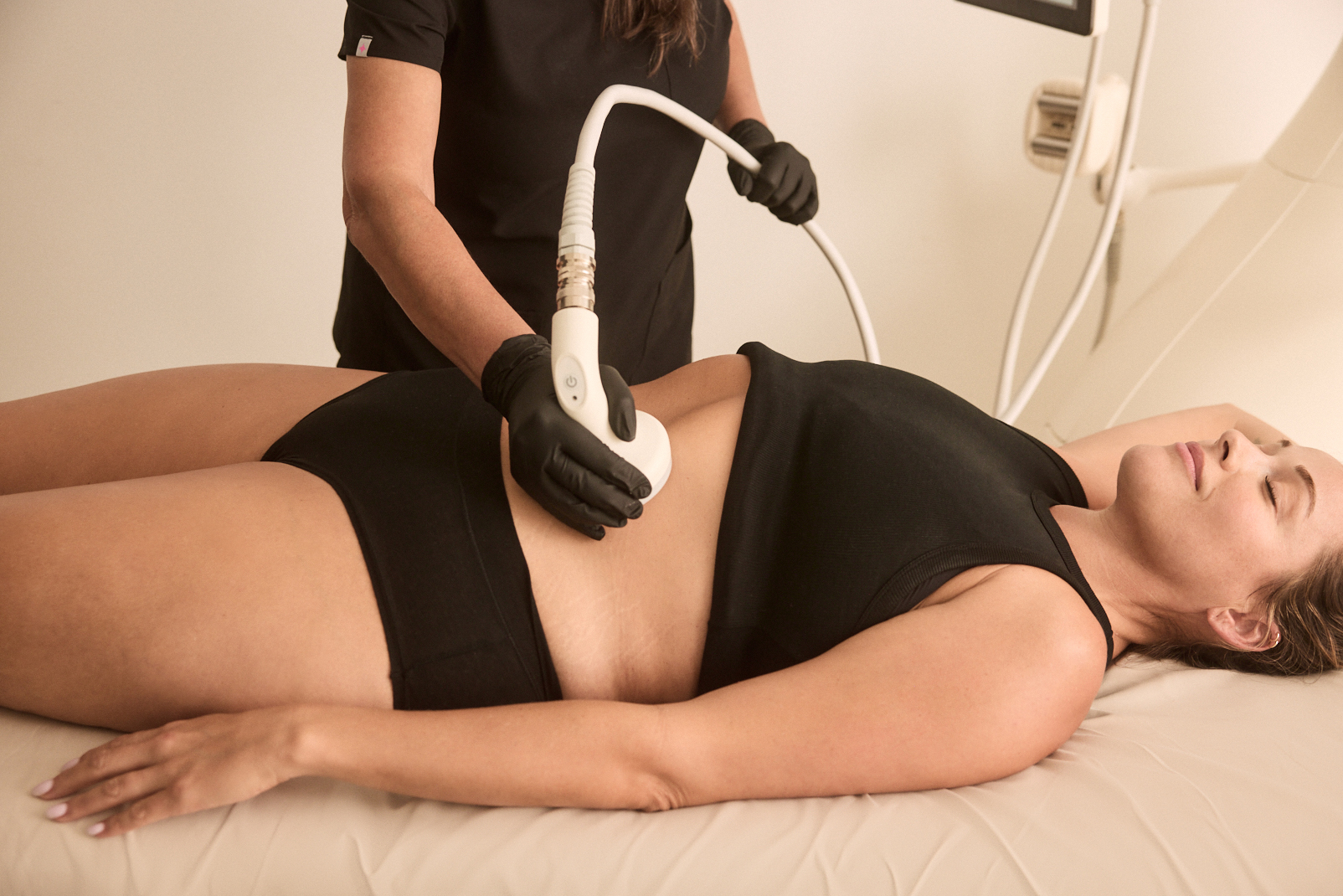
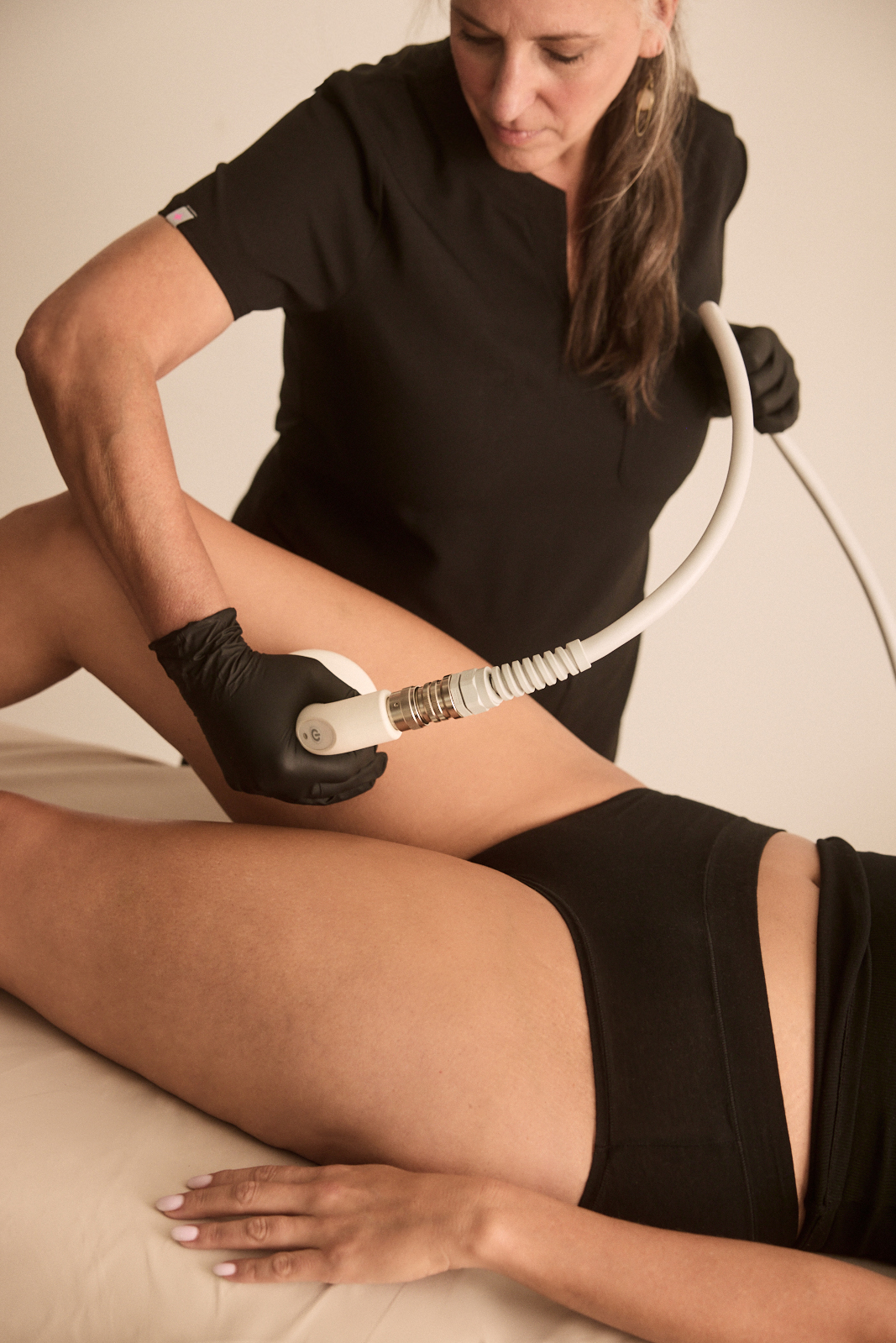
The technology: the T-Shape 2 is a multi-platform system that combines four powerful technologies in one: Multipolar Radiofrequency, Endodermic Massage with Suction, Low-Level Laser Therapy (LLLT), and Mesospheric Activation. The RF generates deep heat to stimulate collagen. The laser targets fat cells and can help improve microcirculation. The massage technology and the mesospheric activation can help promote lymphatic drainage and muscle toning. Together, they create a synergistic effect that can tighten skin and support its health, delivering results that single-modality machines cannot match.
Application: while it can be used on the face for lifting and creating a radiant complexion, the T-Shape 2 is most famous for body contouring and treating crepey skin on the arms, stomach, and thighs. It is a good choice for smoothing out cellulite and tightening skin that has lost its elasticity because of weight loss or aging.
Client experience: clients feel a combination of deep warmth from the RF and a rhythmic suction sensation from the vacuum. Most find the treatment comfortable and even therapeutic, as the vacuum massage helps relieve muscle tension and reduces fluid retention.
Downtime & results: similar to standard RF, there is no downtime. Some mild redness from the vacuum suction may persist for an hour, but it fades quickly. A series of 6 to 10 treatments is usually recommended for body work.
4. Injectable Biostimulatory Fillers
Many people think that fillers are designed to simply plump the skin. While dermal fillers like hyaluronic acid fillers do provide immediate volume, biostimulatory fillers can change your skin’s composition by stimulating collagen production long-term.
The technology: Poly-L-Lactic Acid (PLLA) or calcium hydroxylapatite is injected into the skin. As the body naturally absorbs these, they stimulate long-term collagen and elastin production as they are slowly metabolized by the body.
Application: biostimulatory fillers can be a good choice for global facial rejuvenation rather than filling separate wrinkles. It is used to improve the appearance of hollow temples, sunken cheeks, and the general deflation that occurs with age. It is also often used to improve skin texture and quality on the neck and decolletage.
Client experience: the product is injected using a needle. In the case of PLLA, clients are instructed to follow the “5-5-5 rule”: massage the treated area for 5 minutes, 5 times a day, for 5 days.
Downtime & results: There is virtually no downtime, though minor swelling or bruising at the injection site can occur. It takes about 6 weeks to see the first signs of improvement and 3 to 6 months for the full effect.
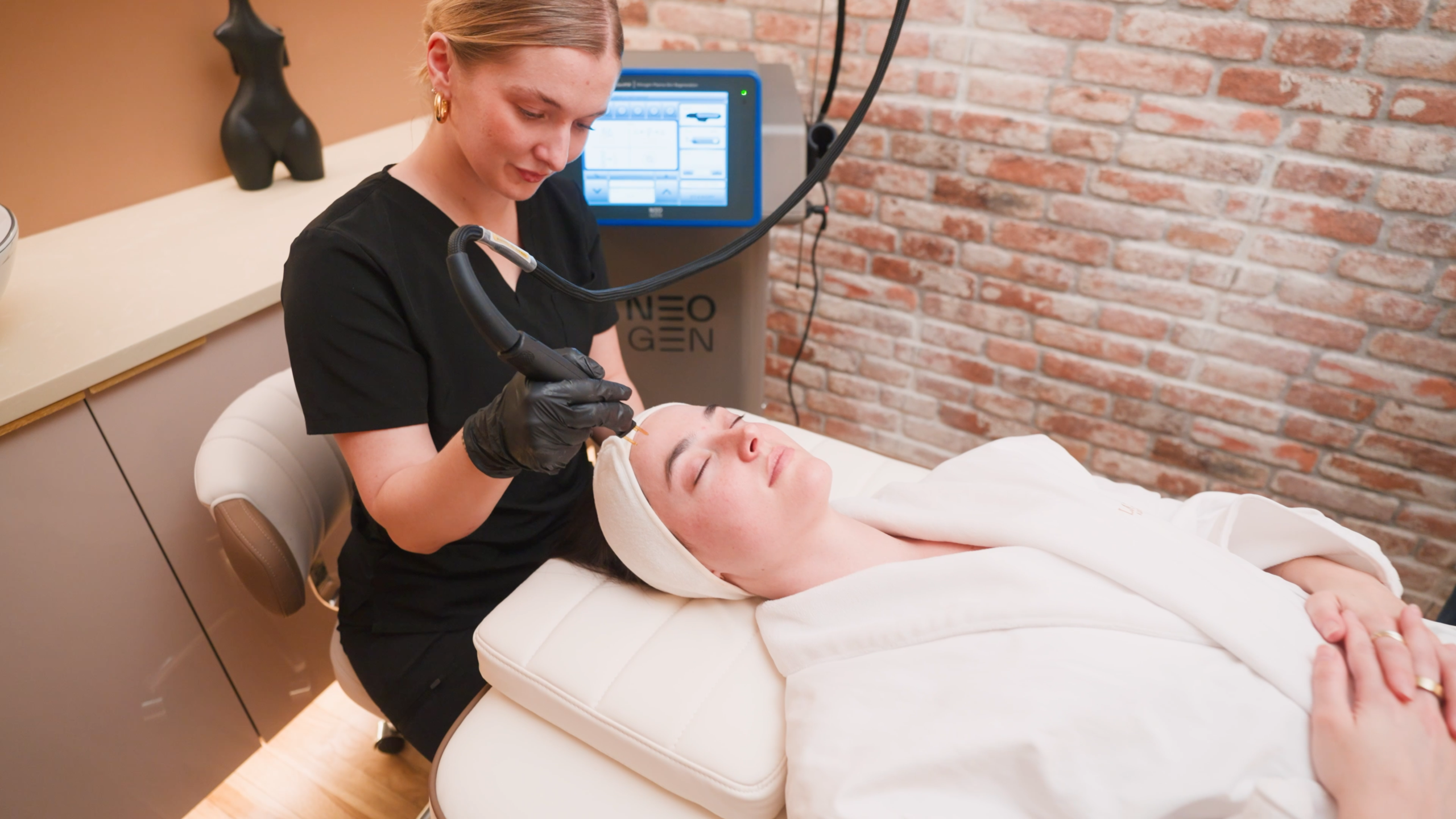
5. Nitrogen Plasma Skin Regeneration
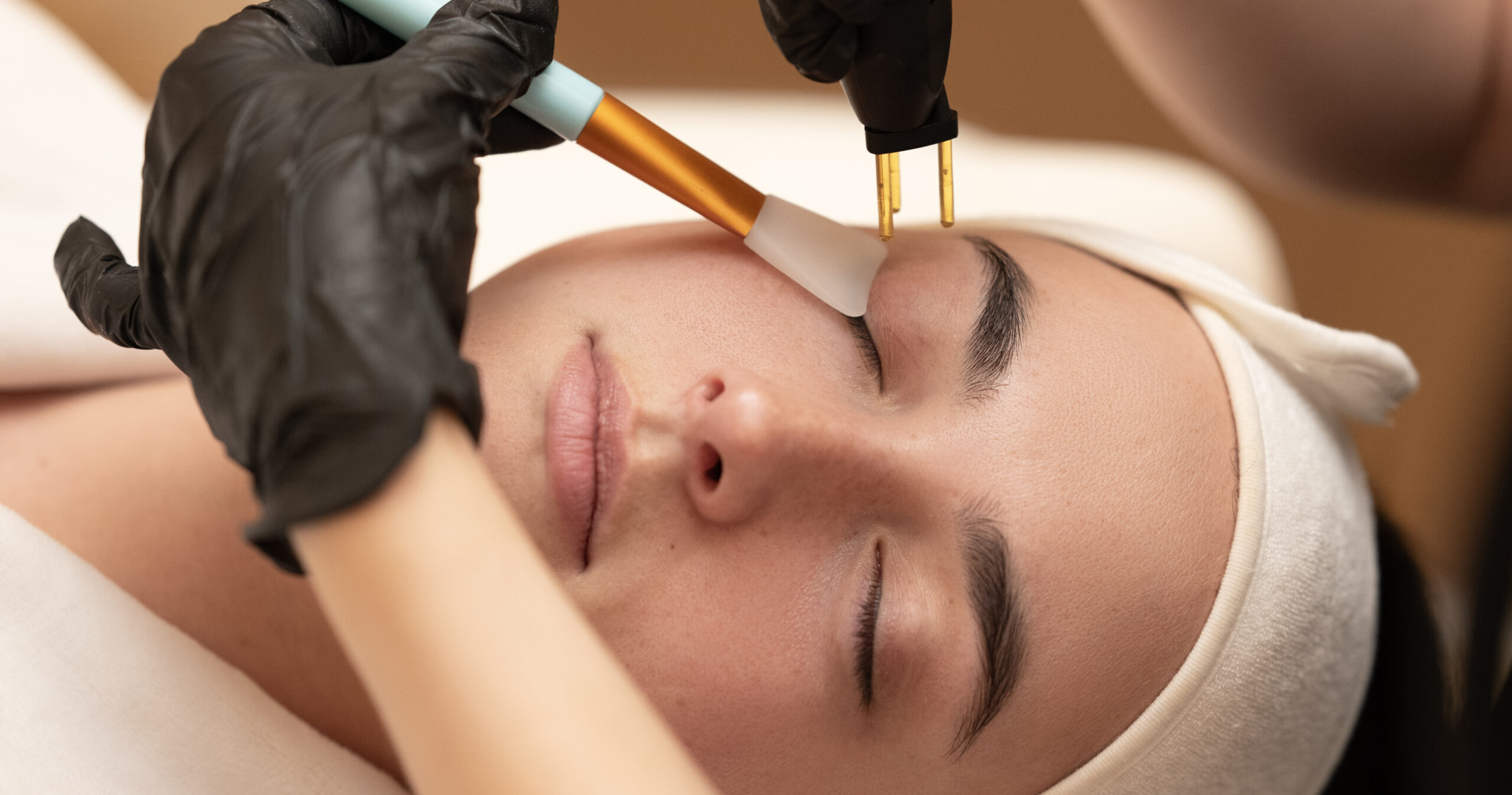
The technology: this treatment utilizes nitrogen plasma energy to boost collagen production. It delivers controlled nitrogen plasma energy to different skin depths (depending on treatment goal). This creates a disruption that stimulates new collagen formation.
Application: nitrogen plasma skin regeneration can be highly effective for reducing wrinkles, acne scars, significant sun damage, seborrheic keratoses, and superficial skin lesions.
Client experience: depending on the intensity setting (low vs. high energy) and targeted depth, clients may feel a sharp heat sensation.
Downtime & results: downtime is generally minimal, but it depends on the targeted skin depth and energy type (minimal downtime for low energy treatments; a more significant downtime for high energy treatments, but still less downtime compared to ablative CO2 laser treatments). Since the plasma triggers a profound remodeling phase, the skin continues to look firmer and more youthful for up to a year after a single high-energy session.
6. Ultrasound-Based Skin Tightening
The technology: ultrasound-based treatments use ultrasound beams to deliver heat into the deeper layers of the skin without affecting the surface. This heat causes an immediate contraction of existing collagen and kickstarts the long-term production of new, stronger collagen fibers.
Application: this can be a good choice for people seeking a non-invasive lift. It is specifically designed to treat skin laxity, such as a drooping brow, sagging under the chin, and turkey neck appearance. It is considered safe for all Fitzpatrick skin types.
Client experience: during the procedure, a smooth applicator is moved over the skin. The clients often feel a brief stinging sensation. While some find it uncomfortable, the sensation only lasts while the energy is being delivered.
Downtime & results: there is typically no downtime; the skin may look slightly flushed for an hour or two, but you can return to normal activities immediately. While some people notice an immediate lifting effect due to heat-induced contraction, the real transformation takes place over 3 to 6 months.
7. Radiofrequency Skin Tightening
The technology: radiofrequency treatments use electrical energy to generate heat in the skin. This activates fibroblasts, which stimulate collagen and elastin production.
Application: RF is often recommended for clients who want to address early signs of sagging and fine lines without any needles or recovery time. It is frequently used for eye lifts, smoothing the nasolabial folds, and tightening the skin around the jawline.
Client experience: the treatment is often described as feeling like a hot stone massage for the face. It is generally a very relaxing and painless experience, requiring no numbing cream.
Downtime & results: there is little to no downtime. Aside from looking slightly glowy and pink for about 30 minutes, there are no immediate side effects as long as the procedure is performed correctly. For lasting collagen growth, a series of 4 to 6 treatments spaced one week apart is typically required.
8. PRP Therapy
The technology: PRP therapy utilizes the healing power found within your own blood. A small sample of blood is drawn and placed in a centrifuge, which spins it at high speeds to separate platelets from other blood components. When the platelet-rich plasma is reinjected into or applied to the skin, it releases a surge of growth factors that trigger the body’s natural collagen production process.
Application: PRP can be effective for improving overall skin quality and texture, as well as for reducing fine lines, wrinkles, acne scars, and sagging skin.
Client experience: the process begins with a standard blood draw. Once the PRP is prepared, it is usually injected into specific areas. The clients feel the initial pinch of the blood draw and a stinging sensation during the injections.
Downtime & results: downtime is minimal, typically involving 24 to 48 hours of mild swelling or bruising at the injection sites. Results are not immediate. You will notice an improved glow within a few weeks. But the structural thickening of the skin and reduction in fine lines develop over 3 to 6 months as the new collagen matures.
9. Professional Chemical Peels
The technology: chemical peels involve the application of a specific acid solution to the skin to intentionally injure the upper layers. This process forces the skin to shed dead or damaged cells (exfoliation) while sending a chemical signal to the deeper skin layers to produce new collagen.
Application: chemical peels are often recommended for reducing rough texture, fine lines, sunspots, and acne scars.
Client experience: during the application, clients feel a tingling sensation for light peels or a significant heat sensation for medium-depth peels.
Downtime & results: superficial peels have minimal downtime; medium-depth peels have approximately 3 to 7 days of downtime, during which the skin may turn brown and eventually peel off in sheets. The reward for this downtime is a new skin effect; the complexion appears significantly brighter, and the underlying collagen stimulation continues to firm the skin for several months following the procedure.
10. Collagen-Boosting Skincare
Professional procedures are the heavy-lifters; that’s a given. But their results can be significantly extended (or undermined!) by your daily habits. Here are some products to introduce in your daily skincare that may help you restore that youthful skin:
- Topical retinoids
- Vitamin C
- broad-spectrum SPF
- Gentle at-home chemical exfoliants
Lifestyle Habits That Help Enhance Collagen Production
The way you eat, hydrate, and take care of your body has a real impact on how well your skin produces collagen. Professional treatments can definitely stimulate change, but your everyday habits can help determine how long those results actually last. Without supportive lifestyle choices, improvements may fade faster than expected.

Nutrition and Collagen Support
Your diet can really encourage collagen production and support overall skin health. Protein intake is especially important because fibroblasts rely on essential amino acids to build new collagen fibers. If your diet is too low in protein, your skin may struggle to repair and regenerate efficiently.
Vitamins and minerals matter just as much. Nutrients like vitamin C, iron, and copper help support collagen quality. So, prioritizing foods such as citrus fruits, leafy greens, and other antioxidant-rich options can make a difference. Antioxidants help reduce oxidative stress, which otherwise weakens collagen over time.
It’s also worth paying attention to high-glycemic foods. Diets high in sugar and refined carbohydrates can lead to repeated insulin spikes and inflammation, both of which can gradually damage collagen structure.
Sun Protection
Sun exposure is one of the biggest factors behind collagen breakdown, so it’s very important to protect your skin daily. It’s recommended to use a broad-spectrum sunscreen, as it can help limit UV damage and preserve your skin’s structural support.
You can also support your skin by wearing hats, choosing protective clothing, and avoiding strong sun exposure during peak hours, usually between late morning and mid-afternoon.
No Smoking
Smoking directly affects collagen production and skin health. Research shows that smokers tend to have lower synthesis rates of certain collagen types, partly because smoking increases enzymes that break down collagen fibers.
On top of that, smoking restricts blood flow near the skin’s surface. Reduced circulation means that less oxygen and fewer nutrients reach the skin, which makes it harder for your body to repair and maintain healthy tissue.
Sleep and Stress
Your sleep habits influence how well your skin repairs itself. A large portion of tissue recovery happens at night when growth hormone levels rise, so consistent, high-quality sleep helps support collagen renewal.
Stress also plays a role. When stress becomes chronic, cortisol levels increase, which can slow fibroblast activity and interfere with the signaling processes involved in long-term collagen stimulation. Over time, this can affect how firm and resilient your skin looks.
Hydration
When you’re dehydrated, your skin may look thinner and less elastic. But when you drink enough water, you support many of the processes involved in maintaining adequate collagen levels and healthy skin. Water helps transport nutrients and supports enzymatic reactions in the skin. Keeping your hydration levels steady helps fibroblasts work more efficiently and supports a healthier collagen structure.
How Long Does Collagen Take to Rebuild?
Collagen remodeling is slow by nature. Some treatments do indeed create an immediate tightening effect. But the real structural improvement happens gradually as your body builds new collagen.
In most cases, fibroblast activity starts increasing within a few weeks after treatment. Nonetheless, visible skin firmness and improved skin elasticity is usually noticed after 6-12 weeks. The most noticeable changes often happen between 3 and 6 months, which is when newly formed collagen becomes thicker and more organized.
Your age, skin quality, nutrition, and lifestyle habits also influence the timeline. For example, smokers or people with high sun exposure can experience premature aging and may see slower progress because, in their case, collagen breaks down faster.
How to Choose the Best Treatment for You
With so many options available, you’re probably feeling a bit overwhelmed, right? What treatment should you choose?
Start by asking yourself a few questions:
- Are you trying to smooth fine lines, tighten sagging skin, restore that youthful skin, or improve acne scars?
- How much downtime are you realistically willing to take?
- Are you looking for subtle, progressive improvement or a more dramatic transformation?
If you want gradual improvement with minimal downtime, you can try radiofrequency, ultrasound, T-Shape 2, or traditional microneedling. For deeper wrinkles or significant texture changes, you can try ablative lasers or nitrogen plasma, but they come with longer recovery periods.
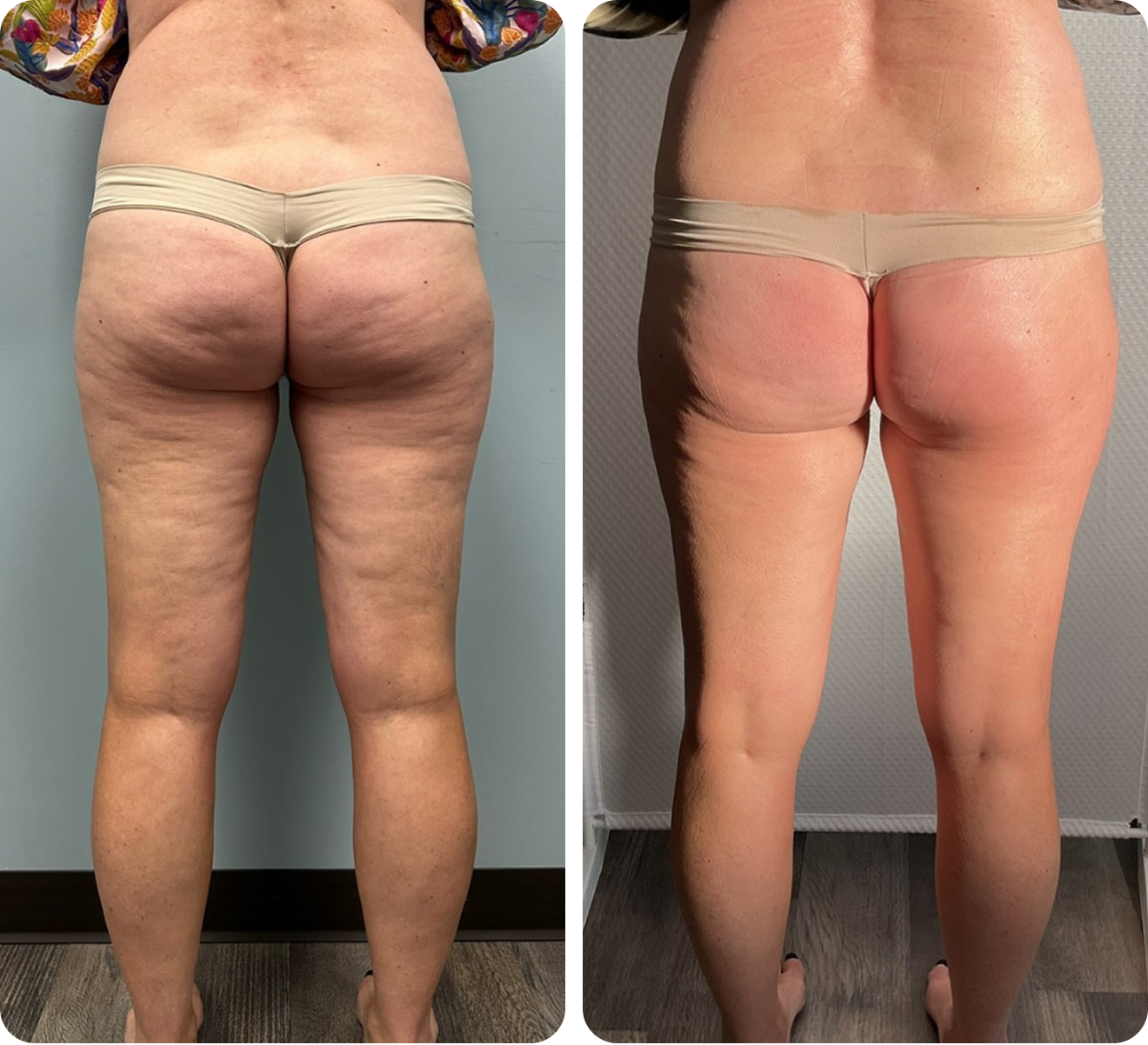
Before and after 3 cellulite treatments on the buttocks and legs with T-Shape 2.
Your skin tone is also important. Some energy-based devices carry a higher risk of pigmentation changes on darker skin types, which is why an experienced provider will usually assess your Fitzpatrick classification before recommending anything.
Are Collagen-Boosting Treatments Safe?
In general, collagen-boosting treatments are considered safe when they’re performed by qualified professionals who understand skin anatomy and device settings.
That said, safe doesn’t mean risk-free. Temporary redness, swelling, or sensitivity are normal after many treatments. Moreover, more aggressive procedures can carry risks like infection, scarring, or post-inflammatory hyperpigmentation. Your medical history also plays a role; conditions like active skin infections, certain medications, or a history of keloid scarring may change which treatments are appropriate for you.
The safest approach is to work with a qualified professional. They will evaluate your skin type, explain realistic outcomes, and discuss downtime openly.
FAQs
What are the best collagen-boosting facial treatments?
The most effective collagen-boosting facial treatments include RF microneedling, laser resurfacing, nitrogen plasma skin regeneration, ultrasound skin tightening, PRP therapy, and biostimulatory injectables. The right choice depends on whether your goal is tightening, wrinkle reduction, or overall skin rejuvenation.
What is the best treatment to boost collagen?
There’s no single best treatment for everyone. Stronger procedures like ablative lasers or nitrogen plasma stimulate the most collagen, but RF microneedling and ultrasound offer solid results with less downtime. The best option depends on your skin condition, goals, and recovery tolerance.
How can I rebuild collagen in my face?
Collagen rebuilding usually requires a combination of professional treatments, consistent sunscreen use, topical retinoids or vitamin C, and healthy lifestyle habits like proper nutrition and sleep. In-office procedures trigger the process, while daily habits help maintain it.
Do collagen boosters actually work?
Yes, collagen boosters work when they’re correctly performed by professionals. Collagen-stimulating treatments deliver controlled heat or micro-injury that can stimulate fibroblasts to produce new collagen over time. The results aren’t immediately visible, but you’ll notice gradual improvement in firmness and skin texture within a few months.