Loose, sagging skin is one of the most common aesthetic concerns people bring to aesthetic clinics. Undoubtedly, it is also among the more frustrating ones, because unlike fine lines or uneven tone, it can’t be masked with skincare products. The skin has to change at a structural level.
That’s what this guide is all about: what the best skin tightening treatments for face are, how they work, and what you can realistically expect from them.
Disclaimer: This article is provided for informational and educational purposes only. The information presented here is not a substitute for professional medical evaluation, consultation, or care and should not be relied upon to make health-related decisions. Always consult a qualified and licensed medical or aesthetic professional before undergoing any cosmetic or aesthetic procedure.
Key Facts: Best Skin Tightening Treatments for Face
The most effective non-surgical skin tightening treatments for the face work by stimulating collagen production through controlled thermal or mechanical injury. The top options are ultrasound, radiofrequency, RF microneedling, T-Shape 2, nitrogen plasma skin regeneration, and laser resurfacing.
Always consult a qualified specialist. Outcomes depend heavily on patient selection, device settings, technique, and aftercare.
Why Does Facial Skin Lose Its Firmness?
Skin firmness depends almost entirely on two proteins: collagen and elastin. Collagen provides structural support (it’s what keeps the skin from sagging). Elastin allows it to bounce back after stretching.
Both are produced by fibroblasts in the dermis. And both decline with age. After 25, your body’s natural collagen production drops by roughly 1% per year. Skin elasticity is also decreasing. By the time someone is in their 40s or 50s, the cumulative loss becomes visible in the form of laxity around the jaw, under the eyes, and along the neck.
Age isn’t the only cause. Sun exposure also accelerates collagen breakdown through UV-induced oxidative damage. Furthermore, smoking impairs collagen synthesis. Last but not least, genetics determines both how much collagen you produce and how quickly you lose it.
And then there’s rapid weight loss, a factor that’s become more and more relevant as GLP-1 medications like semaglutide (Ozempic, for example) have become more and more common. People who are losing significant weight quickly often find that their skin doesn’t contract at the same rate, and excess skin remains behind. The fat that once filled the face recedes faster than the skin can adapt. This causes a deflated appearance that’s sometimes called “Ozempic face.”
Even though this isn’t a side effect of the drug itself (rather, it’s a consequence of the speed and volume of fat loss), it has become an increasingly common reason people in their 40s and 50s seek facial rejuvenation and tightening treatments.
How Do Non-Surgical Skin Tightening Treatments Work?
Most skin tightening procedures work through one of two mechanisms, or a combination of both.
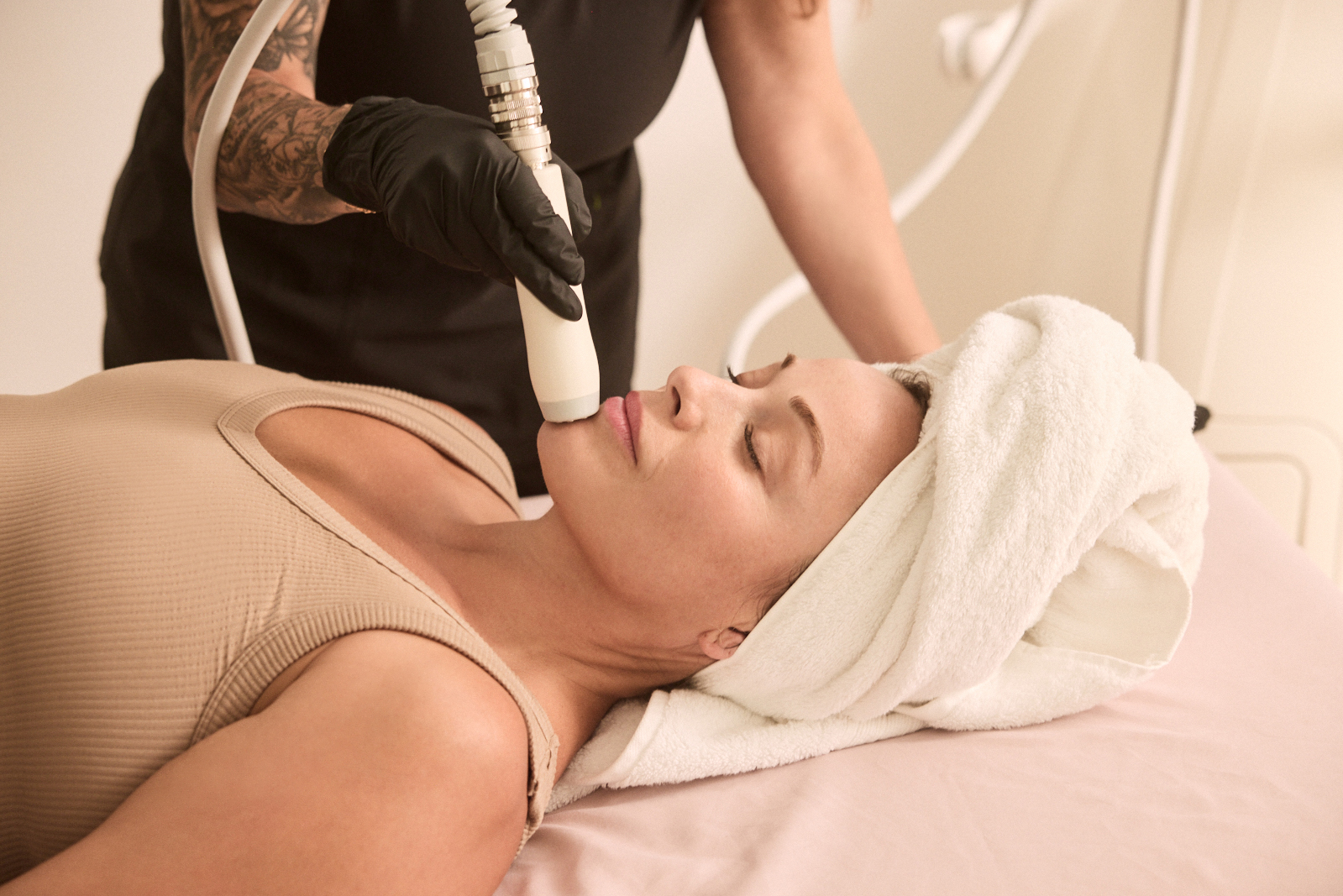
The first is thermal injury. Controlled heat, delivered by ultrasound, radiofrequency, laser, or plasma, damages collagen fibers in a targeted way. Then, the body responds by producing new collagen to repair the tissue. And that new collagen is denser and more organized than what was there before. The skin contracts and firms over the following weeks and months as collagen remodeling takes place.
The second is mechanical injury. Microneedling, for example, creates microchannels in the skin that trigger the body’s natural healing process. When radiofrequency energy is added to that process, both mechanisms fire at once and can help create firmer skin and lift sagging skin.
Depth matters a lot here. Superficial treatments can help improve skin firmness, texture, and tone. Deeper energy delivery tightens the structural layers responsible for true lift. That’s why some technologies are more effective for laxity than others, and why combination approaches are increasingly common in medspas.
Also, it’s worth knowing that the results from energy-based tightening are not instantaneous. Collagen remodeling takes time. Most people see initial improvement over six to twelve weeks, with continued improvement for up to six months.
The Best Skin Tightening Treatments for Face
Before we discuss more about some of the best skin tightening treatments for the face, here’s a quick comparison:
| Treatment | Downtime | Sessions | Best For |
| Ultrasound | Minimal | 1 | Moderate laxity, deep layer stimulation |
| Radiofrequency | Minimal | 1-6 | Broad laxity |
| RF Microneedling | 1-3 days | 3 | Laxity + texture |
| T-Shape 2 | Minimal | At least 6 | Laxity, contouring, maintaining skin health |
| Neogen Plasma | 0-7 days | 1 or series | Laxity + texture + tone |
| Laser Resurfacing | 3-14 days | 1-5 | Lines, laxity, texture |
1. Ultrasound Skin Tightening
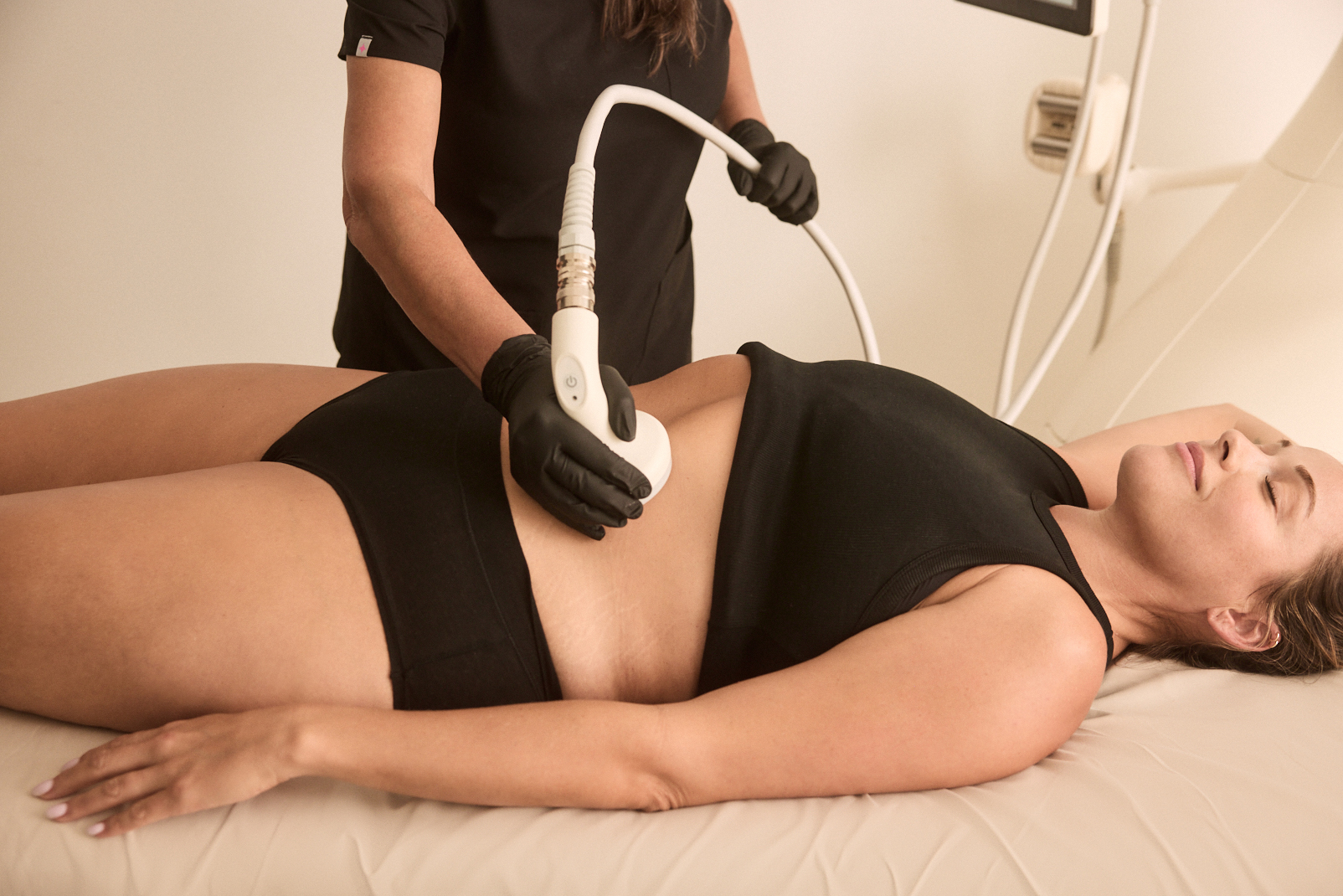
Ultrasound-based treatments use focused sound waves to deliver heat to precise depths in the skin. They can even reach the superficial musculoaponeurotic system (SMAS), the deep layer targeted in surgical facelifts.
The heat caused by the focused ultrasound energy triggers immediate collagen contraction and triggers long-term neocollagenesis (new collagen production). Because the energy bypasses the surface of the skin entirely, there’s no damage to the epidermis.
Here’s what you should know about ultrasound therapy:
| Number of sessions | typically 1, with a repeat at 12-18 months as maintenance |
| Downtime | minimal; mild redness, swelling, or tenderness for a day or two |
| Results timeline | gradual improvement over 2-6 months; full results around 6 months |
| Best for | mild to moderate skin laxity, deeper layer collagen stimulation, brow lifting, jawline definition, neck tightening |
| Comfort | can be uncomfortable during treatment |
2. Radiofrequency (RF) Skin Tightening
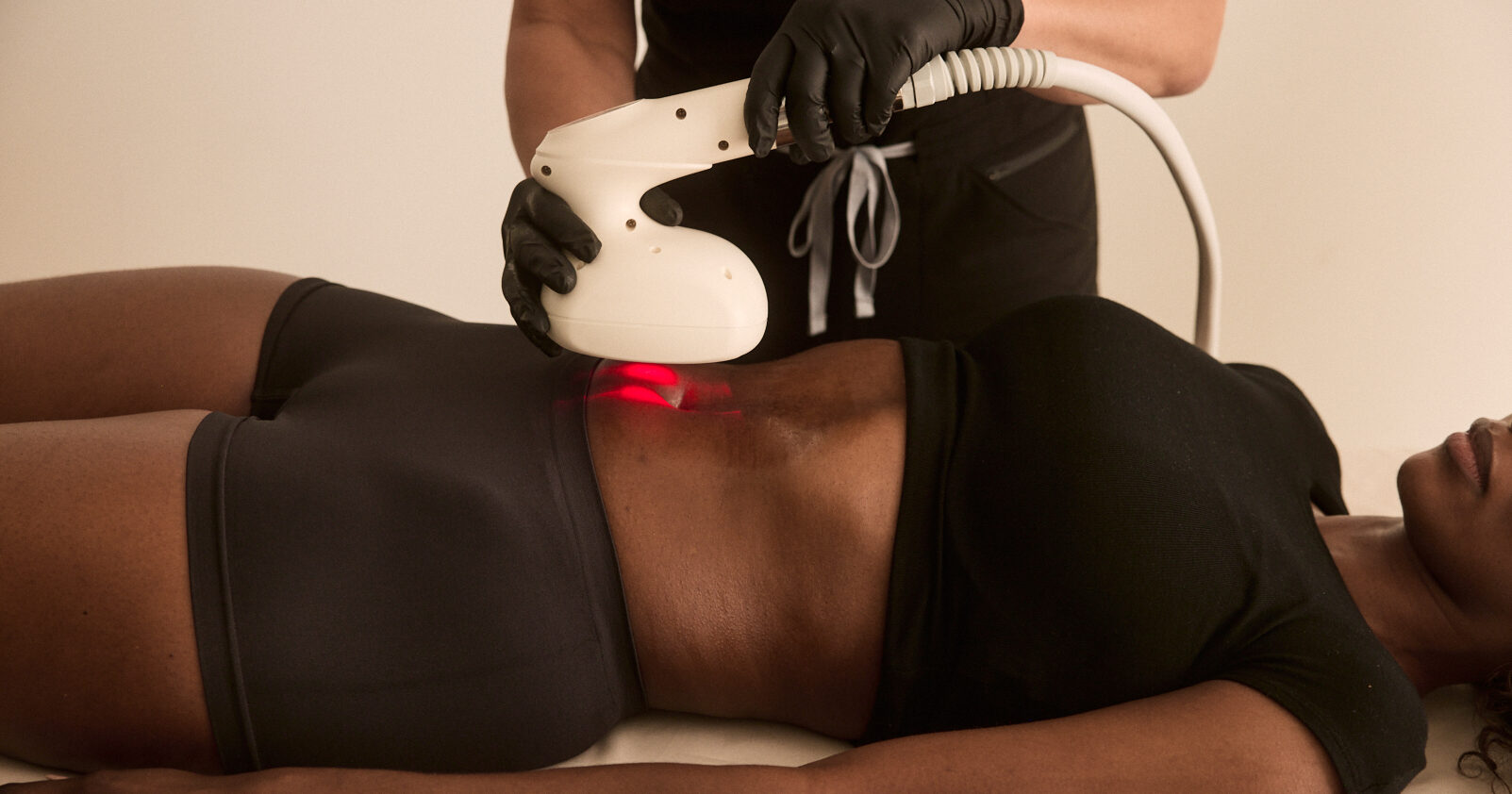
Radiofrequency devices deliver electrical energy that converts to heat in the dermis and subdermal tissue. Like in the case of ultrasound, this stimulates collagen and elastin production. But unlike ultrasound, RF energy is non-focused. This means it heats a broader area. That’s a different trade-off, not a lesser one.
Here’s what you should know about RF skin tightening procedure:
| Number of sessions | varies by device; some technologies are designed for a single treatment, others work in a series of 3-6 |
| Downtime | generally minimal; some temporary redness and swelling |
| Results timeline | 2-6 months for full collagen remodeling |
| Best for | skin laxity across the face, cheeks, jowls, and periorbital area; restoring a more youthful appearance and a tighter skin |
| Comfort | warm to hot sensation during treatment; most patients tolerate it well |
3. RF Microneedling
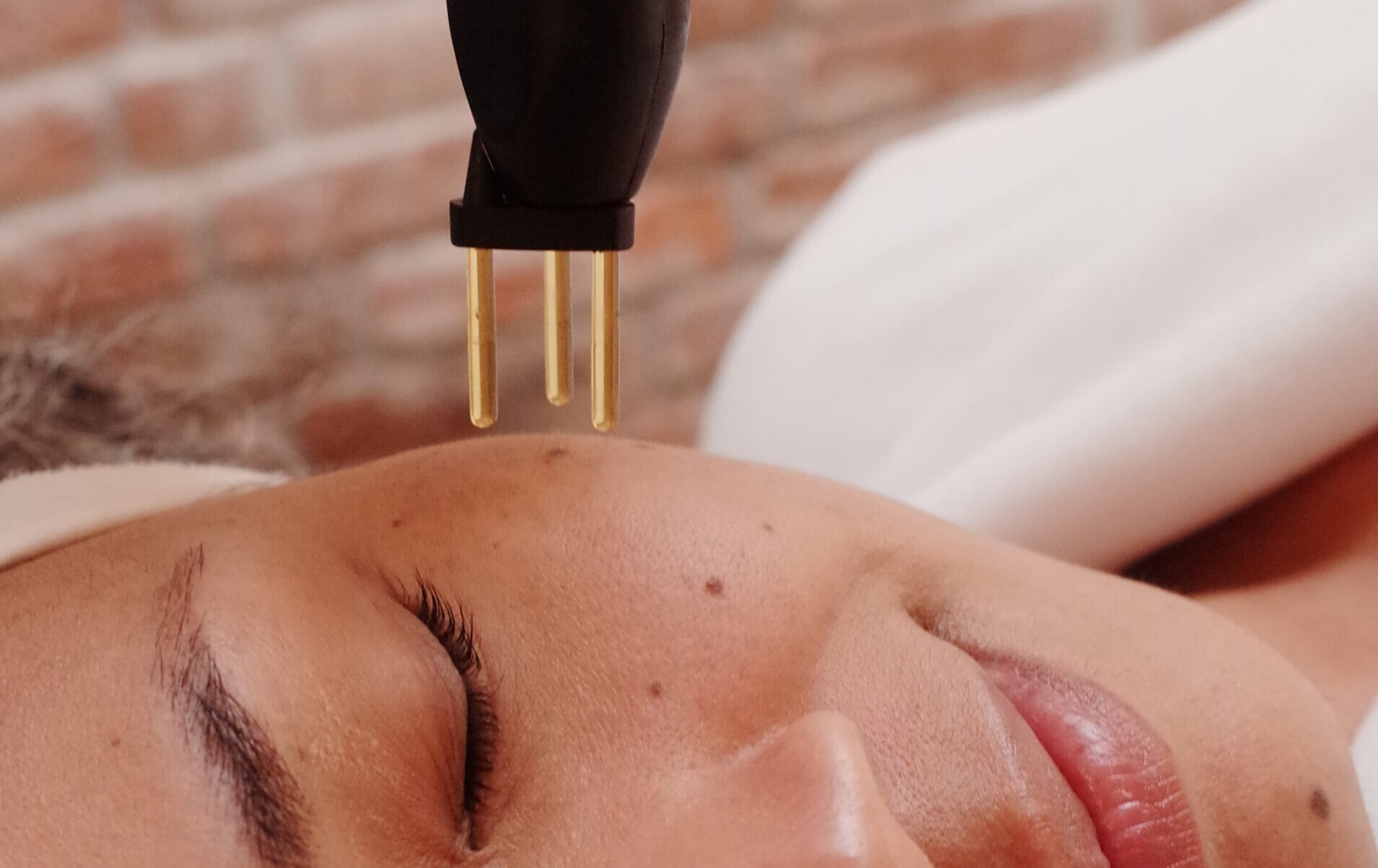
RF microneedling is a non-surgical treatment for skin tightening that combines two mechanisms: the microinjury response of microneedling with the thermal collagen stimulation of radiofrequency. Microneedles penetrate the dermis to a controlled depth and deliver RF energy directly into the tissue at that depth.
This combination can often produce more significant remodeling than either modality alone. It can also help improve skin texture and reduce scarring in addition to laxity. Popular devices in this category include Morpheus8, Sylfirm X, and Potenza.
Here’s what you should know about RF microneedling:
| Number of sessions | typically 3, spaced 4-6 weeks apart; maintenance every 12-18 months |
| Downtime | 1-3 days of redness, pinpoint bleeding, and swelling; some patients experience 3-5 days |
| Results timeline | visible improvement after the first session; progressive through the series |
| Best for | mild to moderate skin laxity, fine lines, acne scarring, enlarged pores, and uneven texture; particularly effective for the lower face and neck |
| Comfort | topical numbing is standard; the treatment is generally well tolerated with adequate preparation |
| Important | people should avoid sun exposure, actives (retinoids, acids), and heat for several days post-treatment |
4. T-Shape 2
The T-Shape 2 is a non-invasive skin-tightening device. It is a multi-technology platform that combines radiofrequency, laser therapy, vacuum massage, and mesospheric activation. This allows providers to address multiple skin issues in one session. The device is designed for both face and body applications. It has specialized protocols that can be adapted for tightening, contouring, and skin tone improvements.
Here’s what you should know about T-Shape 2 procedures:
| Number of sessions | at least 6 sessions are recommended, with maintenance |
| Downtime | generally minimal, consistent with standard RF and ultrasound treatments |
| Results timeline | gradual improvement over weeks to months as collagen remodeling progresses |
| Best for | facial laxity, jawline, neck, and body contouring; skin rejuvenation; suitable for a range of skin types |
| Comfort | no discomfort, feels like a warm massage |
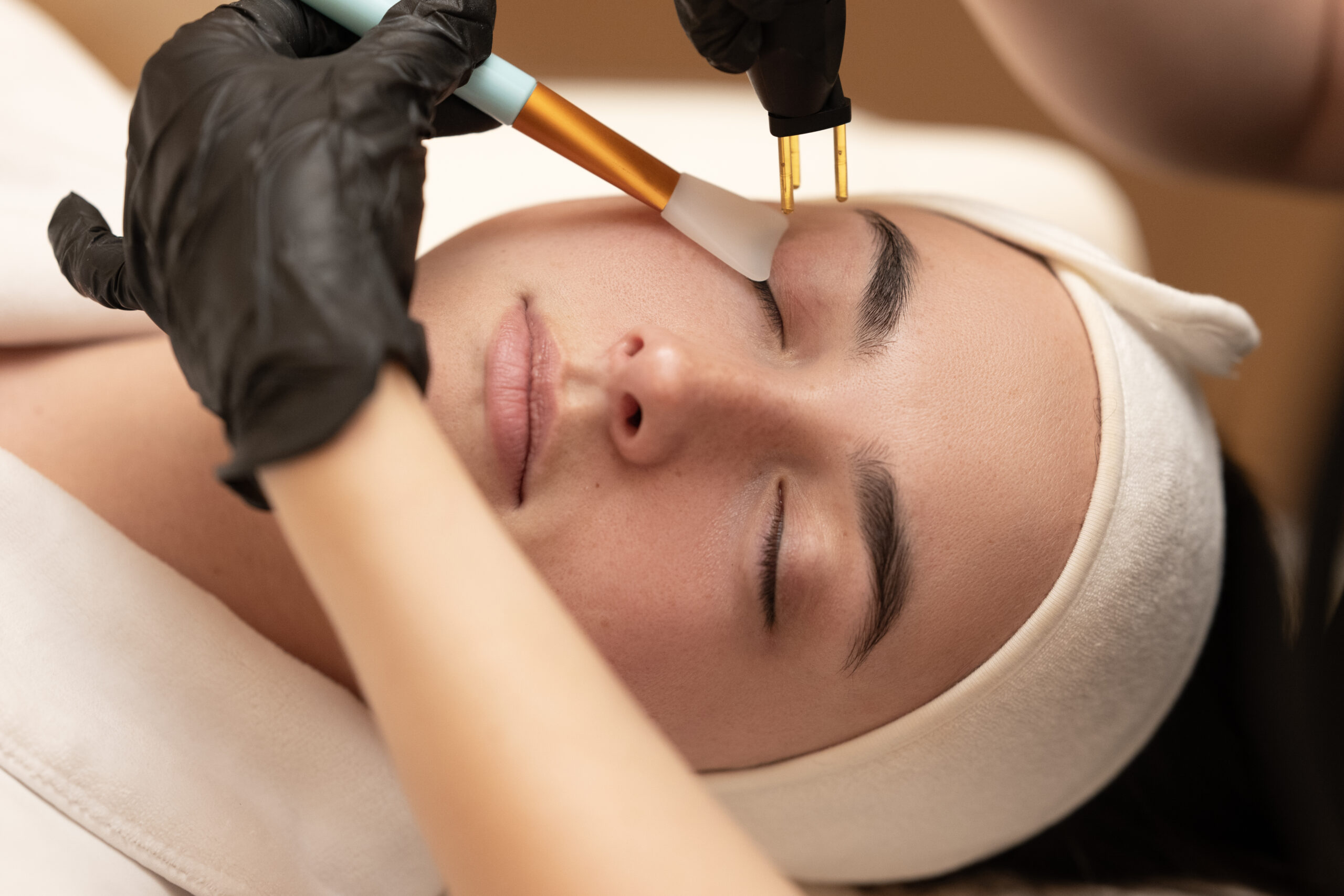
5. Nitrogen Plasma Skin Regeneration
Neogen uses nitrogen plasma energy. Nitrogen gas is converted to plasma at the device’s tip, and that energy is delivered to the skin as a precisely controlled burst of thermal energy.
Unlike ablative lasers, it doesn’t vaporize the skin surface. This is a major advantage for those who aren’t ready for significant downtime. Instead, it causes controlled coagulation that triggers deep collagen remodeling while preserving the skin’s surface architecture. Because nitrogen plasma works at a controlled temperature with a broad treatment footprint, it can help address laxity, texture, and pigmentation.
Here’s what you should know about nitrogen plasma skin regeneration procedure:
| Number of sessions | can be performed as a single-session treatment at higher energies, or as a series at lower settings |
| Downtime | varies by energy level; lower settings involve minimal downtime; higher settings may involve 5-7 days of redness, crusting, and peeling |
| Results timeline | immediate textural improvement; collagen remodeling continues for 3-6 months |
| Best for | moderate skin laxity, fine lines, sun damage, texture irregularity, and acne scarring; effective across Fitzpatrick skin types I-VI |
| Differentiator | nitrogen plasma is non-ablative at lower settings, giving providers control over the aggressiveness of treatment |
6. Laser Skin Resurfacing
Laser resurfacing uses focused light energy to resurface the skin by targeting water in the tissue. Ablative lasers (CO2, Erbium:YAG) remove the outer skin layers, triggering significant collagen remodeling and skin tightening during healing. Non-ablative fractional lasers (like Fraxel) are more minimally-invasive procedures compared to ablative lasers. They deliver heat in a grid pattern, leaving the surrounding tissue intact, which reduces downtime while still driving collagen production.
Here’s what you should know about laser resurfacing:
| Number of sessions | ablative – often 1 treatment; non-ablative fractional – typically 3-5 sessions |
| Downtime | ablative CO2 – 7-14 days of significant healing; non-ablative fractional – 3-5 days |
| Results timeline | 3-6 months for full collagen remodeling; new skin visible sooner in ablative cases |
| Best for | skin laxity, fine lines, wrinkles, sun damage, brown spots, and texture issues; ablative is particularly effective for perioral and periorbital lines |
| Skin type consideration | ablative lasers carry higher pigmentation risk in darker skin; a specialist should assess suitability; sun avoidance post-treatment is critical |
Why Should You Always Talk to a Specialist?
The technologies used for skin tightening deliver energy, sometimes significant amounts, into your tissue. The outcomes depend heavily on patient selection, device settings, technique, and aftercare. That’s worth taking seriously, especially given that you want to use these to reduce skin laxity on the face. That’s exactly why you should talk to a specialist to find the right skin tightening treatment for you.
A qualified specialist will assess whether you’re actually a good candidate for non-surgical skin tightening. Some people with significant skin laxity will get better results from cosmetic surgeries than from energy-based treatments. Others may have contraindications: active skin infections, certain medications, metal implants, pregnancy, or conditions that affect wound healing.
Secondly, they’ll also determine the right treatment or combination of treatments for your specific anatomy. Thirdly, technique matters as much as technology. For instance, an RF microneedling treatment performed with incorrect depth settings or inadequate skin contact can produce inconsistent or no results. The device is only as effective as the provider operating it.
Lastly, aftercare tremendously affects the result. After the treatment, your skin is more susceptible to UV damage, which can undo collagen remodeling and cause pigmentation, so a specialist will advise you on that.
How to Sustain Skin Tightening Results Naturally
Collagen remodeling is an ongoing biological process. It can be supported or undermined depending on how you treat your skin day-to-day. So, even if you do get good results after facial skin tightening treatments, they will not last long if you don’t support your skin’s health on a daily basis. As such, here’s what you can try!

Wear Sunscreen, Every Day
UV radiation is the fastest way to undo the collagen your skin just worked to rebuild. UV-induced oxidative stress breaks down collagen and elastin quite fast and can easily offset the collagen gains from tightening treatments. That’s why dermatologists recommend applying a broad-spectrum SPF 30 or higher every morning, even if it’s cloudy and even if you’re spending time indoors near your window. Reapply if you’re outside for more than two hours.
Use a Retinoid
Retinoids, prescription tretinoin or over-the-counter retinol, are among the most evidence-backed topical ingredients for stimulating collagen production. Used consistently, they can help slow the rate at which collagen is lost between treatments.
Start low and slow if you’re new to them. Just a pea-sized amount, two to three nights per week, is enough. And then increase the frequency as your skin adjusts. Make sure to avoid retinoids in the week before and after any energy-based treatment. Your skin is more sensitive during that window, and if you use retinoids, it will get irritated.
Support Collagen from the Inside
Skincare works at the surface, so you should also take some measures to support the tissue below the surface.
Collagen synthesis depends on vitamin C. The body can’t produce collagen without it. Luckily, you can get plenty of vitamin C from whole food sources (citrus, peppers, leafy greens). Or you can take a daily supplement to support the baseline. Protein also matters: collagen is a protein, and low dietary protein slows the body’s ability to produce it. So, aim for adequate intake relative to your body weight, especially if you’re in a phase of weight loss.
Limit sugar and refined carbohydrate intake, as they trigger glycation. This is a process that cross-links collagen fibers and makes them stiff and brittle. Alcohol should also be avoided. It depletes zinc and vitamin A, both needed for skin repair. And let’s not forget about nicotine. Smoking is one of the most damaging dietary and lifestyle factors for collagen. It constricts the blood vessels that supply oxygen and nutrients to the dermis.
Stay Hydrated
Drinking water doesn’t directly plump the dermis or reverse laxity. What it does do is maintain the environment in which skin cells function, and it does help keep the skin hydrated for a smoother appearance. You may have already noticed that chronically dehydrated skin looks duller, fine lines appear more pronounced, and the skin barrier becomes less effective at retaining moisture. None of that helps the results of a tightening treatment.

Protect Your Sleep
Skin repairs itself during sleep. If you’re not getting enough quality sleep on a daily basis, your cortisol levels will increase. Cortisol, in turn, will break down collagen and impair the skin barrier. It will also reduce blood flow to the skin. This can cause puffiness and dullness.
Aim for 7-9 hours of sleep every single night. And try to sleep on your back, as this can reduce mechanical compression of the face, which, over the years, contributes to the creasing and stretching that works against tightening results.
Schedule Maintenance Treatments
The baseline rate of collagen decline, roughly 1% per year after 25, continues regardless of your lifestyle choices. You can’t stop this process, but you can support new collagen production. That’s why most energy-based treatments require a maintenance session every 12-18 months to help you stay ahead of that decline.
FAQs
What procedure takes 10 years off your face?
No single procedure guarantees taking 10 years off your face. That framing is marketing, not medicine. What actually produces the most dramatic rejuvenation depends on what’s driving the aging in the first place. For significant laxity and volume loss, often the most recommended procedure is a surgical facelift. For someone with good skin structure but surface damage, ablative CO2 laser resurfacing might produce a striking improvement in texture, tone, and fine lines. A specialist who assesses your specific anatomy will get you further than any procedure trending on social media.
Can facial skin be tightened without surgery?
Yes, facial skin can be tightened without surgery, as long as the laxity is not severe. It can be done with ultrasound, radiofrequency, RF microneedling, T-Shape 2 procedures, nitrogen plasma skin regeneration, and laser resurfacing.
What do dermatologists recommend for sagging skin?
For mild laxity, most dermatologists recommend starting with a retinoid, combined with daily SPF. For mild to moderate skin laxity, the most commonly recommended in-office treatment plans include ultrasound-based devices, radiofrequency, and RF microneedling, often in combination. For advanced skin laxity, many dermatologists refer patients to plastic surgeons to assess whether surgical procedures are suitable.
Can anything actually tighten loose skin?
Yes. The mechanism is well understood: controlled thermal or mechanical injury stimulates the body to produce new collagen, which is denser and more organized than what it replaces. The skin contracts as that remodeling takes place. Ultrasound, radiofrequency, RF microneedling, nitrogen plasma, and ablative laser resurfacing work through this pathway and have clinical evidence behind them. The caveat is the degree. These treatments work best on mild to moderate laxity. Skin that has lost significant structural support, whether from major weight loss or decades of aging, may need surgical intervention for meaningful changes.
How to tighten skin after weight loss naturally?
To naturally support your skin’s health and ability to bounce back after weight loss, make sure to build or maintain muscle mass through resistance training, eat enough protein, take vitamin C consistently, wear SPF daily, and lose weight gradually if you’re still in the process.