You’re eating well and exercising regularly, but that inner fat seems to never leave? The inner thighs are actually one of the most common problem areas when it comes to losing weight. But why? And how can you actually get rid of that fat and tone your legs? Is there anything that really works?
This guide will explain why inner thigh fat accumulates, as well as outline some strategies on how to get rid of inner thigh fat, so read on!
Disclaimer: This article is provided for informational and educational purposes only. The information presented here is not a substitute for professional medical evaluation, consultation, or care and should not be relied upon to make health-related decisions. Always consult a qualified and licensed medical or aesthetic professional before undergoing any cosmetic or aesthetic procedure.
Quick Answer: How to Get Rid of Inner Thigh Fat
The best way to reduce inner thigh fat is through overall fat loss using a calorie deficit, cardio exercise, strength training, and consistent, healthy lifestyle habits. While spot reduction is not possible, exercises that target the inner thighs can improve muscle tone and leg definition as body fat decreases.
Why Does Inner Thigh Fat Accumulate?
Inner thigh fat accumulates because of lifestyle factors, genetics, hormonal changes, age, and muscle loss rate.
Genetics
Genetics is often cited as the biggest factor that determines how much inner thigh fat one gets. A study from Uppsala University measured how fat was distributed in almost 360,000 participants. The results have shown that where the human body stores fat is highly influenced by genetic factors. They have also discovered that genetic factors are present predominantly in women, who tend to store more fat on the hips and legs, and to a much lower extent in men, who tend to store more fat in the trunk.
Hormonal Changes
Hormones play an important role in how your body looks. Estrogen, for example, actively directs fat storage toward the lower body, the hips, buttocks, and inner thighs. In fact, Mathias Rask-Andersen, the lead author of the study mentioned above and Ph.D and postdoctoral researcher at Uppsala University, confirmed that estrogen can be linked to how fat is distributed in the body.
For example, during pregnancy and menopause, women may experience more inner thigh fat because of hormonal fluctuations.
Other issues that could increase inner thigh fat deposits include insulin resistance, low testosterone, high cortisol levels, thyroid imbalances, PCOS, and others.
Age and Muscle Loss
Volpi et al. confirmed in their study that muscle mass decreases approximately 3-8% per decade once we turn 30. This rate increases after we turn 60. So, as you get older, your thigh muscle mass slowly decreases, your metabolism slows, and your body becomes more prone to storing excess fat.
Lifestyle Factors
If you have a sedentary lifestyle, for example, this reduces blood flow and muscle activation in the lower body. If your diet is high in processed foods, refined carbs, and added sugars, it promotes fat storage, thigh cellulite, and fluid retention. If you’re chronically stressed, that doesn’t help either, because elevated cortisol influences fat distribution. If you sleep poorly or not enough, this can also influence where and how much fat is stored, as well as how easy it is for you to get rid of that fat.
Can You Lose Fat Just in the Inner Thighs?
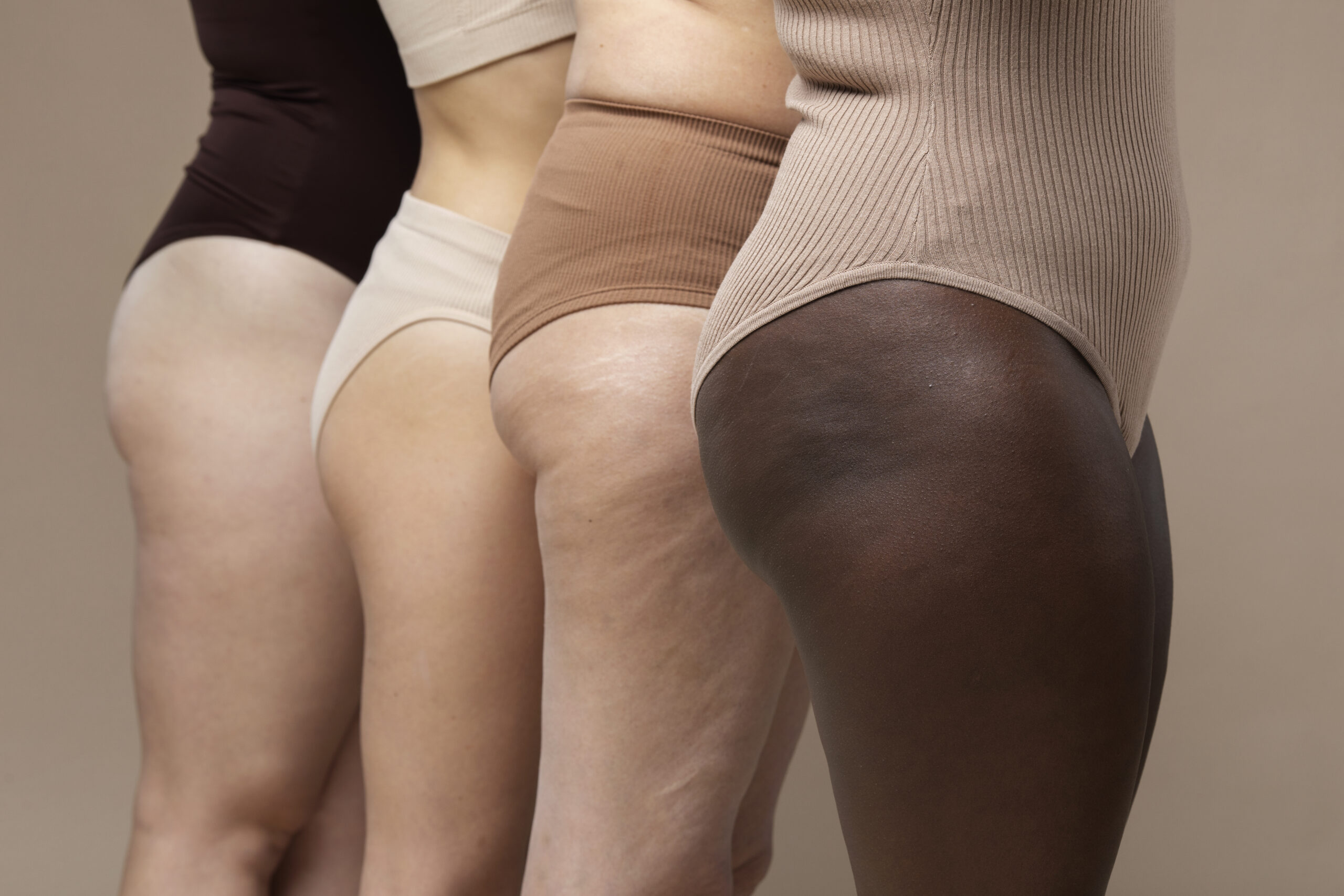
One of the most persistent misconceptions in fitness is the idea that you can target fat loss in a specific area by exercising that area. Do enough inner thigh squeezes, and the fat there will disappear – something people call spot reduction. Unfortunately, the science does not support this.
Fat loss occurs throughout the body. The fat stores used for energy while exercising come from everywhere in the body, not just the area we’re targeting – the inner thighs, in this case. Moreover, based on our genes, gender, and age, the body is the one that decides where we store fat and where we lose it first.
That said, this doesn’t mean that doing squats or other lower-body exercises isn’t helpful. All physical activity helps burn body fat and build muscle mass.
How to Get Rid of Inner Thigh Fat: Evidence-Based Methods
If you want to reduce thigh fat, focus on diet, exercise, and lifestyle.
Nutrition
You cannot out-train a poor diet. If your nutrition is not aligned with your goals, you’ll find it much harder to lose weight from any area of the body.
The core principle is a calorie deficit. This means you should consume slightly fewer calories than your body burns. Most people go for a moderate deficit of 250-500 calories per day, as that’s usually the most sustainable and can lead to gradual fat loss. It’s not recommended to cut more than 500-1,000 calories daily.
Also, choose your food wisely. A healthy diet that can help with fat loss should generally include:
- Lean proteins (chicken, fish, legumes, eggs) to preserve thigh muscles and support satiety
- Whole grains (oats, quinoa, brown rice) for sustained energy and fibre
- Fruits and vegetables for micronutrients and volume without excessive calories
- Healthy fats (avocado, olive oil, nuts) in moderation to support hormone function
- Adequate hydration, as water supports metabolic efficiency and can reduce hunger
Reduce processed foods, sugary drinks, refined carbs, and alcohol.
However, before changing your diet, make sure to talk to a healthcare professional, especially if you have hormonal imbalances or other medical conditions. And don’t forget that restricting calories too aggressively can affect your well-being and make fat loss harder over time.
Exercise
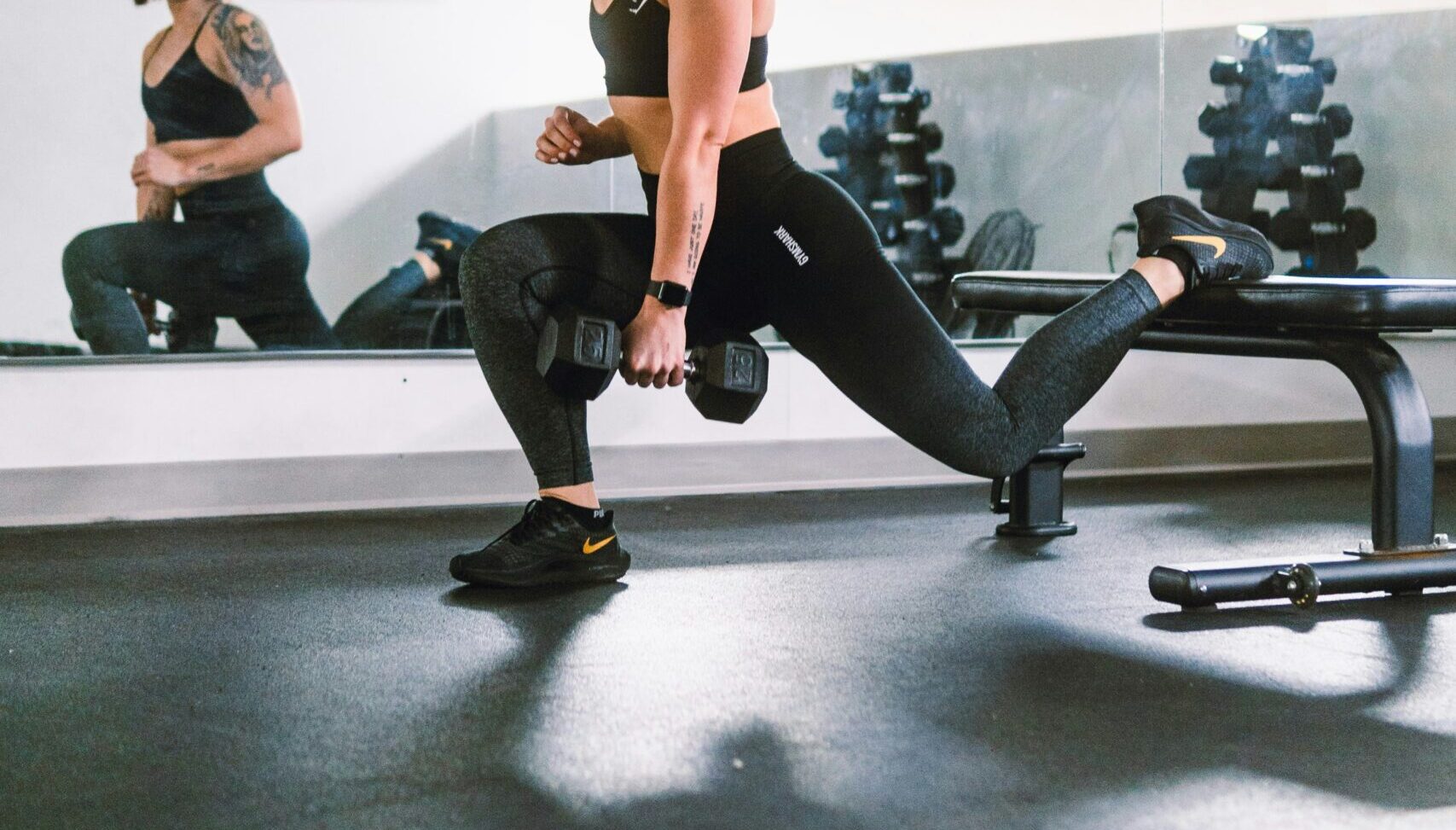
Exercising can help burn calories, supporting the calorie deficit that drives fat loss, and it builds muscle, improving body composition and the overall shape of your lower body. Here are some exercises you can try, which we’ll explain below
| Exercise | Primary Target | Equipment Needed | Reps / Hold |
| Cardio exercises | Whole body composition | None | ~150 minutes a week |
| Sumo squats | Adductors, glutes | Optional dumbbells | 12-15 reps |
| Lateral lunges | Adductors, quads | Body weight or dumbbells | 10-12 reps each side |
| Wall sits | Quads, inner thighs | None | 30-60 sec hold |
| Side-lying leg lifts | Adductors (bottom leg variation) | None | 15-20 reps each side |
| Resistance band adductions | Adductors | Resistance band | 15 reps each side |
| Curtsy lunges | Adductors, glutes | Body weight or dumbbells | 10-12 reps each side |
Cardiovascular Inner Thigh Exercises
Cardio can support overall energy expenditure and can be especially effective for reducing subcutaneous fat. Here’s what you can try:
- Walking – brisk walking engages the inner thigh muscles and can help you burn lots of calories
- Running or jogging – higher intensity means more calories burned per session
- Cycling – excellent for engaging the thighs with lower joint impact
- Swimming – a full-body exercise that activates the inner and outer thighs through the kicking motion
- HIIT (High-Intensity Interval Training) – alternating high-effort bursts with recovery periods.
It is recommended to aim for around 150 minutes of moderate cardio per week, combined with structured strength training sessions, adjusted based on your physical condition.
Sumo Squats
- Stand with your feet wider than shoulder width, toes slightly turned outward.
- Lower into a squat. Keep your chest upright and the knees bent in line with your toes.
- As you return to the starting position, push through your heels and squeeze your inner thighs and glutes.
Lateral Lunges
- From a standing position with your feet together, step one leg wide to the side with that leg bent and your opposite leg straight.
- Push your hips back and lower them until your bent knee reaches roughly 90 degrees.
- Move back to the starting position.
- Repeat on both sides.
Wall Sits
- Stand with your back flat against a wall.
- Slide down until your knees are bent to a 90-degree angle.
- Hold the position for 30-60 seconds.
Side-Lying Leg Lifts
- Lie on your side with your arm on the floor or under your head for support.
- While the bottom leg stays on the mat, lift the top leg toward the ceiling. Keep your core engaged.
- Lower the leg.
- Repeat on the other side.
Resistance Band Adductions
- Secure a resistance band around a fixed anchor at ankle height.
- Stand sideways to the anchor point, loop the band around your outer ankle, and pull your leg across your body toward the opposite leg.
Curtsy Lunges
- From a standing position, step one foot diagonally behind the other, as if performing a curtsy.
- Lower your knees toward the floor.
- Repeat on the other side.
Lifestyle Factors
Here are the factors that you should pay attention to while trying to lose fat:
- Sleep: lack of quality sleep can increase hunger, studies show, because ghrelin levels increase, triggering hunger and reducing energy expenditure; it has also been confirmed that lack of quality sleep can cause less fat loss and more fat-free mass loss.
- Stress management: chronically elevated cortisol levels can interfere with fat loss; try meditation and other stress management and mental health techniques to support your fat loss journey.
- Sedentary behavior: if your daily routine involves long periods of sitting, try to move more throughout the day; take standing breaks, go for a short walk, take the stairs instead of the elevator.
- Alcohol intake: alcohol has lots of calories and no nutritional value; it also disrupts sleep quality, and it can promote fat storage; try to reduce its consumption, even moderately.

How Long Does It Take to See Results?
Generally, with a sustained calorie deficit and a consistent exercise routine, most people can expect to notice changes in inner thigh fat storage and overall body composition within 4-8 weeks. That said, how quickly you’ll notice results depends on your starting points, genetics, age, consistency, and overall body composition.
T-Shape 2: A Professional Non-Invasive Method for Losing Thigh Fat
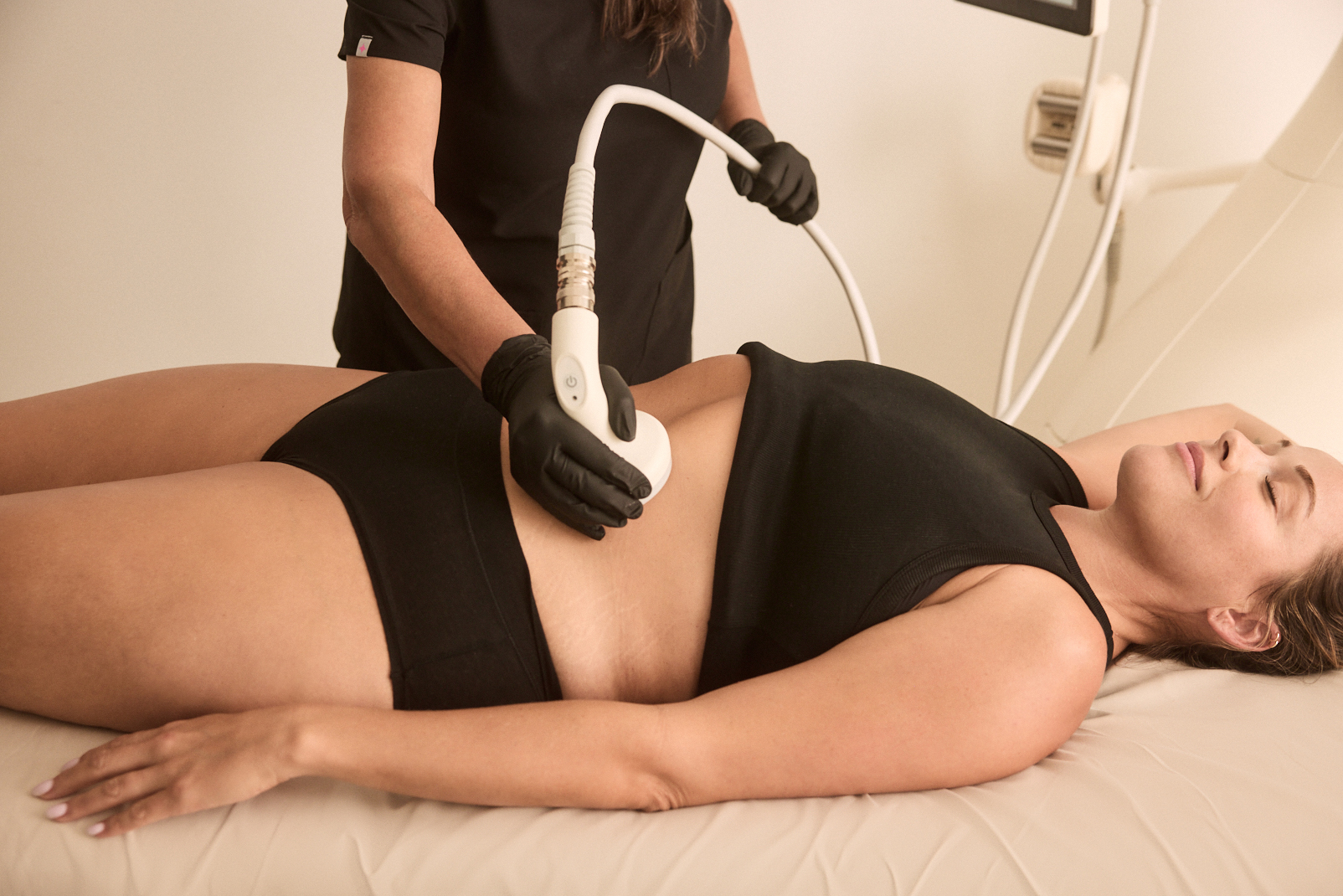
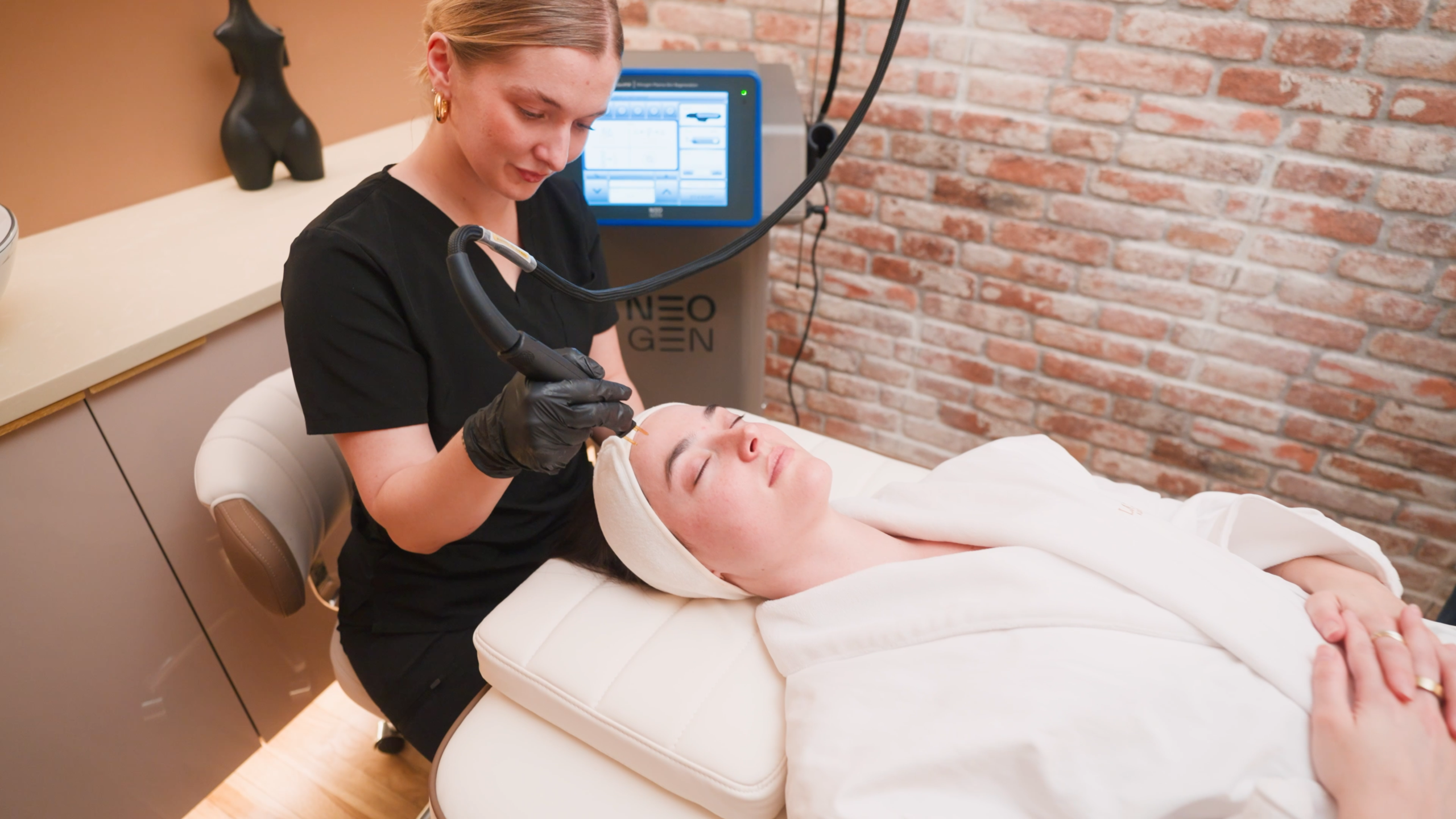
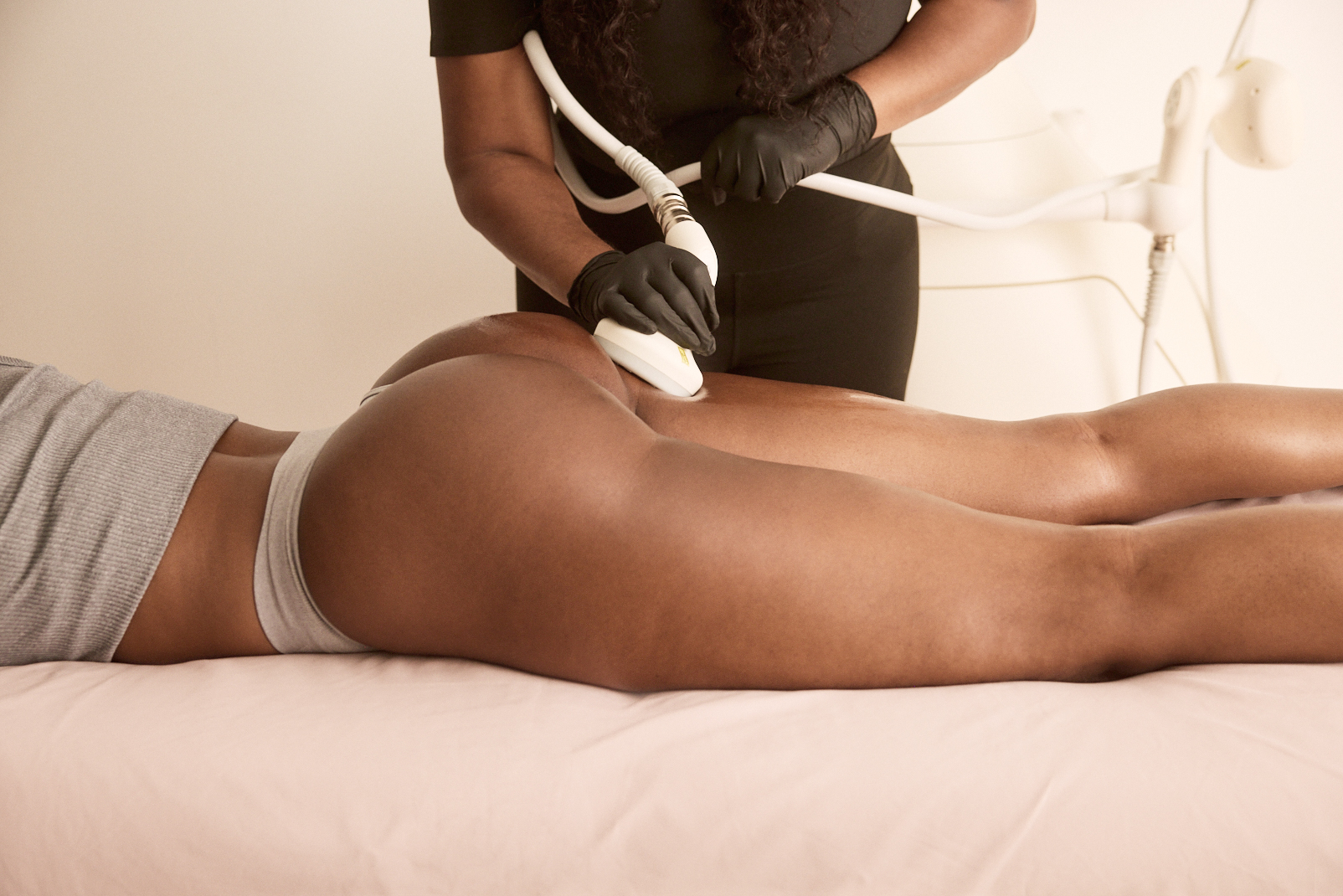
If you have committed to diet changes and regular exercise, but still find it difficult to get rid of inner thigh fat or simply want a bit of exterior help, you can try T-Shape 2, a non-invasive body sculpting device that can help with thigh toning and thigh contouring, as well as help reduce cellulite and promote lymphatic drainage.
T-Shape 2 is a professional body contouring device that combines four technologies:
- Bipolar radiofrequency, which can help boost collagen (which is important for skin health) and firm the skin
- Low-Level Laser Therapy (LLLT), which can help sculpt the thighs and improve metabolism
- Endodermic massage with suction, which can help improve lymphatic drainage and smooth dimpling
- Mesospheric activation, which can help tone underlying muscles, improve overall skin health, and promote circulation in the thighs
Can T-Shape 2 Complement Exercise and Diet for Losing Inner Thigh Fat?
T-Shape 2 is not a replacement for a healthy diet and physical activity. But it can complement them and help achieve better results.
Diet and exercise reduce overall body fat and build lean muscle in the inner thigh muscles. T-Shape 2, however, addresses the localised, stubborn fat deposits that are disproportionately resistant to those efforts. Simultaneously, it works on skin quality so that results look as refined as possible.
What to Expect from T-Shape 2 Procedures
T-Shape 2 procedures are not painful – they feel like a warm massage. They require no recovery time.
Results vary by individual. Most people notice visible improvements after several sessions, with optimal outcomes typically appearing after a course of treatments over a few weeks. Collagen remodeling that is triggered by the radiofrequency component continues for months, which helps tighten skin.
It’s important to maintain the results through continued attention to diet, exercise, and physical activity.
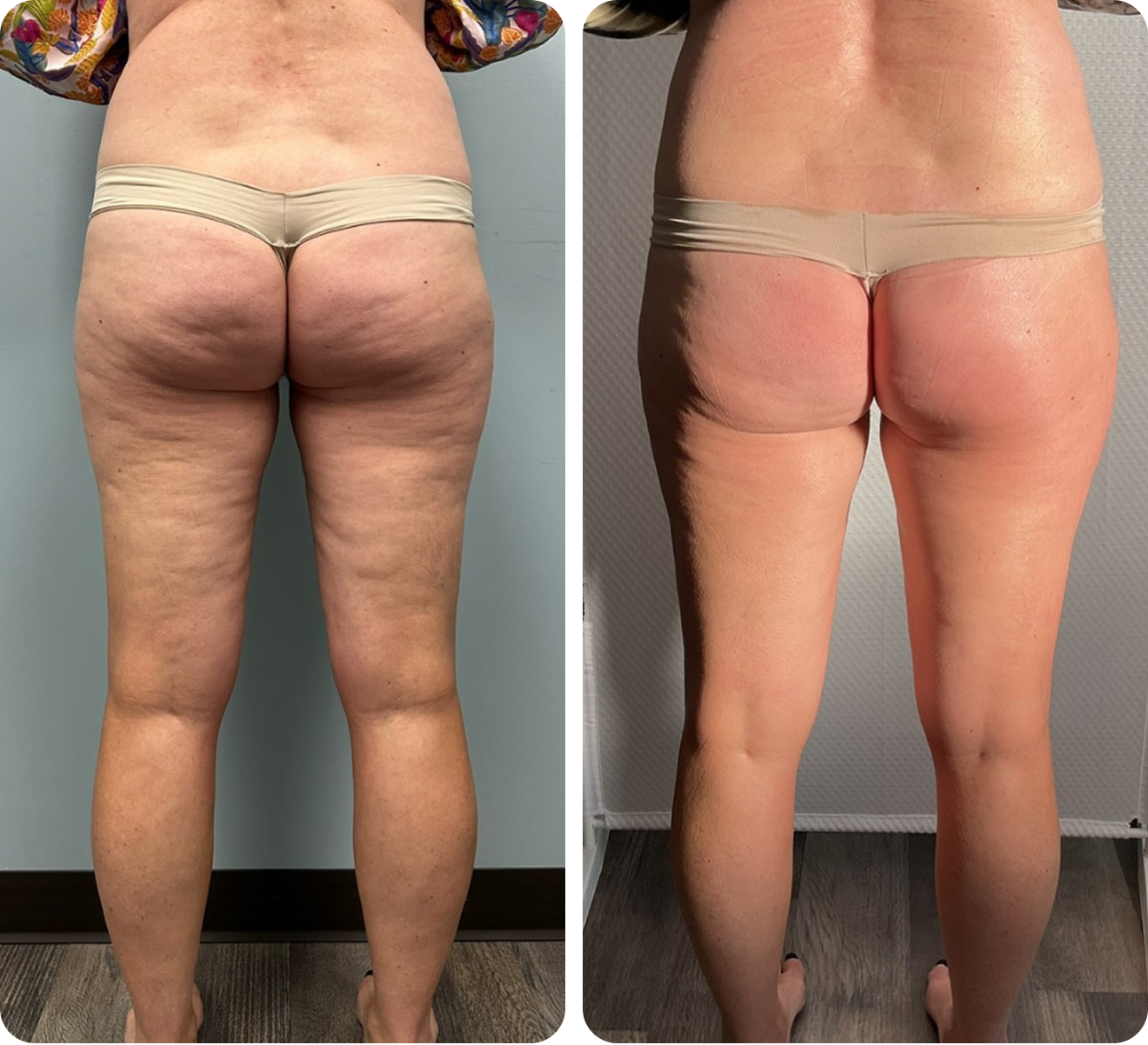
Before and after 3 cellulite treatments on the buttocks and legs with T-Shape 2.
T-Shape 2 is generally considered suitable for people who are near their goal body weight but have areas, like the inner thigh area, that are resistant to further change through lifestyle alone. If you are experiencing mild swelling, skin laxity, or visible cellulite on the inner thighs, it may be worth talking to a practitioner about whether this treatment is suitable for you.
Surgical Options to Get Rid of Inner Thigh Fat
In some cases, a healthcare professional might recommend surgical procedures for inner thigh fat removal. These might include thigh liposuction, which physically removes fat cells, or a thigh lift surgery, which can address both excess fat and excess skin.
If you think one of these might be your best option, talk to an experienced healthcare professional who can assess whether a surgical solution might indeed suit you.
Myths About Inner Thigh Fat
Myth: You can spot reduce with the right exercises.
Reality: As discussed above, this is not supported by the bulk of scientific evidence. Inner thigh exercises build and tone the inner thigh muscles, which is valuable indeed. But overall calorie deficit drives fat loss from the body as a whole.
Myth: Cardio is enough.
Reality: Cardio burns calories and supports fat loss, but without strength training, you risk losing muscle alongside fat. Preserving and building thigh muscles is important for both appearance and metabolic rate.
Myth: If you’re genetically predisposed, nothing will work.
Reality: Being genetically predisposed to carry extra weight in the inner thighs means it may be harder to change that area, and it may be the last area to respond. It does not mean that change is impossible. Consistent effort with the right strategy can produce real results. It may just take longer.
Myth: Thigh gap is the goal.
Reality: Thigh gap is largely a function of bone structure, not just body fat percentage. Try to aim for toned legs and improved body composition.
Myth: Losing weight fast will lead to faster fat reduction results.
Reality: Very rapid weight loss tends to result in muscle loss alongside fat. It can also leave loose skin in the inner thigh area. A gradual, sustainable weight loss produces better body composition outcomes.
When to Talk to a Healthcare Professional
If inner thigh fat accumulation is accompanied by rapid weight gain, leg pain, irregular periods, severe fatigue, swelling, or other unexplained symptoms, it may be worth speaking to a healthcare professional. Conditions such as PCOS, thyroid disorders, hormonal imbalances, or lipedema can influence fat distribution and body composition.
FAQs
How to get rid of upper inner thigh fat?
You cannot specifically target upper inner thigh fat with exercises alone. The most effective approach is reducing overall body fat through a calorie deficit, regular cardio, strength training, and consistent lifestyle habits. Lower-body exercises like sumo squats, lunges, and resistance band adductions can help tone the inner thigh muscles as body fat decreases. You can also try professional body sculpting procedures like T-Shape 2.
How to get rid of inner thigh fat fast?
There is no safe way to lose inner thigh fat extremely fast. Sustainable fat loss usually comes from combining a moderate calorie deficit, regular exercise, strength training, adequate sleep, and stress management. Rapid weight loss methods often lead to muscle loss and are difficult to maintain.
How to get rid of inner thigh fat pockets?
Inner thigh fat pockets are usually stubborn pockets of fat influenced by genetics and hormones. Since spot reduction is not possible, focus on overall fat loss through nutrition and exercise. Some people also explore non-invasive body contouring treatments for areas resistant to lifestyle changes.
How to get rid of stubborn inner thigh fat?
Stubborn inner thigh fat often requires long-term consistency with a balanced diet, cardio, strength training, and healthy lifestyle habits. Because the inner thighs are a genetically common fat-storage area, results may take longer to appear there compared to other parts of the body. Building inner thigh muscles can also improve leg definition as fat decreases.
Why is it so hard to get rid of inner thigh fat?
Inner thigh fat can be difficult to lose because fat distribution is heavily influenced by genetics, hormones, age, and sex. The body also decides where fat is lost first. For many people, it takes more time to achieve lean legs. Hormonal changes, sedentary habits, and muscle loss with age can make the process even slower.