Saggy cheeks are one of the most common aesthetic concerns people are noticing as they get older. They’re particularly unpleasant because they can affect the overall facial appearance and symmetry. This aging symptom is usually caused by several processes, including a loss of structural proteins, a redistribution of fat, and a gradual weakening of the foundation that holds the skin in place.
Saggy cheeks are undoubtedly a natural part of aging, and everyone gets them at some point. But if you do want to delay their formation or, if you’ve already got them, improve their appearance, there are some methods you can try both at home and at a medspa. But first, let us explain what exactly saggy cheeks are and what causes them.
Disclaimer: This article is provided for informational and educational purposes only. The information presented here is not a substitute for professional medical evaluation, consultation, or care and should not be relied upon to make health-related decisions. Always consult a qualified and licensed medical or aesthetic professional before undergoing any cosmetic or aesthetic procedure.
Key Points about Saggy Cheeks
- What they are: downward sagging of mid-face skin and fat → flatter cheeks, deeper folds, early jowls
- Main causes: collagen + elastin loss, fat pad shrinkage/shift, bone changes, muscle weakening
- What makes them worse: sun exposure, smoking, rapid weight loss, poor diet, dehydration, genetics
- Common signs: loss of cheek volume, heavier lower face, deeper nasolabial folds, softer jawline
- Prevention: daily SPF, good nutrition (protein + vitamin C), hydration, no smoking
- Treatment: skincare (retinoids, vitamin C), RF treatments, microneedling, dermal fillers, biostimulatory injectables, thread lifts, laser, RF devices, or surgical facelift
What Are Saggy Cheeks?
Saggy cheeks are also referred to as droopy cheeks. They manifest as a downward shifting of the skin and soft tissue in the mid-face area. The cheeks basically lose their rounded appearance and begin to look flat or heavy. You may also notice deepening folds around the nose and mouth, a less defined jawline, or jowls forming at the sides of the chin.
This is a normal part of the aging process. Most people start noticing changes in their cheek area from their early 30s onward, though the pace varies from person to person. Genetics, lifestyle, and environment can influence this process, either speeding it up or slowing it down.
Why Do Cheeks Sag?
Facial skin sags because of multiple changes happening simultaneously in the deeper layers of the skin and the structures beneath it. Here’s what science tells us.
Loss of Collagen and Elastin
Collagen and elastin are the two proteins responsible for keeping your skin firm and springy. Collagen acts as a structural scaffold, giving the skin its shape and strength. Elastin allows the skin to snap back into place after being stretched.
Your body produces less collagen from your mid-20s onward. Its production declines naturally by about 1% each year. Elastin, on the other hand, is produced in high amounts only up to your teen years, after which it declines significantly. So, as collagen and elastin decline, the skin becomes thinner, less elastic, and more prone to drooping.
Fat Pad Deflation and Descent
Beneath your skin, your face contains distinct pockets of fat, known as fat pads. These fat pads give the cheeks their youthful fullness and structure. With age, these fat pads shrink and, in some areas, shift position.
Changes in Bone Structure and Facial Muscles
The bones of the face also change with age. The cheekbones can lose projection and density, reducing the structural support for the facial tissues above. At the same time, facial muscles weaken over time, contributing to reduced muscle tone and less support for the overlying skin.

External and Lifestyle Factors
Beyond the natural aging process, several lifestyle factors can accelerate facial sagging:
| Factor | Explanation |
| Excessive sun exposure | UV radiation breaks down collagen and elastin at an accelerated rate, making sun exposure one of the biggest contributors to premature sagging |
| Smoking | Smoking restricts blood flow to the skin and generates free radicals that damage collagen and elastin directly. |
| Rapid weight loss | Losing facial fat quickly can leave the skin without adequate volume support, causing it to appear loose and droopy. |
| Poor diet and dehydration | A diet low in antioxidants, vitamins C and E, and healthy fats can impair the skin’s ability to maintain good skin quality. |
| Genetics | Genetics play a crucial role in how our cheeks age, with family history influencing the structure and strength of skin and the distribution of facial fat. |
| Pollution | Pollution can contribute to oxidative stress that affects overall skin health. |
Visible Signs of Saggy Cheeks
Not sure whether what you’re seeing qualifies as saggy cheeks? Here are the most common signs to look out for:
- Your cheeks look flatter or less full than they used to.
- You notice heaviness or drooping around the corners of your mouth.
- Nasolabial folds (the lines running from the nose to the mouth) have deepened.
- The jawline looks less defined, with jowls beginning to form.
- Skin texture in the cheek area feels thinner or looser.
- Your face looks tired or older than you feel.
Can You Prevent Saggy Cheeks?
Prevention won’t stop the biological clock, but it can slow down the process significantly. Here are the most evidence-supported habits for protecting skin elasticity and maintaining a youthful appearance:
- Wear broad-spectrum sunscreen daily. Apply a broad-spectrum sunscreen with both UVA and UVB protection every morning, even on cloudy days. Protecting your skin from sun exposure is one of the most impactful things you can do.
- Quit smoking. The link between smoking and accelerated facial aging is well-established. Quitting at any age can help slow skin deterioration.
- Eat for collagen support. Foods rich in vitamin C (such as citrus, bell peppers, and broccoli) support collagen production. Lean proteins, zinc, and copper also play a role.
- Stay hydrated. Proper hydration supports skin health and helps maintain skin texture and plumpness.
- Use collagen-supporting skincare products. Look for formulations that include retinoids, peptides, and vitamin C, which can promote collagen production over time.
- Sleep on your back. Sleeping on your side can compress the cheek area repeatedly over the years, potentially contributing to earlier sagging.
- Exercise regularly. General exercise supports circulation, which helps maintain skin health overall.
Treating Saggy Cheeks: An Overview of Your Options
If prevention isn’t enough or if sagging has already progressed, there is a wide range of professional treatments available. These span from entirely non-invasive options to surgical procedures, depending on the severity of the sagging and your personal goals.
Here’s a quick overview of the most commonly recommended procedures for saggy cheeks:
| Treatment Type | Examples | Downtime | Longevity |
| Non-invasive devices | T-Shape 2, Neogen, RF therapy | Minimal to none | Months to 2 years |
| Injectable treatments | Dermal fillers with hyaluronic acid; biostimulatory injectables | Minimal | 6-24 months |
| Thread lifts | PDO threads, Silhouette Soft | 1-3 days | 12-24 months |
| Fat transfer | Autologous fat grafting | 1-2 weeks | Long-lasting |
| Surgical facelift | Full or mini facelift, neck lift | 1-3 weeks | 5-10+ years |
The right approach depends on how much sagging you’re dealing with, your recovery tolerance, and your budget.

How to Fix Saggy Cheeks: Non-Surgical Treatments
Non-surgical treatments have become increasingly popular for people who want visible improvement without the risks or recovery of surgery. They tend to work best for mild to moderate sagging cheeks and are often combined for better results.
As such, here are some commonly recommended cosmetic procedures to treat sagging cheeks.
Dermal Fillers
Dermal fillers are most commonly made from hyaluronic acid. They are gel-like injectable treatments that restore lost volume in the cheek area. When injected into the mid-face, they can help lift sagging areas, smooth deep folds, and restore a more defined youthful contour.
Your body produces hyaluronic acid naturally, though its production slows down with age. Hyaluronic acid attracts and retains water in the tissue and thus creates a plumped appearance that looks natural, which is why it’s so often used in dermal fillers.
A cheek filler treatment typically takes less than an hour. Results are visible immediately. Minor swelling is normal and usually subsides within a few days.
Results from dermal fillers typically last between 6 and 18 months, depending on the specific product used, the practitioner’s technique, and individual lifestyle factors.
It is worth noting that fillers can address volume loss but do not tighten excess skin. If you have more pronounced laxity, you can ask your practitioner if you can combine fillers with a skin-tightening technology.
Biostimulatory Injectables
Biostimulatory injectables are not the same as dermal fillers. They do not add immediate volume. Instead, they stimulate your body to produce more of its own collagen over time. Biostimulatory injectables might be a good option for saggy cheeks if they’re caused primarily by structural volume loss and skin thinning.
Because results build progressively over several months, the outcome often looks subtle and natural. They can last up to two years or longer in some cases, depending on the product used and individual response. Many practitioners also combine them with energy-based treatments like RF microneedling or radiofrequency skin tightening for a more comprehensive rejuvenation plan.
RF Microneedling
RF microneedling combines microneedling with radiofrequency energy. Ultra-fine needles create controlled micro-injuries in the skin. At the same time, they deliver heat into the deeper dermis, where collagen and elastin production occurs. This can help improve skin firmness, texture, and mild to moderate laxity in the cheek area.
For saggy cheeks, RF microneedling may help by tightening crepey or thinning skin and improving support in the mid-face. It is often considered when someone has early-stage sagging but does not yet need a more aggressive lifting treatment.
Results develop gradually as collagen remodeling occurs over several weeks to months. Most people need a series of treatments, often three or more sessions, for the best results. Mild redness and swelling are common for a few days after treatment. Results can last a year or longer, especially with maintenance sessions.
T-Shape 2: Multi-Technology Facial Rejuvenation
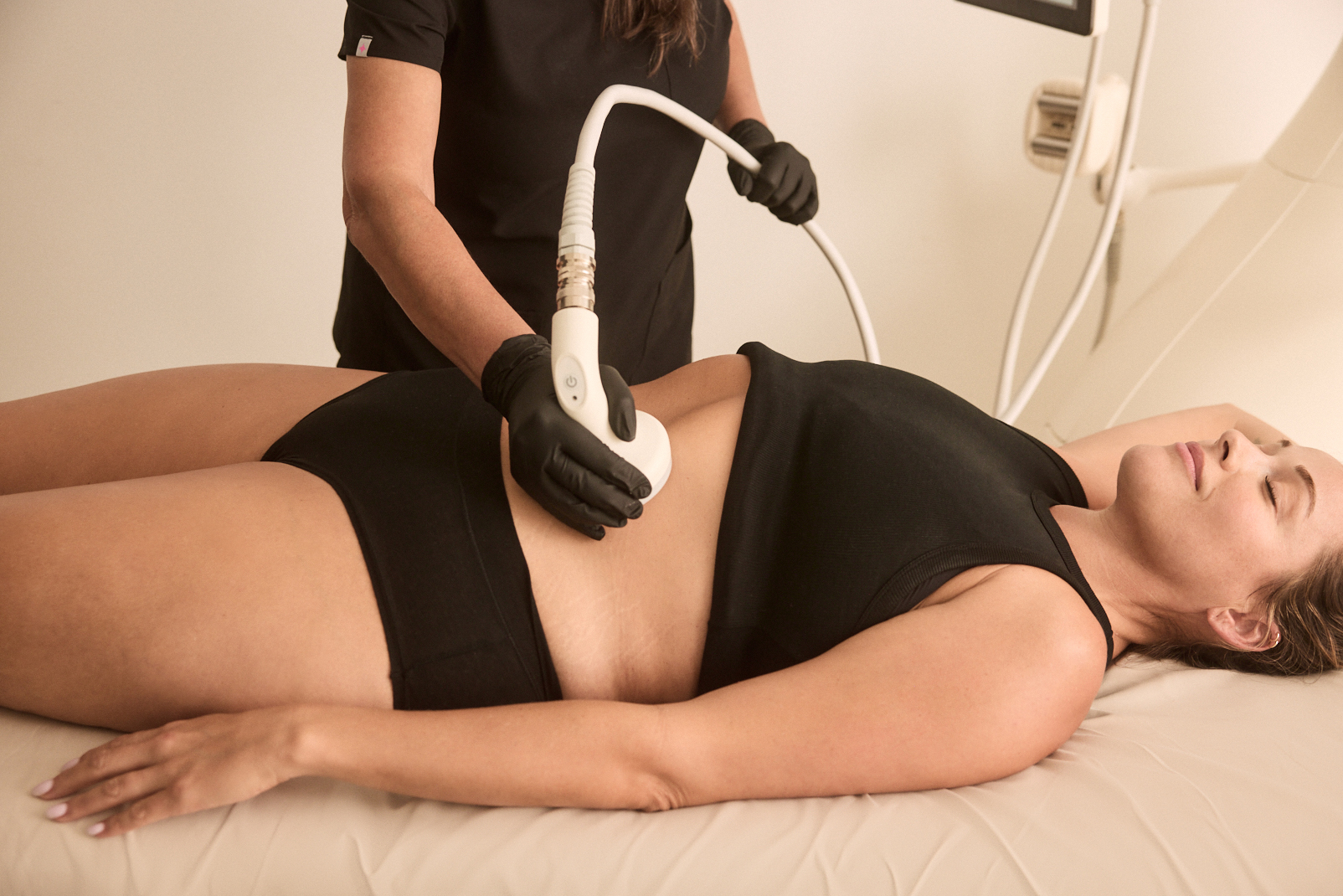
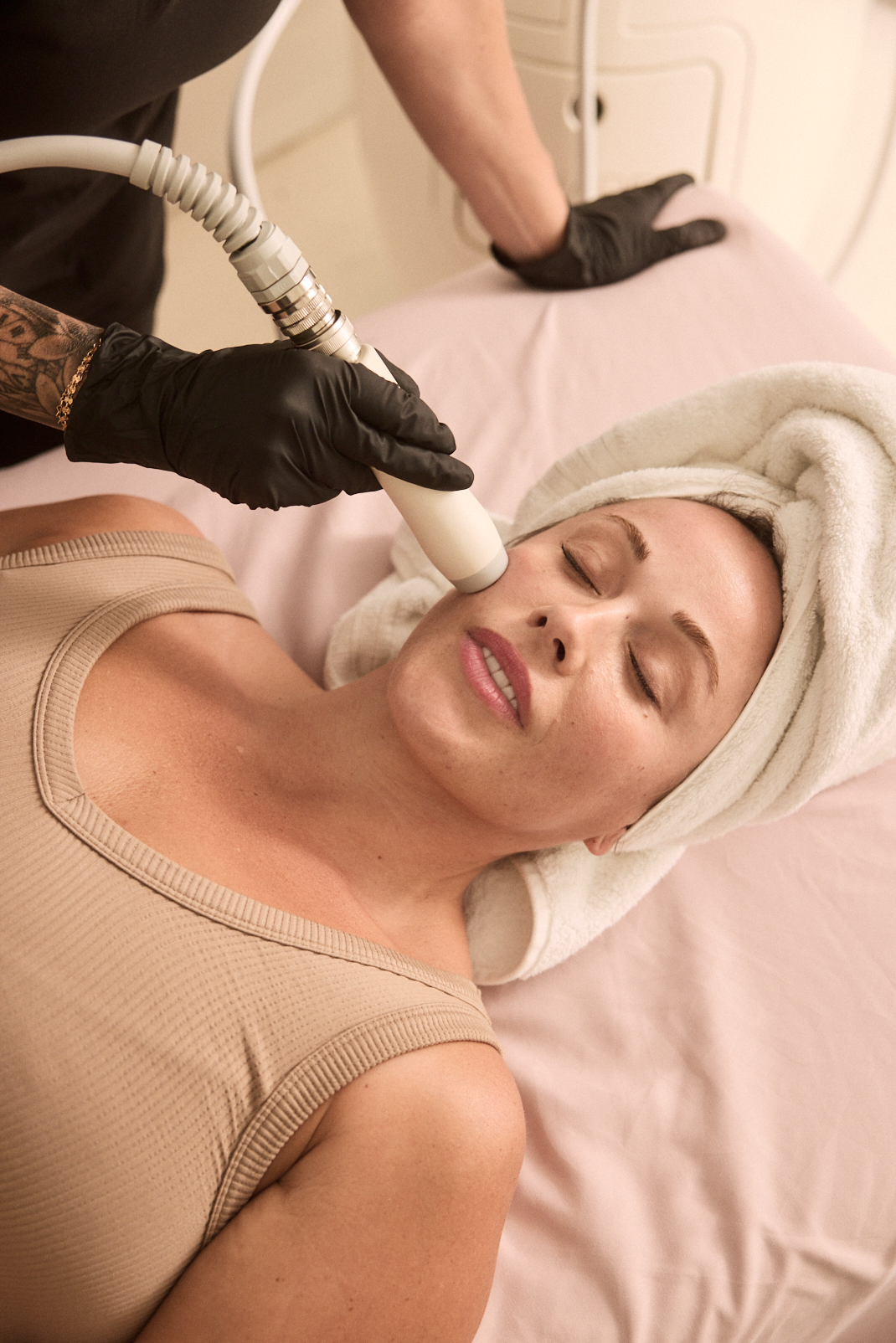
The T-Shape 2 combines four technologies in a single platform, making it one of the more comprehensive non-surgical options available for both the face and body:
- Bipolar Radiofrequency (RF): triggers collagen and elastin production, delivering a gradual firming and skin tightening effect
- Low-Level Laser Therapy (LLLT): supports metabolism
- Endodermic Massage with Suction: boosts circulation and lymphatic drainage to reduce puffiness and support firmer skin
- Mesospheric Activation: enhances the delivery of active ingredients into the skin for deeper absorption and helps tone underlying muscles
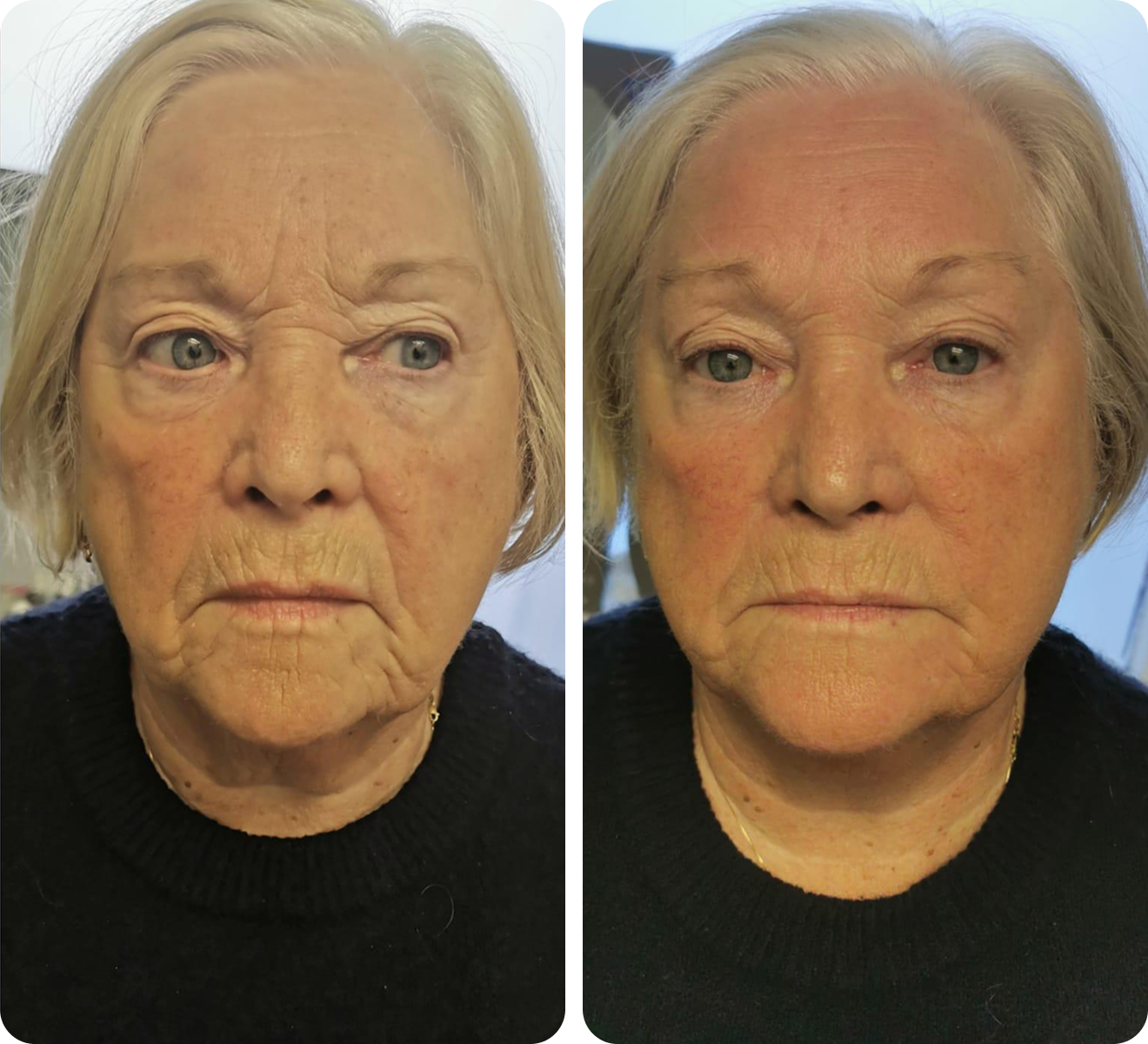
Before and after T-Shape 2.
For saggy cheeks specifically, the bipolar RF component heats the dermis and facial tissues, encouraging natural collagen production in the treated area. The endodermic massage with suction and mesospheric activation components can also help improve overall facial contours. Sessions typically take less than an hour and are described by clients as warm and comfortable, similar to a massage.
Thread Lifts
Thread lifts imply the use of fine, dissolvable threads that are inserted beneath the skin. They can lift sagging skin physically and dissolve over time.
The threads also trigger a wound-healing response in the skin. This can help stimulate collagen production around the thread. In other words, results continue to improve for several months after the procedure, as new natural collagen forms around the suture.
Thread lifts might be a good option for people who want a non-surgical cheek lift with natural-looking results and minimal downtime. Most clients return to normal activities within a few days. Some redness and mild swelling are typical immediately after, though. Results can last 12–24 months.
Radiofrequency Skin Tightening
Radiofrequency (RF) technology delivers controlled heat energy into the deeper layers of the skin. That heat energy triggers the contraction of existing collagen fibers and encourages the production of new ones. The result is gradual skin tightening and improved skin elasticity over several weeks.
RF treatments are non-invasive, comfortable for most patients, and require no recovery time. They can be particularly effective for mild to moderate sagging skin. Results build progressively with multiple treatments.
Laser Therapy
Laser therapy uses focused light energy. It aims to resurface the skin and stimulate collagen remodeling. Depending on the type of laser, ablative or non-ablative, downtime can range from a few days to a couple of weeks. Laser treatments can improve skin texture, reduce fine lines and wrinkles, and contribute to a firmer facial appearance overall.
Nitrogen Plasma Technology
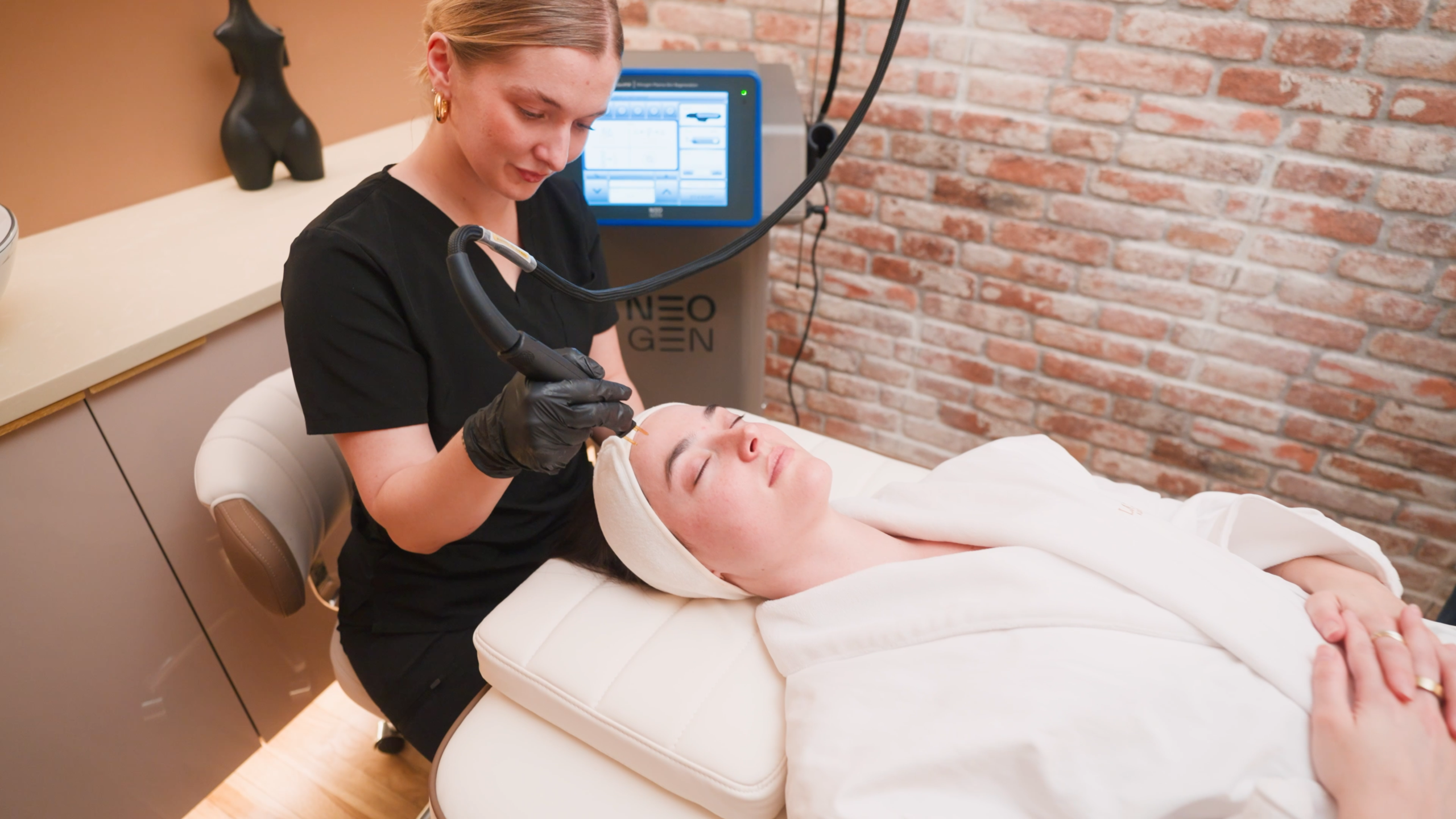
Nitrogen plasma skin regeneration (Neogen) uses nitrogen plasma technology. The machine delivers controlled thermal energy into the skin. It works across the full skin architecture rather than just a fraction of it.
This makes it different from fractional lasers or standard RF devices, which treat only a portion of the tissue at a time. It also means that Neogen doesn’t create an open wound and has less downtime compared to CO2 lasers, all while delivering similar results. Neogen basically preserves the outer layer of the skin, which acts as a natural dressing while the new, regenerated skin forms underneath.
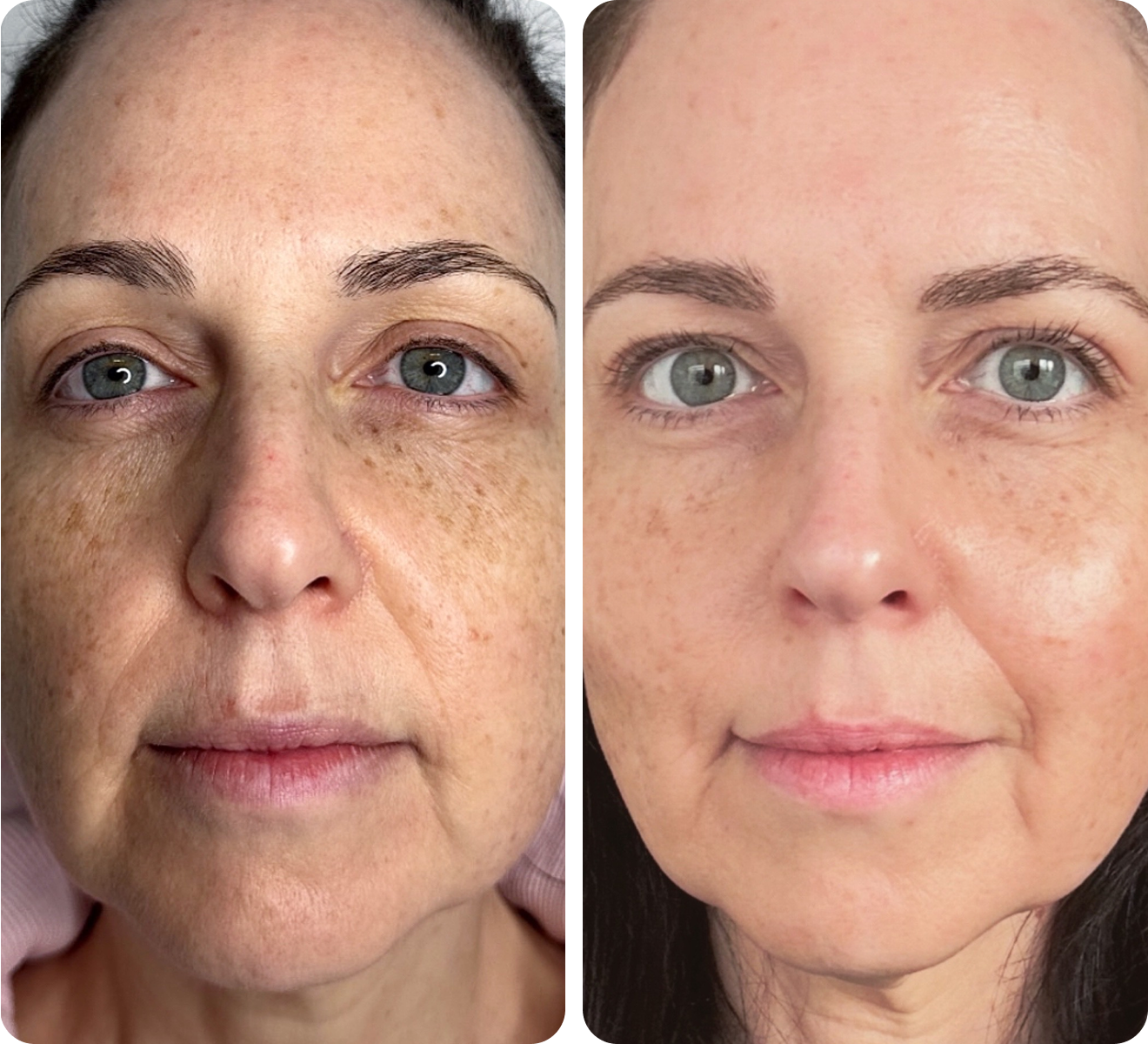
2 Weeks after 1 medium energy treatment with Neogen. Courtesy of Plasmatology.
Neogen is tailorable. This means that practitioners can adjust the energy level and number of pulses based on the patient’s skin concerns and downtime preferences. Because of this, it can function as a “lunchtime” treatment at lower energies or as a more intensive intervention for clients with more significant excess skin. Downtime ranges from 1 to 10 days, depending on the energy level used.
How to Get Rid of Saggy Cheeks: Surgical Treatments
For more advanced sagging cheeks, particularly where there is significant excess skin or major facial volume loss, non-surgical options may not deliver the degree of change the patient is looking for. In those cases, surgical procedures might offer more comprehensive and longer-lasting results. These might include:
- Mini facelifts
- Full facelifts
- Neck lifts
- Fat transfer
Regardless of whether you want to try a surgical or non-surgical procedure, talk to a professional before deciding anything.
How to Choose the Right Treatment for Your Saggy Cheeks
Consider these factors before assessing whether a specific procedure might work for the saggy skin on the cheeks:
- Severity of sagging -> mild sagging responds well to non-surgical treatments like dermal fillers, RF devices, T-Shape 2, and Neogen.
- Age and skin condition -> younger people with good skin quality may see excellent results from non-invasive technologies and injectable treatments. Older people or those with more significant excess skin may benefit more from surgical correction.
- Recovery tolerance -> if downtime isn’t an option, try T-Shape 2 or dermal fillers, as they offer minimal downtime with natural-looking results.
- Budget -> non-surgical approaches are generally less expensive upfront, though they require maintenance treatments over time.
A consultation with a qualified practitioner at a reputable cosmetic skin clinic is always the recommended first step in your treatment journey.
Do Facial Exercises Help With Saggy Cheeks?
Facial exercises, sometimes called face yoga, may help strengthen underlying facial muscles and improve circulation, which could create a mild improvement in muscle tone or facial appearance for some people. That said, facial exercises are unlikely to reverse significant sagging caused by collagen loss, fat pad descent, or excess skin. At best, they may offer subtle support and are generally considered complementary rather than a substitute for professional treatments.
Common exercises you can try include:
- Cheek lifts: smile without showing teeth, lift the cheeks upward, hold for several seconds, and repeat.
- Fish face exercise: suck in your cheeks and lips, hold the position, then release.
- Cheek puff exercise: fill the mouth with air and shift it from side to side to engage cheek muscles.
FAQs
How do I lift my cheeks naturally?
You may be able to address saggy cheeks naturally, though results are usually subtle. Here’s what you can try to lift your cheeks naturally:
- Apply daily sunscreen to protect collagen from further breakdown.
- Use skincare ingredients like retinoids and peptides to support firmer-looking skin over time.
- Stay hydrated, eat a nutrient-rich diet, avoid smoking, and maintain a stable weight to support skin quality.
- Try facial exercises to improve muscle tone, though evidence for significant lifting is limited.
Natural methods can help support prevention and mild improvement, but they are unlikely to lift moderate or advanced sagging cheeks dramatically.
Why do cheeks sag with age?
Cheeks sag with age because the structures that support the face weaken over time. Collagen and elastin decline, so the skin becomes thinner and less elastic. Facial fat pads can also shrink and shift downward, reducing cheek volume and causing tissue descent. Changes in bone structure also reduce support for the mid-face. Plus, external factors like sun damage, smoking, genetics, and rapid weight loss can speed up the process.
What do sagging cheeks look like?
Sagging cheeks often look flatter, lower, or heavier than they used to. The cheeks may lose their rounded, lifted appearance and begin to droop toward the lower face. Common signs include deeper nasolabial folds, reduced cheekbone definition, early jowls, and a softer jawline. Some people also notice loose or crepey skin in the mid-face and an overall tired or aged facial appearance.