Laser skin tightening uses controlled heat to promote collagen and elastin production: two proteins that keep the skin firm and plump. This procedure can gradually restore firmness and help achieve a more youthful appearance.
If you want to learn more about skin-tightening laser procedures, keep reading. This guide covers everything you need to know about it before choosing to implement it into your beauty routine.
Disclaimer: This article is provided for informational and educational purposes only. The information presented here is not a substitute for professional medical evaluation, consultation, or care and should not be relied upon to make health-related decisions. Always consult a qualified and licensed medical or aesthetic professional before undergoing any cosmetic or aesthetic procedure.
What Is Skin Tightening Laser?
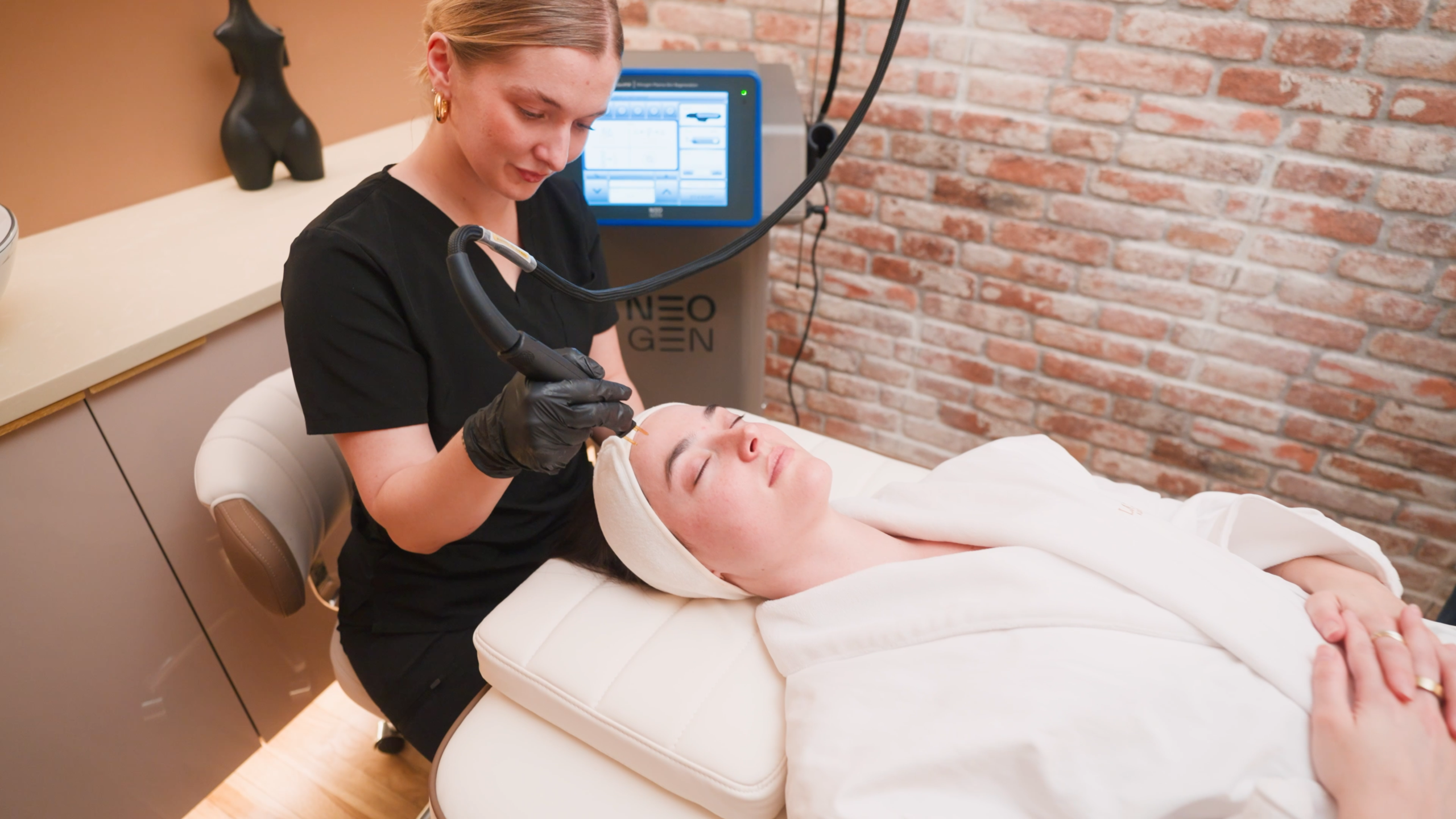
Laser skin-tightening is a non-surgical skin rejuvenation procedure. It uses focused heat energy to penetrate the deeper layers of skin and trigger your body’s natural healing process.
According to David Shafer, MD, this is basically creating a tiny, controlled wound, which prompts your skin to start producing more collagen and elastin as it heals.
Laser skin resurfacing has become more and more popular in recent years, mainly because:
- Sessions are usually short; they only take around 45 minutes; between 2-6 sessions are usually recommended for non-ablative laser, spaced out a month; one sessions of ablative laser is usually enough
- The laser can treat skin on multiple body parts, including the face, neck, jawline, abdomen, thighs, upper arms, and knees.
- Most clinics use FDA-cleared devices.
- Non-ablative lasers offer minimal downtime and side effects.
When Can You Expect Results from Skin-Tightening Laser?
Here’s a general timeline of what happens after non-surgical skin-tightening laser procedures:
| Phase | What Happens | When to Expect It |
| Immediate | Mild tissue contraction, subtle tightening | Within hours to days |
| Early Results | Visible skin firmness improvement | 2-4 weeks |
| Full Collagen Remodeling | Maximum tightening and texture improvement | 2-6 months |
| Long-Term Results | Benefits visible long-term | 6-12+ months |
| Regular Maintenance | Sustaining optimal results | Every 9-12 months |
The final results are not immediately visible. But you might indeed notice some immediate results, like slight tightening due to initial swelling and collagen contraction. However, full collagen remodeling from laser treatments may take 2 to 6 months. The results develop gradually.
How Long Does Laser Skin Tightening Last?
Skin-tightening laser results can last for 12-36 months, depending on several factors, including:
- Age: younger skin can hold results longer
- Baseline skin quality: damaged skin might not maintain results for longer periods
- Device type
- Lifestyle factors: smoking, sun-damaged skin, and poor nutrition can accelerate collagen breakdown
How Can You Maintain Skin-Tightening Laser Results?
You can adopt a few healthy habits to maintain the results obtained after skin-tightening laser sessions for longer. Here’s what you can do:
- Protect your skin with a broad-spectrum SPF 30+ cream/spray daily, even on cloudy days.
- Book your sessions in autumn or winter. American Board of Cosmetic Surgery states that laser skin resurfacing is best done in autumn. In fact, autumn is considered by many to be the laser season.
- Avoid tanning beds. Don’t get caught in the sun without protection.
- Don’t smoke. It’s bad for collagen production.
- Maintain a consistent skincare regimen. Use retinoids and antioxidants (or other products recommended by your doctor).
- Stay hydrated.
- Eat a diet rich in vitamins C and E.
Who Is a Good Candidate for Laser Skin Tightening?
Ideal candidates for laser skin tightening typically include:
- Adults aged 30-65 with mild to moderate skin laxity
- People with early jowling, slight neck looseness, or crepey texture under the eyes
- People with mild tummy laxity without a lot of excess skin
- People seeking subtle improvement without a long recovery time for cosmetic procedures
- People in their late 20s to early 30s who want to use laser skin tightening as a preventive measure
If you:
- Have severe laxity
- Have experienced major weight loss
- Have pronounced neck “bands” or heavy jowling
- Take certain medications
…laser skin tightening might not be the best choice for you. It is recommended to consult a medical professional to assess the severity of the issue and find the best solution.
Either way, whether you might be a good candidate for skin-tightening laser or not, a personalized medical consultation is mandatory. Your provider will review your medical history, assess your skin condition, and discuss realistic expectations.
How Much Does Laser Skin Tightening Cost?
One session of laser skin-tightening can cost anywhere between $600 and $2,500. The final price depends on the device used by the clinic, as well as on the area and problem that are targeted. Most people need up to six sessions. In general, these are spaced about a month apart. This means a complete laser skin-tightening treatment can set you back anywhere between $3,600 to $15,000.
Types of Skin Tightening Laser Procedures
There are several types of skin-tightening laser procedures, but all of them basically use the same principle.
Many clinics combine multiple technologies (e.g., laser with radiofrequency), so it’s best to confirm the technology used directly with the clinic of your choice.
1. Ablative Laser Skin Tightening
Ablative lasers like CO2 lasers and erbium (Er:YAG) work by removing the outer layers of the skin, creating controlled, targeted thermal injury to the surrounding tissue. Simultaneously, they deliver light energy deep into the dermal layers. As your skin heals, a smoother skin layer grows back in. This process causes immediate collagen contraction and stimulates long-term collagen remodeling.
Ablative methods can be recommended for moderate skin laxity, deep wrinkles and photodamage, as well as acne scars or textural irregularities.
Of all the laser resurfacing options available, this one is believed to deliver the most long-lasting tightening results, but it also comes with a fair bit of downtime – usually 3-8 weeks of healing time, plus several weeks of residual redness. And there’s also a higher risk of infection, scarring, and changes in skin color.
2. Nonablative Laser Skin Tightening
Nonablative laser skin tightening, such as Nd:YAG, is a less aggressive option compared to ablative laser skin-tightening. It also comes with a shorter recovery time.
These devices do heat the dermis. But they do not remove the outer skin layers. They can provide subtle, gradual tightening and have minimal to no downtime. The primary risks include temporary redness or swelling, which should pass quickly.
Nonablative laser skin tightening is usually recommended for people who want to improve the appearance of wrinkles, mild laxity, and minor scars without too much disruption to their daily routine. The good news is that the skin heals much more quickly than it would after an ablative laser procedure.
Special Delivery Methods for Laser Skin Tightening
Laser procedures are also grouped based on the way the heat is delivered to the skin.
Fractional Laser Skin Tightening
Fractional lasers are a delivery method that can be applied to both ablative and nonablative lasers.
According to the American Society for Dermatologic Surgery, fractional lasers deliver microbeams of laser light deep into the lower skin layers. This creates deep columns of tissue coagulation, which activates the body’s healing process and growth of healthy new tissue.
Fractional laser skin tightening can be used for the face, neck, arms, hands, and chest.
Non-Fractional Laser Skin Tightening
Non-fractional or full-field ablative resurfacing aims to treat the entire skin surface in the target area rather than creating microscopic columns like fractional lasers. It can deliver more dramatic results in a single session. But it comes with longer downtime and higher risk of side effects.
Laser Skin Tightening vs Other Procedures
Radiofrequency energy procedures, ultrasound treatments, and other skin-tightening procedures are often presented as types of laser skin-tightening solutions. But even though they also stimulate collagen production, they use completely different technologies. They also impact the skin distinctly.
Here’s a quick comparison between laser skin-tightening and other skin-tightening procedures:
| Procedure Type | Technology / Energy Source | Degree of Tightening | Downtime | Longevity of Results | Best For | Key Limitations |
| Laser Skin Tightening (Ablative & Non-Ablative) | Laser | Mild to High (depends on type) | Minimal to High | 1-3 years | Wrinkles, texture, mild laxity, stretch marks | Pigment risk, downtime for ablative lasers |
(RF) | Low-frequency electromagnetic waves | Mild to Moderate | None to minimal | 1 year | All skin tones, face and body laxity | Results are gradual and modest |
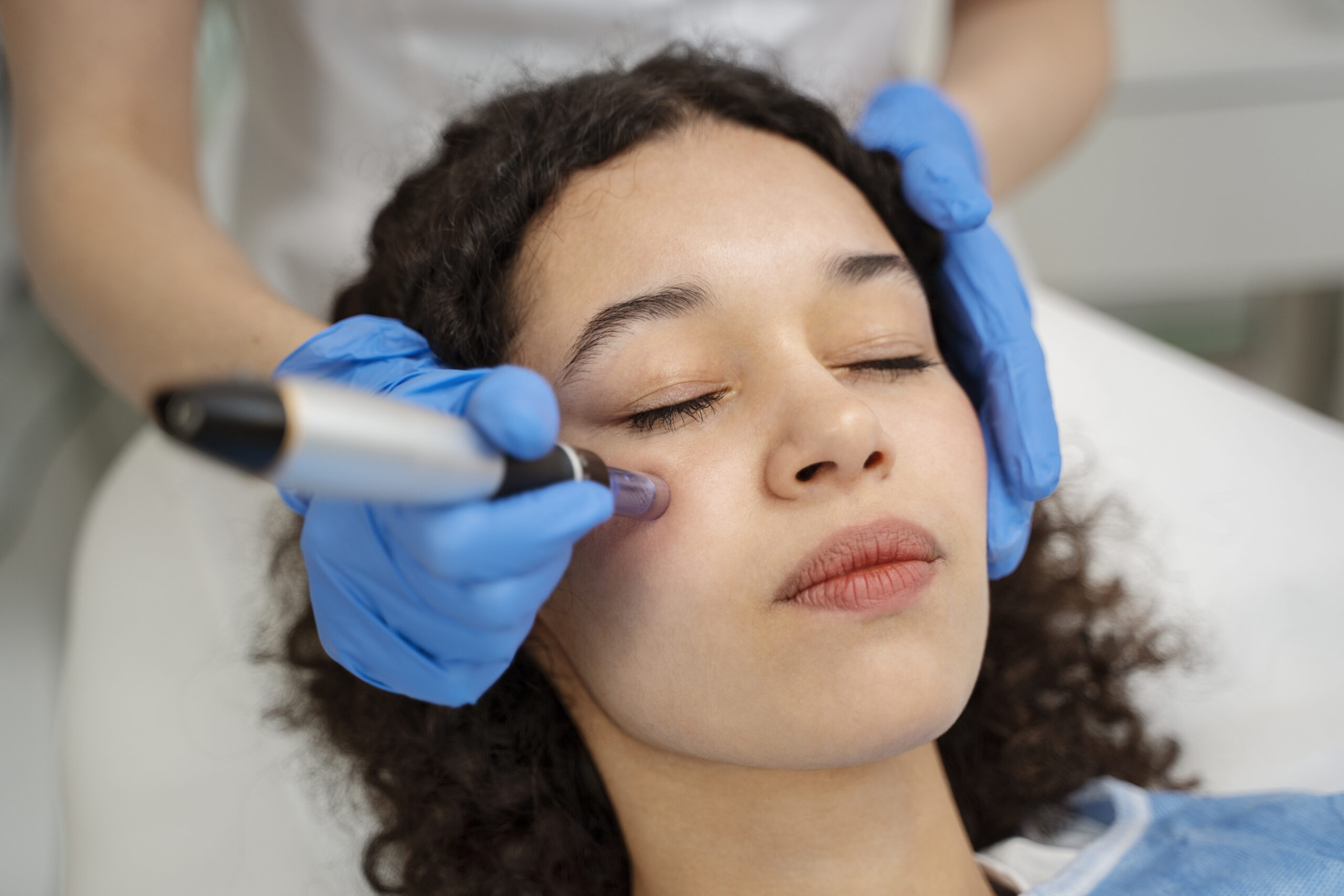
| Microneedling | Thin needles that create tiny holes in the top skin layer | Moderate | 1-3 days | 1-2 years | Acne scars, early laxity | Multiple sessions required |
| Ultrasound waves | Focused ultrasound energy that penetrates up to 5 mm deep | Moderate | None | 1-2 years | Non-surgical lifting, jawline, neck | Discomfort during treatment |
| Injectable Biostimulators | Injectable substances | Mild to Moderate | Minimal | 2-3 years | Volume-related laxity | Does not tighten skin surface |
What Areas Can Skin Tightening Lasers Target?
Most energy-based skin tightening devices are versatile enough to address both facial and body skin concerns. The key is matching the right technology to the right treatment area.
Common facial areas that can be targeted by skin-tightening lasers include:
- Forehead and brows (for subtle lifting)
- Crow’s feet and periorbital region
- Cheeks and midface
- Nasolabial folds
- Jawline and jowls
- Under-chin/submental area
- Neck
- Under-eye crepiness
Common body areas that can be targeted by skin-tightening lasers include:
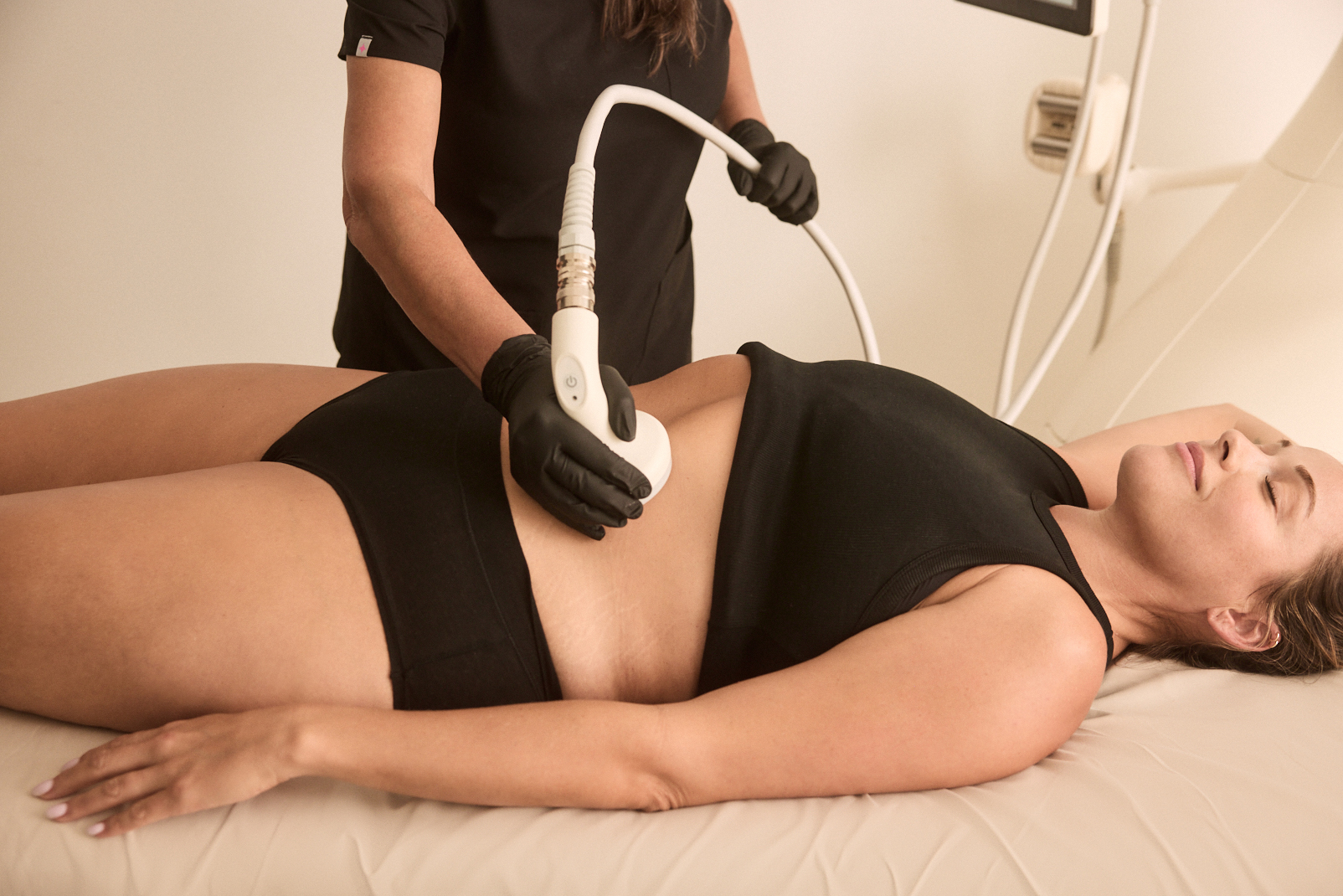
- Abdomen (especially post-pregnancy or after weight loss)
- Inner and outer thighs
- Buttocks
- Above-knee crepey skin
- Upper arms (addressing “bat wing” laxity)
- Hands (occasionally, for improved skin texture)
Safety, Side Effects, and Recovery
Laser skin-tightening is widely used and generally considered safe when performed with professional-grade devices by trained providers. because it’s pretty gentle on most people.
That said, like any energy-based procedure, laser skin tightening does come with potential side effects, such as redness, swelling, sunburn-like sensation, and temporary hyperpigmentation. These are usually mild and temporary, but it’s important to understand what to expect.
Downtime depends on the type of laser used:
- Non-ablative laser skin tightening usually has little to no downtime, and most people return to normal activities the same day or the next day.
- Ablative laser treatments involve more recovery time, including peeling, redness, and sensitivity that can last weeks or even months.
Your provider should clearly explain what level of downtime to expect before treatment.
Therefore, before scheduling skin-tightening laser sessions, it is strongly recommended to consult a professional to ensure the procedure is safe for your specific condition, skin type, and any pre-existing health issues.
How to Choose the Right Skin Tightening Laser for You
Your decision should depend on the following factors:
- What’s bothering you in the first place – your skin concerns, age, genetics
- Targeted area (some devices work better on the face and neck, for example)
- How much downtime you’re willing to deal with (non-ablative lasers are a good choice if you want as little downtime as possible)
- Whether you want gradual results or something more immediate
A qualified aesthetic professional can assess your skin and recommend an approach that aligns with your goals. More often than not, the most satisfying skin-tightening results are tied to personalized treatment plans.
Why Choose T-Shape 2 for Skin Tightening
The T-Shape 2 device stands out in the beauty industry for a reason – it combines different technologies. This means it can also deliver more benefits. The technologies incorporated into the T-Shape 2 device are:
- Low-Level Laser Therapy (LLLT): it uses gentle laser energy that can stimulate cellular activity and improve blood flow in targeted areas
- Bipolar Radiofrequency (RF): it delivers controlled heat into the skin’s deeper tissues and can stimulate collagen and elastin production
- Endodermic Massage with Vacuum Suction: it is a mechanical suction and massage system that gently manipulates tissue and can stimulate circulation and lymphatic drainage.
- Mesospheric Activation: a specialized massage action that reaches deep into tissue and can help boost blood circulation and lymphatic activity.
Main Benefits of T-Shape 2
Here are the main benefits of T-Shape 2 that made numerous clients believe in its efficacy:
- Comfortable and non-invasive experience. T-Shape 2 treatments are designed to be comfortable and relaxing, with no needles, no surgery, and no downtime. Clients can return to normal activities immediately after a session.
- All-in-one solution. Unlike many devices that focus on just one area, T-Shape 2 can be used on both the face and body. This can make it suitable for common concerns such as loose skin on the abdomen, thighs, arms, jawline, and neck.
- Supports natural skin tightening. By gently heating the deeper layers of the skin, T-Shape 2 can help support the body’s natural collagen and elastin production, leading to firmer, smoother-looking, more radiant skin over time.
- Demonstrated efficacy. The T-Shape 2 device features preset protocols built on clinically backed technology. They can deliver real, visible outcomes, depending on the problem/body area that is targeted.
Ready to try it? Find a provider near you!
FAQs
Do skin-tightening lasers really work?
Yes, laser skin tightening is a clinically proven technology. Studies have shown it can really improve skin elasticity and tightening. The lasers heat up your deeper skin layers to contract existing collagen and stimulate new collagen production.
How much does laser tightening cost?
Laser skin tightening can cost anywhere from $600 to $2,500 per session, which is typically split over several visits – 3 to 6 sessions spaced a month apart for the absolute best results. Areas like the face, which are relatively small, will run $400-$800 per session, whereas a bigger area like the tummy or thighs can easily cost $1,500-$2,000 or more per session.
Can you tighten loose skin with a laser?
The answer is yes, lasers are specifically designed for resurfacing and can also help tighten up loose or sagging skin by stimulating the production of collagen and elastin. Studies have shown that after laser skin tightening treatments, skin elasticity can significantly improve. However, results vary from person to person.
What are the risks of laser skin tightening?
Common risks of laser skin tightening include temporary redness, swelling, and discomfort that typically resolve within days. Rare complications may include hyperpigmentation, hypopigmentation, scarring, or infection, especially in the case of ablative laser skin tightening. It is best to consult a cosmetic dermatology professional before performing any laser procedures.
What is the best laser for skin tightening?
CO2 lasers offer stronger immediate collagen contraction, while Er:YAG lasers achieve comparable long-term results with faster healing. You can also try devices like the T-Shape 2, which incorporates Low-Level Laser Therapy and other technologies for no-pain, no-downtime sessions.
Can laser skin tightening be used on the face?
Yes, laser skin tightening is frequently used on the face and can help treat wrinkles, fine lines, and sagging skin while improving overall facial contours.
Can laser skin tightening be used on the stomach?
Yes, laser skin tightening is commonly used on the abdomen. It can help treat loose or crepey skin on the belly and upper body areas. The stomach typically requires larger treatment areas and may cost more per session ($1,500-$2,000+).
Is laser skin tightening permanent?
No, laser skin tightening is not permanent. The new collagen production can continue months after the procedures, and the results may be visible between 12 months and 3 years, depending on skin quality, age, and sun exposure. After this, maintenance sessions are recommended.