If you’ve started noticing horizontal lines across the front of your neck, it’s only natural that you’re now wondering whether they’re normal, depending on your age, and whether they can be smoothed out.
So, if you’re here to discover how to get rid of neck lines, read on, whether it’s for a daily skincare tweak or an aesthetic procedure.
Disclaimer:This article is provided for informational and educational purposes only. The information presented here is not a substitute for professional medical evaluation, consultation, or care and should not be relied upon to make health-related decisions. Always consult a qualified and licensed medical or aesthetic professional before undergoing any cosmetic or aesthetic procedure.
Quick Answer: How Do You Get Rid of Neck Lines?
Neck lines can be improved with daily sunscreen, retinol, hydration, and professional treatments such as fillers, Botox, radiofrequency, ultrasound, or nitrogen plasma. The best treatment depends on whether you’re dealing with fine lines, deep horizontal creases, vertical neck bands, or loose skin.
Why Does the Neck Age Faster?
The skin on your neck is structurally different from the skin on your face: it’s thinner, has fewer sebaceous glands, receives far less consistent care than the face, and is subject to constant movement, which causes dynamic wrinkles that over time become static. Because of this, many people get neck lines sooner than they get facial wrinkles.
Specialists have confirmed that the neck’s skin barrier can weaken as early as age 30, showing greater loss of subcutaneous fat, dermal collagen, and elastin.
Types of Neck Lines
Neck lines fall into two main categories:
- Horizontal neck lines (also called necklace lines): creases running across the front of the neck. These form partly because of natural skin folds that exist even in youth, and partly because repeated flexion of the neck compresses the skin in the same place over time. When collagen production slows with age, those temporary folds become permanent.
- Vertical neck bands (also called neck bands or platysmal bands): bands that run vertically down the front of the neck. These come from the platysma, a thin sheet of muscle sitting just beneath the skin. With age, repeated contractions, and declining skin support, these vertical neck bands become static.
What Causes Neck Lines?
Natural Aging and Collagen Loss
With age, your skin loses collagen and elastin. This results in thinner skin that is less firm and prone to folding.
As a result of these changes, the neck area loses its structural scaffolding. Sagging skin, creasing, and the forward bulging of underlying muscles all become more pronounced. Skin laxity increases, and lines that were previously visible only during movement become fixed at rest.

Tech Neck
Tech neck is a term used to describe the horizontal neck lines formed or accelerated by the habitual posture of looking down at screens. Each time you tilt your head forward, the skin on the front of the neck compresses into folds. In younger skin with sufficient collagen, those folds smooth out. Over time, with repeated movements in the same pattern, they become deep neck lines.
UV Exposure and Sun Damage
Prolonged sun exposure accelerates collagen degradation through a well-documented mechanism: UV radiation activates enzymes called matrix metalloproteinases (MMPs), which break down collagen in the dermis. Many people apply SPF to their face diligently but often forget about the neck, leaving it without sun protection day after day, which can lead to premature aging.
Genetics and Body Composition
Genetic predisposition influences how early and how prominently neck lines develop. People with naturally thinner skin may notice deep lines earlier, even without significant sun damage or postural habits. Research also suggests that less subcutaneous fat in the neck correlates with more visible horizontal creasing, since the fat layer that would otherwise cushion the skin is absent.
At What Age Do Neck Lines Start?
Many people notice more prominent neck lines in their late 20s and 30s. But, in reality, we all have faint horizontal neck creases, even during childhood or adolescence, because of the way the skin folds across the neck.
However, these lines often become more noticeable with age as collagen and elastin production gradually decline.
Younger people today are also developing visible neck lines earlier because of prolonged screen use and habitual neck flexion throughout the day.
How to Get Rid of Neck Lines: Treatment Options
The best solution for treating neck lines should be outlined based on your specific needs, age, and other factors. It largely depends on whether you’re dealing with horizontal neck lines, vertical bands, skin laxity, or multiple concerns.
Ultimately, it’s recommended to talk to a professional who can help you find a personalized solution that will work for your skin, your concerns, your budget, and your long-term goals. This is particularly important for neck creams and procedures, because the skin is thinner and more delicate.
Retinol and Retinoids
Retinol is the most thoroughly researched topical ingredient for neck wrinkles. Results from studies show that retinol can lead to statistically significant improvements in horizontal neck lines, skin texture, crepiness, and skin laxity.
Because neck skin is thinner and more sensitive than facial skin, it’s recommended to start at a lower concentration and apply the cream just 2-3 nights per week.
Hyaluronic Acid Serums
Hyaluronic acid can hold up to 1,000 times its weight in water. Applied topically, it draws moisture into the skin and temporarily improves the appearance of neck lines by plumping the outer layers. While this effect is not structural in the way retinol’s collagen stimulation is, consistent hydration does support the skin’s function and makes fine lines less pronounced. When used as part of a daily skincare routine, it pairs well with retinol to offset dryness.
Sunscreen, Every Day
Sun protection on the neck is not optional if you’re trying to prevent neck wrinkles or stop existing lines from deepening. SPF 30 or above, broad-spectrum, applied to the face, neck, and chest each morning, is the baseline recommendation from dermatologists. Also, make sure to reapply it every two hours.
Vitamin C and Antioxidants
According to dermatologist Dr Shilpi Khetarpal, applying a topical antioxidant (vitamin C, vitamin E, or ferulic acid) to the neck in the morning helps neutralize oxidative stress from free radicals, which contributes to skin texture deterioration and collagen breakdown. These are best applied as serums after cleansing and before sunscreen.
Botulinum Toxin (Botox) for Neck Bands
Botulinum toxin injections are often recommended for vertical neck bands. Injected into the platysma, the toxin relaxes the muscle, reducing the prominence of neck bands and softening the appearance of the jawline.
Results typically last 3-4 months, after which repeat treatments are needed. However, it’s worth noting that botulinum toxin has a more limited effect on horizontal neck lines specifically.
Hyaluronic Acid Fillers for Horizontal Neck Lines
Dermal fillers using hyaluronic acid can be injected directly along horizontal neck lines to plump and soften the creases. A study on the efficacy and safety of hyaluronic acid filler on the treatment of horizontal neck lines found that after only one session of hyaluronic acid filler injection, the appearance of horizontal neck lines improved. The results peaked at one month post-injection and lasted for 6 months.
Chemical Peels
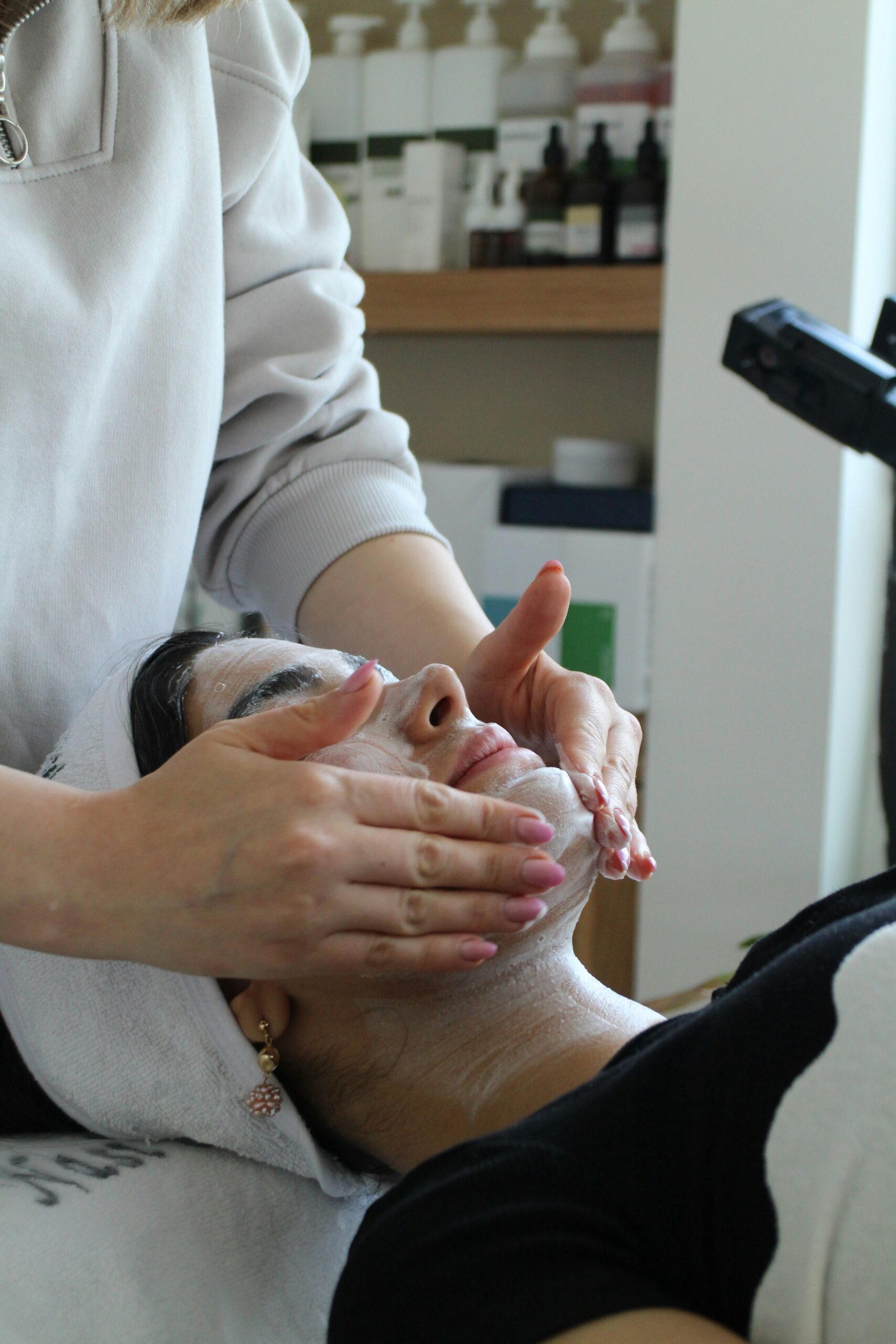
Chemical peels exfoliate the damaged surface skin, prompting the body to generate new skin cells and increase collagen production. For the neck, lighter peels are generally recommended, given the delicate skin in this area. They can help improve skin texture, skin tone unevenness, and mild neck creases, but they will not remove neck lines permanently.
Radiofrequency, Ultrasound, and Energy Devices
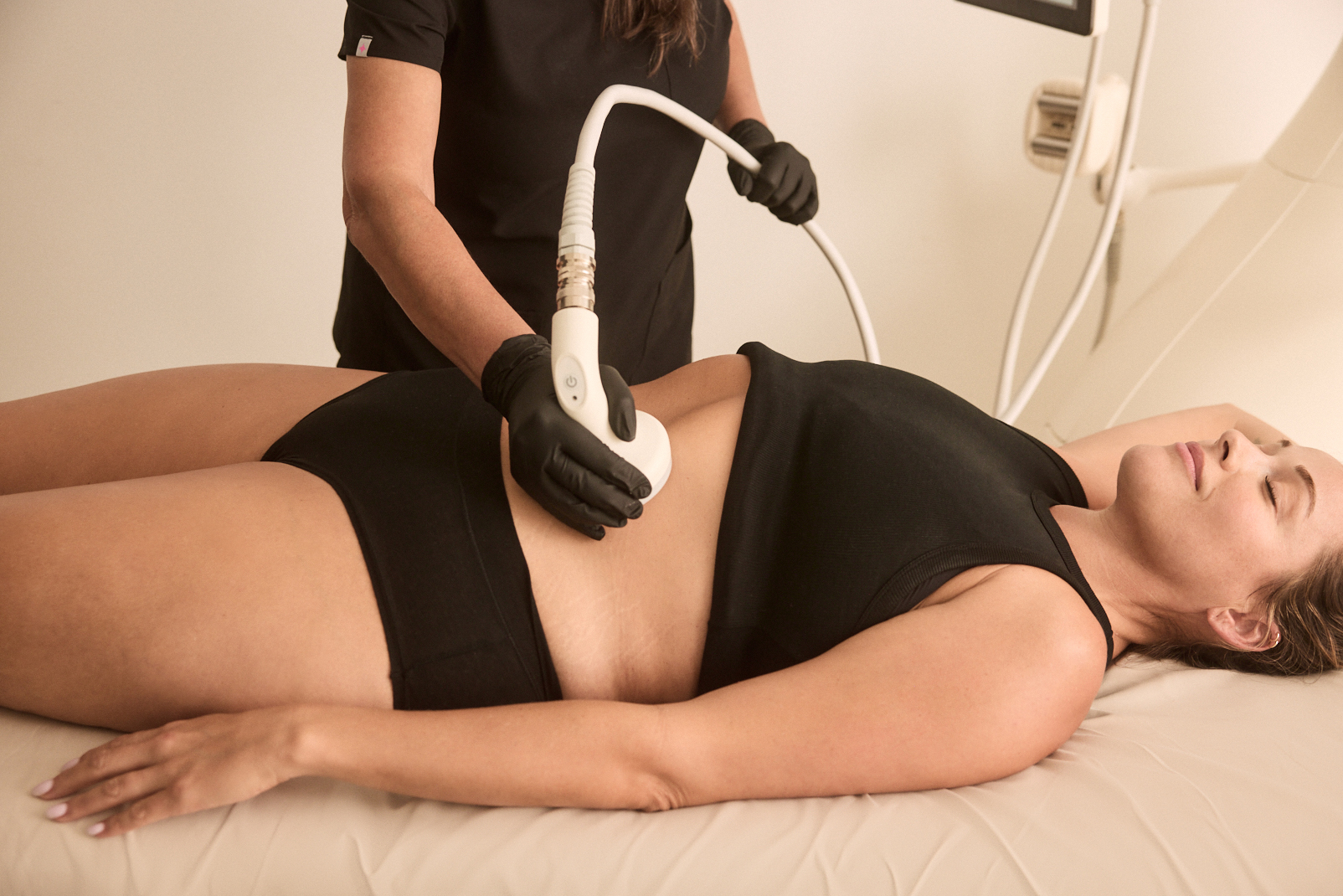
Energy-based devices, including radiofrequency (RF), microfocused ultrasound (Ultherapy), and combined systems, are non-surgical treatment options that work by heating the deeper layers of the skin to stimulate collagen production and trigger tissue remodelling. This can help improve skin elasticity, reduce neck lines, and tighten skin. Results develop over several months as collagen gradually remodels. Maintenance sessions are generally recommended. These approaches are usually well-suited to mild-to-moderate neck skin laxity.
Another option is RF microneedling, which combines tiny needles with radiofrequency to stimulate collagen production.
T-Shape 2
The T-Shape 2 stands out among other aesthetic devices because it combines four technologies in one system: bipolar radiofrequency (RF), low-level laser therapy (LLLT), endodermic massage with vacuum suction, and mesoporation. Each technology plays a distinct role. Together, these technologies can heat the skin to stimulate collagen production and improve skin elasticity, as well as promote muscle tone, blood circulation, and lymphatic drainage.
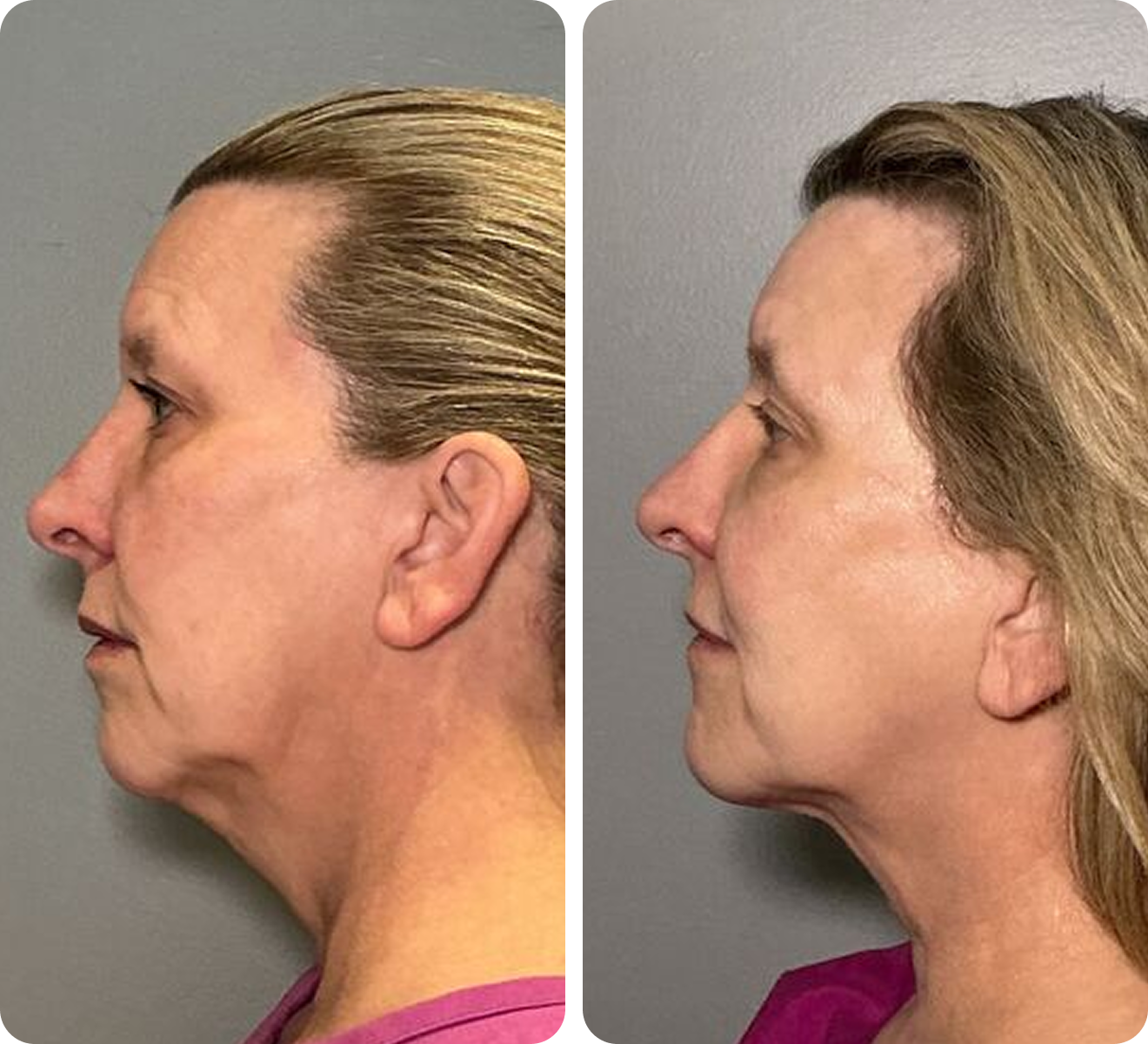
Before and after 3 skin-tightening treatments with T-Shape 2.
For the neck area, the T-Shape 2 uses a dedicated face and neck handpiece designed to address skin laxity, neck lines, double chin, and the appearance of tech neck wrinkles. Sessions typically run 20 to 45 minutes and are comfortable with no downtime. They can be repeated regularly.
Nitrogen Plasma (Neogen)
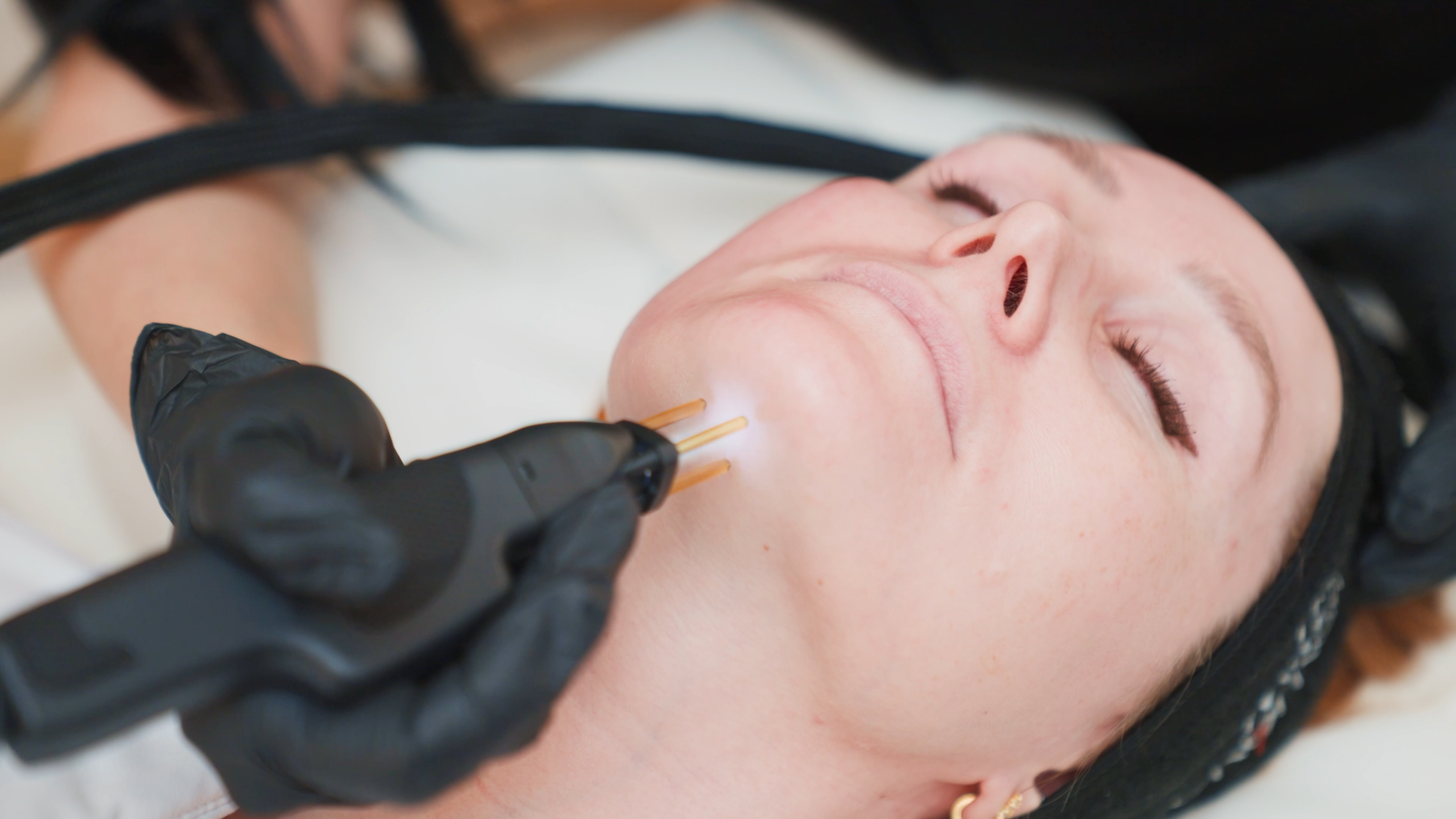
Neogen delivers controlled thermal energy to the skin via nitrogen plasma technology. Neogen preserves the outer skin while heating the deeper dermis. This triggers fibroblast activation, collagen synthesis, and elastin formation. It can yield results similar to CO2 lasers but without the significant downtime associated with them.
For the neck area, Neogen has shown measurable reductions in skin laxity, crepey skin texture, and the appearance of neck wrinkles. Treatments are typically done in a course of several sessions, spaced six weeks apart. At higher energy settings, some peeling and redness can occur in the days following treatment. Lower energy settings have minimal downtime with cumulative results over several sessions.
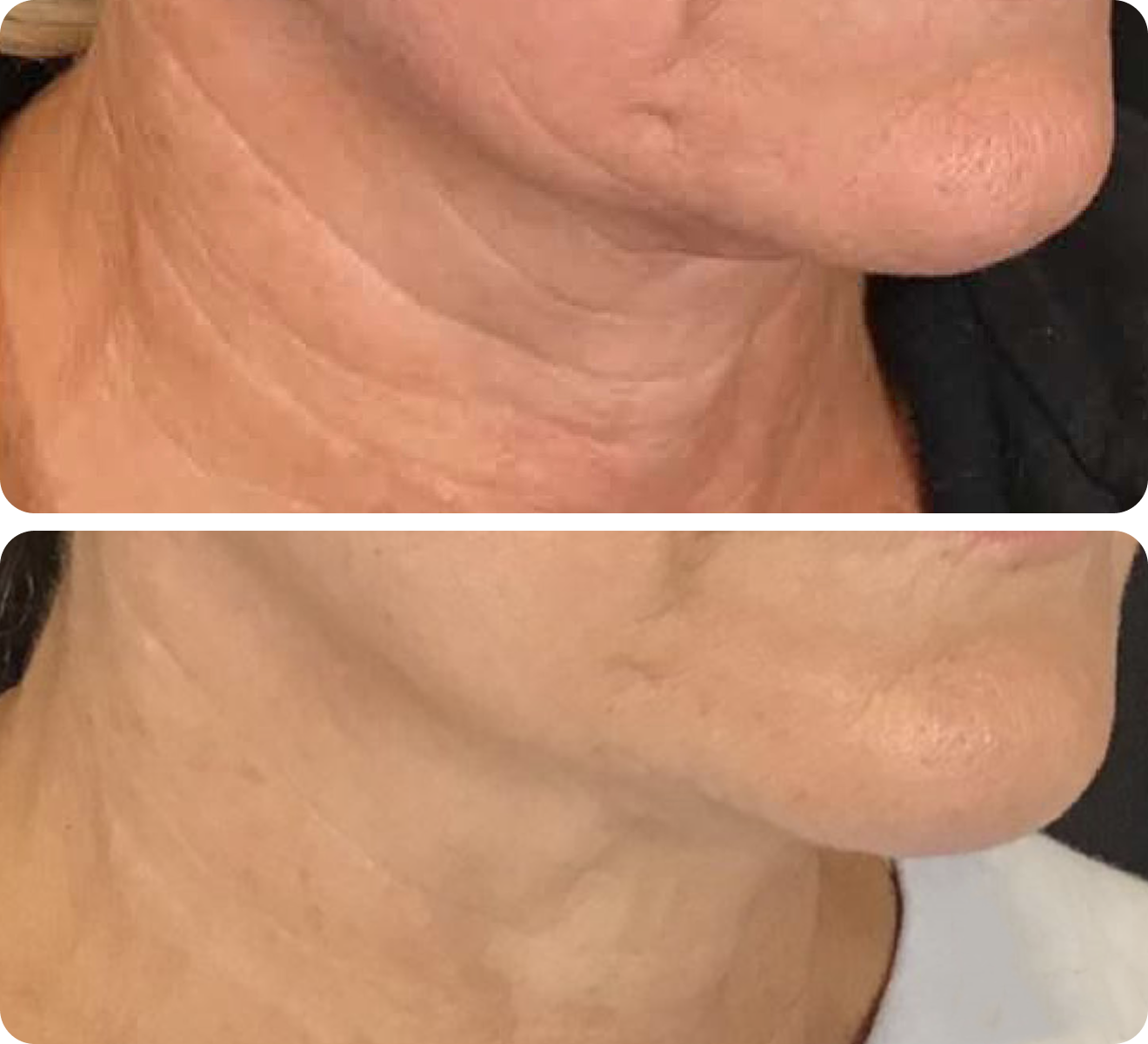 6 Weeks after 1 low energy treatment with Neogen. Courtesy of Dr. Nina Deep.
Gradual improvements generally become visible within 2-4 weeks, with full results peaking around the three-month mark. Benefits can last 12 to 18 months, with occasional maintenance sessions recommended thereafter.
What Works Best for Different Types of Neck Lines
If you’re not sure yet what could work for your specific concerns for the neck region, we’ve prepared some guidelines. Always talk to a healthcare professional before trying a new skincare product or aesthetic treatment.
Fine Lines and Crepey Neck Skin
Fine lines and crepey texture are usually linked to early collagen loss, dehydration, and sun damage. These concerns may respond to:
- Retinol and prescription retinoids
- Hyaluronic acid and barrier-supporting moisturizers
- Vitamin C and antioxidants
- Radiofrequency (RF) treatments
- Nitrogen plasma treatments like Neogen
Deep Horizontal Neck Lines and Wrinkles
Deep horizontal neck lines are harder to improve with skincare alone because the creases become etched into the skin over time. Treatments that might be recommended include:
- Hyaluronic acid fillers
- Collagen-stimulating energy devices
- Retinoids for maintenance and prevention
- Combination treatments using fillers plus RF or ultrasound
Vertical Neck Bands
Vertical wrinkles are caused primarily by the platysma muscle beneath the skin. Because the issue is muscular rather than purely skin-related, these bands usually might respond to:
- Botulinum toxin (Botox)
- Combination skin-tightening treatments if laxity is also present
Loose or Sagging Neck Skin
When skin laxity is the main concern, collagen-remodelling procedures are generally more effective than topical products. Common options include:
- Radiofrequency devices
- Ultrasound treatments like Ultherapy
- Nitrogen plasma treatments
- Combination tightening procedures
If you have excess skin, you should talk to a specialist who can offer a personalized solution. These procedures do not remove excess skin.
What Doesn’t Work Well for Neck Lines
Many products and techniques marketed for neck wrinkles have limitations, especially for deeper or more advanced neck lines. Here’s what you need to know:
- Topical products can improve hydration, texture, and mild lines, but they generally cannot fully erase deep horizontal neck creases or significant skin laxity on their own.
- While neck exercises may slightly help tone the neck muscles, there is little evidence that they can meaningfully remove established neck lines or tighten loose skin significantly.
- Most professional treatments for neck lines require maintenance. Collagen continues to decline with age, meaning results are usually gradual and temporary rather than permanent.
- At-home microneedling, strong acid peels, or overly aggressive devices can irritate or damage the delicate neck skin, especially when performed incorrectly.
- Collagen-remodelling treatments like radiofrequency, ultrasound, and nitrogen plasma typically work slowly. Results often develop gradually over several weeks to months as new collagen forms.
FAQs
How to get rid of tech neck lines naturally?
You can reduce mild tech neck lines by improving posture, keeping screens at eye level, wearing sunscreen daily, and using basic skincare like moisturizers, retinol, and vitamin C. These steps help prevent lines from getting deeper, but won’t fully erase established creases.
What is the best tech neck treatment?
The best treatment for tech neck depends on severity. For mild lines, skincare with retinol and sun protection can help. For deeper lines, professional options like fillers, radiofrequency, ultrasound, or plasma treatments tend to give more noticeable results, often in combination.
Why do I have lines on my neck?
Lines on the neck can appear early because of genetics, environmental factors, natural skin folds, modern lifestyle factors like screen-related posture, significant sun exposure, or naturally thin skin.
What is the best neck cream for wrinkles?
Neck creams that contain retinol, peptides, hyaluronic acid, vitamin C, niacinamide, or ceramides are usually the most recommended for the neck. Retinol-based creams generally have the strongest evidence for improving fine lines over time.
Can neck lines go away naturally?
Mild neck lines may soften with consistent skincare, sun protection, and lifestyle changes, but deeper neck creases usually do not disappear completely without professional treatments.
Are neck lines permanent?
Early neck lines may improve somewhat with skincare and preventive measures. Static lines are often difficult to fully reverse without professional treatments.
How can I prevent neck lines from getting worse?
To prevent your neck lines from deepening, use daily sunscreen, prioritize good posture, moisturize the neck skin daily, try retinoid, and avoid prolonged downward screen positioning. Moreover, make sure you stay hydrated and have a healthy diet.