There are different types of procedures aimed to give your skin a boost if it shows signs of aging. The thing is that they work differently. Each procedure usually has a unique target. What works well for fine lines may not work as well for skin laxity, for example. A procedure that brightens sun-damaged skin won’t tighten a sagging jawline too much.
So, if you’ve been trying to figure out how to choose the best facial for aging skin, which one’s actually worth your time and money, you’re not alone. The truth is that it really depends on what you’re trying to address. And that’s what we’re here to help you with.
Disclaimer: This article is provided for informational and educational purposes only. The information presented here is not a substitute for professional medical evaluation, consultation, or care and should not be relied upon to make health-related decisions. Always consult a qualified and licensed medical or aesthetic professional before undergoing any cosmetic or aesthetic procedure.
Quick Answer: Best Facial by Skin Concern
| Concern | Recommended Treatment |
| Fine lines and texture | Microneedling |
| Sagging skin and laxity | RF skin tightening, ultrasound, T-Shape 2 |
| Wrinkles and laxity combined | RF microneedling |
| Dull skin and dehydration | HydraFacial |
| Sun damage and pigmentation | Chemical peel, nitrogen plasma |
| Comprehensive rejuvenation | Nitrogen plasma |
| Multiple signs of aging | Combination approach |
| Sensitive aging skin | LED Light therapy |
| Temporary immediate lifting | Microcurrent facial |

Why Does the Skin Age?
Why does the human skin age, after all? It’s a natural process, of course, but why exactly do some people look older than their age, for instance?
If you’re trying to find a good facial that could address your skin concerns, it will help you to understand what exactly causes said skin concerns, because this will determine the solution that may be best for you.
Collagen and Elastin Loss
Collagen gives your skin firmness and structure. Unfortunately, your body produces less and less collagen as you grow older. Its production begins declining in your mid-20s. The rate speeds up after menopause in women.
If your body produces less collagen, your skin becomes thinner, and you start noticing fine lines. Slowly but steadily, your jaws and cheeks start losing their definition.
Most anti-aging facial treatments work, at least in part, by stimulating the skin to produce new collagen.
On the other hand, elastin allows your skin to snap back after being stretched. Your body produces a lot of elastin up until late adolescence, after which its production slows down significantly. And as the existing elastin breaks down over time, the skin becomes less resilient and starts to sag.
Sun exposure accelerates collagen and elastic breakdown significantly.
Reduced Cell Turnover
Younger skin sheds dead cells and generates new ones at a much faster rate. With age, this cycle slows down, which leads to a dull and uneven complexion, age spots, and a rougher texture.
Exfoliating treatments like chemical peels and microneedling work partly by accelerating this renewal process.
Sun Damage and Pigmentation
Ultraviolet exposure over the years contributes to what dermatologists call photoaging. This is a pattern of damage that includes brown spots, uneven skin tone, and a coarsened texture. These changes are slightly different from those caused by biological aging.
Photoaging accounts for a significant portion of the visible signs we associate with older skin.
Volume Loss
Over time, fat pads in the face shift and thin out. The underlying bone structure changes, too. Because of this, many people develop hollowness under the eyes, flattening of the cheeks, and deepening of the nasolabial folds.
Most facial treatments don’t address volume loss directly. In this case, you might benefit from dermal fillers.
Best Facial Treatments for Aging Skin
| Treatment | Best For | Downtime | Results Duration |
| Microneedling | Fine lines, texture, scars | Low | Months (with maintenance) |
| RF Microneedling | Wrinkles and laxity | Moderate | Long-term |
| LED Light Therapy | Maintenance, mild aging signs | None | Short-term |
| T-Shape 2 | Laxity, firming, contouring | Minimal | Moderate to long |
| Microcurrent Facial | Temporary lifting and toning | None | Days to weeks |
| HydraFacial | Dull skin, dehydration, glow | None | Short (regular upkeep needed) |
| Chemical Peel | Pigmentation, photoaging, texture | Varies by depth | Moderate |
| Nitrogen Plasma Technology | Comprehensive rejuvenation, resurfacing | Moderate | Long-term |
| Ultrasound Skin Tightening | Deeper lifting | Low | Long |
1. Microneedling
Also known as collagen induction therapy, microneedling uses a device fitted with fine needles to create controlled micro-injuries in the skin. The skin’s wound-healing response produces new collagen and elastin, the proteins responsible for firmness, skin elasticity, and overall skin structure.
The evidence base for microneedling is reasonably solid. It is widely positioned as an effective solution for skin rejuvenation and beyond.
Microneedling works particularly well for fine lines and wrinkles, overall texture, reduced pore appearance, and mild skin laxity. It’s not the most effective standalone option for significant sagging or deep wrinkles, though. People over 50 may also need more sessions to achieve results comparable to younger skin. Also, results don’t appear overnight because collagen production takes time.
Downtime is generally low: redness and mild sensitivity lasting 1-2 days.
2. RF Microneedling
RF microneedling combines the above-mentioned tiny needles with radiofrequency energy. The needles deliver heat directly into the dermis. This causes controlled thermal injury alongside the mechanical micro-wounds. This dual stimulus triggers a stronger collagen response and also promotes skin tightening through collagen contraction.
RF microneedling is generally considered one of the stronger options for addressing wrinkles and skin laxity. The downtime is somewhat higher than the downtime of standard microneedling. You might experience redness, swelling, and sensitivity, typically lasting several days.
3. LED Light Therapy
LED light therapy uses specific wavelengths of visible light to stimulate biological processes within the skin. Red light is the wavelength most commonly used in anti-aging treatments because it may support collagen production and help reduce inflammation.
LED therapy is completely non-invasive and requires no downtime. Despite that, while it can improve overall skin quality and restore a more youthful skin, LED therapy is often combined with treatments such as microneedling, HydraFacial, and chemical peels.
4. T-Shape 2
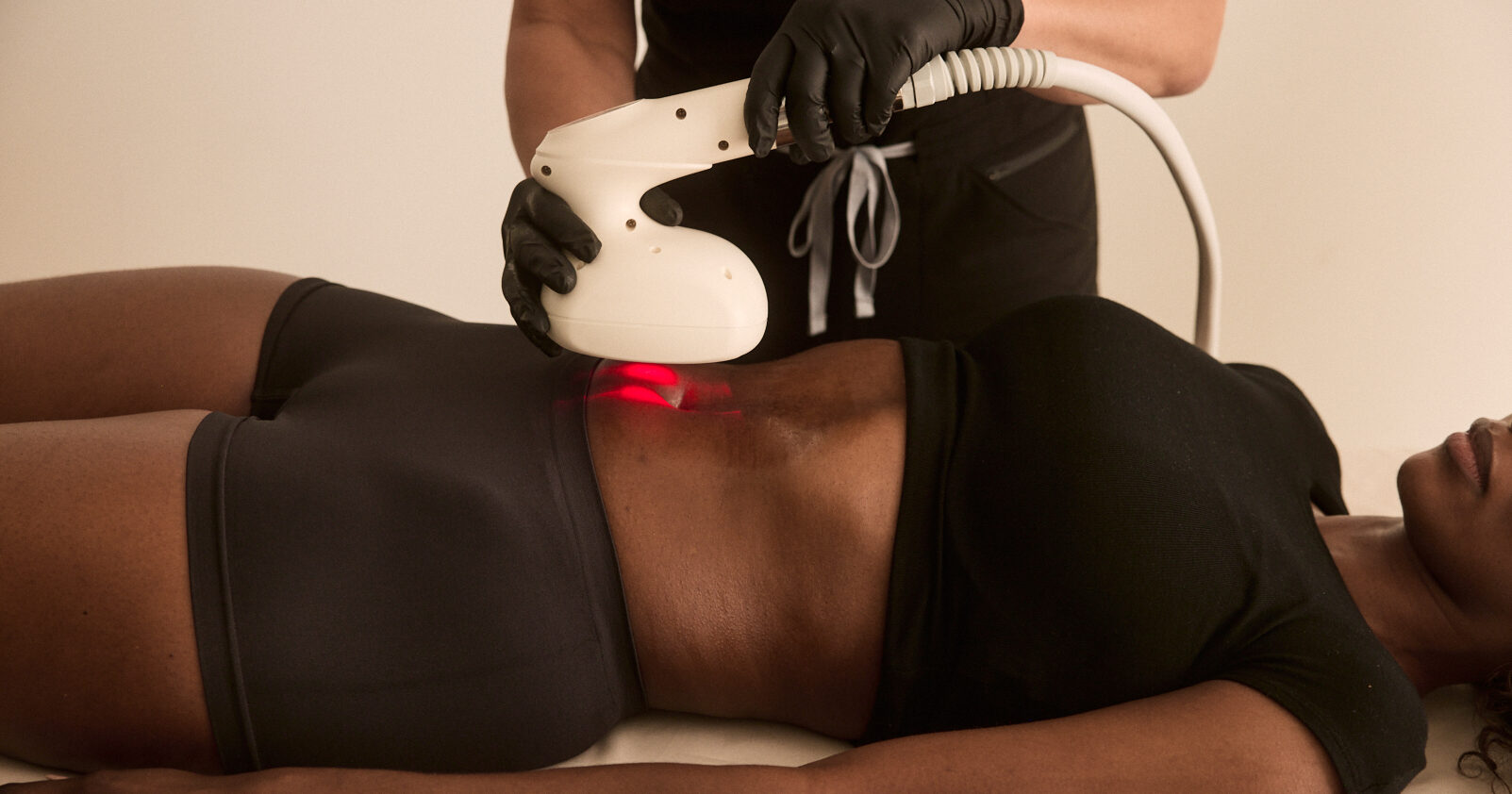
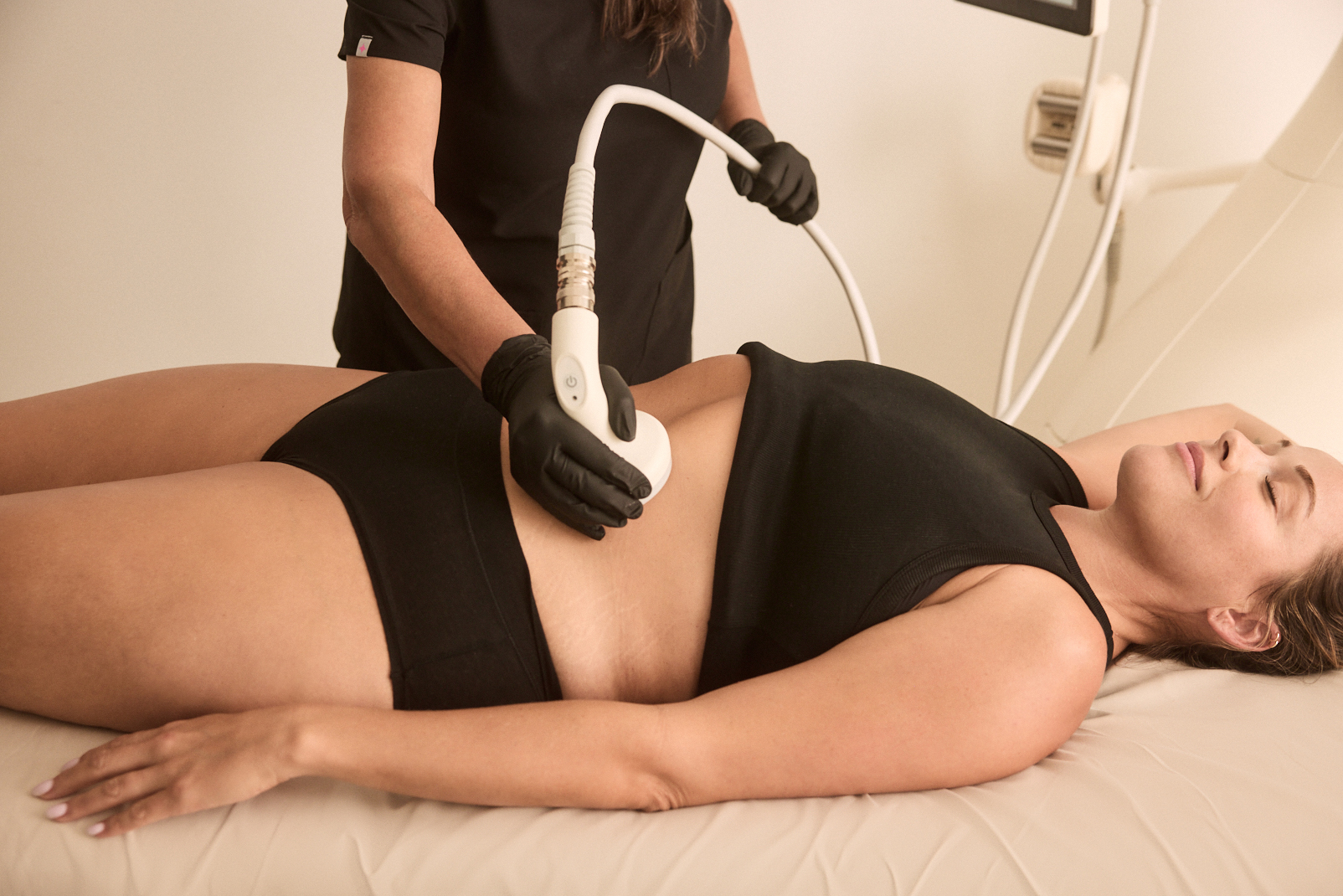
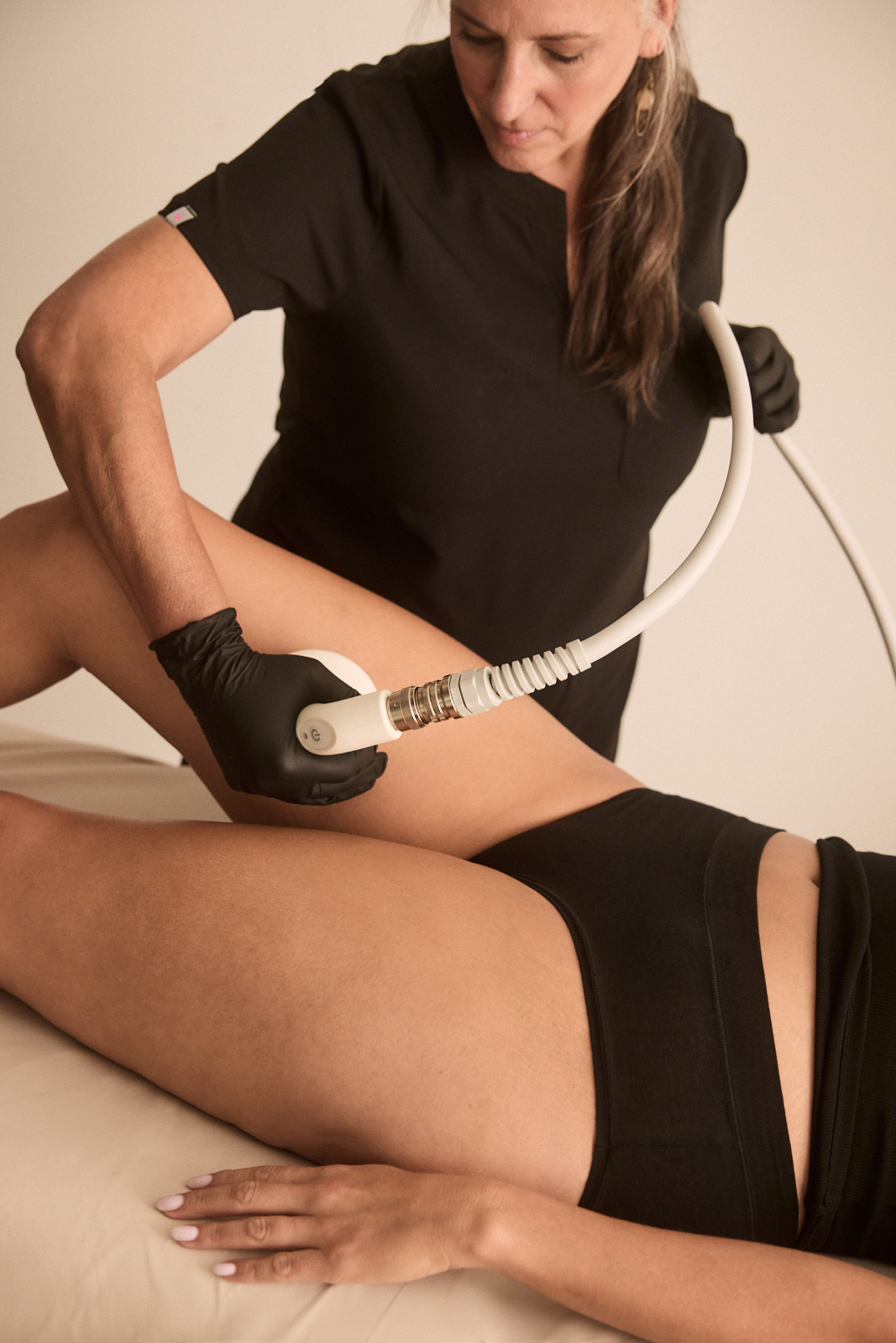
The T-Shape 2 is a specialized device that combines radiofrequency energy, low-level laser therapy, endodermic massage with vacuum suction, and mesospheric activation into a single treatment platform.
The bipolar radiofrequency component can stimulate collagen production, producing a gradual lifting effect on the skin. Low-level laser therapy can promote skin regeneration and improve circulation. The endodermic massage with suction helps improve lymphatic drainage and smooth dimpling, while mesospheric activation helps tone underlying muscles and promote circulation.
T-Shape 2 can be well-suited for clients with mild-to-moderate skin laxity on the face, jaw, and neck, as well as those looking for a treatment with minimal downtime. It can also be used on the body if needed.
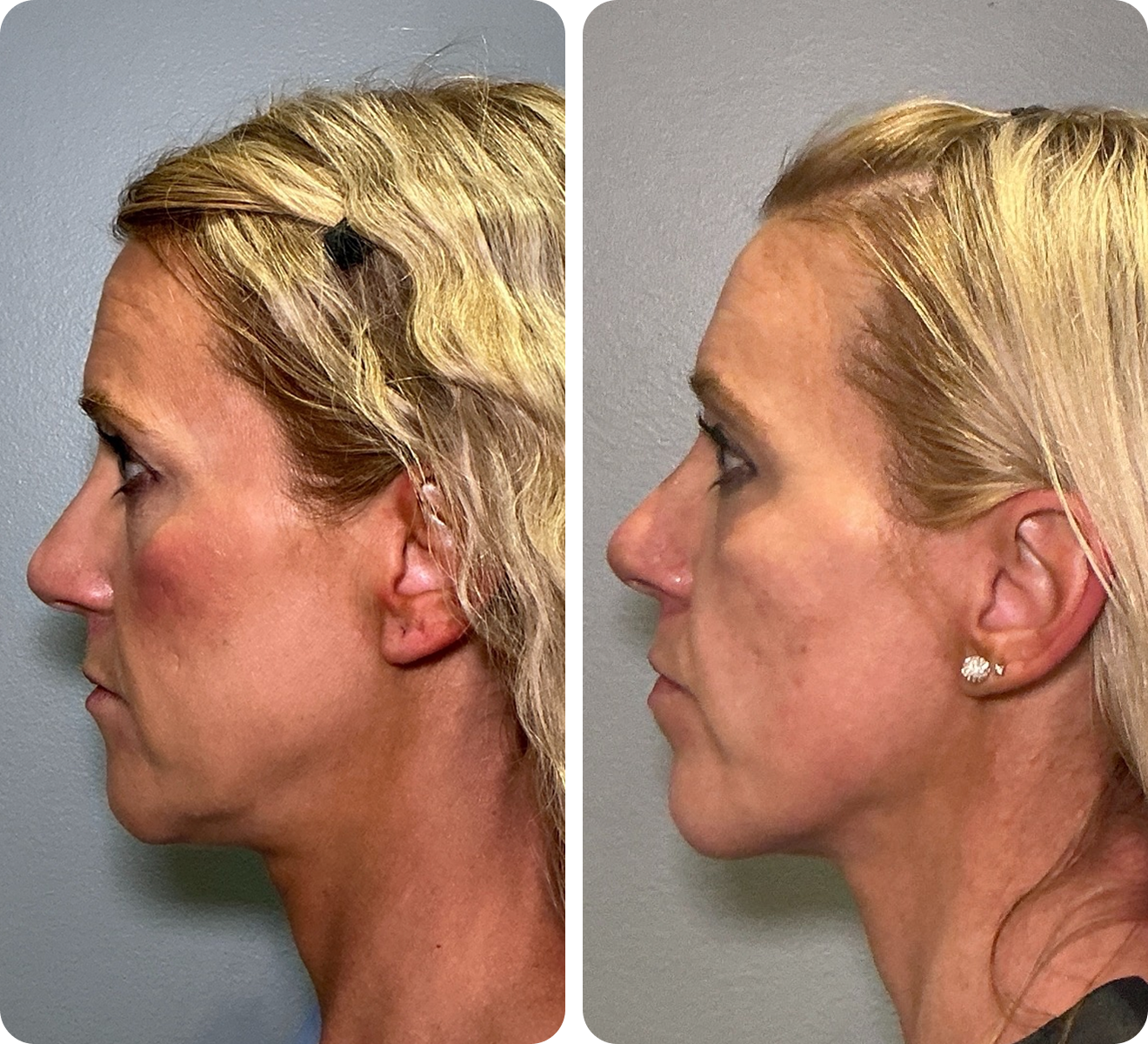
Before and after 2 treatments with T-Shape 2.
Sessions are comfortable. You’ll feel just a warm sensation from the RF energy and gentle suction. Procedures last around 30-60 minutes, depending on the area. Most people need a series of sessions (usually six or more) to see optimal results, with some improvements visible from early on.
5. Microcurrent Facial
Microcurrent facials stimulate facial muscles using low-level electrical currents. The treatment is sometimes described as a non-surgical facial workout because it aims to create a temporary lifting and toning effect for a more radiant skin.
Many people notice improved facial definition immediately after the treatment. However, unlike collagen-stimulating procedures such as microneedling, RF microneedling, or Neogen, microcurrent treatments do not produce substantial structural remodeling within the skin.
Microcurrent facials may be most appropriate for individuals who are looking for a temporary improvement in facial contour. It can also be part of an ongoing maintenance routine.
6. HydraFacial
HydraFacial focuses on cleansing, gentle exfoliation, extraction, and hydration, so it’s quite different from the technologies described above.
The treatment uses vortex-powered technology that removes dead cells and impurities. It also infuses the skin with serums containing hyaluronic acid, peptides, and antioxidants. Hyaluronic acid, which the skin produces less of with age, is especially relevant. It draws moisture into the skin and helps plump the appearance of fine lines.
HydraFacial produces an immediate improvement in radiance, hydration, and overall skin quality. Most clients notice a more glowing skin immediately after the treatment. However, it does not produce the structural collagen changes that microneedling or RF treatments can achieve, so it won’t address significant skin laxity or deep wrinkles. Its strength is basically maintenance. It keeps the skin hydrated, bright, and clear.
Hydrafacial has minimal to no downtime. It is suitable for virtually all skin types, including sensitive skin.
7. Chemical Peels
Chemical peels use acidic solutions to cause controlled damage to the outer skin layers. This prompts the skin to shed and regenerate. The results and the recovery period are determined by the type of chemical peel used.
Superficial peels reach only the epidermis and work well for mild pigmentation, dullness, and early photoaging. They require no significant downtime and can be repeated regularly.
Medium-depth peels penetrate into the upper dermis and can work better for sun damage, uneven skin tone, and more pronounced texture changes. But they imply a longer recovery, typically up to a week, and carry a greater risk of post-inflammatory hyperpigmentation.
Deep peels are the most aggressive, which is why they’re now only rarely used in aesthetic settings.
8. Nitrogen Plasma Technology
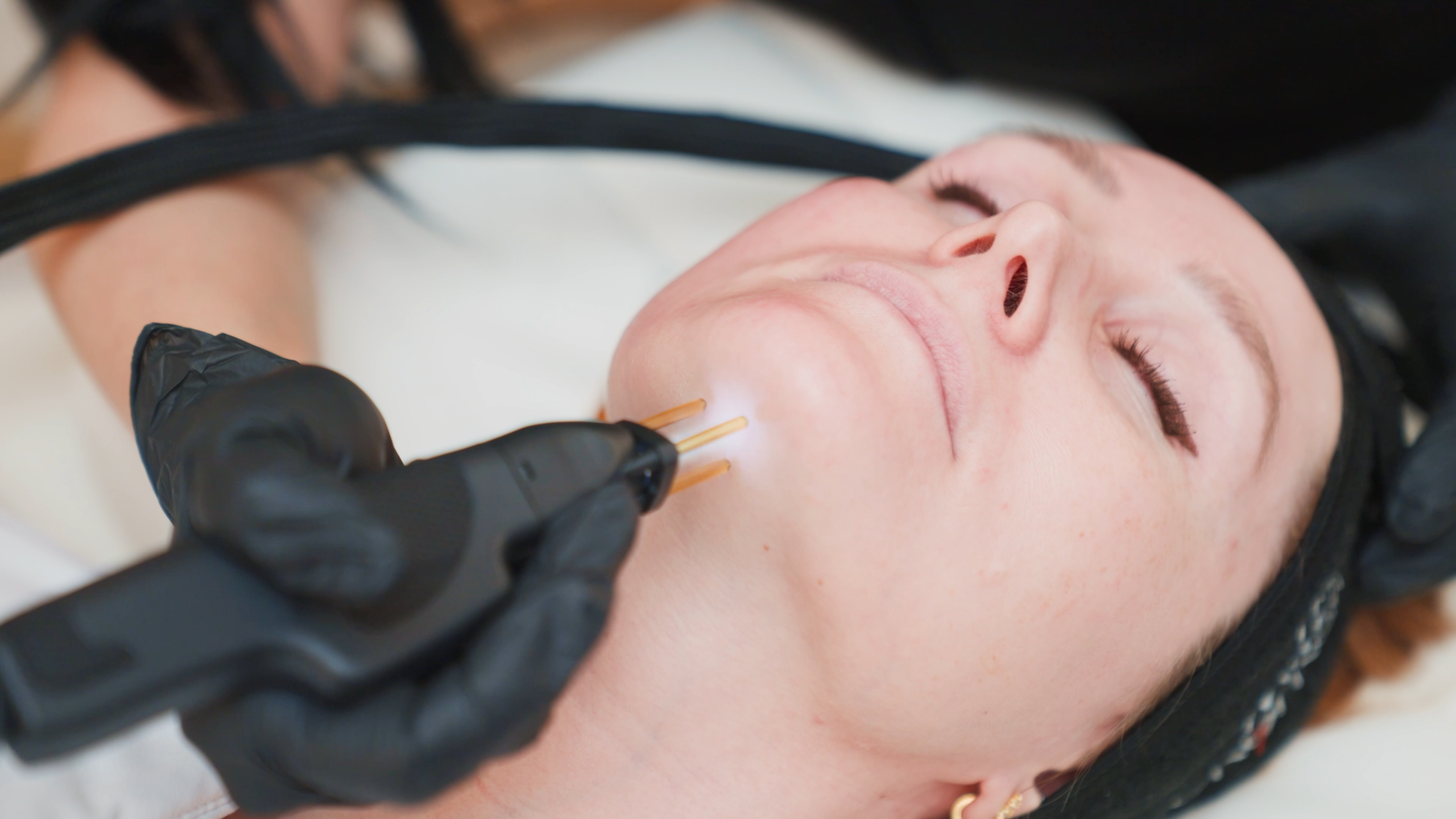
Neogen uses nitrogen plasma technology to deliver controlled thermal energy to the skin. It implies converting medical-grade nitrogen gas into plasma, which is then applied to the skin. When the plasma energy reaches the skin, it triggers an immediate contraction, followed by a long-term collagen and elastin production process.
What makes Neogen distinct from RF microneedling and fractional laser treatments is the breadth of its tissue coverage. Rather than treating a proportion of the skin surface, the nitrogen plasma acts across the entire skin architecture, which triggers a stronger response.
Neogen can be used for skin tightening, resurfacing, and regeneration. It can be suitable for fine lines, wrinkles, sun damage, pigmentation, and acne scarring. Like in the case of other collagen-boosting technologies, results continue to develop over several months after the procedure. Downtime is moderate. It varies depending on the energy settings used.
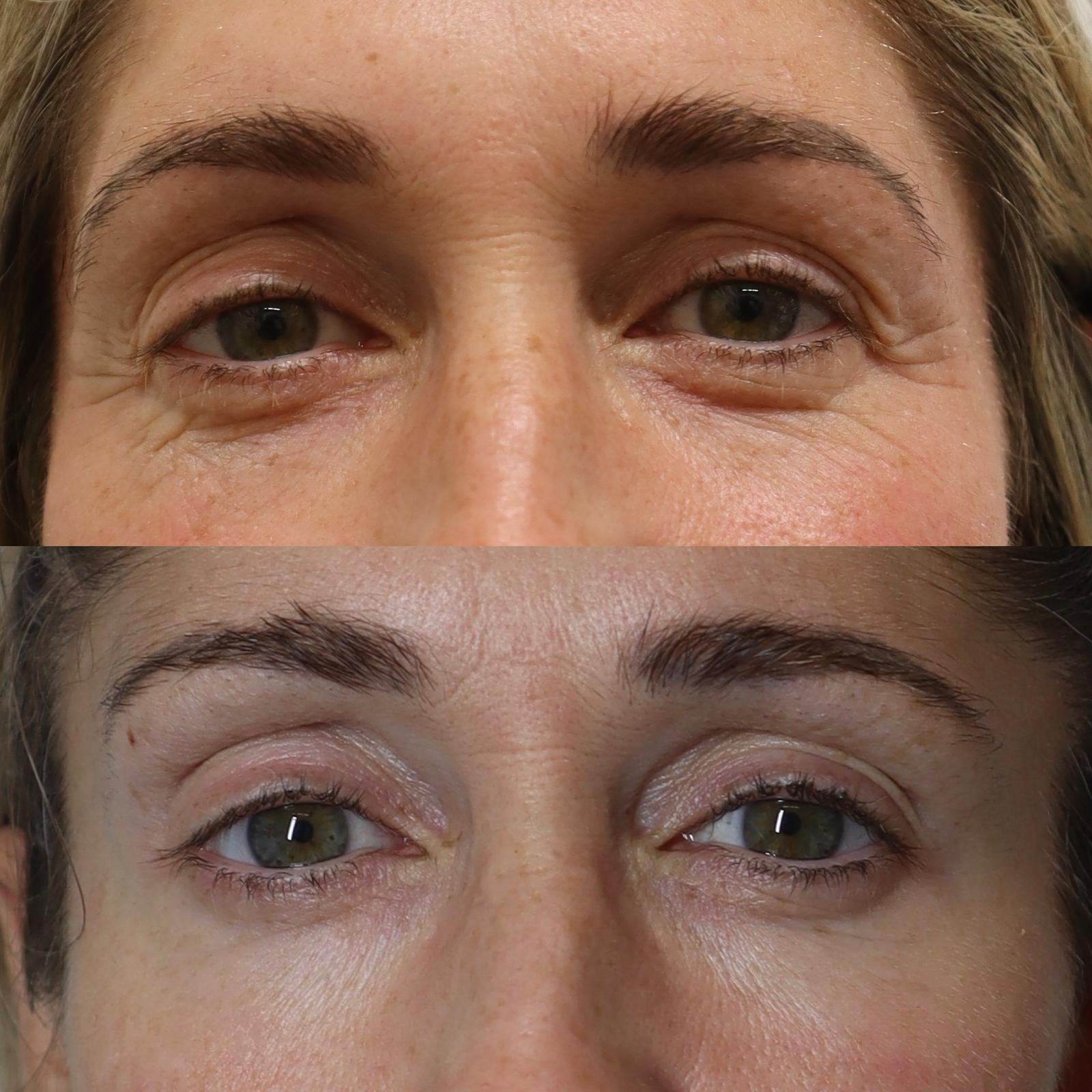
4 Weeks after 3 treatments on the eye area with Neogen. Courtesy of La Ross Clinic.
Neogen may be suitable for people dealing with multiple signs of aging, like texture, tone, laxity, and surface damage. As with all energy-based treatments, a consultation with an experienced provider is important to assess candidacy and set realistic expectations.
9. Ultrasound Skin Tightening
Treatments such as Ultherapy use focused ultrasound energy to target the deeper layers of tissue, including the SMAS layer that surgeons address in a facelift. This depth of penetration is what differentiates ultrasound tightening from most radiofrequency-based options.
Results develop gradually over 2-3 months as collagen is remodelled. The treatment is particularly suited to mild-to-moderate lifting of the brow, cheeks, neck, and décolletage. Downtime is generally low, though the treatment can be uncomfortable, and some temporary swelling is possible afterward.
Which Facial Gives the Best Results for Aging Skin?
For fine lines and overall texture -> microneedling is one of the most evidence-supported options available. It’s accessible, has minimal downtime, and the collagen response it produces is well-documented across multiple clinical studies.
For skin laxity and sagging -> RF-based treatments tend to produce the most reliable tightening results. T-Shape 2 is a practical multi-technology option for mild to moderate laxity; RF microneedling is appropriate if both wrinkles and laxity are present.
For sun damage, photoaging, and uneven skin tone -> chemical peels and nitrogen plasma technology might be useful.
For comprehensive rejuvenation addressing multiple concerns simultaneously -> nitrogen plasma technology may offer an advantage by treating both surface and deeper tissue in a single modality.
For people who want visible improvements with zero downtime -> HydraFacial, LED light therapy, and microcurrent may be good options.
How Often Should You Get Anti-Aging Facials?
Frequency depends entirely on the treatment:
- HydraFacial: monthly sessions are typically recommended for ongoing skin health and maintenance.
- Microneedling: standard protocol involves 1-3 sessions spaced 4-6 weeks apart, followed by maintenance procedures every few months.
- LED light therapy: often performed weekly or biweekly initially, followed by monthly maintenance sessions. Because the treatment is gentle and has no downtime, more frequent treatments are generally possible.
- RF skin tightening and T-Shape 2: most treatment plans involve at least six sessions, scheduled once or twice weekly, with maintenance thereafter.
- Microcurrent facials: results are temporary, so treatments are commonly performed weekly during an initial series and then maintained every few weeks depending on the individual’s goals.
- Chemical peels: superficial peels can be repeated every three to four weeks. Medium-depth peels require longer intervals, given recovery time, typically a few months.
- Nitrogen plasma technology: a single session can be effective for some people; others may require a second treatment after a recovery period. Maintenance is typically recommended every 1-2 years.
- RF microneedling: Often done in a series of 3-4 sessions spaced around 6 weeks apart, with maintenance as needed.
Are Anti-Aging Facials Worth It?
Many people might find that anti-aging facials are worth it, as long as they know what to expect from each. Professional facial treatments, particularly those that stimulate collagen production, can produce visible improvements that no topical creams could achieve because they don’t penetrate that deeply.
Other treatments, such as HydraFacial, LED light therapy, and microcurrent facials, are often used to improve skin quality, hydration, radiance, and maintenance between more intensive procedures.
That said, no facial reverses aging. The results are highly dependent on the provider’s skill, the appropriateness of the treatment for your skin type and concerns, and how consistently you support your skin at home.
Applying sunscreen is the most impactful thing you can do to preserve whatever results you achieve from professional treatments.
Key Takeaways
- Microneedling is one of the most effective treatments for improving fine lines, texture, and overall skin quality.
- RF microneedling is often preferred when wrinkles and skin laxity occur together.
- T-Shape 2, radiofrequency skin tightening, and ultrasound treatments may help improve mild-to-moderate skin laxity.
- Chemical peels and nitrogen plasma technology can be effective for photoaging, pigmentation, and uneven skin texture.
- HydraFacial improves hydration, radiance, and skin health but does not significantly tighten the skin.
- LED light therapy can be a useful maintenance treatment, particularly for people seeking a gentle, non-invasive option.
- Microcurrent facials may provide temporary lifting and contouring effects, but do not produce significant long-term collagen remodeling.
- Combination treatment plans often provide the most comprehensive approach to addressing multiple signs of aging.
FAQ
What is the best anti-aging facial?
There is no best facial for aging skin that suits everyone’s needs and skin type. The most popular facials for aging skin, though, are microneedling, RF microneedling, HydraFacial, nitrogen plasma skin technology, and combination devices like T-Shape 2.
Which facial stimulates collagen the most?
RF microneedling, nitrogen plasma technology, and T-Shape 2 are among the treatments with the strongest evidence for collagen stimulation.
What facial helps sagging skin?
Radiofrequency-based treatments, including RF microneedling and devices like T-Shape 2, as well as ultrasound tightening, are generally the most evidence-backed options for skin laxity.
What facial is best after age 50?
The most commonly used facials for people after 50 include RF microneedling, ultrasound, T-Shape 2, and nitrogen plasma technology.
Is HydraFacial good for aging skin?
Yes, Hydrafacial can be good for aging skin. It can help improve hydration, radiance, and surface quality with no downtime. It won’t produce the structural collagen change that energy-based treatments can, but it’s a useful complement to those procedures and a good standalone option for early signs of aging.
Is RF microneedling worth it?
If you have both wrinkles and skin laxity, RF microneedling may be worth it. It’s considered one of the more well-studied minimally invasive options available. Talk to a healthcare professional before trying it.
How long do anti-aging facial results last?
Some anti-aging facial results last a few weeks, like in the case of HydraFacial; other anti-aging facial results may last a year or longer, like in the case of RF microneedling or nitrogen plasma technology.
What is better, microneedling or chemical peel?
Microneedling and chemical peels target different concerns, so it’s best to choose based on your personal needs. Microneedling is generally more effective for fine lines, skin laxity, and texture. Chemical peels tend to outperform for pigmentation, sun damage, and surface discoloration. Many skin concerns benefit from both, used at appropriate intervals.
When should I get anti-aging facials?
Most people start anti-aging facials in their 30s, but it really depends on your unique needs. Some people still have a youthful glow in their 40s, for example, while others show signs of aging, like expression lines, earlier. Even if you start anti-aging boosters and treatments, it’s essential to talk to a healthcare specialist to choose the procedure that best suits your skin concerns.