Did you know that the skin around the eyes is the thinnest on the body? It also has less structural support and less fat, and it is one of the most active facial areas. It’s easy to see why crow’s feet, meaning those wrinkles that form at the outer corner of the eye, are so common.
Every time you squint your eyes (especially if you have myopia, for example, and don’t wear glasses or lenses), every time you laugh, every time you go out in the sun without sunglasses, your periorbital skin is slowly getting damaged. This is sped up by stress, diet, environmental factors, and genetics.
So, if you’ve noticed that you’re starting to develop crow’s feet and are looking for the best crows feet treatment, we’ve got you covered. In this article, we’ll explain why crow’s feet appear, how to reduce their appearance naturally, and what aesthetic procedures might work for you.
Disclaimer: This article is provided for informational and educational purposes only. The information presented here is not a substitute for professional medical evaluation, consultation, or care and should not be relied upon to make health-related decisions. Always consult a qualified and licensed medical or aesthetic professional before undergoing any cosmetic or aesthetic procedure.
What Are Crow’s Feet Wrinkles?
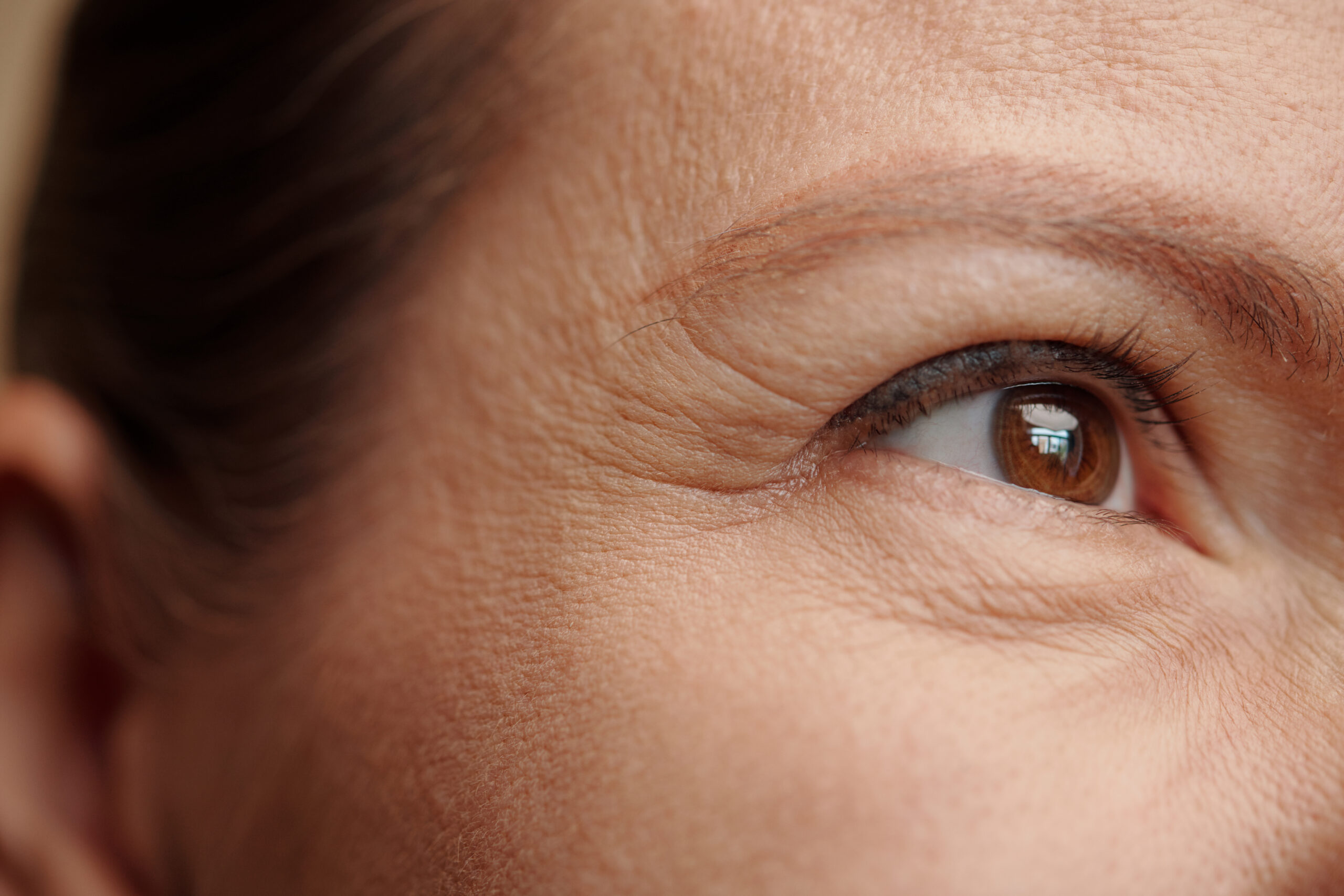
Crow’s feet are the clusters of fine lines and wrinkles that radiate from the outer corners of the eyes, fanning outward toward the temples. They’re a natural part of aging. Nearly every adult develops them at some point.
They’re called crow’s feet because they do look remarkably like the imprint of a crow’s foot in the sand. Technically, they’re sometimes called lateral canthal lines, though most people just call them crow’s feet. They’re also occasionally referred to as laugh lines, smile lines, or character lines.

What Causes Crow’s Feet?
Crow’s feet appear because the skin around the eyes is the thinnest and most dynamic in the entire body, and it has less subcutaneous fat.
The periorbital skin in the eye area is particularly vulnerable to natural aging changes. It is the thinnest and most dynamic area of the entire body, argue Hamie et al. In some people, it’s as thin as 0.2 mm (0.0078 in). The periorbital skin is also subject to constant movement, given that the orbicularis oculi muscle, which is responsible for blinking, is intertwined with the eyelid dermis.
In other words, repeated facial expressions are the primary cause of crow’s feet. Every time you smile, squint in the sun, or laugh at something funny, the muscles around your eyes contract, and over time, you develop fine lines and wrinkles because of that.
Collagen and elastin are very important here. Collagen gives your skin its structure and density. Elastin gives it the ability to return to its original shape after movement. Both decline gradually with age, starting in your mid-20s. By your 30s, the effects of this decline become more visible, especially around the eyes.
Moreover, UV radiation breaks down collagen and elastin further. Chronic sun exposure is one of the main causes of skin aging. Unfortunately, the eye area is particularly exposed to UV rays. So, if you frequently go out in the sun without sunglasses, you’ll likely notice crow’s feet earlier than people who wear sunglasses regularly.
Other contributing lifestyle factors include genetics, smoking, poor sleep, dehydration, pollution, and a diet low in antioxidants.
Dynamic vs. Static Crow’s Feet
Dynamic wrinkles appear only when the facial muscles are contracting, like when you smile or squint. At this stage, the skin still returns to a smooth state at rest.
Static wrinkles are visible even when your face is completely relaxed. This happens once the skin has lost enough elasticity and structural support that the crease stays put between expressions. Static lines often indicate some degree of damaged collagen and volume loss in the tissue underneath.
Most adults over 40 have some combination of both types, which is why multi-modal treatments tend to deliver the best results. A treatment that targets muscle movement alone (like Botox) may leave static lines largely untouched, while a treatment focused purely on collagen production may not fully address the dynamic component.

Crow’s Feet vs Other Eye Wrinkles and Issues
| Comparison Point | Crow’s Feet | Under-Eye Wrinkles | Glabellar Lines | Eye Bags | Dark Circles | Hooded Eyelids |
| What it is | Fine expression lines at eye corners | Wrinkles beneath eyes | Frown lines between brows | Puffiness or bulging | Pigmentation or shadowing | Excess upper eyelid skin |
| Location | Outer corners of eyes | Under lower eyelid | Between eyebrows | Under eyes | Under eyes | Upper eyelid |
| Main cause | Smiling, squinting, aging | Skin thinning, sun damage | Repeated frowning | Aging, fluid retention, genetics | Genetics, thin skin, fatigue | Genetics, aging |
| Looks like | Fan-shaped lines | Fine crinkled lines | Vertical “11” lines | Swelling or bulges | Darkened under-eye area | Drooping skin fold |
| Wrinkle or other issue? | Wrinkle | Wrinkle | Wrinkle | Volume issue | Pigment/shadow issue | Structural issue |
| Movement-related? | Yes | Sometimes | Yes | No | No | No |
| Usually worsens with age? | Yes | Yes | Yes | Often | Sometimes | Yes |
When Do Crow’s Feet Usually Appear?
Most people start to notice crow’s feet in their late 20s to mid-30s. For some people, particularly those who spend a lot of time outdoors without eye protection, they can appear earlier. For others, especially those with oilier skin tones (which tend to age more slowly), they may not become noticeable until the 40s.
Also, sensitive skin types are often more reactive to environmental triggers and may develop visible fine lines sooner. Genetics plays a significant role, too. If your parents developed crow’s feet early, there’s a chance you will as well.
Natural Crow’s Feet Treatment Options
Before moving to in-clinic procedures, it’s important to learn how to care for the periorbital skin at home, given that the results obtained after cosmetic procedures must be maintained over time.
These natural crow’s feet treatment options are most effective for early, mild crow’s feet or as maintenance alongside professional treatments.
Before we discuss more, don’t forget that we’re talking about the eye area, which is much more sensitive than the skin on other facial areas. Therefore, make sure that the products you’re choosing can be safely used on the periorbital skin.
Retinoids (Vitamin A Derivatives)
Retinoids accelerate cell turnover and stimulate collagen production in the dermis. Retinol is the most widely available version. Prescription tretinoin is stronger and tends to deliver more visible results more quickly, but it is also not suitable for everyone.
Retinoids can help soften crow’s feet if used in a daily routine for the skin. It takes 12 weeks or more to really see improvements. They’re most effective for mild to moderate fine lines and can also improve overall skin texture.
A few things to keep in mind if you do want to try retinoids:
- Start with a low concentration and build up slowly to reduce the risk of irritation, especially around the sensitive skin of the eye area.
- Use only at night, as retinoids can increase sun sensitivity.
- Consistency matters more than concentration. Long-term use at a low dose outperforms short bursts at a high dose.
- Talk to a dermatologist before using retinoids if you have any skin issues.
Eye Creams with Active Ingredients
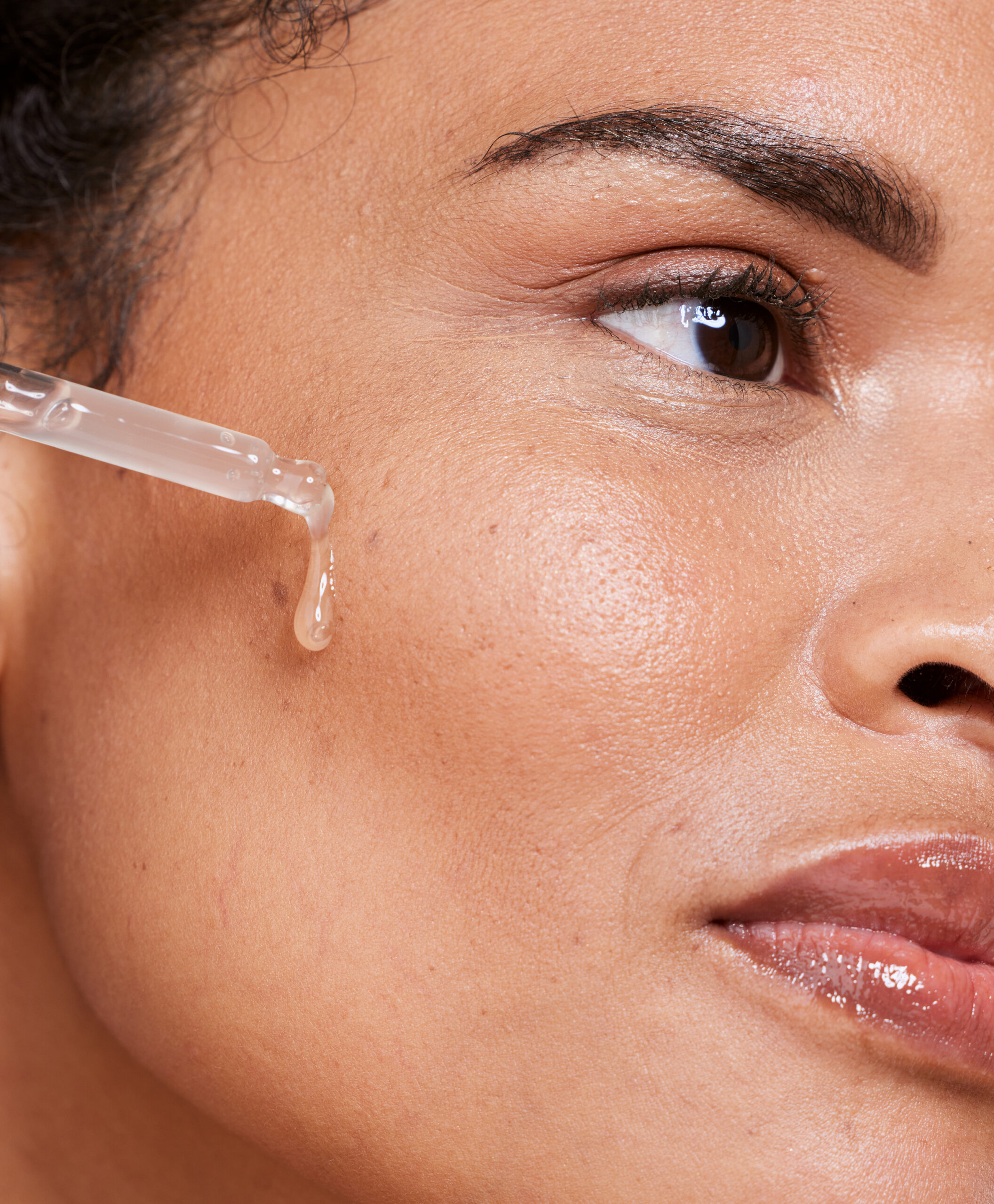
Creams that are formulated specifically for the eye can be really helpful. It’s usually not recommended to use a regular face cream under the eyes because the skin in that area is different from the skin on other facial areas. It’s much thinner and more sensitive, so the cream must be gentle. It might be expensive to buy a separate eye cream, but it will last much longer than your face cream because you only have to apply a tiny amount.
Look for eye creams containing:
- Hyaluronic acid: a humectant that draws water into the skin, temporarily plumping fine lines
- Peptides: short chains of amino acids that can prompt the skin to produce collagen
- Niacinamide: can help improve skin texture and can support the skin barrier
- Caffeine: can reduce puffiness and temporarily tighten the eye area
- Antioxidants (vitamin C, E, resveratrol): help neutralize free radical damage and slow skin aging
SPF Eye Protection
Wear sunscreen daily (with a sun protection factor of 30 or higher). This is perhaps the most effective thing you can do to prevent crow’s feet from deepening. Sun exposure is responsible for a significant proportion of visible skin aging, and the eye area is particularly exposed, especially if you squint in bright light.
Pair SPF with sunglasses that offer UV400 protection. This combination reduces UV exposure and limits the muscle movement involved in squinting, both of which contribute to the formation of dynamic wrinkles.
Facial Massage and Lymphatic Drainage Techniques
Facial massage and lymphatic drainage won’t help you get rid of wrinkles, but they can improve circulation in the eye area, support lymphatic drainage, and reduce puffiness that makes crow’s feet look more pronounced. Gua sha tools and facial rollers have become popular for this purpose.
On the other hand, it’s recommended to avoid facial exercises if you have crow’s feet, because they can actually deepen them, given that crow’s feet are primarily caused by repeated facial expressions.
Diet and Lifestyle Adjustments
The lifestyle choices that support overall health also support healthy skin. Here’s what you can do:
- Adopt a healthy diet rich in vitamin C, zinc, and omega-3 fatty acids, which provide the building blocks for collagen production.
- Avoid smoking to protect your skin against premature aging and reduced elastin production.
- Limit alcohol intake, as alcohol dehydrates the skin and depletes the nutrients needed for repair.
- Prioritize sleep, because that’s when the skin does much of its structural repair work.
These changes won’t yield results overnight, but don’t be disappointed yet. Years from now, you’ll reap the benefits of a healthy lifestyle!
In-Office Crow’s Feet Treatment Options
Professional treatments usually deliver more significant and faster results than at-home methods. However, there are many options nowadays, and you should choose the best crow’s feet treatment based on whether your wrinkles are primarily dynamic wrinkles, static wrinkles, or both, as well as based on your skin type, goals, and tolerance for downtime.
Also, since the area around the eye is very sensitive, you should make sure that the professional you’re choosing for the procedure has extensive experience in treating the periorbital skin.
Here are some of the most popular professional crow’s feet treatment options.
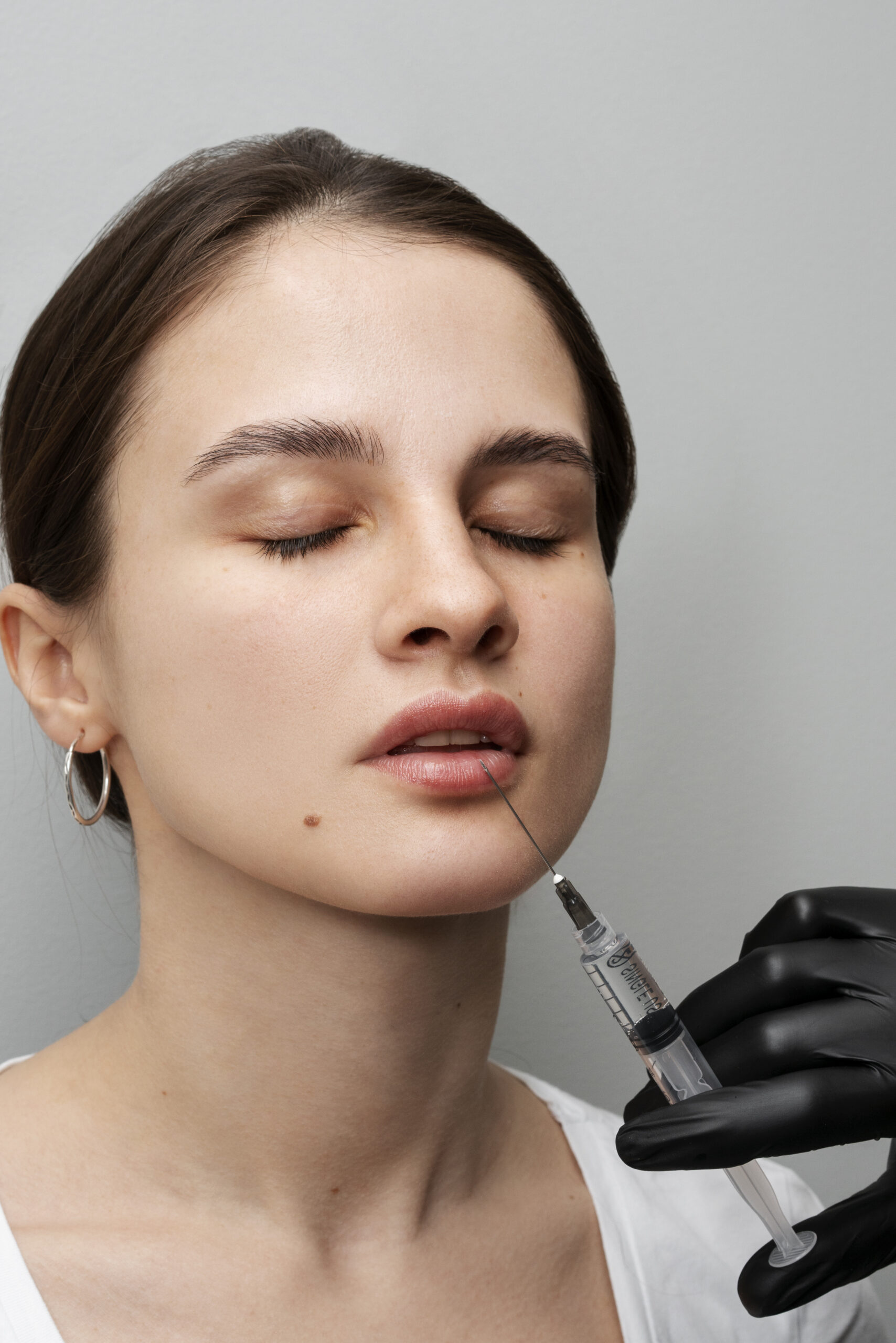
Botox (Botulinum Toxin Injections)
Botox temporarily blocks the nerve signals to the muscles that surround the eye, reducing the muscle contractions responsible for dynamic wrinkles.
The procedure takes around 15 to 20 minutes, involves a series of small injections at the outer corners of the eye, and requires no downtime. Results typically appear within 3 to 7 days and last between 3 and 6 months with regular maintenance.
Botox is most effective for dynamic wrinkles (those that appear with natural expression). For static wrinkles visible at rest, it may soften crow’s feet, but it won’t eliminate them entirely. Other treatments targeting the skin structure are usually recommended.
Dermal Fillers (Hyaluronic Acid Fillers)
Dermal fillers address the volume loss and structural deficit that contribute to static wrinkles. As we age, the fatty tissue under the skin around the eyes diminishes. That’s why you start noticing some hollowing and why crow’s feet look more pronounced over the years. Hyaluronic acid fillers can immediately restore some of this volume, plump the overlying skin, and soften crow’s feet.
Results from hyaluronic acid fillers can last 6 to 18 months, depending on the product and individual metabolism. They can also be dissolved if you don’t like the results.
Fillers are generally most appropriate for static wrinkles and volume loss.
Chemical Peels
Chemical peels use acids (such as glycolic, lactic, or TCA) to remove the outermost layers of the skin, triggering cellular renewal and stimulating new collagen production. For mild to moderate crow’s feet, superficial peels can improve skin texture, reduce the appearance of fine lines, and give the eye area a more even, refreshed tone.
There are light peels and medium-deep peels. For the eye area, only light peels are recommended.
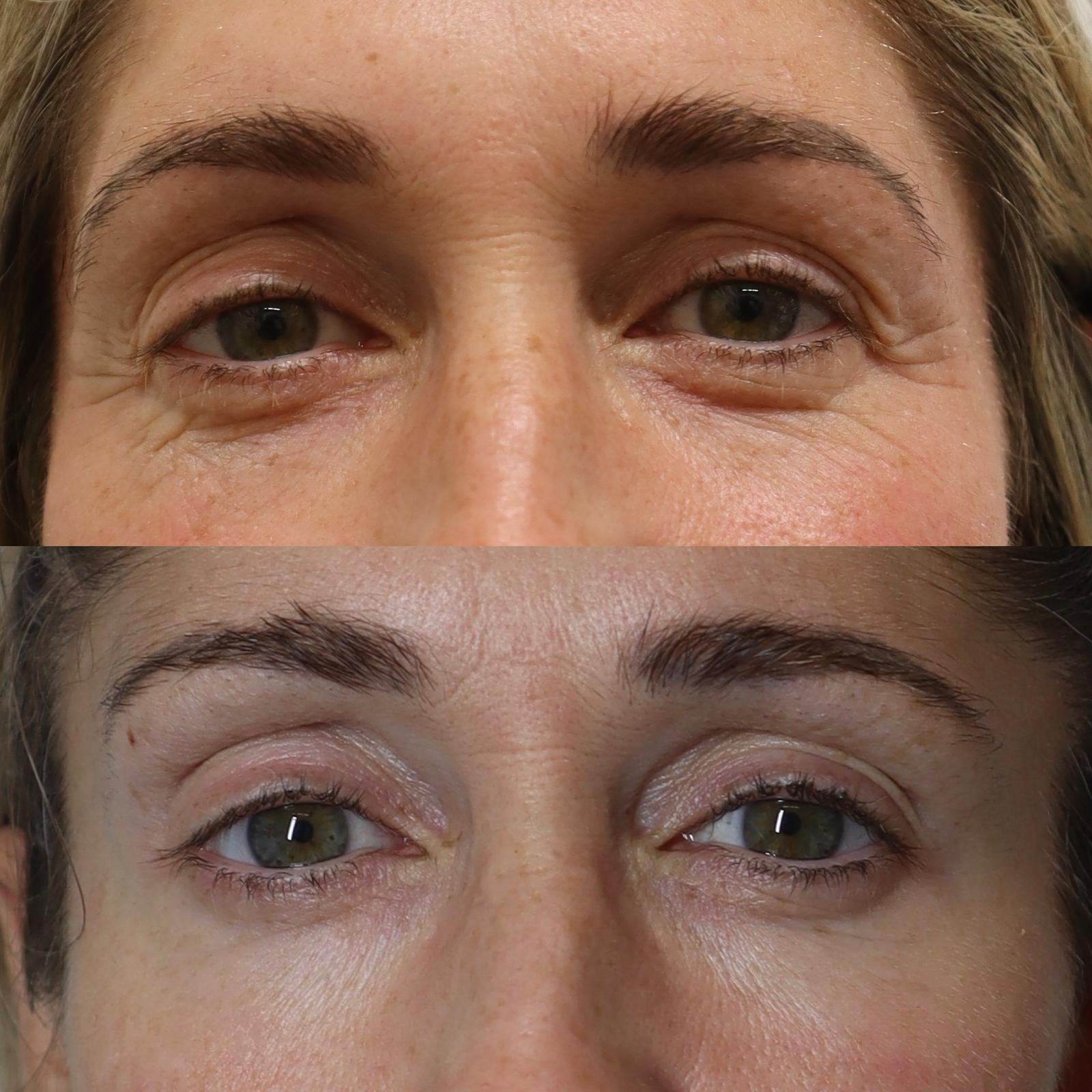
4 Weeks after 3 low-energy treatments on the eye area with Neogen. Courtesy of La Ross Clinic.
Nitrogen Plasma Technology
Nitrogen plasma (Neogen) is one of the more advanced technologies available for crow’s feet treatment and periorbital rejuvenation. Neogen converts nitrogen gas into plasma energy, delivering a precise thermal effect to the skin that triggers deep regeneration.
What makes Neogen different from many other devices is that it treats the entire skin architecture rather than working in fractional patterns. This means that the entire treatment zone is addressed, not just isolated columns of tissue. Because of this, it triggers a more comprehensive collagen remodelling process across the periorbital skin.
Here are some things you need to know about Neogen procedures:
- FDA-cleared for wrinkle reduction and suitable for all skin types
- No epidermal vaporisation, the outer skin is preserved as a natural barrier, supporting more comfortable healing
- Downtime varies by energy level: low-energy treatments involve minimal downtime, while higher-energy protocols may involve 5-7 days of redness and peeling
- Visible results typically begin to appear 3-6 months post-treatment as the skin’s growth phase progresses; results can last up to 2 years
- A typical course involves 1-3 sessions spaced 4-6 weeks apart, depending on the depth of treatment and individual skin concerns
Neogen can be recommended to people with significant sun damage, deeper wrinkles, or those who want comprehensive skin regeneration.
Microneedling and RF Microneedling
Microneedling involves the use of fine needles to create thousands of tiny, controlled micro-injuries in the skin, triggering the body’s wound-healing response and stimulating collagen and elastin production. RF microneedling combines fine needles with radiofrequency, being even more effective. It can be recommended for improving skin texture, reducing the appearance of fine lines, and addressing mild static wrinkles.
Results build gradually over several weeks as new collagen is produced. A typical course involves 3-6 sessions spaced 4-6 weeks apart. Downtime is usually a few days. However, keep in mind that some people find this procedure slightly uncomfortable because the skin around the eyes is thinner and more sensitive.
Laser Resurfacing
Laser resurfacing uses focused light energy to address the skin at both the surface and deeper structural levels. It’s considered one of the most effective tools for deeper wrinkles and significant skin texture issues.
There are two broad categories:
- Ablative lasers remove the outer skin layers, triggering significant regeneration. Results can be dramatic, but expect two or more weeks of healing.
- Non-ablative lasers heat the dermal tissue without surface removal, stimulating collagen production with less downtime.
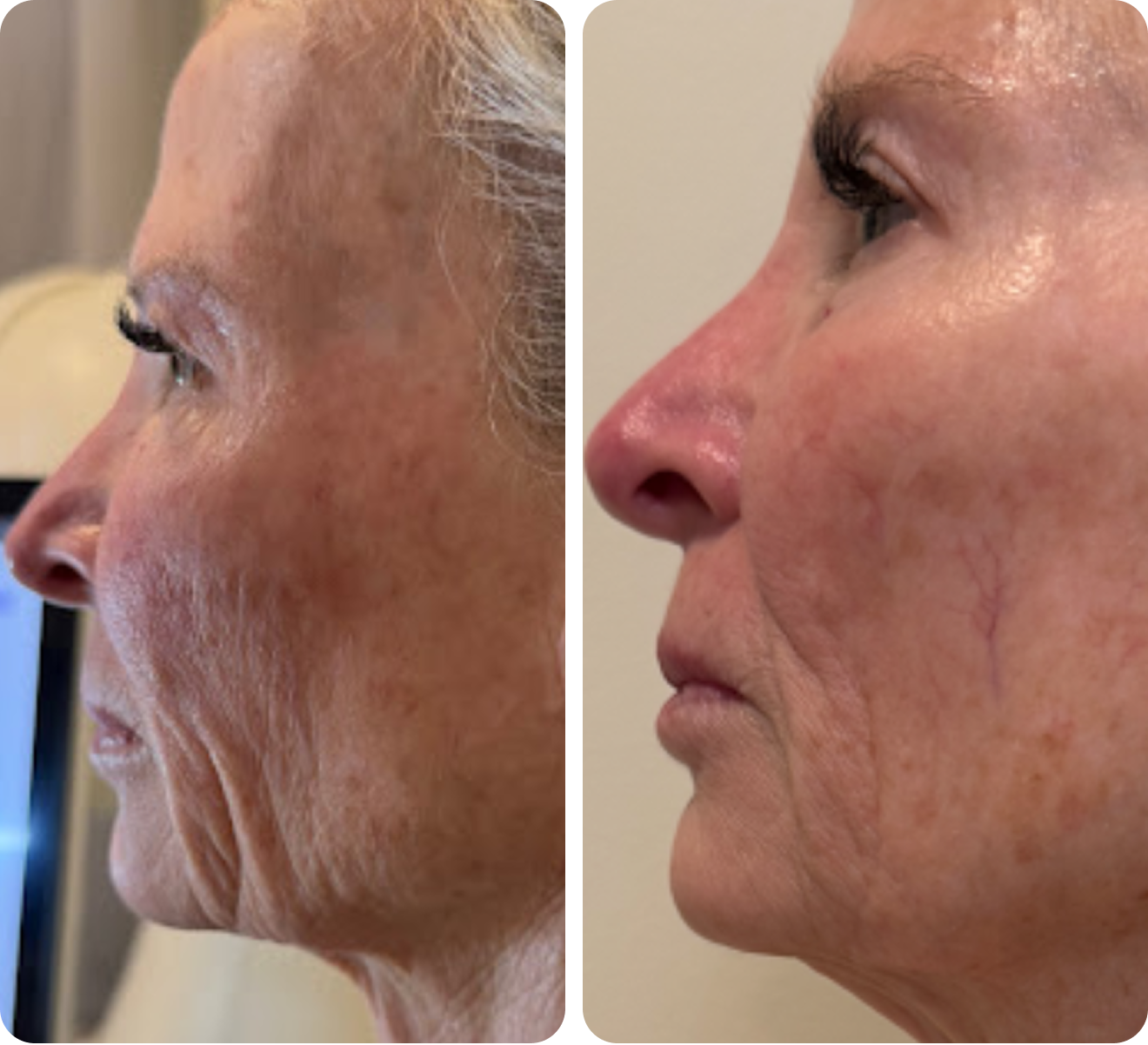
Before and after 8 skin-tightening treatments on the face with T-Shape 2.
T-Shape 2
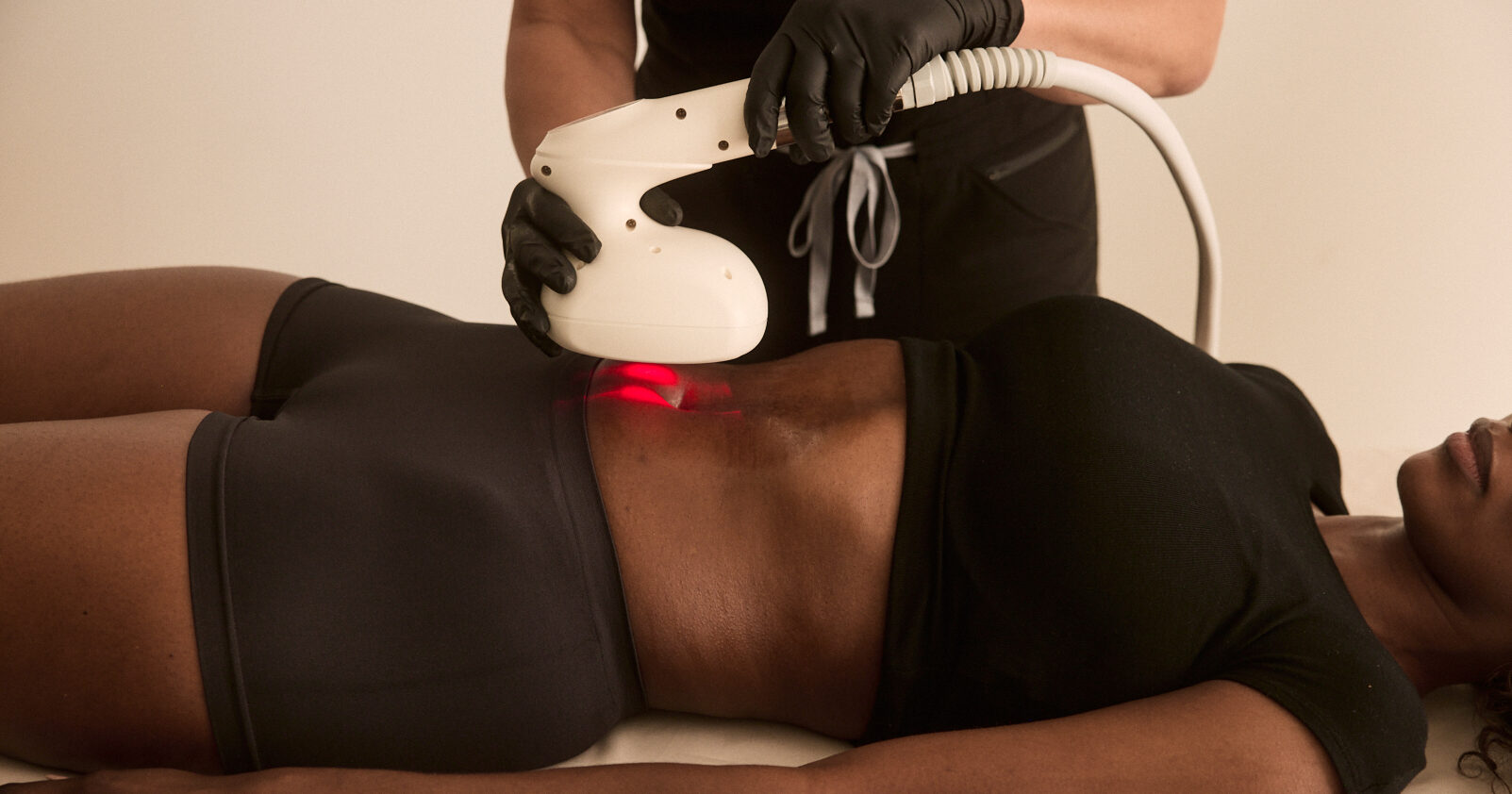
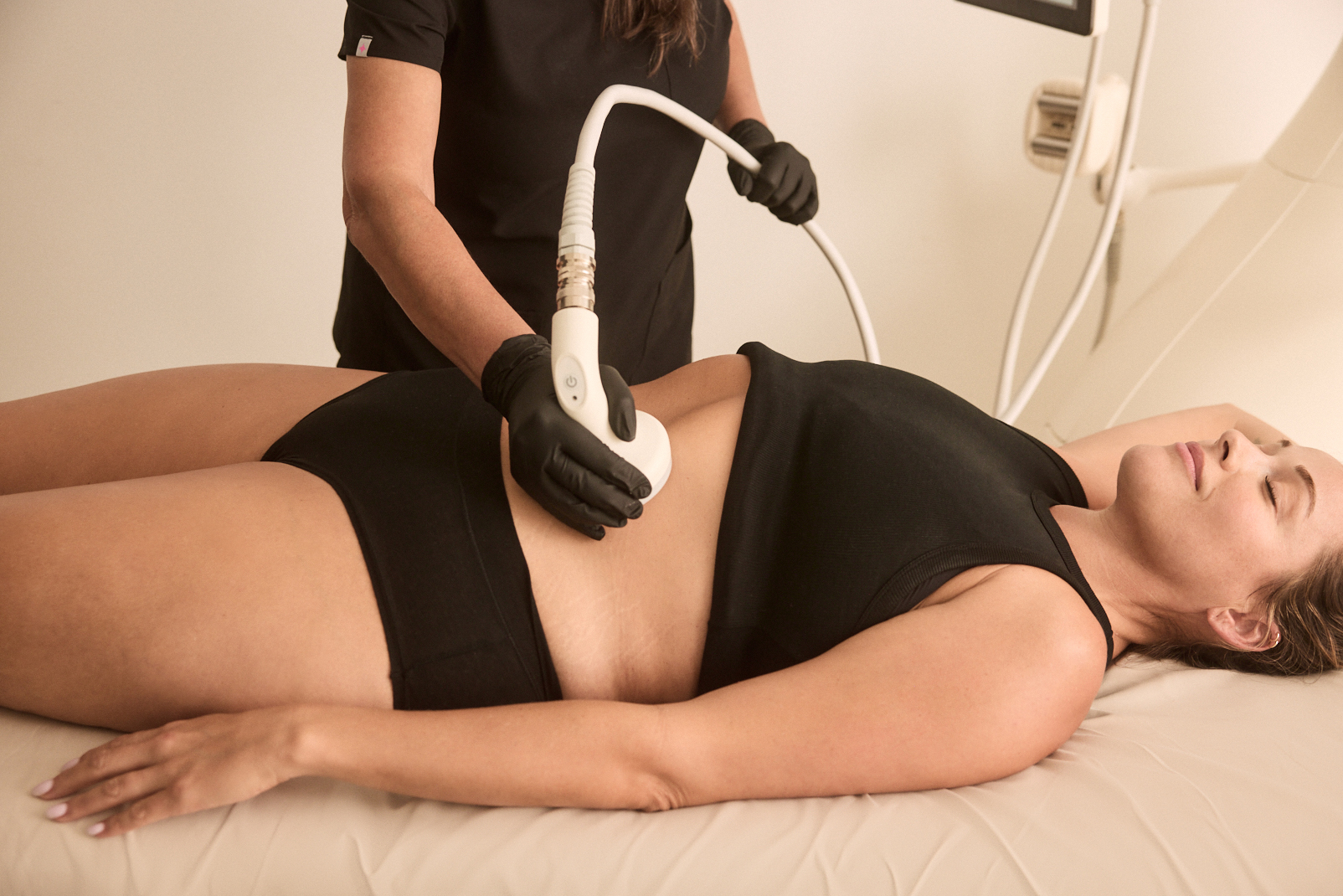
The T-Shape 2 is a multi-technology device that offers a non-invasive approach to crow’s feet treatment by combining several modalities in a single session. It’s well-suited for clients looking to address crow’s feet and broader facial aging without needles or downtime.
The T-Shape 2 operates through four technologies:
- Bipolar Radiofrequency (RF): delivers controlled heat to the dermis, stimulating collagen production and improving skin firmness and elasticity.
- Low-Level Laser Therapy (LLLT): promotes cellular regeneration, improves vasculature, and supports collagen remodelling, particularly useful for improving overall skin texture around the eye area
- Endodermic Massage with Vacuum Suction: improves circulation and lymphatic drainage
- Mesospheric Activation: supports the body’s natural circulatory processes, contributing to a healthier, more radiant result over time
Together, these technologies can soften crow’s feet, improve skin texture, and support the overall firmness of the eye area with no downtime. Sessions typically last 30 to 60 minutes.
T-Shape 2 is suitable for a range of skin types and can be used on the face, neck, and around the eyes, as well as on the body. It’s particularly effective as part of a maintenance protocol or in combination with other treatments.
Radiofrequency Skin Tightening
Radiofrequency (RF) treatments deliver controlled thermal energy to the dermis, heating it to a temperature that stimulates collagen production and tissue remodelling without damaging the surface of the skin. The result is gradual tightening and firming of the eye area over several weeks following the treatment.
RF is generally well-suited for people who want meaningful results without significant downtime. It’s also one of the few energy-based modalities that can be used safely on all skin tones.
Ultrasound-Based Treatments
Ultrasound-based devices like Ultherapy use sound waves to deliver energy to specific depths in the skin and soft tissue. At the eye area, this can stimulate deep collagen production and tissue contraction, producing a mild lifting and tightening effect on crow’s feet and upper eyelid laxity.
HIFU treatments typically require a single session per year and involve minimal downtime, though some clients experience temporary tenderness in the treated area. Results build gradually over 3-6 months.
Platelet-Rich Plasma (PRP) Injections
PRP treatments use a concentration of growth factors derived from your own blood, injected or microneedled into the eye area to stimulate cellular repair and collagen production.
It might be a good option for you if you prefer a treatment that uses only your own biological material.
How to Get Rid of Crow’s Feet: Matching Treatment to Your Situation
Here are some recommendations from the experts, depending on your skin issue and wrinkle depth:
| Situation | Suggested approach |
| Early, dynamic lines only (visible smiling, not at rest) | SPF, retinoids, preventive Botox |
| Mild static lines at rest | Retinoids, hyaluronic acid eye creams, RF device treatments (T-Shape 2), microneedling |
| Moderate crow’s feet, some static wrinkling | Botox + RF (T-Shape 2), or Neogen for more comprehensive regeneration |
| Deeper wrinkles with volume loss | Botox + fillers + laser resurfacing or Neogen |
| Significant sun damage and skin texture concerns | Neogen, laser resurfacing |
| Preference for no needles or downtime | T-Shape 2, HIFU |
And here are a few questions to ask yourself and to bring to a consultation:
- What’s your primary concern? Lines when you smile? Lines at rest? A general loss of firmness around the eye area?
- What’s your tolerance for downtime? Laser resurfacing and higher-energy Neogen protocols can deliver significant results but require recovery time. Botox, T-Shape 2, and low-energy RF involve minimal downtime and fit more easily into a busy life.
- Do you prefer non-injectable options? A number of effective treatments, such as T-Shape 2, Neogen, and HIFU, can address crow’s feet without needles.
- What’s your budget? Some treatments require a series of sessions; others are a one-time investment with maintenance as needed. Factor in not just the upfront cost but the frequency of repeat treatments.
- Are you willing to maintain results? Almost all crow’s feet treatment options require some ongoing maintenance.
Why It’s Important to Talk to a Professional
The eye area is anatomically complex. For example, if the injections are placed incorrectly or if a rejuvenation device is used at an incorrect setting, you can experience unwanted side effects, including eyelid drooping, asymmetry, scars, or infections. All in-office procedures for this facial area must be performed by a practitioner who understands periorbital anatomy specifically, not just facial injection technique in general.
Schedule a consultation with a qualified professional who can assess whether your crow’s feet are primarily dynamic or static, whether there’s underlying volume loss, whether your skin type and lifestyle factors are contributing, and which combination of treatments is most likely to give you a natural result. They can identify sensitive skin concerns or contraindications that might rule out certain approaches entirely.
FAQ
Does collagen fix crow’s feet?
Collagen supplements can help support your skin’s health and give it a boost in terms of plumpness, but they cannot help you get rid of crow’s feet completely, especially if the wrinkles are deep.
How to get rid of crow’s feet completely?
Getting rid of established crow’s feet completely is difficult, particularly for static wrinkles with significant volume loss. But you may achieve a noticeable reduction in their appearance with treatments like Botox, Neogen, and laser resurfacing.
Can you conceal crow’s feet with makeup?
Yes, to a degree, you can conceal crow’s feet with makeup. You can use hydrating primers and lightweight foundations to conceal crow’s feet and reduce their visible depth. Avoid heavy matte foundations because they can settle into lines and make them look worse. Avoid setting powder, as well, because it can be drying and emphasize fine lines. In short, the fewer products, the better.
At what age should I start treating crow’s feet?
If you start to notice crow’s feet forming, it’s worth establishing good preventive habits regardless of age. Protect the area from sun exposure, hydrate it well, use retinoids, and have a healthy, skin-supporting diet. Botox is also often recommended as a preventive measure.
Are crow’s feet treatments safe?
The vast majority of well-established crow’s feet treatment options have strong safety profiles when performed by qualified practitioners. Still, always schedule a consultation with a healthcare professional before trying any treatment.
Do crow’s feet come back after treatment?
Crow’s feet do come back after treatment, because the treatment doesn’t stop the natural aging process. However, results do usually last at least 6-12 months, especially if you maintain them at home every day. From there, you likely need maintenance sessions once or twice a year.
What ingredients fight crow’s feet?
Focus on a skin care routine with retinol, peptides, vitamin C, vitamin E, hyaluronic acid, and niacinamide, which can help you fight crow’s feet.