Noticed a gradual softening of your jawline? Or maybe a downward pull along the lower face? Or does your skin begin to sag below the chin? You’re definitely not the only one dealing with jowling. And it’s caused by structural changes that happen well beneath the surface.
There are more treatment options today than ever before. You can make a few lifestyle adjustments to support your skin health. You can also try advanced skin tightening procedures that can produce results without surgery.
So, if you want to learn how to get rid of jowls, keep reading! This article covers what causes jowls, what you can do at home to slow their progression, and which medspa procedures are worth asking a healthcare professional about.
Disclaimer: This article is provided for informational and educational purposes only. The information presented here is not a substitute for professional medical evaluation, consultation, or care and should not be relied upon to make health-related decisions. Always consult a qualified and licensed medical or aesthetic professional before undergoing any cosmetic or aesthetic procedure.
Quick Answer: How to Get Rid of Jowls
To get rid of jowls, you can try focused ultrasound (HIFU), radiofrequency treatments, RF microneedling, nitrogen plasma skin regeneration (Neogen), and devices like the T-Shape 2. They can help tighten the skin and stimulate collagen for mild to moderate jowling. Injectable treatments like dermal fillers and biostimulatory injectables (Sculptra, Radiesse) can help address volume loss in the lower face.
For significant skin excess or deep tissue descent, surgical options might be better. The right treatment depends on the cause, so a consultation with a qualified specialist is the best first step.

What Are Jowls?
Jowls are the areas of soft tissue that sag below the jawline and chin. This creates a loss of definition between the lower face and the neck. The skin, fat, and muscle can no longer hold their position against gravity, so drooping or heaviness develops around the jawline. This happens either because the skin has lost elasticity, the underlying fat has shifted, or the structural support of the face has weakened over time.
Most people start noticing jowls in their 40s and 50s. Genetics, sun exposure, and significant weight changes can cause them to appear earlier. Some people develop rounded heaviness along the jaw. Others see a more subtle blurring of the jawline contour or a slight downward pull at the corners of the mouth.
What Causes Jowls?
Jowls don’t develop overnight. And they’re rarely caused by one thing. They’re the result of several processes that progress across decades.
Collagen and Elastin Loss
Your skin gets its structure and elasticity from two proteins: collagen and elastin. From around age 25, the body produces less collagen each year. Your collagen production decreases by roughly 1% annually, according to a research paper authored by Seungman Park from Johns Hopkins University. Elastin, which gives your skin the ability to snap back after movement, degrades at the same time.
And this way, your skin loses its ability to stay anchored against the pull of gravity. Sagging skin along the lower face is often the first visible sign of this process.
Fat Redistribution and Bone Changes
The face doesn’t just lose volume with age. It also redistributes it. The fat pads that once gave the cheeks their fullness begin to descend. Some pockets of fat thin out entirely.
At the same time, the underlying bone structure changes. In their study, Robert B Shaw Jr. et al. discovered something truly interesting. The mandible changes that occur naturally with age, coupled with soft-tissue changes, can make the lower third of the face appear aged. That contributes to what many describe as a sagging jawline.
The Role of the SMAS and Facial Ligaments
The superficial musculoaponeurotic system (SMAS) is a layer of fibromuscular tissue that connects the facial muscles to the skin above them. The retaining ligaments anchored to this system hold the soft tissue in place. Over time, these ligaments weaken and the SMAS loses integrity. The lower face descends, and jowls form along the jawline.
Genetics
Some people are simply more predisposed to early jowling. Genetics influence skin thickness, bone structure, and the rate of collagen degradation. If a parent developed prominent jowls in their 40s, there is a chance that their children will too. Even repetitive facial habits and certain lifestyle choices can lead to saggy jowls.
Ozempic Face and Rapid Weight Loss
Rapid or significant weight loss can also cause jowling. This is particularly common in the context of GLP-1 receptor agonists like semaglutide (Ozempic, for instance). These medications have become widely used for weight management. While the metabolic benefits are well-documented, some patients experience what’s called “Ozempic face.” This is an accelerated volume loss and facial aging process that leaves the skin without the underlying support it previously had.
When people lose weight quickly, their skin doesn’t have time to contract gradually. These changes, particularly in people over 40, can cause pronounced jowling, among other skin issues.
That doesn’t mean that weight loss needs to be avoided. It does mean, though, that people on GLP-1 medications may want to discuss facial support strategies with their provider before the changes become noticeable.
How to Get Rid of Jowls Naturally
Before exploring medspa procedures, there are some evidence-informed habits that you can try. They may help slow jowl formation. They can also help maintain the results of treatments over time.
These won’t reverse significant structural changes, though. But they’re very important for maintaining your skin’s health and youthful appearance.

Sun Protection
UV radiation is one of the most well-studied causes of collagen breakdown. Chronic ultraviolet exposure accelerates the degradation of dermal collagen and elastin fibers.
Because of this, daily broad-spectrum SPF 30 or higher remains among the most evidence-backed things you can do to slow visible skin aging, including the tissue laxity that leads to jowls.
Retinoids
Topical retinoids can help stimulate collagen production and accelerate skin cell turnover. A double-randomized study led by Anne Bouloc MD, PhD et al. compared the effects of retinoids on the skin. They confirmed that retinol cream and tretinoin cream use is associated with measurable improvements in skin laxity and wrinkle depth over time. Both contribute to maintaining youthful facial contours.
Facial Exercises for Jowls
It’s still unknown whether facial exercises are really helpful, but you can still try face yoga, for instance. There is some research suggesting that facial muscle exercises may be helpful, though, especially those that target the lower face and the neck skin.
For instance, in a small study, Murad Alam et al. analyzed the results of the participants who performed 30 minutes of facial exercises daily for 20 weeks. They found that these participants looked approximately three years younger. They confirmed that the effect is likely driven by the hypertrophy of the cheek and other muscles. Still, the authors themselves state that this study had limitations, particularly because the sample was small.
Diet, Hydration, and Collagen-Supporting Nutrients
Adequate hydration, a diet high in antioxidants, and sufficient vitamin C intake support your body’s collagen synthesis pathways. A poor diet that lacks Vitamin C, for example, is associated with impaired skin integrity. Why? Because Vitamin C is absolutely necessary for collagen production.
Some studies have also analyzed the effects of oral collagen peptide supplementation on the skin. They found modest but statistically significant improvements in skin elasticity.
Sleep Position
If you always sleep on one side of your face, this may accelerate skin creasing. Over time, it can cause asymmetric laxity. That’s why some dermatologists recommend sleeping on your back if you want to prevent jowls. There’s limited direct evidence that links sleep positions to jowl formation, but you don’t lose anything by trying.
How to Get Rid of Jowls with Facial Procedures
This is where the most meaningful clinical improvements occur. The procedures below vary in their mechanism, downtime, depth of effect, and cost. That’s why a consultation with a qualified provider is the appropriate way to determine which option, or combination of options, is right for your anatomy and goals.
Focused Ultrasound (HIFU / Ultherapy)
High-intensity focused ultrasound (HIFU) delivers precise thermal energy to targeted depths below the skin surface. It can even reach the SMAS layer, the same tissue surgeons work with during a facelift. That thermal injury triggers a wound-healing response. In turn, that wound-healing response stimulates new collagen production over the following months.
For jowls specifically, HIFU may help with tightening loose skin along the deeper layers of the lower face and jawline without disrupting the skin surface. Results typically develop over three to six months as neocollagenesis (new collagen formation) happens. A single session can produce effects that last 1-2 years.
Suitable for: Mild to moderate jowling in people with reasonable skin quality. Generally not a first choice for individuals with significant volume loss alongside laxity.
Downtime: Minimal. Temporary redness or swelling in the hours following treatment.
Radiofrequency (RF) Skin Tightening
Radiofrequency devices deliver electromagnetic waves that generate heat in the dermis and subdermis. This stimulates collagen remodeling. It also causes the existing fibers to contract.
Most RF skin tightening devices work primarily within the dermis, not at the SMAS level. They can work for improving skin texture, surface laxity, and mild to moderate jowling. They are also generally more comfortable than HIFU.
Results are typically gradual and cumulative. You may have to schedule a series of treatments (commonly 4-6 sessions) for the best results.
Suitable for: Mild skin laxity and early jowl formation. Often used as a maintenance or prevention strategy.
Downtime: None to minimal.
RF Microneedling
RF microneedling combines two mechanisms. First, there are the micro-injuries created by tiny needles (which trigger the skin’s natural repair response). Secondly, there’s radiofrequency energy that is delivered directly into the dermis through the needle tips. The heat is thus deposited at precise depths with less surface injury than laser alternatives.
In the lower face, RF microneedling may help improve skin tightness and texture. Devices in this category include Morpheus8, Genius, Sylfirm X, and others.
Suitable for: Mild to moderate jowling with skin texture concerns. Works well in combination protocols.
Downtime: Redness and mild swelling for 24 to 48 hours. Pinpoint bleeding during the procedure.
Dermal Fillers
Dermal fillers are most commonly hyaluronic acid (HA) based. They don’t tighten the tissue directly. They can address the volume loss and structural collapse that allows jowls to form and worsen.
This approach, sometimes called a “liquid facelift,” works best for people who are primarily dealing with volume loss, not just excess or saggy skin. HA fillers are also reversible with hyaluronidase, so they’re a lower-risk starting point.
The professional who will work on your face needs to have detailed knowledge of facial anatomy and the specific fat compartments involved. If the dermal filler is injected into the wrong plane or incorrect location, it can actually worsen the appearance of your jowls. In rare cases, it can even lead to vascular complications. In other words, this procedure should only be performed by a trained and experienced injector.
Suitable for: People whose jowling is primarily driven by volume loss and descent rather than skin excess.
Downtime: Mild bruising and swelling for several days. Results are immediate.
Biostimulatory Injectables
Unlike hyaluronic acid fillers, biostimulatory injectables trigger the body’s own collagen production. They do not add immediate volume. Biostimulatory injectables are similar to energy-based procedures in this regard. The two most well-known options are:
- Poly-L-lactic acid (Sculptra): PLLA stimulates fibroblast activity and new collagen formation over weeks to months. A series of sessions (typically three, spaced four to six weeks apart) can produce gradual volume restoration and lead to skin quality improvement. Results can last two or more years.
- Calcium hydroxylapatite (Radiesse): CaHA provides immediate structural support while also stimulating collagen over time. It has a thicker consistency than most HA fillers and is particularly useful in areas requiring structural lift, including the jawline.
Both options may be recommended for those who want longer-lasting results than HA filler provides. They may also be suitable for people who are looking for skin quality improvement as well as increased volume.
Suitable for: Individuals with moderate volume loss, skin laxity, and poor skin quality who want sustained improvement over time.
Downtime: Similar to dermal fillers. Sculptra may have slightly more post-treatment swelling.
T-Shape 2
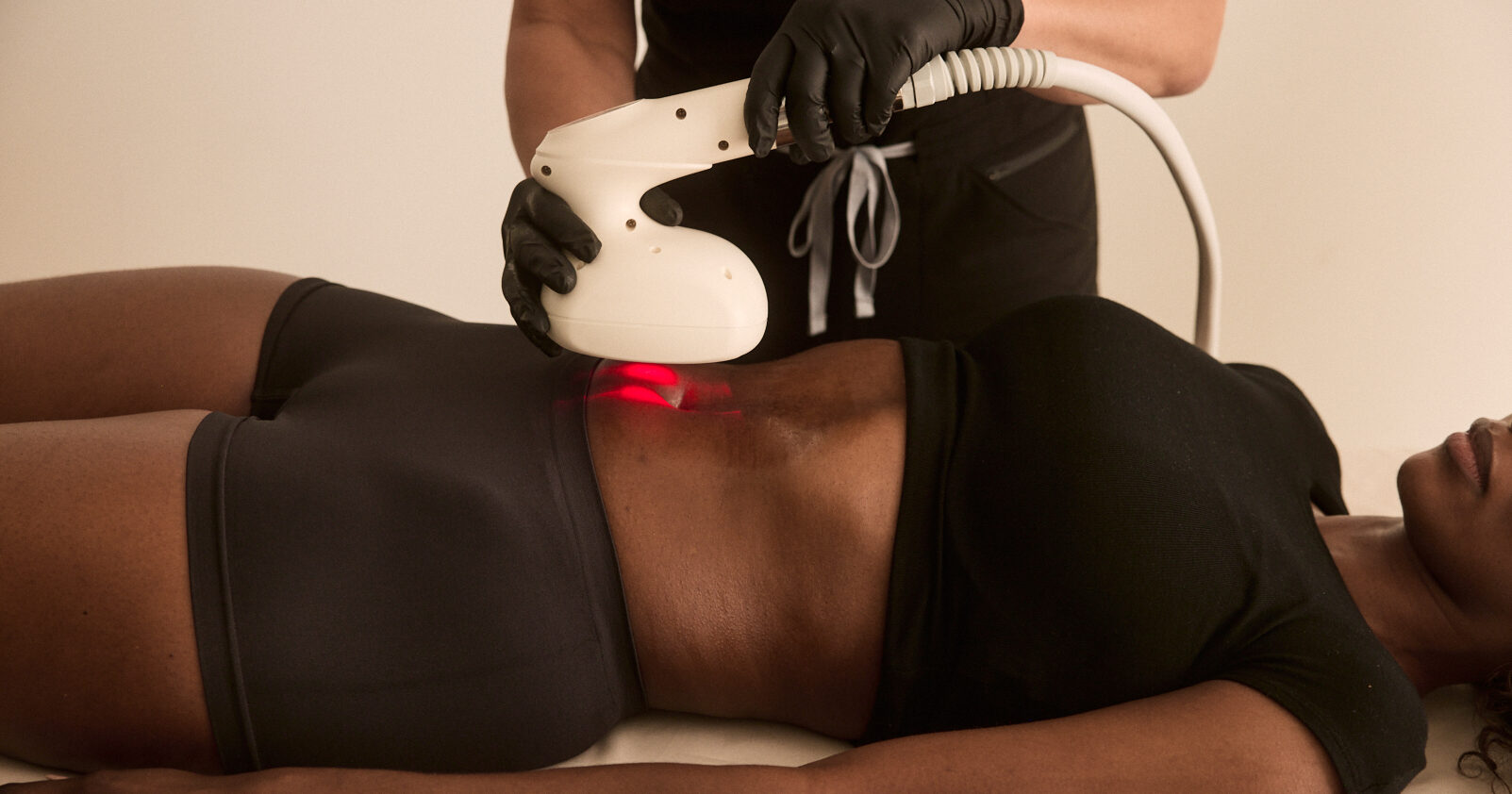
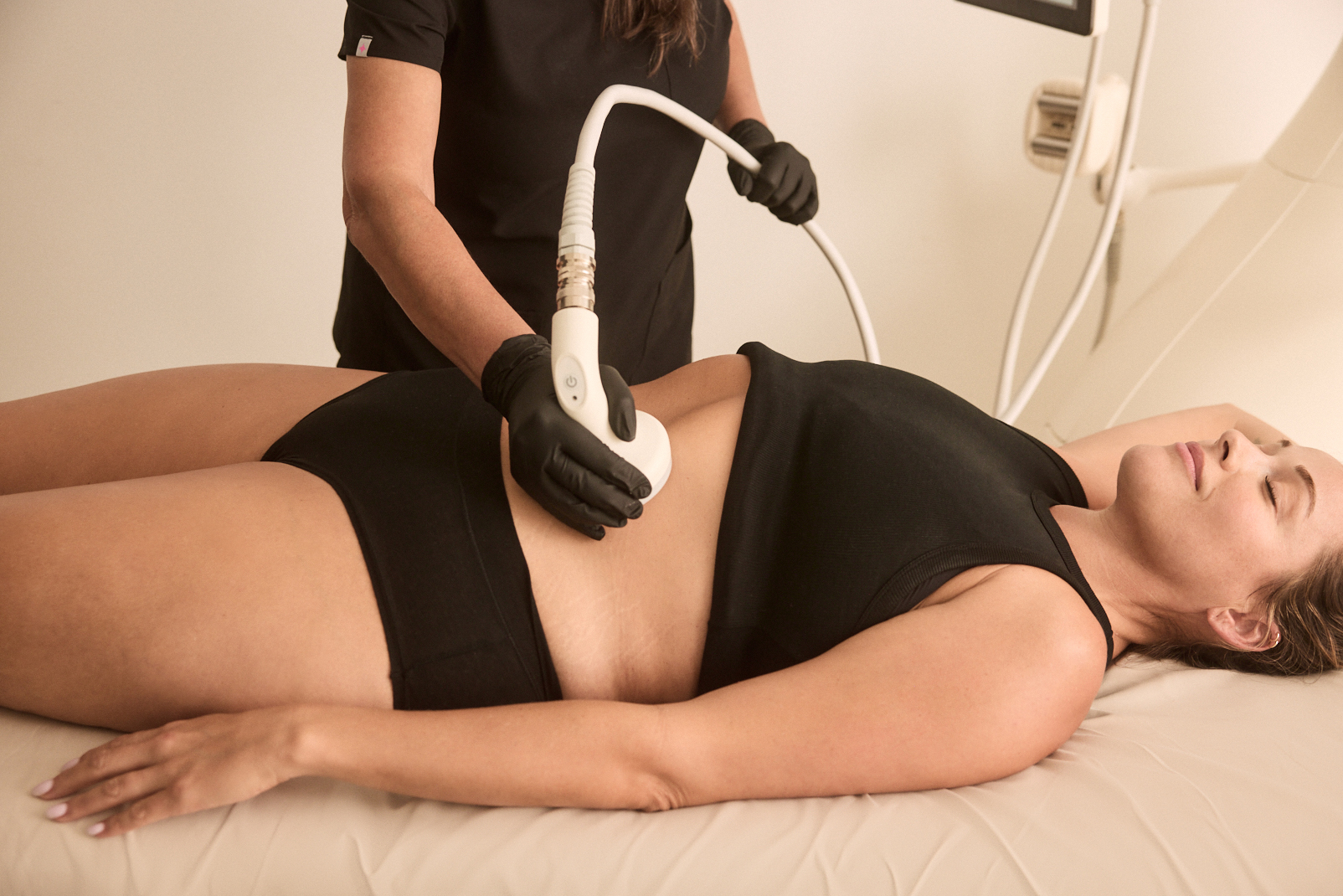
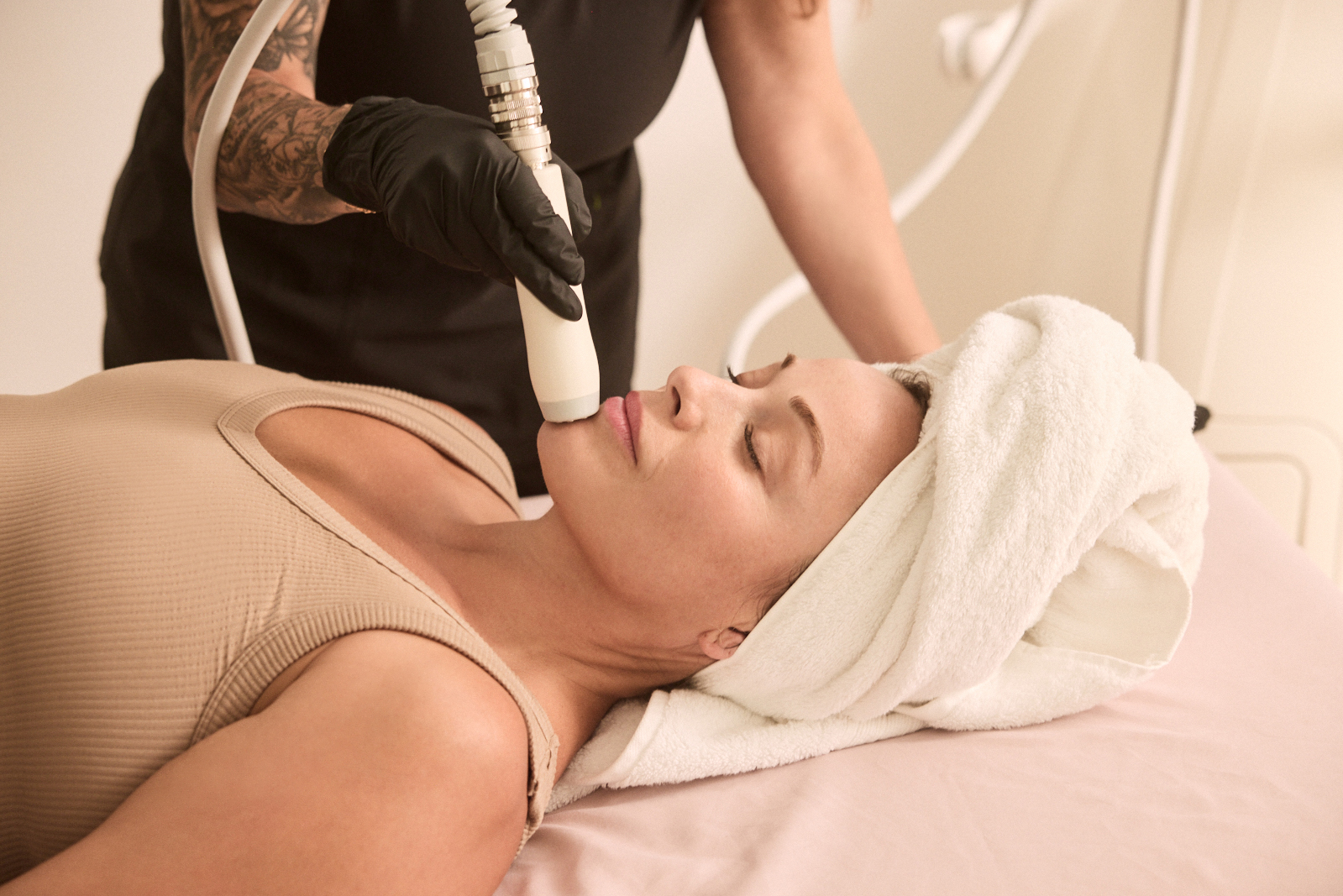
The T-Shape 2 is a professional-grade device that combines four distinct technologies: Low-Level Laser Therapy (LLLT), Bipolar Radiofrequency, Endodermic Massage with Suction, and Mesospheric Activation. T-Shape 2 targets multiple tissue layers simultaneously. It allows practitioners to address fat reduction, skin firming, cellulite, and muscle tone within a single session. All in all, it can be a strong option for comprehensive facial rejuvenation.
LLLT works at the metabolic level to support body sculpting. Bipolar radiofrequency can help stimulate collagen production and firm the skin. Endodermic massage with suction can help improve lymphatic drainage and smooth the dimpling associated with cellulite. Last but not least, mesospheric activation helps tone underlying muscles, promote circulation, and support overall skin health.
The treatments are pre-programmed. This means that the protocols are consistent and don’t rely on manual calibration by the operator. Most clients describe the experience as similar to a warm massage with no downtime required.
The T-Shape 2 is FDA-cleared and CE-certified, and is used in professional clinics globally.
Suitable for: Mild to moderate facial and body skin laxity, cellulite, and body contouring concerns. Works well as part of a multi-modal approach to lower face rejuvenation.
Downtime: None.
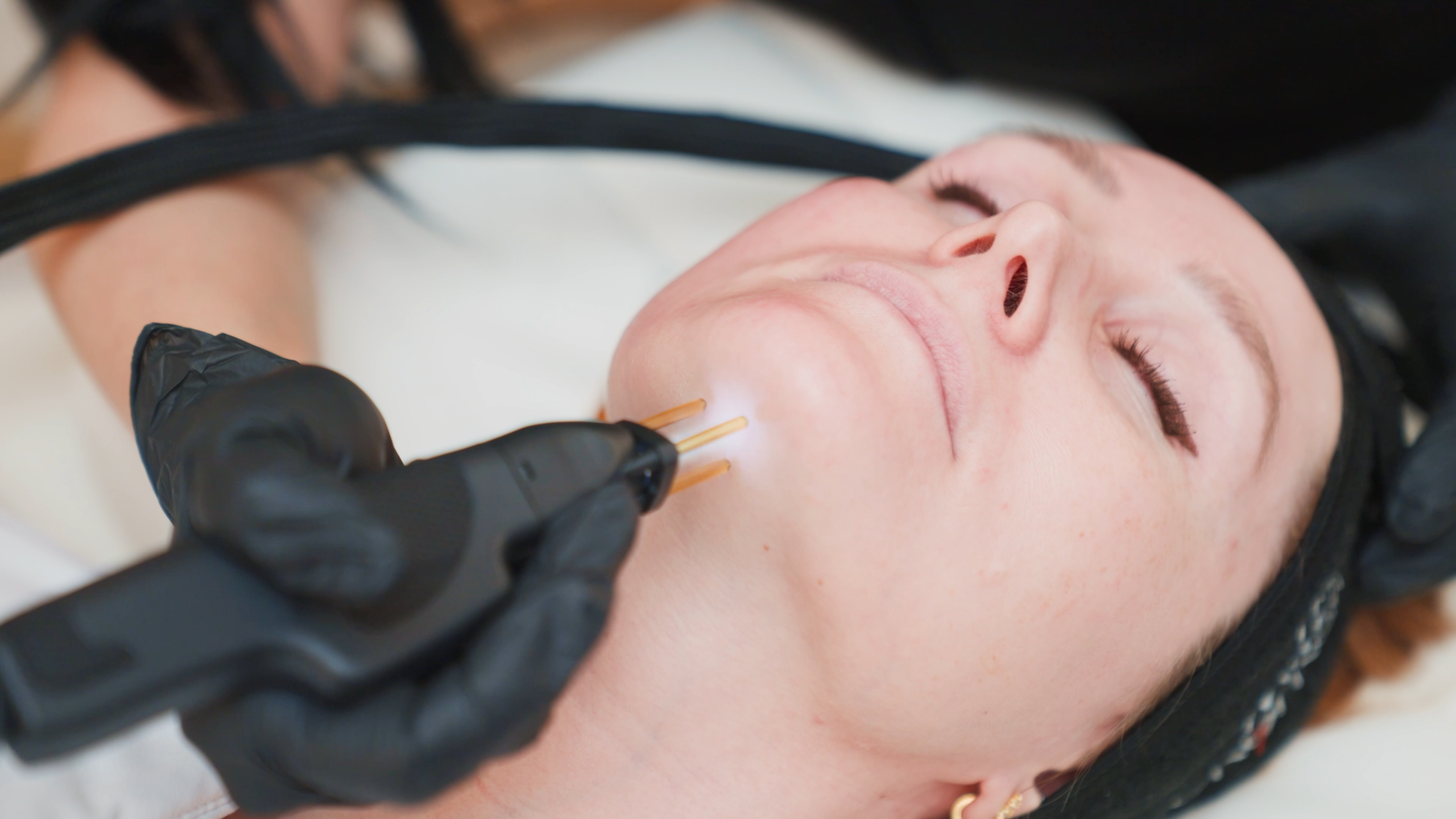
Nitrogen Plasma Skin Regeneration (Neogen)
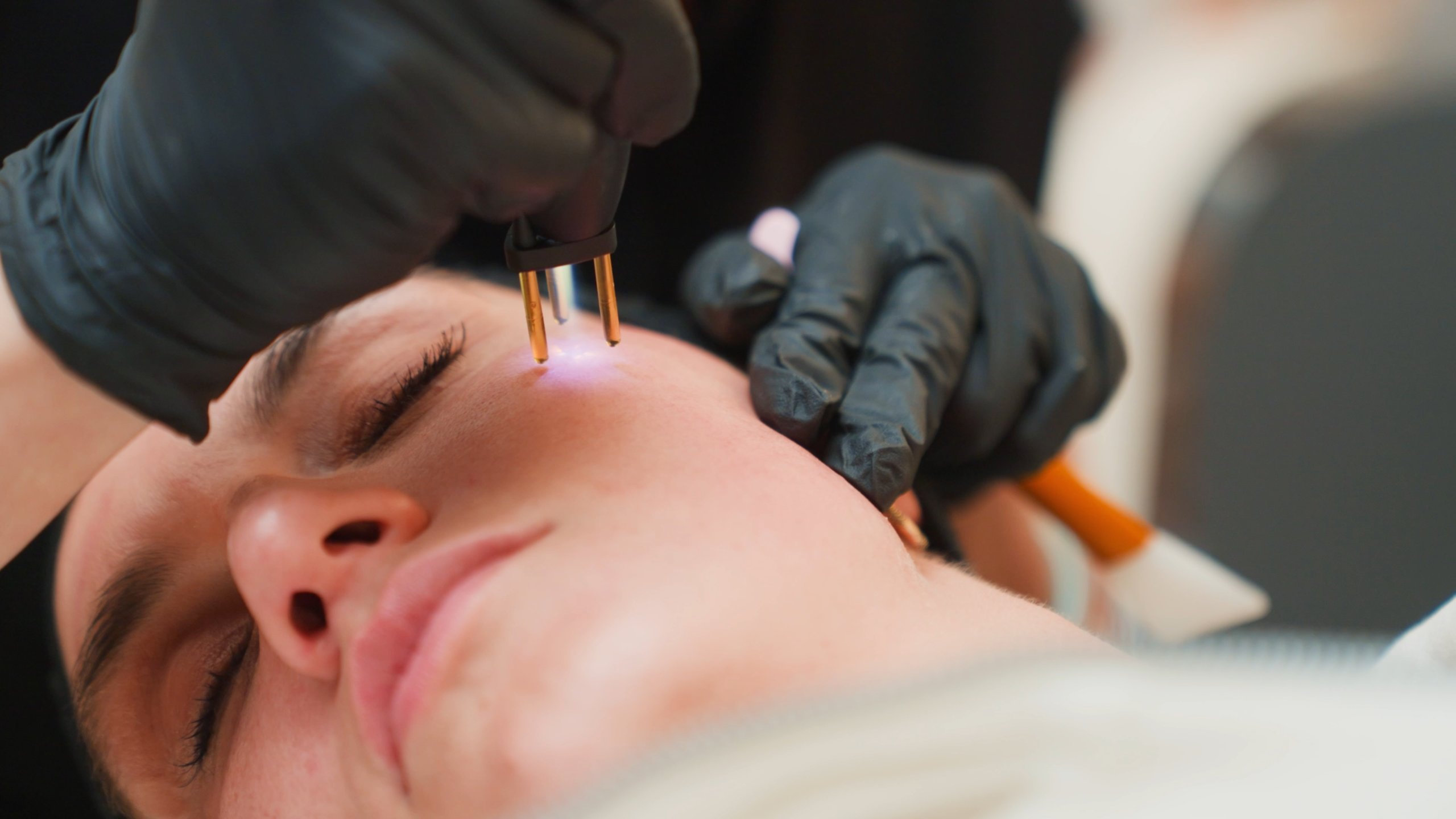
Neogen Plasma is one of the more distinctive technologies available in aesthetic medicine. It delivers nitrogen plasma, which produces a rapid and precisely controlled thermal effect across the skin surface.
This creates what is described as a controlled wound-healing response: the plasma energy triggers significant collagen remodeling, skin contraction, and regeneration of the dermis.
The depth and intensity of treatment can be adjusted. This allows practitioners to use Neogen for multiple indications, from superficial skin quality improvement to more intensive resurfacing sessions that address moderate excess skin.
For jowls, Neogen plasma may produce noticeable skin tightening and improved tissue firmness. It can be particularly effective in people who have surface-level skin quality changes plus laxity. Also, this procedure can help tighten neck skin and smooth mouth wrinkles.
You should expect a longer recovery period following more intensive Neogen treatments. The skin may appear red or feel sensitive for several days to a week or more, depending on the energy level used. Lighter settings have minimal downtime, though.
Suitable for: Patients with skin laxity combined with surface-level skin quality concerns (sun damage, texture, early rhytids). Particularly useful when skin tightening and skin renewal are both priorities.
Downtime: Varies by protocol. Light treatments: 2-4 days. More intensive sessions: up to 1-2 weeks.
Laser Resurfacing
Ablative laser resurfacing devices (e.g., CO2 lasers) create controlled injury to the epidermis and upper dermis. This stimulates collagen remodeling and new skin formation as the treated area heals. Laser resurfacing can help you achieve a more youthful appearance once the skin heals completely. On the other hand, ablative lasers cause significant downtime, sometimes weeks for complete healing.
Fractional laser platforms (such as Fraxel) are more gentle. They have minimal downtime but require more sessions to achieve the same results as ablative lasers.
For jowling, laser resurfacing may improve skin texture, tone, and mild surface laxity. It tends to be most effective when skin quality is a primary concern alongside laxity. It’s not the best if the main issue is volume loss or deep structural descent.
Suitable for: People with photodamage, textural concerns, and mild to moderate skin laxity. Often combined with other modalities.
Downtime: Non-ablative fractional: 2-4 days. Fully ablative: 2 weeks or more.
Surgical Options for Jowls
Surgery is likely the most direct solution for people with significant skin excess, deep tissue descent, or jowling that hasn’t responded adequately to non-invasive treatment. For example, a lower facelift surgery (rhytidectomy), neck lift, or SMAS-based facelift can address the structural anatomy directly. These procedures can reposition the descended tissue, remove any sagging or excess skin, and create a smoother jawline.
Surgical outcomes can be dramatic and long-lasting. But surgery carries many more risks, including anesthesia risks, scarring, and longer recovery times.
If you’re interested in surgical options, a consultation with a board-certified plastic surgeon or facial plastic surgeon is the appropriate starting point.
Why a Specialist Consultation Matters More Than You Might Think
Jowling has multiple causes. Your skin is unique, as is your body. That’s why the right treatment should be chosen based on your specific needs. And this can only be done with the help of a professional. Ultimately, treating the wrong thing or treating the right thing with the wrong device can cause disappointing results. And it can sometimes even make the problem worse.
A properly trained specialist will:
- Assess the relative contributions of skin laxity, volume loss, and structural change to your specific appearance.
- Review your medical history and medications (including GLP-1 agonists, blood thinners, or immunosuppressants) for any contraindications.
- Recommend a sequence and combination of treatments that make clinical sense for your anatomy.
- Set realistic expectations about what is achievable without surgery, and at what timeline.
The person performing the procedure matters as much as the procedure itself. For instance, energy-based devices can cause burns, scarring, or nerve injury when used by practitioners who don’t have proper training. Even the procedures that are marketed as “non-invasive” require clinical judgment and technical skill.
When evaluating a provider, ask about their specific training in aesthetic medicine and how many of the recommended procedures they’ve performed. Ask whether they can show patient photos from their own clinical work.
FAQs
How to get rid of jowls without surgery?
Non-surgical options for jowls include energy-based treatments like HIFU, radiofrequency, RF microneedling, T-Shape 2, and Neogen plasma, which can help stimulate collagen and tighten skin in the lower face. You can also try injectables such as dermal fillers and biostimulatory agents like Sculptra can also restore volume and structure to the jawline area.
Do jowls go away with weight loss?
In some cases, losing weight may reduce the appearance of jowls by decreasing facial fat, but rapid or significant weight loss can actually make jowls worse, since the skin may not contract fast enough to keep up with the volume reduction. This is particularly relevant for people using GLP-1 medications like Ozempic, where facial volume loss can accelerate the appearance of sagging.
Will retinol lift jowls?
Retinol usually cannot lift significantly sagging jowls, but it supports skin firmness over time by stimulating collagen production and accelerating cell turnover, which may reduce the appearance of mild laxity. However, it won’t address the structural changes that cause more pronounced jowling, so it works best as a preventative or complementary measure alongside other treatments.
Why do people get jowls as they age?
People get jowls as they age because, with age, the skin produces less collagen and elastin, facial fat pads descend, the underlying bone structure resorbs, and the ligaments that hold the soft tissue in place gradually weaken. All of these cause the lower face to sag. These processes begin as early as the mid-20s. They speed up with sun exposure, genetics, and lifestyle factors like smoking or significant weight fluctuations.
How to prevent jowls?
You can prevent jowls by using a broad-spectrum SPF daily, applying topical retinoids, maintaining a stable weight to avoid repeated cycles of volume loss and gain, eating collagen-supporting foods, trying oral collagen supplements, avoiding smoking, and trying collagen-stimulating treatments.
Can Botox help with jowls?
Botox is not a primary treatment for jowls, but it can help relax specific muscles that contribute to sagging skin around the jawline, such as the muscle that pulls the corners of the mouth downward or the platysmal bands in the neck.
What is the best treatment for jowls?
No treatment is the best for sagging jowls for everyone. The best treatment for you depends on whether your jowling is driven more by skin laxity, volume loss, or structural descent. For most people, a combination protocol works best: an energy-based device like Neogen plasma or T-Shape 2 for skin tightening, paired with biostimulatory injectables for collagen support and volume. A qualified specialist can assess your specific anatomy and recommend a treatment plan tailored to your needs.