The face is the first thing people notice, and often the last place we feel confident about when our weight changes. You might have lost a couple of pounds and still feel like your photos aren’t catching up. Or you’ve noticed a rounder jawline over the past year and wondered what to do about it.
This guide walks you through what can actually cause a fuller face, what you can do about it, and where professional treatments fit in. As such, if you want to learn how to lose face fat, keep reading!
Disclaimer: This article is provided for informational and educational purposes only. The information presented here is not a substitute for professional medical evaluation, consultation, or care and should not be relied upon to make health-related decisions. Always consult a qualified and licensed medical or aesthetic professional before undergoing any cosmetic or aesthetic procedure.
Quick answer: Can You Really Lose Fat Just from Your Face?
You can’t spot-reduce facial fat any more than you can target belly fat with crunches. Fat loss is a whole-body process driven by your overall energy balance, lifestyle habits, and, to some extent, genetics.
That said, you can make your face look slimmer. To do this, you should focus on overall fat loss, reducing puffiness through smarter daily habits, and, for those who want more, try professionally delivered non-surgical treatments.
Keep in mind that, sometimes, face puffiness is caused by medical conditions, so always consult a professional before making any changes in your lifestyle.

Why Does My Face Look Fuller?
Your face may look fuller if you’ve added some weight or if you have water retention. You may also notice a fuller face because of genetics and aging, as well as because of specific medical conditions.
True Fat vs Puffiness and Water Retention
Stored facial fat, which actually increases your cheek volume or softens your jawline, develops gradually alongside general weight gain. It won’t disappear overnight.
Puffiness is different. It can be caused by fluid retention, high sodium intake, a few drinks the night before, poor sleep, or even dehydration. In this case, your face may look noticeably fuller by morning. This kind of facial puffiness can resolve within hours or days once you address the cause.
Genetics, Bone Structure, and Natural Face Shape
Some people store more fat in their cheeks and jaw, even at a perfectly healthy weight. Wider cheekbones, a softer chin, and a naturally rounder face shape are genetic traits, not signs that something is wrong. For these people, even significant weight loss might not produce the chiselled look they had in mind.
Aging and Facial Fat Pads
The face has distinct fat compartments (fat pads), and they naturally change with age. The midface tends to lose volume. Plus, fat in the lower face and jowl area can appear more pronounced. This is one reason why aggressive fat loss in older adults can sometimes make the face look older rather than slimmer: the hollowing effect can exceed what any contouring provides.
If you’re noticing changes in your facial appearance when you’re in your 40s and 50s, some of that is less about weight gain and more about redistribution and volume loss elsewhere.
When to Suspect a Medical Cause
Certain medications and hormonal conditions can cause noticeable facial fullness that won’t respond to diet or exercise. If your face has changed quickly and unexpectedly, or if the change seems out of proportion with the rest of your body, have it evaluated by a doctor before starting any cosmetic approach.
The Myth of Spot-Reduction
The idea of targeting fat loss in one specific area is definitely appealing, but the body simply doesn’t work like that. When you create an energy deficit, meaning when you consume fewer calories than you burn, your body draws on fat stores throughout the body, not just from wherever you’d prefer. The fat that is stored in your body consists of triglycerides, which are stored in adipocytes. Adipocytes are found everywhere in your body, being stored either as subcutaneous fat or visceral fat.
Now, when you exercise, your muscles cannot directly access and burn specific fat stores. They use lipolysis, a process that converts triglycerides into free fatty acids and glycerol. So, the fat stores used for energy during exercise come from throughout the body, not just the one spot that we’re targeting through a specific exercise.
This has been repeatedly proven in studies. A systematic review signed by Ramirez-Campillo et al. analyzed 13 studies involving 1158 participants. The authors confirmed that localized muscle training had no effect on localized tissue deposits.
The Role of a Modest Calorie Deficit
The most evidence-backed way to lose fat remains creating a moderate calorie deficit: eating fewer calories than you use. “Moderate” is the key word. Crash dieting can lead to rapid weight loss that affects facial volume too aggressively, resulting in sagging skin and a gaunt appearance rather than a healthy, defined look. And it’s also not healthy for your body.
Therefore, aim for a gradual loss of 0.5-1 kg per week. This gives the skin enough time to adapt and preserves more facial structure. And continue exercising your entire body.

Step 1 – Lifestyle Habits For A Slimmer-Looking Face
Eat A Diet that Supports Gentle Fat Loss
A healthy diet for facial fat loss isn’t too different from an overall healthy diet. It’s recommended to:
- Prioritize whole foods: vegetables, fruit, legumes, lean protein, and whole grains like brown rice and oats. These tend to be higher in volume and lower in caloric density, which makes it easier to lower your calorie intake without feeling deprived.
- Get enough protein: it preserves lean muscle mass during a calorie deficit, which matters for how you look and feel, not just the number on the scale.
- Watch refined carbs and processed foods: white bread, pastries, convenience foods, and sugary drinks drive blood sugar spikes and can contribute to fat storage over time. They’re also low in beneficial nutrients and fiber intake, which means they don’t help with satiety.
- Cut back on processed meats: beyond the general health reasons, these tend to be high in sodium, which drives water retention and facial puffiness.
- Limit unhealthy fats: not all fat is the enemy, but ultra-processed foods high in hydrogenated oils add calories without much nutritional return.
You don’t have to eliminate a food group entirely unless recommended by a healthcare professional. Just focus on a balanced diet built around plant foods, adequate protein, and minimally processed ingredients.
Move More: Cardio Plus Strength Training
Cardio exercise is one of the most reliable tools for reducing overall body fat. The current guidelines recommend at least 150 minutes of moderate aerobic exercise per week: brisk walking, cycling, or swimming. Plus two days of resistance training.
Strength training, or resistance training, preserves lean muscle mass while you’re losing fat. Without it, extended caloric restriction can result in a face that looks deflated rather than defined, because you’ve lost both fat and the muscle structure underneath it.
Water, Sodium, and Alcohol Intake
Excess salt causes the body to hold onto water. More often than not, that excess shows in the face. If you consume excess sodium, meaning if you eat processed foods, take-aways, and sauces quite often, it might be worth it to reduce the frequency and the amount of salt you consume. This can help reduce puffiness in just a few days.
Moreover, excessive alcohol consumption dehydrates you while simultaneously causing fluid retention (it sounds kind of contradictory, but it’s a real physiological effect). The general recommendation is to keep alcohol intake to up to one drink per day for women, two for men, and ideally less when you’re actively trying to lose weight. The caloric intake from alcohol is also worth noting: drinks add up quickly without providing any satiety or beneficial nutrients.
Water, on the other hand, is very important, not just for overall health, but because proper hydration supports kidney function and the lymphatic system, which in turn regulate fluid retention.
Sleep and Stress Control
Poor sleep and chronic stress both raise cortisol levels. Elevated cortisol is associated with increased fat storage, water retention, and a tendency to crave calorie-dense foods.
Quality sleep, meaning 7-9 hours, on a consistent schedule, supports metabolic function, hormone regulation, and recovery from exercise. It’s probably the most underrated tool for weight management.
For sleep hygiene, the basics are easy: consistent sleep and wake times, reduced screen exposure in the hour before bed, and keeping caffeine to the earlier part of the day.

Step 2 – Face-Focused Strategies: Exercises, Massage, And Posture
Do Facial Exercises Really Burn Face Fat?
Mostly, no, facial exercises don’t really affect facial fat. At least not noticeably. Face muscles are small, and the energy expenditure from working them is negligible. That said, small studies have analyzed facial exercises for a different reason: muscle thickness and tone.
A 2018 study published in JAMA Dermatology found that 20 weeks of daily facial exercises improved perceived facial fullness and rejuvenation in middle-aged women. Essentially, the face looked more toned. This is different from fat loss, but it can still influence how the face looks overall. In short, facial exercises don’t burn fat, but they may improve the muscle structure underneath. This can subtly sharpen facial appearance.
Simple Facial Exercises You Can Try Safely
These won’t promise to tone facial muscles overnight, but they’re low-risk and take a few minutes:
- Cheek puff: Inhale deeply and hold the air in your cheeks for 5-10 seconds, shift it side to side, then release. Repeat 10 times.
- Big smile hold: Smile as wide as you can with teeth together, hold for 10 seconds, relax. Repeat 10-15 times.
- Neck stretch with tongue press: Tilt your head back, press your tongue firmly to the roof of your mouth, and hold for 10 seconds. This works the platysma and the muscles under the chin.
Facial Massage and Lymphatic Drainage
Lymphatic drainage massage, meaning gentle, rhythmic movements along the lymph nodes of the face and neck, has become popular in aesthetic practice. It doesn’t reduce facial fat, but it can temporarily reduce facial puffiness. It basically helps improve fluid circulation and encourages the lymphatic system to move the accumulated fluid out of the tissues. Gua sha tools, jade rollers, and manual lymphatic drainage techniques all work on this principle.
The effects are subtle and relatively short-lived. But this doesn’t make them useless, particularly if puffiness is part of what’s bothering you. Done consistently in the morning, they can take some of the swollen edge off a fuller-looking face.
Posture, Tech Neck, and Jawline Appearance
Here’s something that often gets overlooked: how you hold your head. Chronic forward head posture caused by hours of looking at a phone or laptop can dramatically change how your chin and jawline look in photos and in the mirror. When the head drops forward, the soft tissue under the chin bunches. Basically, what looks like a double chin may partly be a posture issue.
Pulling the shoulders back, lengthening the neck, and keeping the chin parallel to the floor can help you sharpen the jawline instantly without any fat loss whatsoever.
Step 3 – Non-Surgical Clinic Treatments That Can Contour the Face
Non-surgical clinic treatments offer an additional layer of refinement for healthy adults who’ve already worked on their habits and still feel that their face is undefined.
Keep in mind that these are just helpful procedures. They do not replace healthy habits. Plus, they’re not for everyone. Therefore, always consult a qualified professional before starting any treatment.
Consider aesthetic procedures if:
- You’ve been consistent with diet and exercise for several months, but the lower face or jawline remains soft.
- Your primary concern is skin laxity (looseness) rather than excess fat.
- You want more noticeable contouring than home methods can realistically deliver.
- You’ve ruled out medical causes and have no contraindications.
Radiofrequency (RF) for Tightening and Localized Fat Reduction
Radiofrequency technology delivers controlled energy to the dermis and the subcutaneous tissue below. The heat stimulates collagen production, which tightens the skin over time. At certain energy levels, it may also influence localized fat cells in the treated area.
The key variables are temperature control and professional expertise. Effective RF treatment requires precise delivery, which is why device choice and operator skill matter so much.
There’s one thing to keep in mind, though: overtreatment with RF, meaning too many sessions, too high energy, can cause unwanted loss of facial fat pads, particularly in already lean faces. This is why experienced practitioners approach facial RF conservatively.
Low-Level Laser for Facial Contouring
Low-level laser therapy (LLLT) works through photobiomodulation, meaning light energy that stimulates cellular function. LLLT has been shown in several studies to promote fat burning.
While most research focuses on the body rather than the face, the same basic mechanism (light influencing fat cell activity) underpins devices marketed for facial contouring, which should always be used under professional guidance.
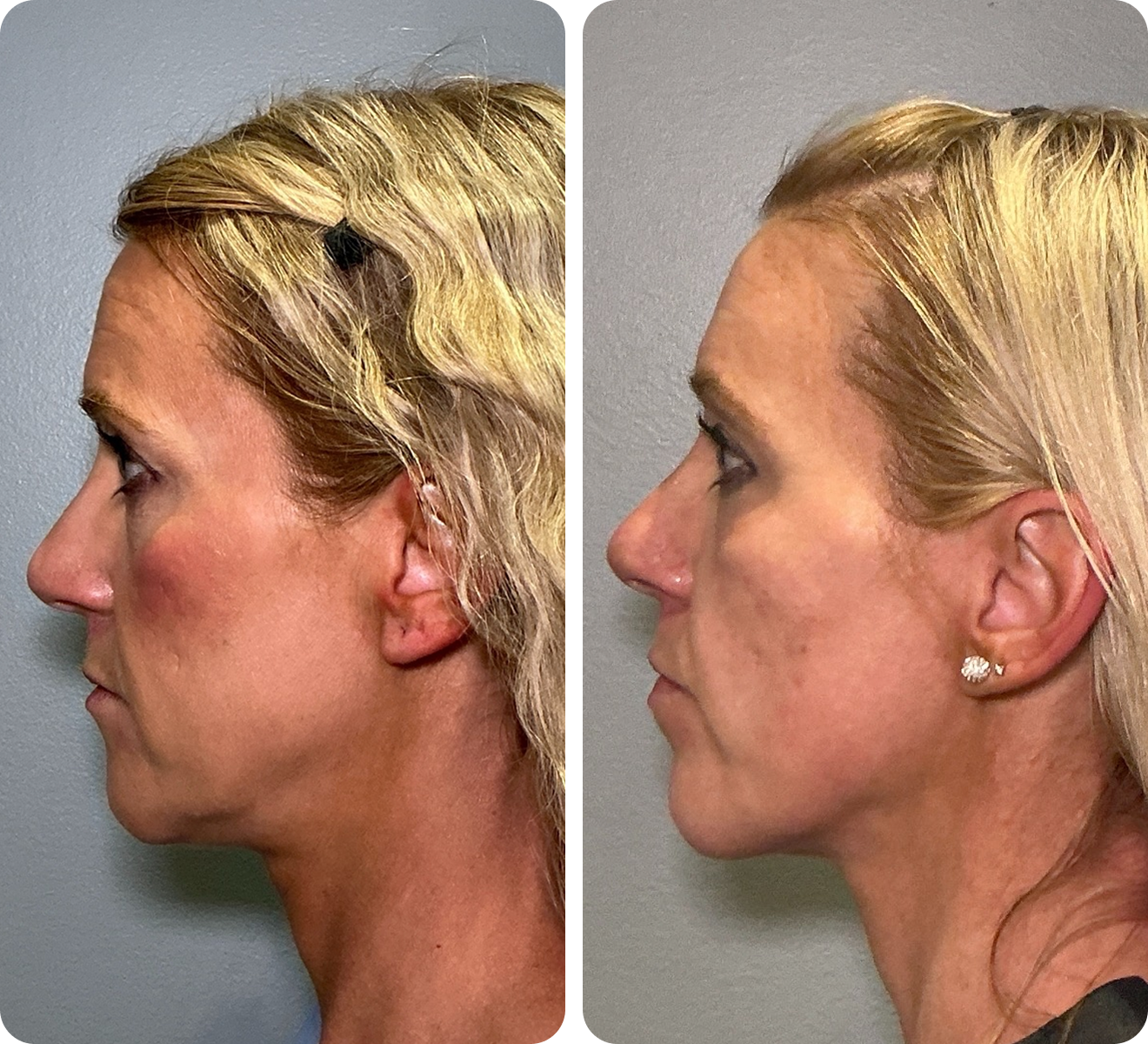
Before and after 2 T-Shape 2 facial treatments.
Combined Technologies: RF, Laser, Vacuum Massage, And Tissue Activation
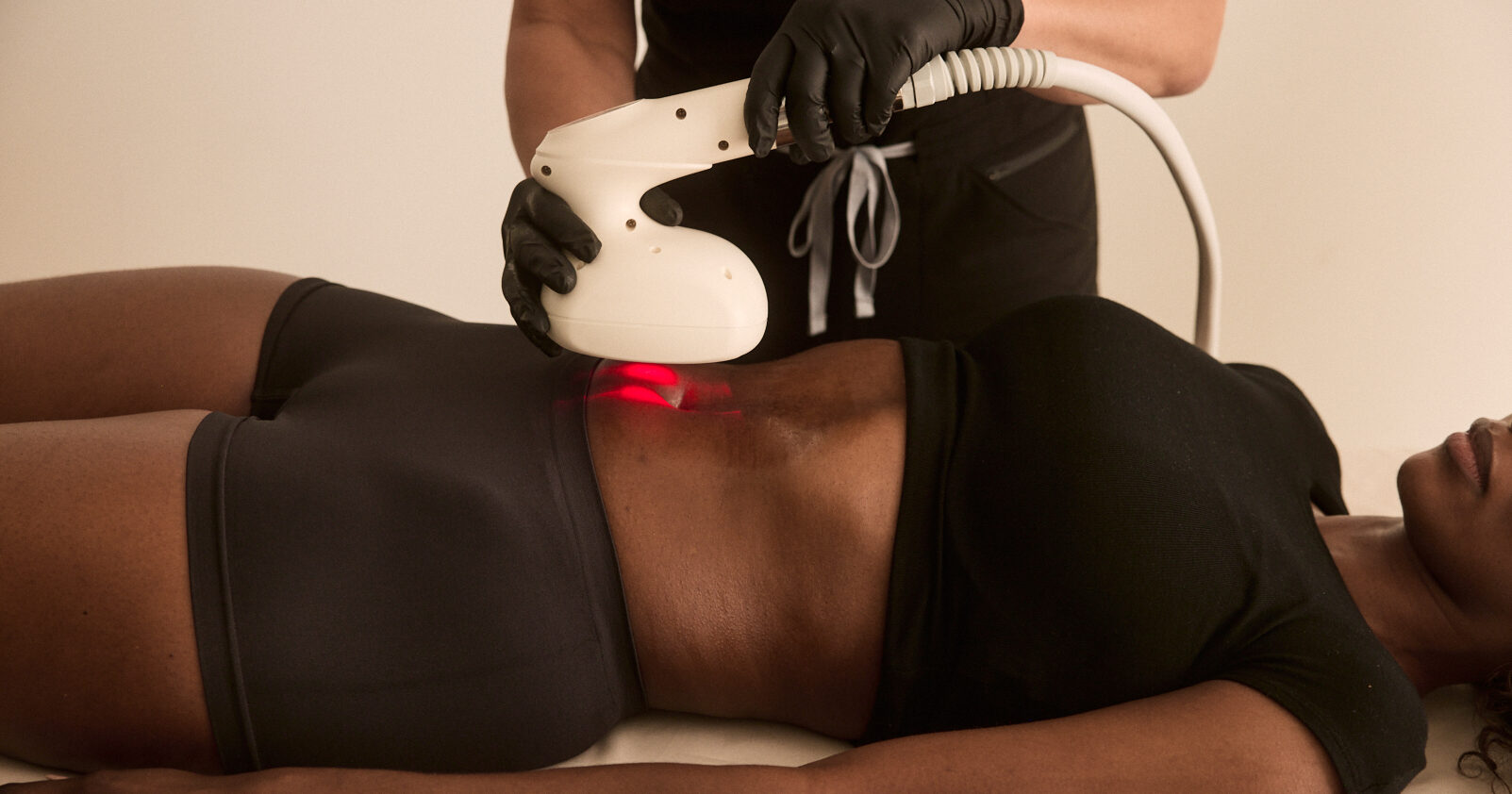
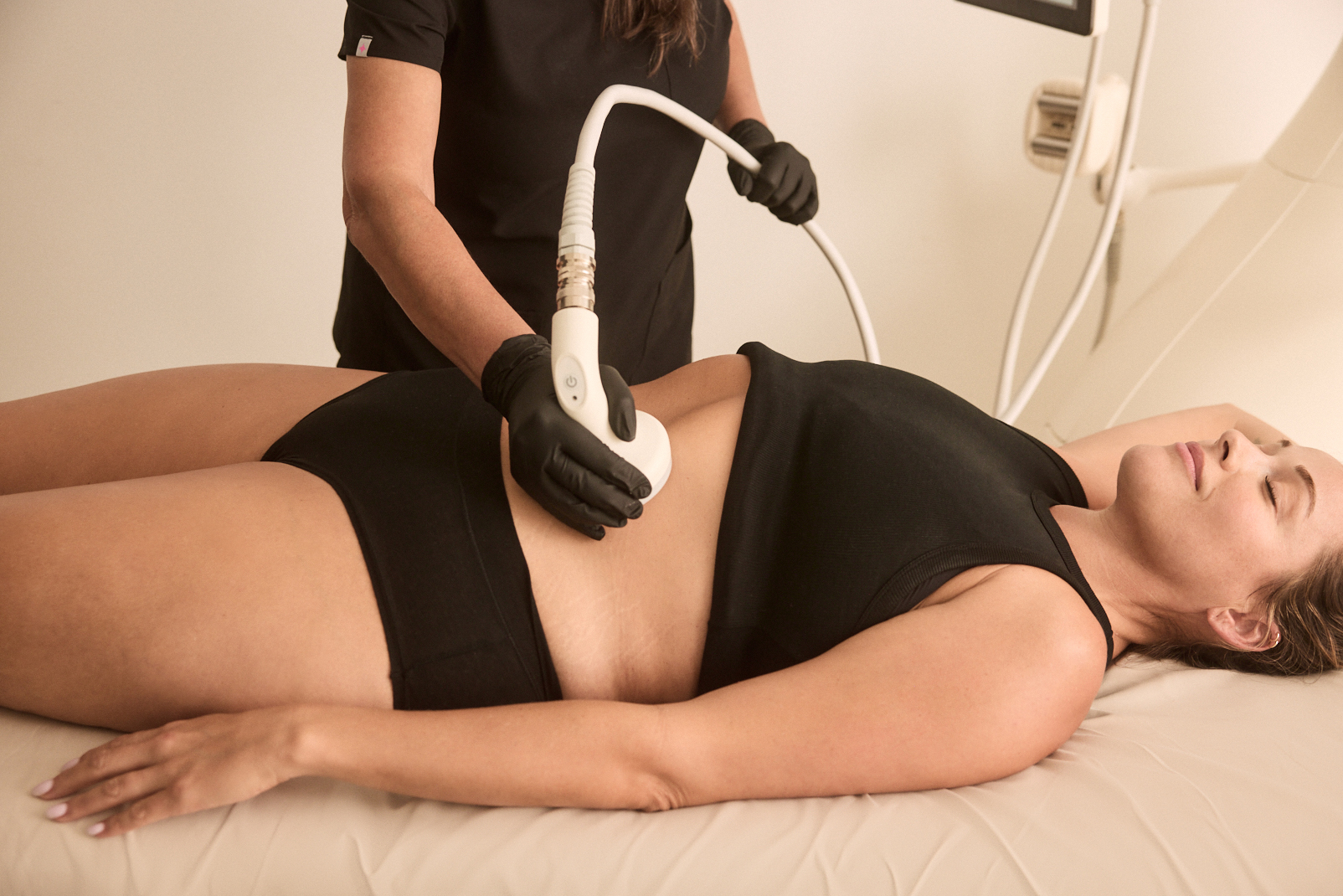
The more sophisticated clinic platforms don’t rely on a single technology. Devices like T-Shape 2 that combine RF energy, low-level laser, mechanical vacuum massage, and mesospheric activation aim to address facial fullness from multiple angles simultaneously:
- The RF component warms the dermis, stimulates collagen, and may reduce localized fat cells.
- The laser component supports microcirculation and can assist with the metabolic processing of released fat.
- Vacuum massage encourages lymphatic drainage and temporarily de-puffs the treated area.
- Mesospheric activation of the deeper tissue layers may support overall skin quality and firmness and have a facial rejuvenation effect.
Together, these modalities are designed to refine facial contours, particularly around the cheeks, jawline, and under-chin area, through a course of treatments delivered by trained professionals.
This is the category of device that the T-Shape 2 sits in: a multi-technology platform designed for professional settings, combining these mechanisms for non-surgical facial and body contouring. It’s worth asking any clinic you visit which technologies their device uses and how they approach facial protocols specifically. If you want to easily find a provider near you, you can find them all on our website.
Safety, Expectations, and Choosing a Provider
Aesthetic procedures can deliver subtle contouring, improved skin quality, and reduced puffiness. They can’t change your face. Plus, the results usually appear gradually.
When choosing a provider:
- Look for a licensed clinician with specific experience in facial applications.
- Ask what device they use and what parameters they apply for the face versus the body.
- Discuss your medical history openly, including any conditions, medications, or recent procedures.
- Be honest about your expectations, and ask for honest answers in return.
Step 4 – Who Should Not Chase More Facial Fat Loss
People with Very Lean Faces and Older Adults
If you’re already lean or over 50, more fat loss in the face may not be what you actually need. Volume loss is one of the primary drivers of facial aging. It’s also the reason many people who lose body weight rapidly look older than they actually are.
If you’re in this category, the question worth asking isn’t “how do I lose face fat?” but “how do I improve the texture and structure of what I have?” The aesthetic procedures described above, particularly RF for skin tightening, may be more relevant than any fat-reduction approach.
Red Flags that Need Medical Input
If you notice any of the signs described below, you should talk to a doctor before making any changes in your lifestyle or seeking any aesthetic procedures:
- Swelling on one side of the face only
- Rapid facial changes without a clear lifestyle explanation
- Facial fullness accompanied by other symptoms (weight gain elsewhere, fatigue, mood changes, irregular periods)
- Pain or tenderness in the face or jaw
When to Talk to a Professional
Before starting any clinic treatment, it’s of the essence to schedule a consultation with a specialist. They’ll inquire about:
- Your current health and any relevant medical history
- Your weight-loss goals and where you currently are with them
- The quality and laxity of your skin
- Your facial volume, whether you actually have excess fat or whether the issue is redistribution and laxity
The answer to all of these will determine the approach that’s best for you specifically. Lifestyle-only changes work well for many people. Others will benefit from an aesthetic procedure.
FAQs
How to lose face fat in a week?
You can’t safely lose fat from your face in just one week. Fat loss occurs gradually across the whole body, not in one specific area. In a week, you can, however, reduce puffiness if you cut sodium, avoid alcohol, sleep well, hydrate, and do light cardio, which may make your face look slightly leaner even if you don’t really lose much fat.
How long does it take to lose face fat?
It usually takes about 4-8 weeks to lose face fat, but the timeline varies from person to person. The face often responds faster than areas like the abdomen, though this isn’t universal. How quickly you lose face fat depends on your starting point, overall rate of weight loss, and genetics.
How to lose face fat quickly?
The fastest and healthiest way to reduce face fat is to focus on overall fat loss: a modest calorie deficit, regular cardio, and strength training so your whole body gets leaner and your face naturally follows over a few weeks. Pair this with low‑sodium, minimally processed foods, limited alcohol, and good sleep to minimize water retention that can make the face look fuller.
Can I lose face fat without losing weight overall?
Broadly speaking, no, you can’t lose face fat without losing weight overall. Since you can’t target fat loss in one area specifically, reducing facial fat requires reducing overall body fat, which means losing weight overall. The exception is puffiness caused by fluid retention, which can be reduced without any fat loss through changes in sodium intake, alcohol consumption, sleep, and hydration.
How to debloat the face?
To debloat your face, lower your salt intake, cut back on alcohol, drink more water, and prioritize getting enough sleep, which all help your body release excess water. You can also use cold compresses, ice rollers, and gentle lymphatic drainage massage to temporarily reduce puffiness around the eyes and cheeks.
Does chewing gum help lose face fat?
Chewing gum works your jaw muscles, but there’s no strong evidence that it noticeably reduces face fat. We simply can’t spot‑reduce fat from one area just with targeted exercise. At best, it may help a bit with appetite control and cravings. This could indirectly support overall weight loss, and eventually a leaner face, when combined with a healthy diet and exercise.
How to get rid of chubby cheeks?
You can reduce chubby cheeks the same way you lose fat elsewhere: by creating a small, sustainable calorie deficit with nutritious food, doing regular cardio, and lifting weights to preserve muscle as your overall body fat drops. Reducing salty, ultra‑processed foods and alcohol, plus improving sleep, can also reduce puffiness by cutting water retention. You can also try facial exercises that may tone muscles, but they won’t replace the need for full‑body fat loss.
Are facial exercises enough to lose face fat?
Facial exercises are not enough to lose face fat. Facial exercises can contribute to muscle tone and may slightly improve how defined the face looks, but they can’t produce meaningful fat loss on their own. They work best as a complement to overall fat loss through diet and exercise.
Will losing 10 lbs make my face slimmer?
Losing around 10 lbs can make a subtle difference in facial fullness for many people, because fat loss happens across the whole body, including the face. How noticeable it actually looks depends on your starting weight, body‑fat percentage, age, and genetics. Some people get a more defined jawline after losing 5-10 lbs, while others need to lose more weight for noticeable changes.
Why am I skinny but my face is chubby?
You can be slim yet have a chubby face due to genetics, natural fat distribution patterns, and bone structure, which influence where your body tends to store more fat. You might also experience facial puffiness from high sodium intake, alcohol, hormones, allergies, poor sleep, or even medical conditions, which require professional help.