
Everyone develops wrinkles on the forehead sooner or later. It’s unavoidable. Every time you raise your eyebrows or furrow, you’re training your skin to deepen the lines that appear with muscle movement. As we grow up, these lines are dynamic. They appear only when you contract your forehead muscles. With age, they deepen and become static. So, can you stop them from becoming static and thus visible at all times?
You can prevent forehead wrinkles, but not completely. They’ll still appear as you age, but they may develop much more slowly if you’re keeping your skin healthy.
As such, how to prevent forehead wrinkles? Let’s find out!
Disclaimer:This article is provided for informational and educational purposes only. The information presented here is not a substitute for professional medical evaluation, consultation, or care and should not be relied upon to make health-related decisions. Always consult a qualified and licensed medical or aesthetic professional before undergoing any cosmetic or aesthetic procedure.
Quick Answer: How to Prevent Forehead Wrinkles
To prevent forehead wrinkles, wear sunscreen every day, build an appropriate skincare routine, get your eyes checked by an ophthalmologist, pay more attention to your facial expressions, and adjust your screen habits and reading habits. It is also recommended to adopt a healthy lifestyle by drinking plenty of water, having a nutritious diet, prioritizing sleep, and reducing stress.
What Causes Forehead Wrinkles?
To be able to prevent forehead wrinkles, you must understand what exactly causes them. Like with anything else, finding a solution is impossible if you don’t fully know the problem.

Intrinsic Aging
As you get older, your skin naturally produces less collagen and elastin, the proteins that are responsible for keeping the skin firm, supple, and able to bounce back after movement.
Collagen production begins to slow in your mid-20s, at a rate of roughly 1% per year. It’s a bit different with elastin, because your body only produces elastin abundantly until your late adolescence, after which it slows down significantly. And let’s not forget about hyaluronic acid, which keeps our skin hydrated. Its production also decreases with age.
That’s why our skin becomes much drier and less elastic over the years. For some people, fine lines and wrinkles start appearing in their 20s. Others don’t notice them until they are in their mid-30s.
This is an unavoidable process. But you can control how fast it happens.
Repetitive Facial Expressions
Every time you raise your eyebrows, squint, or furrow your brow in concentration, you contract the forehead muscle (the frontalis). These are called dynamic wrinkles, which are lines that appear only when you contract your muscles and disappear when you’re relaxed.
Gradually, dynamic wrinkles turn into static wrinkles. These are visible without any facial movements and reflect longer-term structural changes in the deeper skin layers.
UV Rays and Sun Damage
This is arguably the biggest external driver of premature aging. UV rays, particularly UVA rays, which penetrate deep into the dermis, activate enzymes called matrix metalloproteinases (MMPs). MMPs break down collagen fibers and halt new collagen production. As a consequence, your skin loses elasticity more quickly, and facial wrinkles appear sooner than expected.
A comprehensive review authored by Brar et al. confirmed that chronic UV exposure promotes oxidative stress, MMP activation, and collagen degradation.
Dehydration and Dry Skin
When the skin lacks adequate moisture, fine lines look more exaggerated, and skin texture becomes uneven. Dehydration can be caused by both insufficient water intake and not using the right skincare products.
Lifestyle Factors
Several other factors speed up skin aging:
- Smoking reduces blood flow to the skin and impairs the skin’s natural production of collagen. Smokers significantly more prone to deep facial wrinkles at an earlier age.
- Chronic stress triggers cortisol release, which suppresses collagen synthesis and contributes to premature aging.
- Poor sleep limits the body’s ability to repair skin overnight, slowing skin renewal and dulling overall skin tone.
- A diet high in processed foods and low in antioxidants deprives the skin of the nutrients it needs to fight harmful free radicals, which are unstable molecules that lead to oxidative damage to collagen fibers.
- Hormonal changes, particularly during menopause, can cause a rapid decline in estrogen levels. Estrogen plays an important role in collagen production, so collagen production declines, too.
How to Prevent Forehead Wrinkles Naturally: 9 Methods
1. Wear Broad-Spectrum Sunscreen Every Day
If you do only one thing for your skin, go for sunscreen use. Daily use of a broad-spectrum sunscreen (SPF 30 or higher) can significantly slow down skin aging. It’s, in fact, one of the most clinically proven methods to protect your skin’s health and prevent forehead wrinkles. Apply it as the last step of your morning routine, before makeup. And yes, UV rays do penetrate some windows, so wear it indoors as well.

2. Build a Consistent Anti-Aging Skincare Routine
You don’t need lots of products to build a good anti-aging skincare routine. The secret is actually consistency. And, of course, using products that work for your skin specifically.
Here are some products you can try, which we’ll discuss in detail below:
| Ingredient | Primary Benefit | Best For | Notes |
| Retinol | Boosts collagen production, improves cell turnover | Fine lines, skin texture, photoaging | Start slow; avoid in pregnancy |
| Hyaluronic acid | Deep hydration, plumps fine lines | All skin types, including sensitive skin | Apply to damp skin for best absorption |
| Vitamin C | Antioxidant protection, supports collagen synthesis | Photoaging, dull skin tone | Use in the morning; pair with SPF |
| Peptides | Signal skin to produce more collagen | Early forehead wrinkles, maintenance | Gentle enough for sensitive skin |
| Niacinamide | Strengthens the skin barrier, improves texture | Uneven texture, enlarged pores | Compatible with most other actives |
| Growth factors | Stimulating collagen production, skin repair | Mature or damaged skin | Found in professional skincare products |
Cleanser
Cleaning your face should always be a priority. We recommend using a gentle, non-stripping cleanser morning and evening. Avoid anything that leaves your skin feeling tight, as this might mean that the cleanser causes barrier disruption that accelerates dehydration and, over time, leads to fine lines and wrinkles.
Retinol or Retinoids
Retinol is one of the most evidence-backed anti-aging ingredients available without a prescription. A comparative study authored by Kong et al. from Amway Corporation and the University of Michigan found that four weeks of topical retinol increased epidermal thickness and type I and III collagen production. Therefore, given that it stimulates collagen production and accelerates cell turnover, retinol can help reduce forehead wrinkles and improve overall skin texture with consistent use.
Start with a low concentration (0.025-0.05%), 2-3 nights per week. Retinol can cause irritation on sensitive skin, particularly in the early weeks, so don’t overdo it.
Hyaluronic Acid
Hyaluronic acid is a molecule that draws moisture into the skin and helps maintain its plumpness. As the skin’s natural production of hyaluronic acid declines with age, topical application can help restore hydration, reduce the appearance of fine lines, and improve skin texture.
We recommend applying a hyaluronic acid serum to slightly damp skin before your moisturizer, both in the morning and at night.
Vitamin C
Vitamin C is a potent antioxidant that neutralizes harmful free radicals generated by UV rays and environmental pollution. Beyond protecting against oxidative damage, it also plays a direct role in collagen production. The body needs vitamin C to synthesize new collagen.
It’s recommended to use a stable vitamin C serum in the morning, before applying sunscreen, for the best protective effect.
Moisturizer
A good moisturizer helps reinforce the skin barrier, lock in active ingredients, and prevent the transepidermal water loss that makes fine lines look more exaggerated.
Look for formulas that combine hyaluronic acid with barrier-supporting ingredients like ceramides or niacinamide.
3. Stay Hydrated
Your skin needs water. While hydration won’t erase the existing wrinkles, lack of it will make them look so much worse. Therefore, drink 1.5-2 litres of water daily (or as needed, depending on your medical history). If your skin is still dry even with plenty of water drunk daily, you might have a dry skin condition, which needs to be addressed by a healthcare professional.

4. Try Facial Exercises/Massage
Facial exercise/massage tutorials are becoming more and more popular online.
You can try some of these exercises or massages, as they can stimulate circulation and reduce puffiness. Some of these are great for preventing forehead wrinkles, not because they actually prevent forehead wrinkles, but because they can help you relax the periorbital muscle (around the eyes) and the frontalis muscle (forehead muscle).
So, if you, for example, use your eyes to do your job (e.g., you read, write, or analyze data), it might be worth it to massage your forehead and the area around your eyes every 2 hours to give your facial muscles a break. Over time, this can really make a difference in both your eyes’ health and in how quickly you develop forehead wrinkles.
However, keep in mind that facial exercises and massages have not been directly linked to preventing wrinkles or reducing existing wrinkles.
5. Get Your Eyes Checked
Oftentimes, forehead wrinkles are linked to your eye activity. Many people, when they’re tired, keep their eyebrows raised, which is a subconscious, compensatory mechanism to lift heavy eyelids. This may also happen if one has certain eye conditions, such as dry eyes, or if they’re wearing inappropriate eyeglasses. Therefore, it might be worth it to see an ophthalmologist to check your vision.
6. Sleep on Your Back
People who sleep on their side for years often develop expression lines sooner than those who sleep on their backs. Over the years, this can contribute to asymmetric wrinkling on the forehead and cheeks. So, if you don’t have any conditions that make side sleeping better for you, try sleeping on your back to see whether facial lines smooth out over time.
7. Practice Mindful Facial Expressions
Many people habitually squint or scrunch their foreheads without being aware of it. For example, we squint when we read or use a screen. If you spend long hours working at a computer, improving ergonomics may help more than you think. Positioning your monitor correctly, increasing font size, reducing glare, and adjusting screen brightness can all reduce unnecessary muscle movement.
Therefore, try to observe how you move your muscles and control your facial expressions if possible.

8. Eat a Well-Balanced Diet
A well-balanced diet rich in antioxidants, omega-3 fatty acids, and vitamin C provides your skin with the building blocks it needs for collagen production and defence against oxidative damage. It can also provide your eyes with the nutrients it needs. Foods like berries, leafy greens, oily fish, citrus fruits, and nuts are all beneficial for the skin.
Conversely, a diet high in sugar and processed foods can accelerate skin aging because of a process called glycation, where excess sugar molecules bind to collagen and make it stiff and prone to damage.
9. Prioritize Sleep and Stress Management
Premature aging skin might be a sign that you’re not taking good care of yourself. It might indicate you’re tired and don’t sleep enough (or well). Or it might indicate your stress levels are too high. If you suspect that might be an issue, try to get 7-9 hours of quality sleep every night to give your skin time to repair and regenerate. And incorporate mindfulness or other stress management practices into your routine. You can also talk to a therapist who can give you the right tools for managing stress.
How to Prevent Forehead Wrinkles in Your 20s, 30s, and 40s
In Your 20s
Prevention in your 20s is largely about protecting collagen before its production starts declining. This includes daily sunscreen, antioxidant protection, hydration, and avoiding tanning. Specialists usually don’t recommend aggressive anti-aging treatments at this point.
If you already notice faint dynamic lines when raising your eyebrows, this is also a good time to introduce a retinoid in a low concentration.
This is also when you should pay attention to habits like squinting at screens, sleeping poorly, or spending years in unprotected sun.
In Your 30s
By your thirties, collagen decline becomes more noticeable. This is often when early forehead lines begin to linger longer after expressions.
A stronger prevention strategy may include regular retinoid use, peptides, barrier-supporting skincare, and, depending on muscle activity, talking with a provider about preventive neuromodulators, sometimes called Baby Botox.
At this stage, prevention is less about avoiding wrinkles altogether and more about preventing dynamic lines from becoming static.
In Your 40s and Beyond
In your forties and later, prevention turns into maintenance. Right now, your goal is to support collagen and elastin, stay healthy overall, and protect your skin against oxidative damage.
This may include a more comprehensive skincare routine, energy-based maintenance treatments, and a more consistent focus on lifestyle factors like nutrition, sleep, and stress management.
Even if forehead lines are already present, prevention still matters, so don’t give up!
How to Prevent Forehead Wrinkles Based on Your Skin Type
If you want to prevent wrinkles, it’s very important to know what skin type you have, because it really influences how quickly you’ll develop wrinkles and the methods you can try to prevent them.
- People with dry skin develop fine lines earlier because low barrier function can make creases appear more pronounced. Prevention may require heavier emphasis on moisturizers, ceramides, and humectants.
- People with oily skin often develop visible wrinkles later, but that does not protect against collagen loss. Daily sunscreen and retinoids still matter.
- People with sensitive skin may need slower retinoid introduction and gentler anti-aging strategies to avoid chronic irritation, which can compromise the skin barrier.
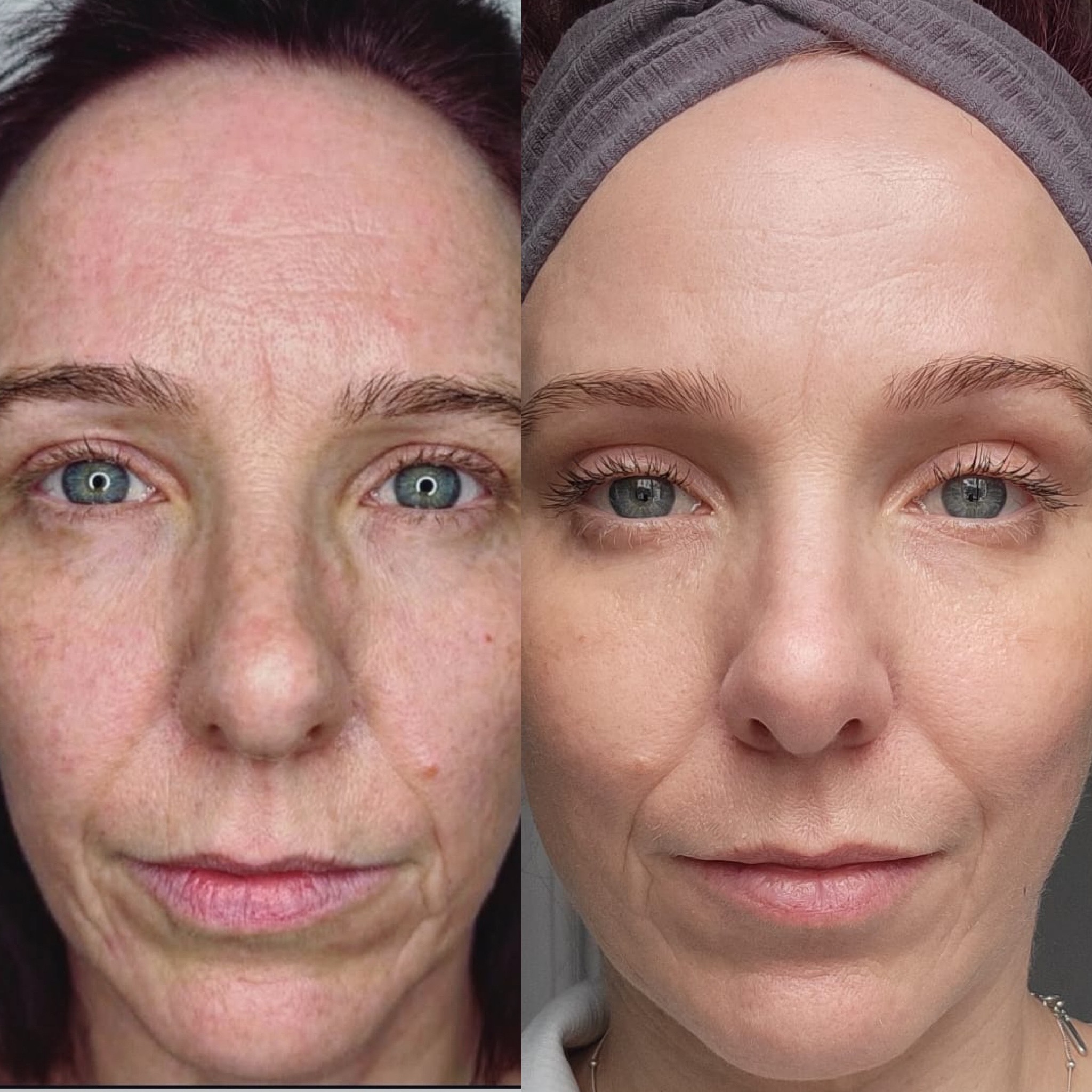
3 months after 1 medium energy treatment with Neogen. Courtesy of Plasmatology.
Professional Treatments for Forehead Wrinkles
If you already have fine lines or deeper static forehead wrinkles, you can also try professional aesthetic procedures to smooth them out. Here are some of the most commonly recommended professional treatments for forehead wrinkles.
If you want to learn more about getting rid of forehead wrinkles, read our guide on this topic.
| Treatment | How it works | Can Improve Existing Lines | Best For | Downtime |
| Botulinum toxin (Botox) | Reduces muscle movement | Yes | Dynamic wrinkles caused by muscle movement | Minimal |
| Dermal fillers | Restores volume | Yes | Static lines and volume loss; restoring youthful-looking skin | Minimal to a few days |
| Chemical peels | Remove damaged outer skin layers | Yes | Treating fine lines, rough texture, early photoaging | Few days to ~10 days |
| Non-ablative laser | Promotes collagen production | Yes | Mild to moderate wrinkles | Moderate |
| Ablative laser resurfacing | Stimulates collagen production | Yes | Deeper etched wrinkles | Significant |
| Microneedling | Stimulates collagen production | Yes | Early lines and collagen support | Low |
| RF microneedling | Stimulates collagen production | Yes | Mild laxity plus wrinkles | Moderate |
| Neogen nitrogen plasma | Stimulates collagen production | Yes | Texture, static lines, skin quality | Moderate |
| T-Shape 2 | Stimulates collagen production | Yes | Skin firmness and tightening; more youthful appearance | None |
Can You Get Rid of Forehead Wrinkles Without Professional Treatments?
If you only have fine lines and wrinkles that are still shallow, you can smooth them out with a consistent anti-aging skincare routine with retinol, hyaluronic acid, vitamin C, and daily broad-spectrum sunscreen.
If you have deep wrinkles and static wrinkles that are already set in, topicals alone are less likely to produce dramatic changes. In this case, you might have to ask your doctor about professional treatments.
The most effective approach combines both: a solid at-home routine that protects and supports the skin daily, and targeted professional treatments to address what topicals cannot fully reach.
Why It’s Important to Talk to a Professional
The entire facial area is anatomically complex. For example, if the injections are placed incorrectly or if a rejuvenation device is used at an incorrect setting, you can experience unwanted side effects, including asymmetry, scars, or infections. All in-office procedures for the face must be performed by a practitioner who understands its anatomy in-depth.
Therefore, schedule a consultation with a qualified professional who can assess whether your forehead wrinkles are primarily dynamic or static, whether your skin type and lifestyle factors are contributing, and which treatment is most likely to yield results. They can also identify sensitive skin concerns or contraindications that might rule out certain procedures entirely.
Frequently Asked Questions
How can I stop my forehead from wrinkling?
You may not be able to stop forehead wrinkles completely, but you can help slow them by wearing sunscreen daily, using topical retinoids, keeping the skin hydrated, avoiding repetitive facial movements, and not smoking. Professional treatments may also help soften developing lines. You might also try getting your eyes checked.
Why do I have forehead lines at 24?
Forehead lines can appear in your 20s because of facial expressions, sun exposure, dehydration, genetics, or early collagen loss. In many cases, they may be expression lines rather than deeper static wrinkles.
Is it possible to tighten forehead skin?
Yes, mild skin laxity may improve with skincare ingredients like retinoids and peptides, while treatments such as radiofrequency, microneedling, and other skin-tightening procedures may offer more noticeable results.
At what age do forehead wrinkles appear?
Forehead wrinkles can begin appearing as early as your 20s, especially dynamic expression lines. More visible static wrinkles often become more common in the 30s and 40s as collagen and skin elasticity decline.
At what age should I start an anti-aging skincare routine?
Most dermatologists suggest incorporating broad-spectrum sunscreen and antioxidants like vitamin C from your mid-20s. Retinol can be introduced in your late 20s to early 30s. If fine lines are already visible, starting any structured anti-aging skincare routine immediately will still produce meaningful results over time.
Do facial exercises help with forehead wrinkles?
The evidence on facial exercises for wrinkle reduction is limited. Some small studies suggest that specific exercises may improve facial muscle tone over time, but the research is not robust enough to make confident claims. More importantly, over-exercising the forehead muscle, through repeated exaggerated expressions, could potentially deepen dynamic wrinkles rather than reduce them. A gentle massage to improve circulation is generally considered more beneficial than targeted facial muscle exercises for this area.