Losing a significant amount of weight or bringing a new life into the world are monumental achievements. Your body has done something incredibly powerful, and that deserves to be celebrated!
But sometimes, people are left with loose stomach skin that can cause frustration, affect their mental health, and negatively impact their confidence. It is completely valid to be proud of your journey and still want to address the loose skin that is left behind.
The good news is that nowadays, there are plenty of options to consider to address loose skin on the stomach.
In this guide, we’ll explain everything you need to know about loose skin on the stomach: what causes it, how to address it, and how to support your skin’s health with daily habits.
Disclaimer: This article is intended for informational and educational purposes only. It does not constitute medical advice, diagnosis, or treatment, and should not be relied upon as a substitute for professional medical guidance.
Quick Facts: Loose Skin on Stomach
Loose skin on the stomach is usually caused by weight loss, pregnancy, aging, and collagen loss. When the skin stretches for a long time, its elastin fibers weaken, so it cannot fully tighten on its own.
Mild to moderate stomach skin laxity can improve with non-surgical treatments like radiofrequency, ultrasound, RF microneedling, and devices such as T-Shape 2 and Neogen Plasma. Severe sagging skin typically requires surgical removal (tummy tuck) for significant, permanent results.
Why Does Stomach Skin Become Loose?
Stomach skin loses its firmness mainly because of significant weight loss, pregnancy, aging, and environmental factors that compromise collagen and elastin production.
It can be incredibly frustrating to feel like your stomach skin doesn’t reflect the hard work you’ve put into your body. Whether it is from a major weight loss journey, having children, or simply the passing of time, stomach skin loses its firmness when its structural proteins, collagen and elastin, are compromised.
Here are the primary causes of loose skin on the stomach, explained in detail.
Weight Loss
When your body goes through massive changes, your skin acts like an elastic band. If you experience significant weight loss, especially losses of 50 to 100+ pounds, the skin that has stretched to accommodate that extra volume often cannot fully retract.
The longer you carry the weight, the more permanent the damage to those elastin fibers becomes. Rapid weight loss is particularly tough on the body; when the volume drops too fast, your skin simply doesn’t have the time to remodel and catch up.
Pregnancy
As your abdomen expands rapidly while you’re pregnant, the skin is stretched well beyond its normal, everyday capacity. This can physically tear the collagen fibers (hello, stretch marks).
Furthermore, many women experience diastasis recti, a separation of the underlying abdominal muscles.
Genetics
Moreover, genetics plays a significant role in how your skin responds to weight gain and weight loss. Some people have naturally resilient skin that bounces back more readily, while others are predisposed to persistent laxity regardless of their lifestyle choices.
Aging and Natural Collagen Loss
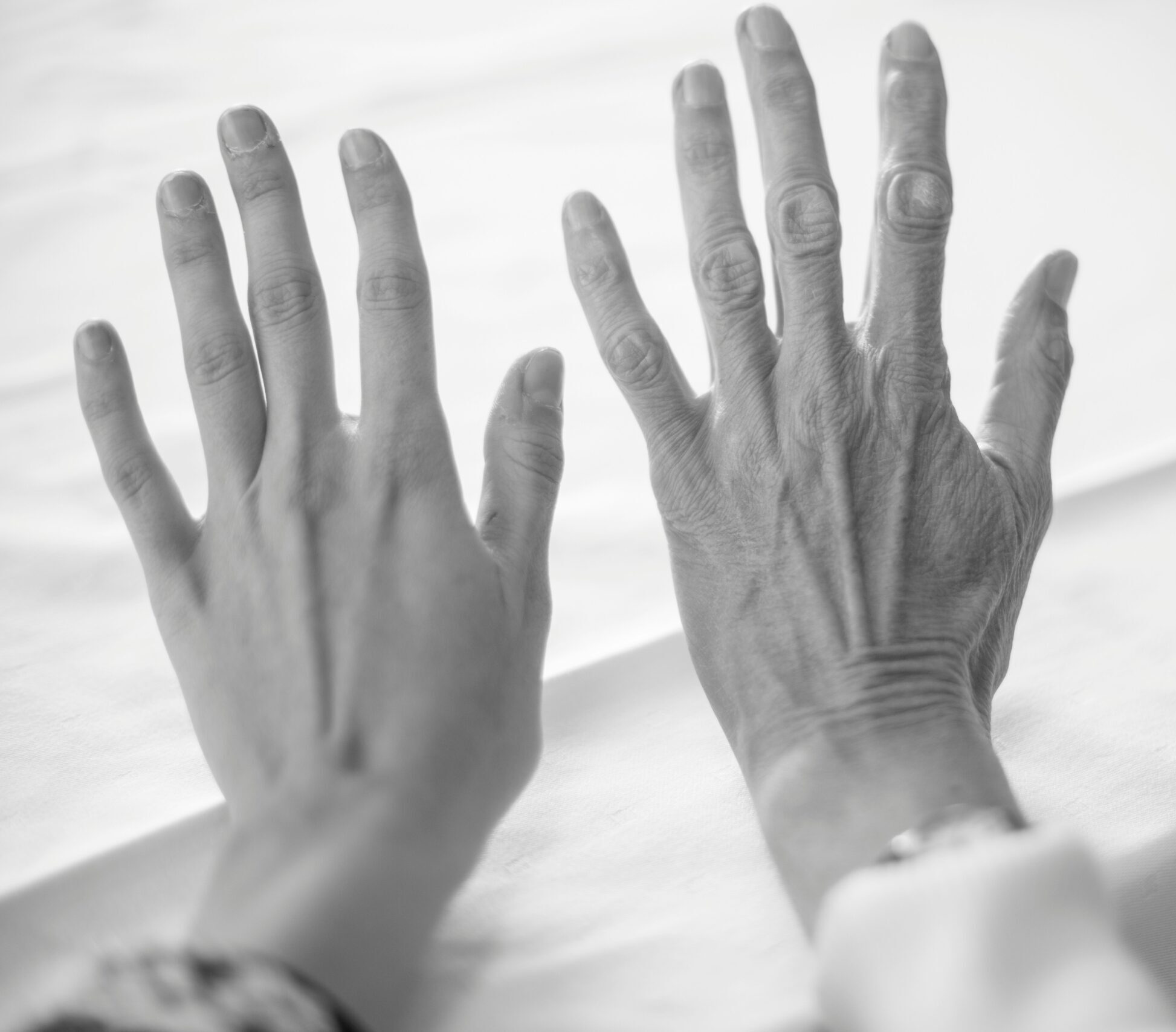
From your late 20s onward, your body produces less collagen and elastin, the proteins that are responsible for your skin’s strength and flexibility. By your 50s, this decline speeds up significantly, and it becomes much harder for the skin to recover from stretching compared to younger skin.
As skin ages, it also loses hyaluronic acid. That’s why its ability to retain moisture and maintain plumpness gradually reduces.
Because the stomach is a natural place for the body to store fat and because it expands and contracts so much over a lifetime, it is particularly vulnerable.
Lifestyle and Environmental Factors
Beyond genetics and major life events, our daily habits and environment actively accelerate the breakdown of our stomach skin:
- Sun exposure penetrates the dermis and affects collagen and elastin production.
- Smoking restricts blood flow, depriving your skin of oxygen and nutrients.
- Poor nutrition without adequate protein, vitamin C, and antioxidants fails to support collagen synthesis.
- Yo-yo dieting repeatedly stretches and shrinks the skin, progressively weakening its elastic capacity.
- Dehydration reduces your skin’s plumpness and resilience.
- Hormonal changes, particularly around menopause, reduce estrogen levels that help maintain skin thickness and moisture.
Loose Skin vs Fat on Stomach
Here’s how to understand whether you’re dealing with loose skin or fat on your stomach:
- Loose skin is thin, lax tissue. Fat is a thicker subcutaneous substance that is stored under the skin.
- Loose skin folds easily when pinched. Fat is dense and spongy.
- Loose skin swings independently. Fat moves as a heavier mass.
- Sagging skin often cannot be addressed by lifestyle changes. Fat can often be reduced with diet and lifestyle changes, as well as exercising.
How to Tighten Loose Skin on Stomach: Non-Surgical Options
Non-surgical stomach skin tightening procedures deliver controlled energy to the deep layers of the skin. This triggers your body’s natural healing response, which, in turn, promotes new collagen formation. These treatments work best for moderate skin laxity and early signs of sagging, typically for people in their 30s through 60s who aren’t ready for plastic surgery.
Most aesthetic medical treatments require a series of sessions. Results build gradually over 3-6 months. Moreover, maintenance sessions may be needed every 1-3 years to maintain results.
As such, here are the most popular non-surgical procedures for loose skin on the stomach, which we’ll discuss in detail below:
| Treatment | Best For | Downtime | How Fast Results Appear |
| Ultrasound Therapy | Deep tissue lifting and structural support | Minimal | 2-3 months |
| Radiofrequency and RF Microneedling | Mild laxity, collagen stimulation | Minimal to several days | Gradual over weeks |
| Laser Skin Tightening | Surface texture, deeper lines, crepey skin | Moderate to significant | Progressive over months |
| Biostimulatory Injectables | Gradual collagen support, mild tightening | Minimal | Weeks to months |
| Combined Technology Treatments | Maintenance, skin firmness, circulation | Minimal | Gradual with sessions |
Ultrasound Therapy
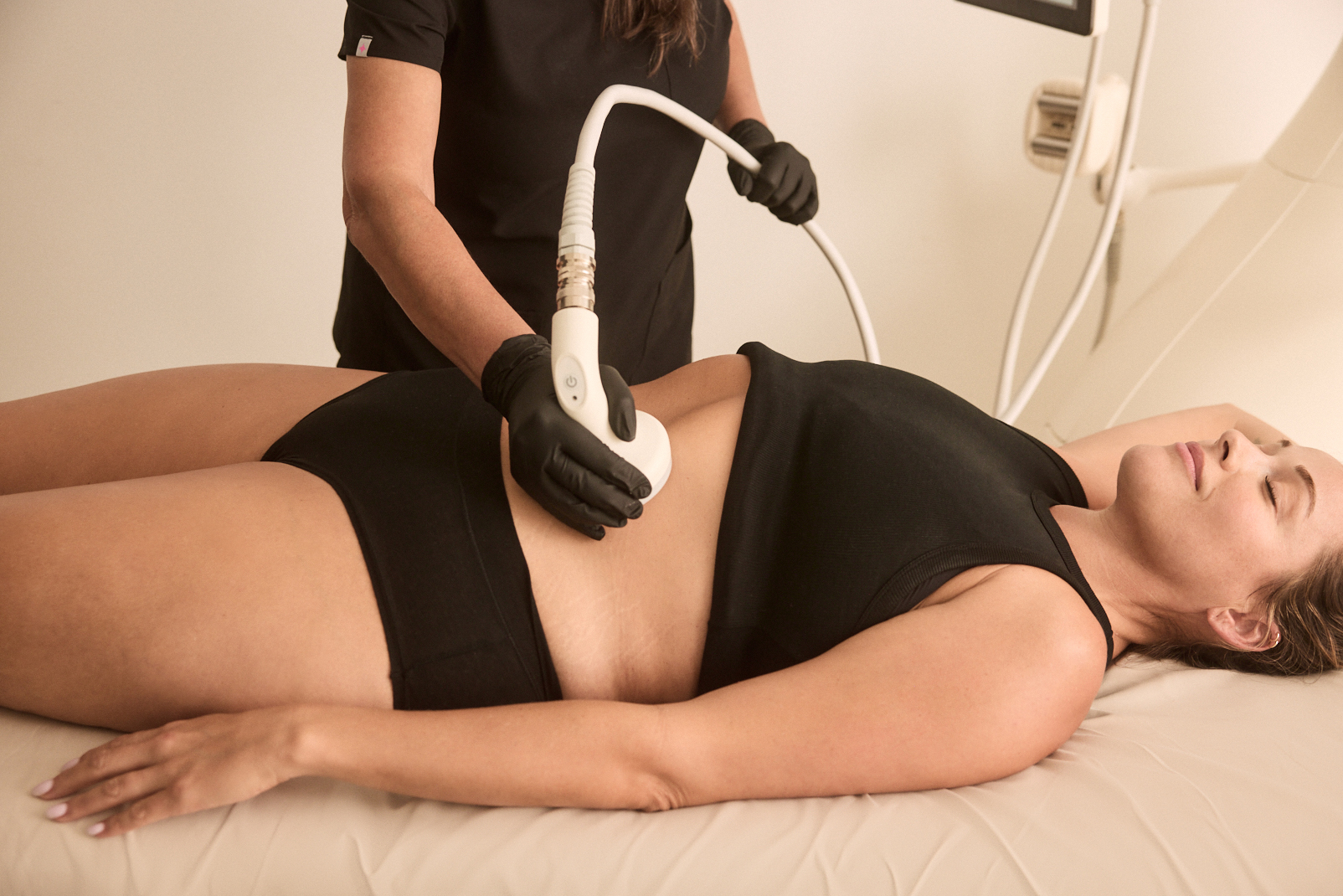
Ultrasound treatments use focused ultrasound energy to heat deep layers of tissue without affecting the skin’s surface. The ultrasound waves create thermal coagulation points at specific depths. This stimulates neocollagenesis, your body’s natural process of building new collagen, which, as mentioned earlier, is very important in reducing sagging skin.
For example, devices like Ultherapy deliver energy up to 4.5mm deep, targeting the foundational tissue layers that provide structural support. Sofwave is another popular ultrasound device. It works at shallower depths (1.5mm) compared to Ultherapy and may be recommended for addressing surface-level crepey skin and mild wrinkling around the belly button.
What to expect:
- One main session, sometimes followed by maintenance treatments
- Results develop gradually over 2-3 months as your body rebuilds the abdominal collagen network
- Mild swelling or tenderness for a few days
- Results may last 12-18 months, depending on skin quality
Radiofrequency and RF Microneedling
Radiofrequency therapy uses energy waves to heat the dermis layer, triggering collagen and elastin production through your body’s natural healing response. For the stomach, devices like Thermage and Forma deliver this energy non-invasively, providing an overall shrink-wrap effect to mildly loose belly skin.
RF microneedling for loose skin on the stomach combines tiny needles that penetrate the skin with RF energy. This technology can help treat both surface texture and deeper laxity. Morpheus8 is a popular RF microneedling device that is often recommended for loose skin on the stomach because it can penetrate deeper and can also help reduce stretch marks.
What to expect:
- 3-4 sessions spaced approximately 4-6 weeks apart
- Results appear gradually over several weeks to months
- New collagen production continues between sessions, progressively firming the abdominal wall skin
- Downtime is usually a few days of redness, grid marks from the needles, and mild swelling
T-Shape 2 for Abdominal Sculpting and Firming
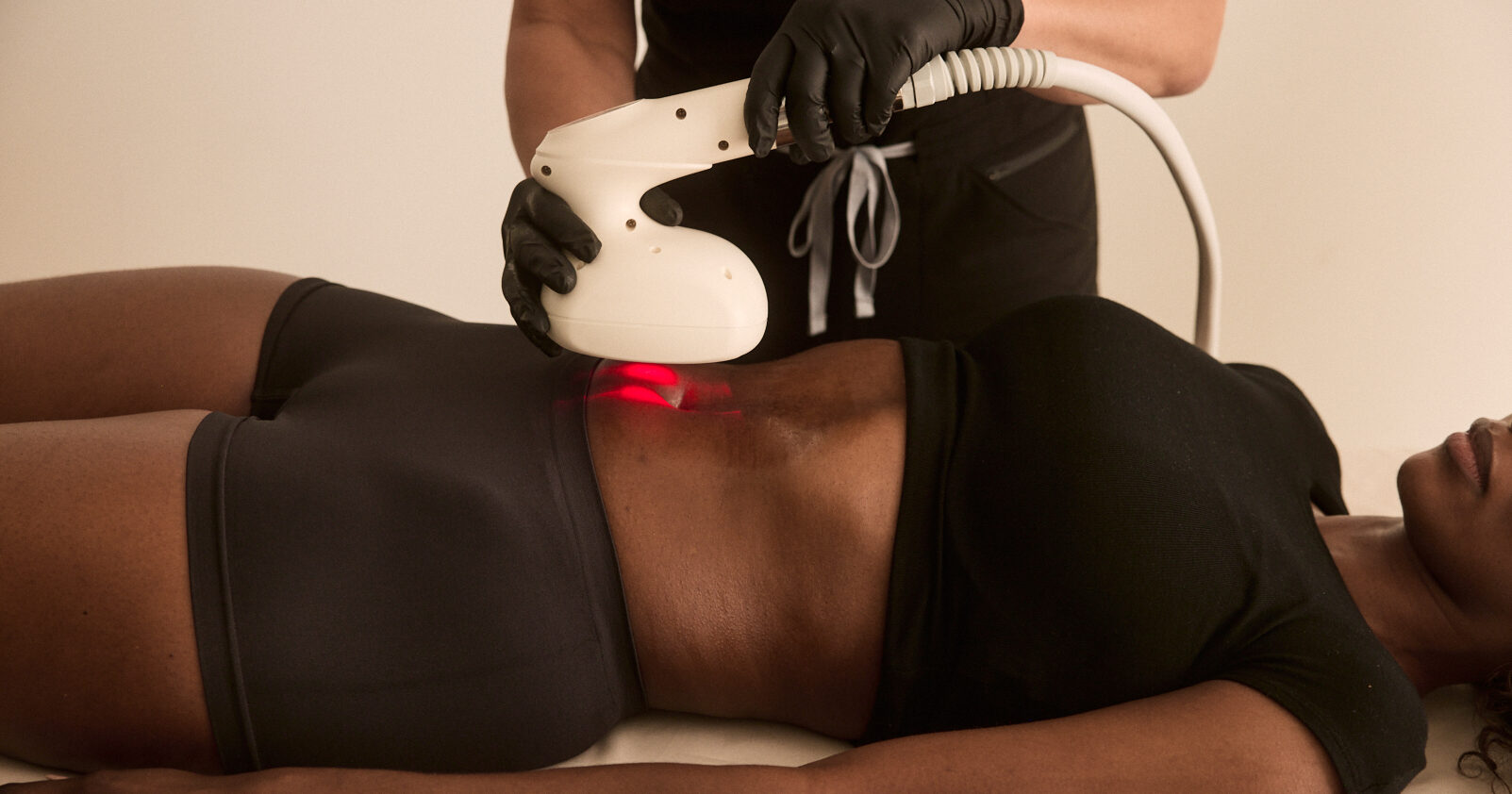
T-Shape 2 is an advanced, multi-technology device that combines bipolar radiofrequency (RF), low-level laser therapy (LLLT), endodermic massage with suction, and mesospheric activation. When used on the stomach, it acts as a comprehensive 3-in-1 treatment that addresses multiple concerns at once:
- The RF energy heats the deep dermal layers to contract existing collagen fibers and stimulate new growth, which tightens the loose skin.
- The laser can target stubborn subcutaneous fat cells beneath the skin and improve metabolism.
- The endodermic massage with suction can help smooth dimpling and promote lymphatic drainage.
- The mesospheric activation can tone underlying muscles, promote circulation, and improve overall skin health.
Studies have shown that T-Shape 2 can lead to a 2-cm average reduction in abdomen circumference, a 10% improvement in skin tone and laxity, and a 14% increase in rectus abdominis muscle tissue thickness after 10 treatments.
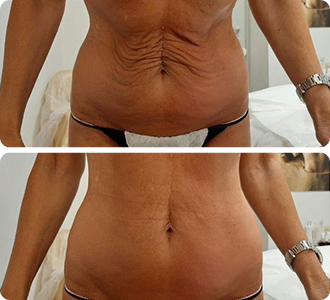
Before and after 3 skin-tightening treatments on the abdomen with T-Shape 2.
What to expect:
- A course of 6-8 sessions, often scheduled 1-2 times a week for optimal momentum
- Painless procedure, frequently described as feeling like a deep, warm abdominal massage
- Zero downtime; you can return to your normal daily activities or hit the gym immediately
- Results appear gradually, with noticeably firmer stomach skin and a potential reduction in waist circumference developing over your treatment course
Laser Skin Tightening
Laser treatments heat the dermis to contract existing collagen while stimulating new collagen formation. On the stomach, lasers serve a dual purpose: they can tighten the skin and can help address pigment irregularities or the texture of stretch marks (striae) resulting from rapid growth or pregnancy.
| Laser Type | Downtime | Best For | Sessions Needed |
| Non-ablative lasers | Several days | Subtle belly tightening, mild stretch marks, maintenance | 3-4 |
| Ablative/Fractional CO2 | 1-2 weeks initially; several weeks for complete healing | Moderate belly laxity, deep/textured stretch marks | 1-2 |
Keep in mind that the skin on the body heals much slower than the skin on the face, so abdominal healing requires significant patience. That’s why many people choose non-ablative options instead of CO2 lasers, for example. Even though they require more treatments to firm the stomach, they are also gentler and have less downtime.
What to expect:
- Aggressive treatments on the stomach may require several weeks or even months for complete healing
- Results can last several years with proper skin care
- Collagen remodeling continues for months after treatment
- Protecting your stomach from the sun is absolutely essential during recovery if you plan on wearing a swimsuit
Biostimulatory Injectables
Biostimulatory injectables like Sculptra and Radiesse act as scaffolds that stimulate collagen production in the deep layers of your skin to promote a more youthful appearance. These injectables trigger a mild inflammatory response that prompts your body to produce its own collagen and elastin over time.
When treating the stomach, especially for the crepey or crinkly skin that often appears directly above or around the belly button, these injectables are heavily diluted (hyper-diluted) and spread across the larger surface area of the abdomen using a cannula.
What to expect:
- Typically 2-3 sessions spaced 4-6 weeks apart
- Results develop gradually over 2-3 months
- Mild swelling, bruising, or tenderness across the injected abdominal area for a few days post-treatment
- Results may last 12-24 months
Neogen Plasma
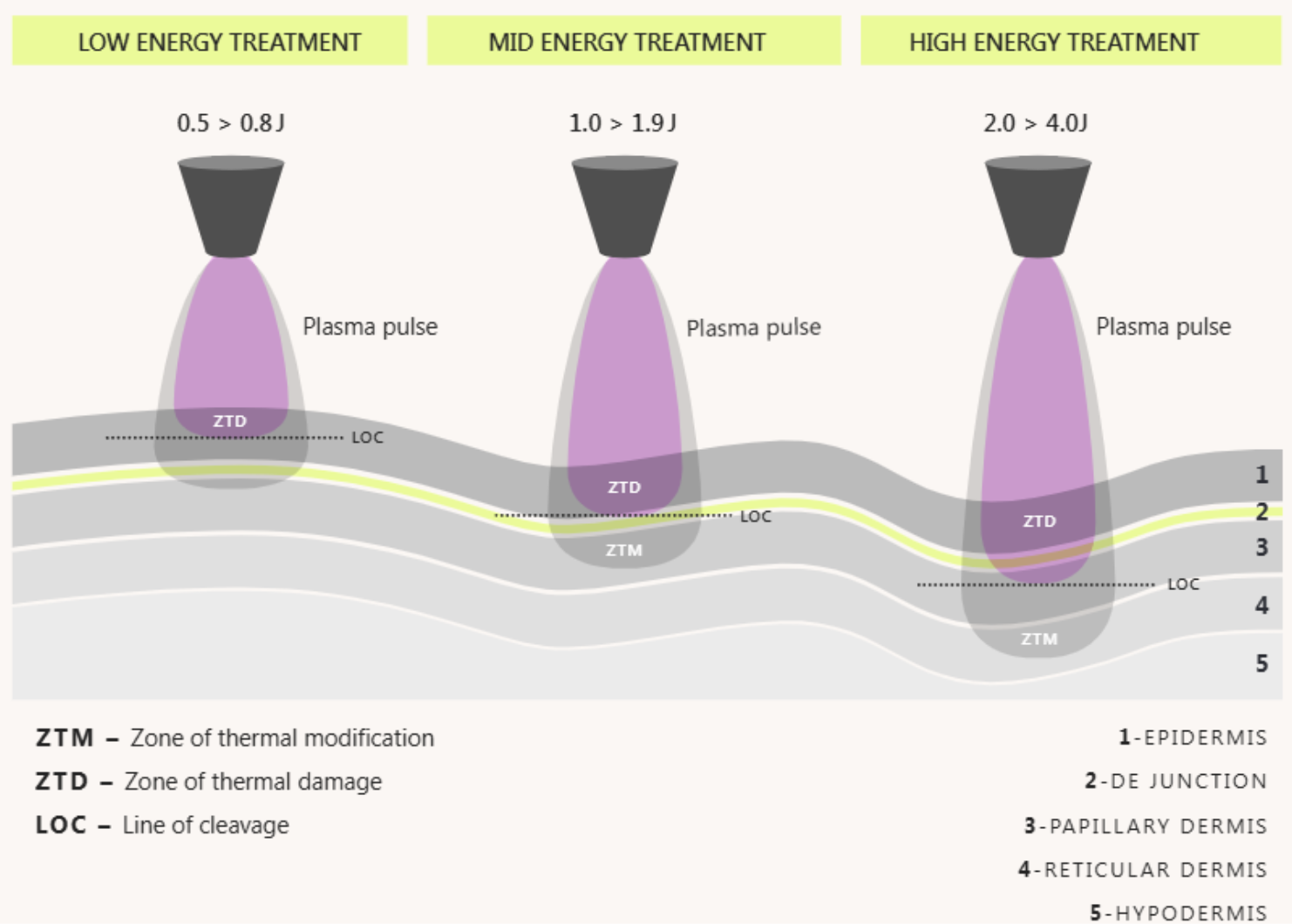
Neogen uses cutting-edge nitrogen plasma technology. It converts medical-grade nitrogen gas into controlled pulses of thermal plasma energy. When applied to the abdomen, this energy rapidly heats the deep dermal tissue to trigger massive collagen and elastin production. The most important aspect is that Neogen does this without burning or breaking the skin’s outer surface like ablative lasers do. That outer layer protects the deep tissue while it heals.
Because Neogen remodels the skin’s underlying architecture, it can work well for mild-to-moderate skin laxity on the stomach. Moreover, it can also help with stretch marks.
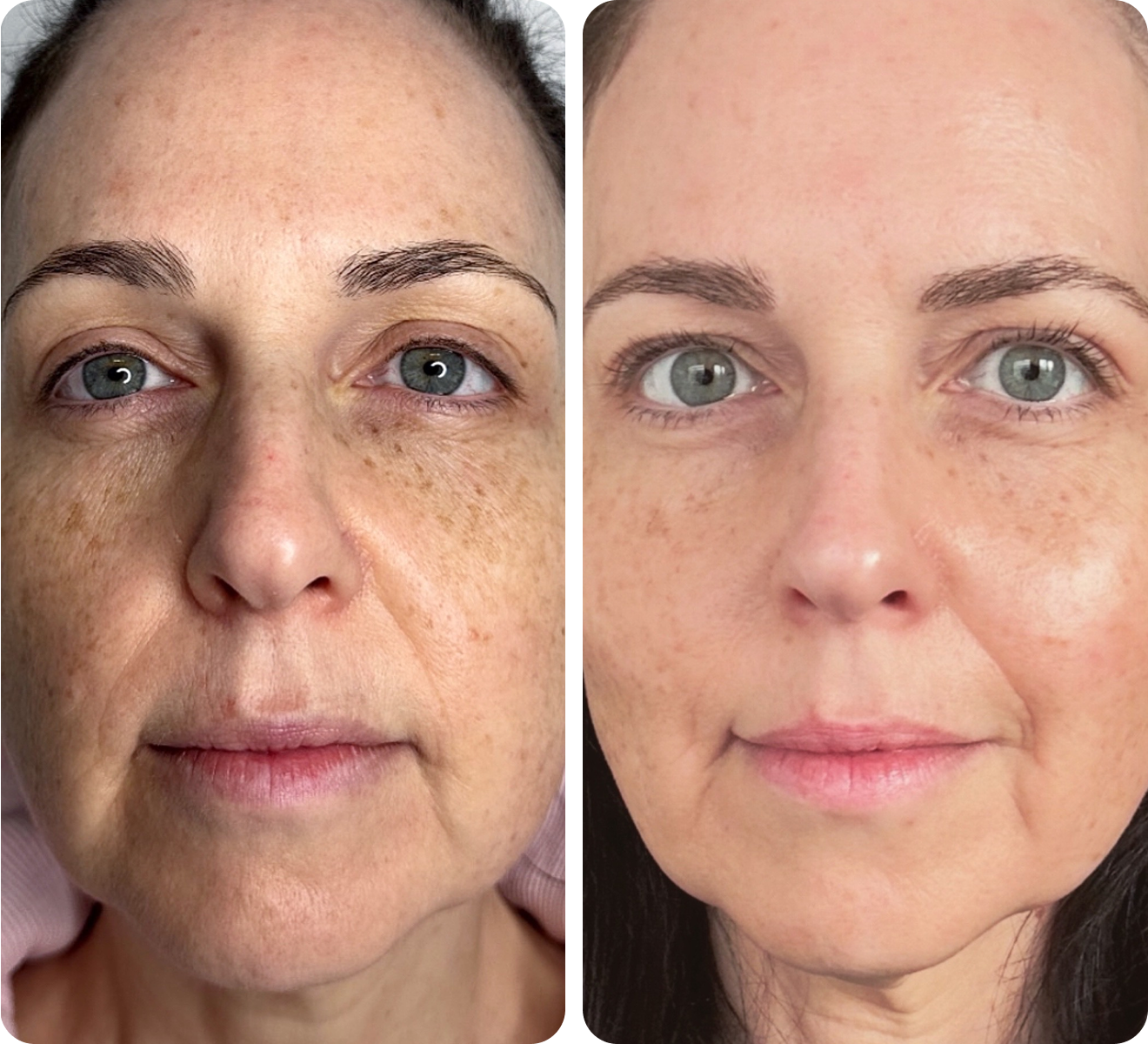
2 weeks after 1 medium energy treatment.
What to expect:
- 1 to 3+ sessions, depending on the energy levels used and the severity of the loose skin or stretch marks
- Downtime depends entirely on the intensity: low-energy treatments cause a few days of redness, while high-energy treatments require 5-7+ days
- Skin on the torso heals much slower than skin on the face. The peeling phase on the stomach requires patience, and you will need to avoid tight waistbands or rough clothing that might prematurely rub the shedding skin
- Results are long-lasting, with continuous skin firming and structural improvements progressing for 12 to 24 months after the procedure
Surgical Stomach Skin Tightening Options
When loose skin is severe, particularly after losing weight rapidly, surgical treatments are often the only effective option. Non-invasive treatments simply cannot remove loose skin or address significant sagging.
Surgical options for loose skin on the stomach:
- Tummy tuck (abdominoplasty): the most common procedure for stomach skin removal
- Extended tummy tuck surgery or lower body lift: for extensive loose skin following significant weight loss, targeting also the love handles between the waist and hips
- Panniculectomy: a medical rather than cosmetic procedure that removes excess skin that hangs over the abdomen, often covered by insurance when the pannus causes physical discomfort, rashes, or infections
- Liposuction: often combined with skin removal to eliminate stubborn fat cells that persist despite weight loss through diet and regular exercise
Sometimes, these are combined with other procedures, such as arm lifts for the upper arms.
How to Choose the Right Treatment for Loose Stomach Skin
To find the best procedure for the loose skin on your stomach, assess the severity of your skin laxity, your anatomy, budget, and how much recovery time you can afford. Here’s a quick reference:
| Severity | Primary Concerns | Best Treatment Options | Expected Downtime |
| Mild | Minor laxity, early loss of elasticity, crepey texture around the belly button, age-related changes | RF treatments (Thermage/Forma), Ultrasound (Sofwave), T-Shape 2 | None to minimal |
| Moderate | Noticeable sagging, post-pregnancy belly changes, moderate laxity after weight loss | RF Microneedling (Morpheus8), deep Ultrasound (Ultherapy), Neogen Plasma, Biostimulators | Low to moderate |
| Severe | Pronounced loose skin, significant overhang (apron), separated abdominal muscles, post-bariatric/massive weight loss. | Tummy tuck (Abdominoplasty), body contouring procedures, lower body lift | Significant (several weeks) |
The Reality Behind Your Results
It is important to remember that your body’s ability to bounce back is completely unique to you. While age plays a role, it is rarely the whole story. How well your stomach skin responds to treatment depends heavily on a few very personal factors:
- Your unique genetics: some of us simply have skin that naturally retains more elasticity and collagen than others.
- The stretch duration: how long your skin was stretched out, whether from a multi-year weight journey or a 9-month pregnancy, heavily impacts its ability to snap back.
- The amount of weight lost: the total amount of weight you have lost changes the underlying structure of the skin.
Because of these variables, someone with mild laxity might see great, confidence-boosting results from non-surgical devices. On the other hand, if you are dealing with significant sagging or an apron effect, non-surgical tools simply won’t be enough, and a surgical procedure is often the best path to get the outcome you deserve.
Balancing Your Budget and Lifestyle
When choosing a procedure, you also have to weigh your options against your real life, specifically your wallet and your calendar:
- Non-surgical treatments are much easier on your immediate budget and your schedule, as there is little to no downtime. However, it is important to remember that they usually require a package of multiple sessions upfront, plus yearly maintenance appointments to keep the results looking fresh.
- Body contouring surgeries require a major upfront financial investment and a significant chunk of time off work and life for recovery. The trade-off is that the removal of the skin is dramatic, immediate, and permanent.
At-Home Support: Caring for Your Stomach Skin
The daily habits you practice at home are what will ultimately protect your investment in any professional treatment. While you do not need to spend a fortune on specialized stomach firming creams (which, by the way, often overpromise and underdeliver), it’s important to treat the skin on your body with the same respect you give your face.
As such, here’s what you can do at home to care for your stomach skin, whether you’ve already undergone a skin-tightening procedure or not. But keep in mind that daily habits and natural remedies cannot physically remove excess skin.
Sun Protection
UV rays are considered the ultimate collagen destroyers. If you are spending time in a swimsuit or wearing a crop top, always apply a broad-spectrum SPF 30+ to your stomach. This is completely non-negotiable for keeping your skin resilient.
Active Skincare
You can extend your facial skincare routine down to your torso. Retinoids can help stimulate cellular turnover and collagen production on the stomach.
But because body skin can surprisingly be a bit sensitive to strong active ingredients, dermatologists recommend starting with a lower concentration or mixing it with your daily body lotion.
You can also try skincare products with ingredients like vitamin C, peptides, and hyaluronic acid.
Hydration
It sounds cliché, but staying hydrated really helps maintain the skin’s plumpness. Dehydrated skin instantly looks more crepey and tired.
Strength Training
Let’s be honest: no amount of sit-ups will magically shrink permanently stretched skin or repair broken elastin. However, building the abdominal muscles underneath fills out the envelope of your skin, providing a firmer, stronger foundation that can help improve how your stomach looks.
Healthy Diet
Your body needs building blocks to create new collagen. Therefore, prioritize foods that are rich in protein, vitamin C, and antioxidants. These can help support that natural synthesis from the inside out.
Pace Your Weight Loss Journey
If you are still on a weight loss journey, aim for losing just 1-2 pounds a week. If you lose more weight per week, your skin likely won’t have enough time to adapt to the change. Avoiding the yo-yo dieting cycle is one of the kindest things you can do to prevent repeatedly stretching and deflating your skin.
Taking the Next Step: Getting a Professional Opinion
The stomach is a remarkably complex area. Because of this, before scheduling any procedure, it’s of utmost importance to book a consultation with a healthcare professional, usually a dermatologist or a board-certified plastic surgeon.
They will physically examine your skin’s elasticity, check your muscle tone, and look at your fat distribution. They will also consider your personal healing capacity and your medical history. From there, they can advise you whether a non-invasive device is actually worth your money, or if a surgical approach is the only way to meet your goals. They can also show you before and after photos of the procedure they recommend, so you can create realistic expectations.
By partnering with a professional, you can ensure that your treatment plan is safe, effective, and customized.
FAQs
How to get rid of loose skin on the stomach?
You can improve loose stomach skin with non‑invasive treatments like radiofrequency, ultrasound, RF microneedling, nitrogen plasma skin regeneration, and T-Shape 2. You should combine these with lifestyle habits such as strength training, good hydration, sun protection, and collagen‑supporting skincare (retinoids, antioxidants, hyaluronic acid).
How to get rid of loose skin on the stomach after weight loss?
For mild or moderate loose skin on the stomach after weight loss, you can try RF microneedling, RF, ultrasound skin tightening, laser resurfacing, T-Shape 2, or nitrogen plasma skin regeneration. Make sure to support these treatments with resistance training, enough protein, hydrating and antioxidant‑rich foods, and possibly hyaluronic acid or retinol products.
Can you tighten loose skin on the stomach?
Yes, you can often modestly tighten skin on the stomach with non‑invasive procedures that deliver heat or energy into the deeper layers of the skin, such as radiofrequency, ultrasound, certain lasers, and RF microneedling. Results are gradual and usually require multiple sessions plus ongoing lifestyle care, but many people see visible improvements in firmness, texture, and stretch marks.
Why does my stomach have loose skin?
Loose stomach skin is often caused by pregnancy, weight fluctuations, or aging, which reduces the skin’s ability to bounce back. Dehydration, sun exposure, smoking, low‑protein diets, and genetics can further weaken elasticity, making sagging more noticeable even if you are at a healthy weight.
Are there any exercises to tighten loose skin on the stomach?
Physical activity cannot directly shrink saggy skin on the stomach, but you can try core and full‑body strength training (planks, crunch variations, leg raises, Pilates, yoga). They can help build underlying muscle so the area appears firmer.
How long do results from non-surgical stomach treatments last?
Results from non-surgical skin tightening treatments for the stomach typically last 12-24 months, depending on the specific technology, your age, and how well you maintain your skin. Some people maintain results longer with healthy lifestyle habits, sun protection, and maintenance sessions every 1-2 years.
Is stomach skin tightening painful?
Most non-invasive stomach skin tightening treatments cause mild to moderate discomfort during the procedure, often described as warming sensations or pinching. Post-procedure, expect some tenderness, swelling, or redness lasting several days, depending on the procedure.