If you’ve noticed that your neck doesn’t quite match how youthful you feel, you’re far from alone. The neck has a way of revealing age before almost any other part of the body, and this can be really frustrating when you’ve been taking proper care of yourself. Luckily, today there are more options than ever to address loose neck skin, vertical bands, and that stubborn double chin.
This guide includes everything you need to know about neck tightening procedures, from the latest non-surgical technologies to surgical solutions that deliver dramatic, long-lasting results.
Disclaimer: This article is intended for informational and educational purposes only. It does not constitute medical advice, diagnosis, or treatment, and should not be relied upon as a substitute for professional medical guidance.
Quick Answer: Neck Tightening Procedures
Neck tightening procedures can stimulate the body’s natural collagen production, tighten underlying tissues, and restore structural support. This can help improve loose skin, wrinkles, and muscle banding. Non-surgical neck tightening cosmetic procedures include ultrasound, radiofrequency, RF microneedling, neuromodulators, nitrogen plasma treatments, T-Shape 2, and biostimulatory injectables. These work best for mild to moderate laxity. Surgical options such as neck lift surgery are typically recommended for severe sagging.
The best treatment depends on the cause of neck aging, whether it’s neck skin laxity, neck fat accumulation, or platysma muscle activity, as well as your age, downtime tolerance, and desired results. Most non-invasive treatments deliver gradual improvements over several months, whereas surgery offers more dramatic and long-lasting tightening.
Potential risks of neck tightening procedures include temporary bruising, swelling, numbness, and rare complications such as infection. They must be performed by experienced professionals.

Why Does the Neck Age Faster?
Neck sagging occurs mainly because of aging, sun exposure, and the natural decline of collagen and elastin production. Moreover, the neck often reveals age earlier than the face because the skin in this area is thinner and frequently underprotected from sun exposure. Many people diligently apply sunscreen to their face but forget about their neck and chest.
Intrinsic Aging
From about the mid-20s onward, the neck skin loses elasticity as collagen and elastin production naturally declines. Hyaluronic acid levels also decrease, and this reduces the skin’s ability to retain moisture and maintain plumpness. By the late 30s to 50s, most people notice visible signs of aging in the neck area, including fine lines, crepey texture, and mild sagging.
Extrinsic Factors
The aging process is also sped up by many external factors, including:
- Chronic sun exposure, which breaks down existing collagen
- Smoking, which restricts blood flow and accelerates neck skin breakdown
- Environmental pollution, which contributes to oxidative stress
- Rapid weight fluctuations, which can cause the skin to stretch and lose elasticity
- Neglecting skincare on the neck (skipping moisturizers and SPF)
Platysmal Muscle Changes
Over time, changes occur beyond the skin’s surface. We’re talking mainly about platysma bands, which, in fact, are among the first signs of aging of the neck.
Studies have shown that platysma bands are not secondary to neck skin sagging and are instead caused by muscular activity during the aging process. Over a period of 10 years, scientists observed 25 participants who had definitive, unilateral facial palsy after otoneurosurgical treatment. They observed that 76% of them had visible platysma bands on the healthy side, but not on the paralyzed side. Based on this, they concluded that “platysma bands are not related to relaxation of the platysma and skin laxity, but are caused by activity of the platysma muscle.”
You can test this theory on yourself while exercising. Next time you lift some weights, look in the mirror and pay attention to how your neck changes. You’ll likely notice those platysmal bands sticking out. The skin follows the muscle; over time, this can cause the platysmal bands to deepen.
Other Structural Changes
Furthermore, fat cells can accumulate beneath the chin, forming a double chin (submental fat) even in otherwise slim people. The combination of loose neck skin, fat deposits, and muscle banding creates what many people describe as turkey neck.
Genetic predisposition plays a role as well. Some people develop prominent neck sagging or jowls in their 40s, even at a healthy weight, simply because of family traits.
Non-Surgical Neck Tightening Procedures
Nonsurgical procedures for neck tightening work by delivering controlled energy to the deeper layers of the skin. This, in turn, triggers the body’s natural healing response and promotes collagen formation.
These options work best for mild to moderate laxity and early turkey neck, typically in younger patients in their 30s through 60s who are not ready for cosmetic surgery. Most treatments require a series of sessions, and results build gradually over 3-6 months because stimulating collagen production takes time. Maintenance sessions may also be needed every 1-3 years.
As such, here are the most popular non-surgical treatments for neck tightening, which we’ll discuss in detail below:
| Treatment | Best For | Downtime | How Fast Results Appear |
| Ultrasound | Structural support and lifting in deeper layers | Minimal | 2-3 months |
| Radiofrequency and RF Microneedling | Mild laxity and collagen stimulation | Minimal to several days | Gradual over weeks |
| Laser Resurfacing | Fine etched lines, texture irregularities, deeper neck lines | Moderate to higher depending on laser type | Progressive over weeks to months |
| Neuromodulators | Neck bands caused by muscle movement | Minimal | 3-14 days |
| Nitrogen Plasma Skin Regeneration | Fine to deep wrinkles, crepey texture, tightening | Variable depending on intensity | Progressive over several months |
| Combined Technology Treatments (T-Shape 2) | Maintenance, skin firmness, circulation support; skin tightening | Minimal | Gradual with sessions |
| Biostimulatory Injectables | Gradual collagen stimulation and skin support | Minimal | Weeks to months |
| Dermal Fillers | Volume loss, horizontal lines, nasolabial folds, marionette lines | Mild swelling or bruising possible | Immediate to 2 weeks refinement |
| Chemical Peels | Surface texture, early fine lines | Low to moderate depending on depth | Gradual after healing |
Ultrasound
Ultrasound therapy uses focused ultrasound energy to heat the deeper layers of the skin and trigger new collagen formation without affecting the top skin layer. The ultrasound waves bypass the skin’s surface to target specific tissue depths, creating thermal coagulation points (small, precisely targeted areas damaged by controlled heat) that stimulate neocollagenesis (the natural process of collagen stimulation).
Two of the most popular ultrasound neck tightening machines are Sofwave and Ultherapy.
Sofwave is a groundbreaking treatment that uses advanced ultrasound technology to tighten neck skin. It uses Synchronous Ultrasound Parallel Beam Technology (SUPERB), delivers energy at a depth of 1.5mm into the skin, and targets the mid-dermis. It can work for fine lines and mild skin laxity.
Ultherapy uses micro-focused ultrasound with visualization (MFU-V) and delivers energy at a depth of up to 4.5mm into the skin. Because Ultherapy can target deeper tissues, it is often used for more advanced skin laxity and deeper wrinkles in the neck area.
What to expect:
- One main session, sometimes followed by a maintenance treatment
- Results develop gradually over 2-3 months as collagen rebuilds
- Mild swelling or tenderness for a few days
- Results may last 12-18 months, depending on skin quality
Radiofrequency and RF Microneedling
Radiofrequency uses energy waves to heat the dermis skin layer. Similar to ultrasound, this triggers the body’s natural healing response, which, in turn, stimulates long-term collagen and elastin production. Thermage and Forma are among the most popular radiofrequency machines.
RF microneedling combines tiny needles penetrating the skin with RF energy to treat both surface texture (crepiness, fine lines) and deeper laxity. One popular RF microneedling machine is Morpheus8.
What to expect:
- 3-4 sessions spaced approximately 4-6 weeks apart
- Results appear gradually over several months
- New collagen production continues between sessions
- Downtime is usually a few days of redness and mild swelling
Nitrogen Plasma Skin Regeneration
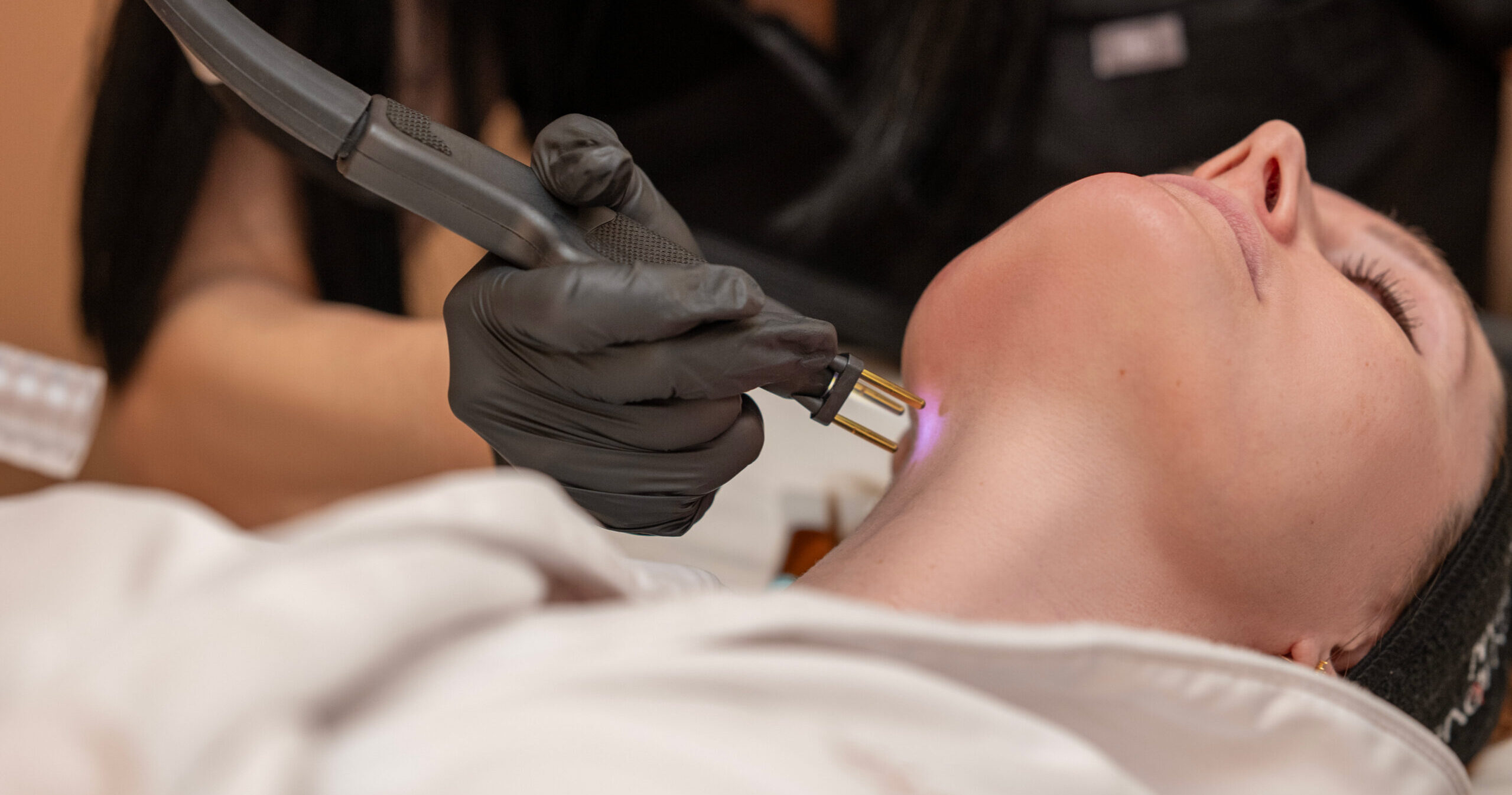
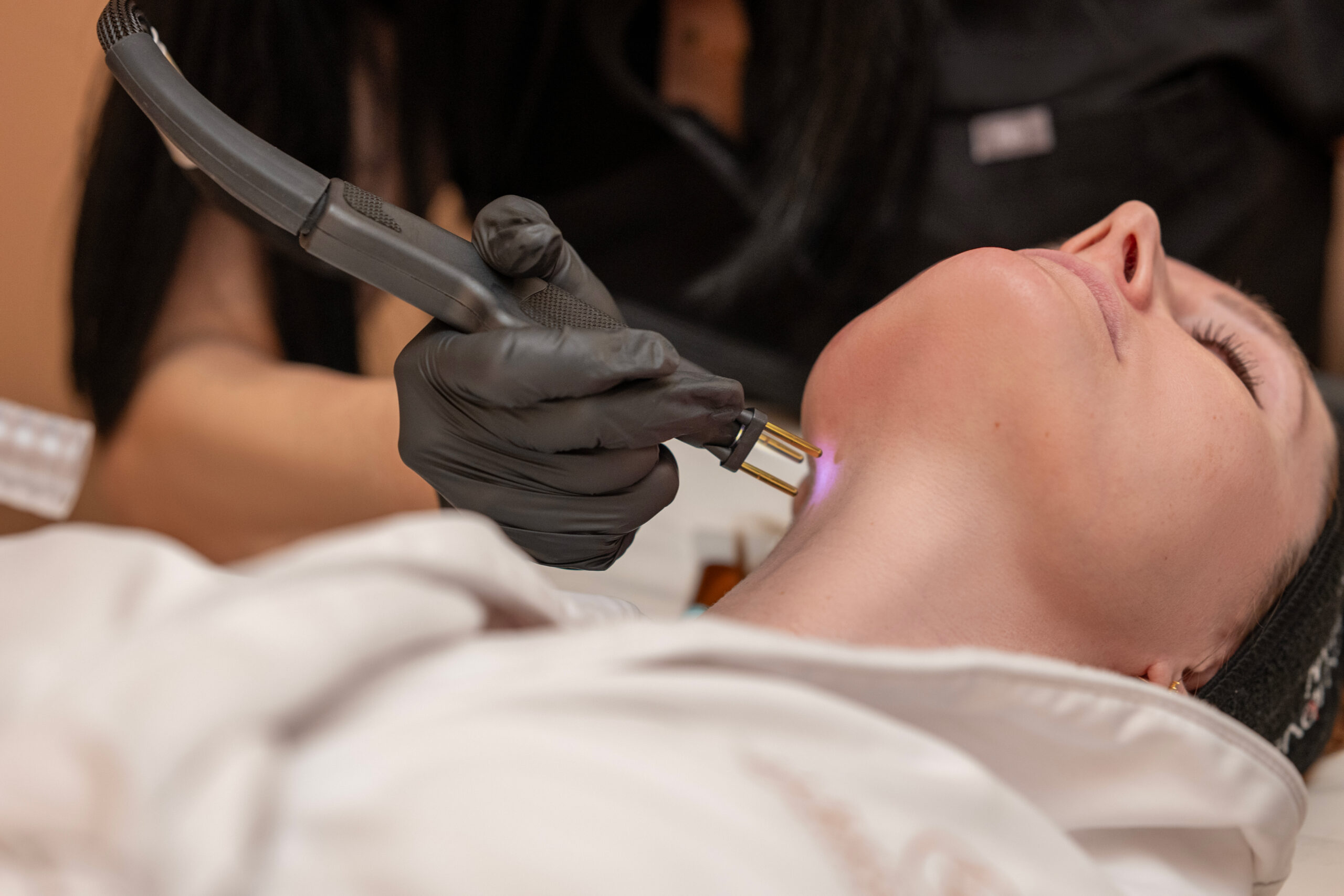
Nitrogen plasma therapy uses controlled nitrogen plasma energy to heat the skin at different depths, depending on procedure goals, and trigger collagen remodeling. Unlike ablative lasers that instantly vaporize the top layer of the skin, plasma energy leaves the skin’s surface intact, which means that these treatments have minimal downtime.
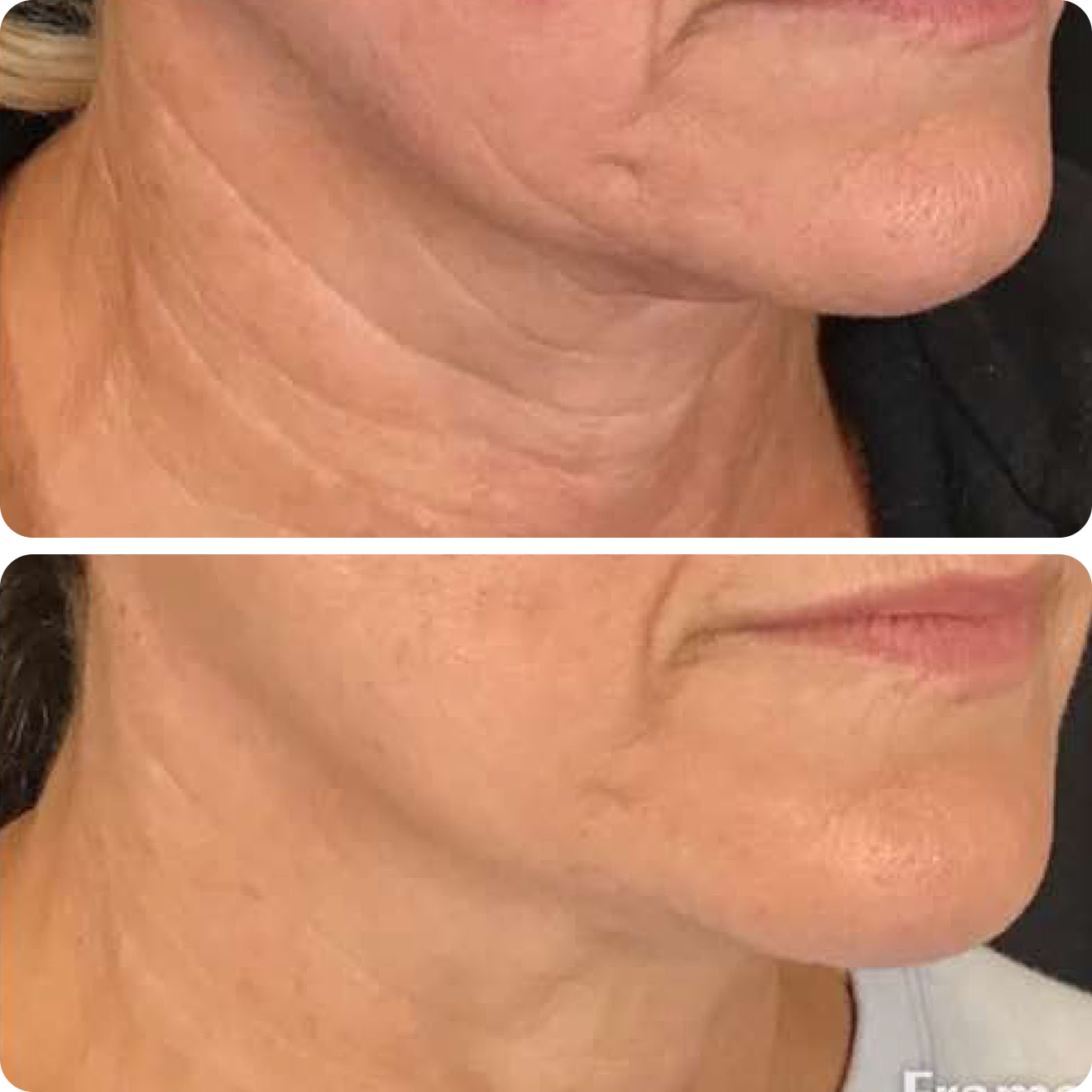
6 Weeks after 1 low energy treatment.
Courtesy of Dr. Nina Deep.
Studies confirm that just one plasma skin regeneration treatment can lead to an improvement of 41% in the appearance of neck wrinkles.
One of the most popular nitrogen plasma machines is Neogen.
What to expect:
- 1-2 high-energy treatments or 3-6 low-energy treatments
- Downtime ranges from a few hours (for low energy) to 5-7 days of social downtime for higher energy
- Collagen remodeling continues for up to a year, with results lasting several years
Laser Resurfacing
Laser tightening heats the dermis to contract collagen and stimulate new collagen formation while also improving pigment irregularities and texture. This dual benefit makes laser treatments particularly valuable for people with both laxity and sun damage.
There are two types of laser treatments:
| Laser Type | Downtime | Best For | Sessions Needed |
| Non ablative lasers | Several days | Subtle tightening, maintenance | 3-4 |
| Ablative/Fractional | 5-10 days initially + several weeks of healing | Wrinkles, sun damage, crepey skin | 1-2 |
Among the most popular laser options are CO2 lasers (ablative lasers with significant downtime), Erbium lasers (ablative lasers with less downtime), and non-ablative lasers like Fraxel (with significantly less downtime than CO2 lasers).
What to expect:
- Aggressive CO2 laser procedures may require several weeks for complete healing
- Non-ablative lasers heat the skin with milder effects, which means that they require more treatments
- Results can last several years; maintenance sessions might be required
- Collagen remodeling continues for several months after treatment
Neuromodulators
Neuromodulators work by temporarily relaxing specific muscles in the neck. One example you probably heard about are the Botox injections – the provider asks the patient to contract and relax the platysma muscles so they can understand where the neuromodulator needs to be injected for optimal results. This can help smooth out prominent neck bands while creating a tighter, more contoured jawline without altering the skin’s structure.
Some of the most popular neuromodulator brands include Botox, Dysport, Xeomin, and Daxxify.
What to expect:
- One brief session (usually under 15 minutes)
- Results appear quickly, typically taking 3 to 14 days to fully develop
- Zero downtime, though minor pinpoint bruising at the injection site can occur
- Results typically last 3-4 months (though newer options like Daxxify may last up to 6 months)
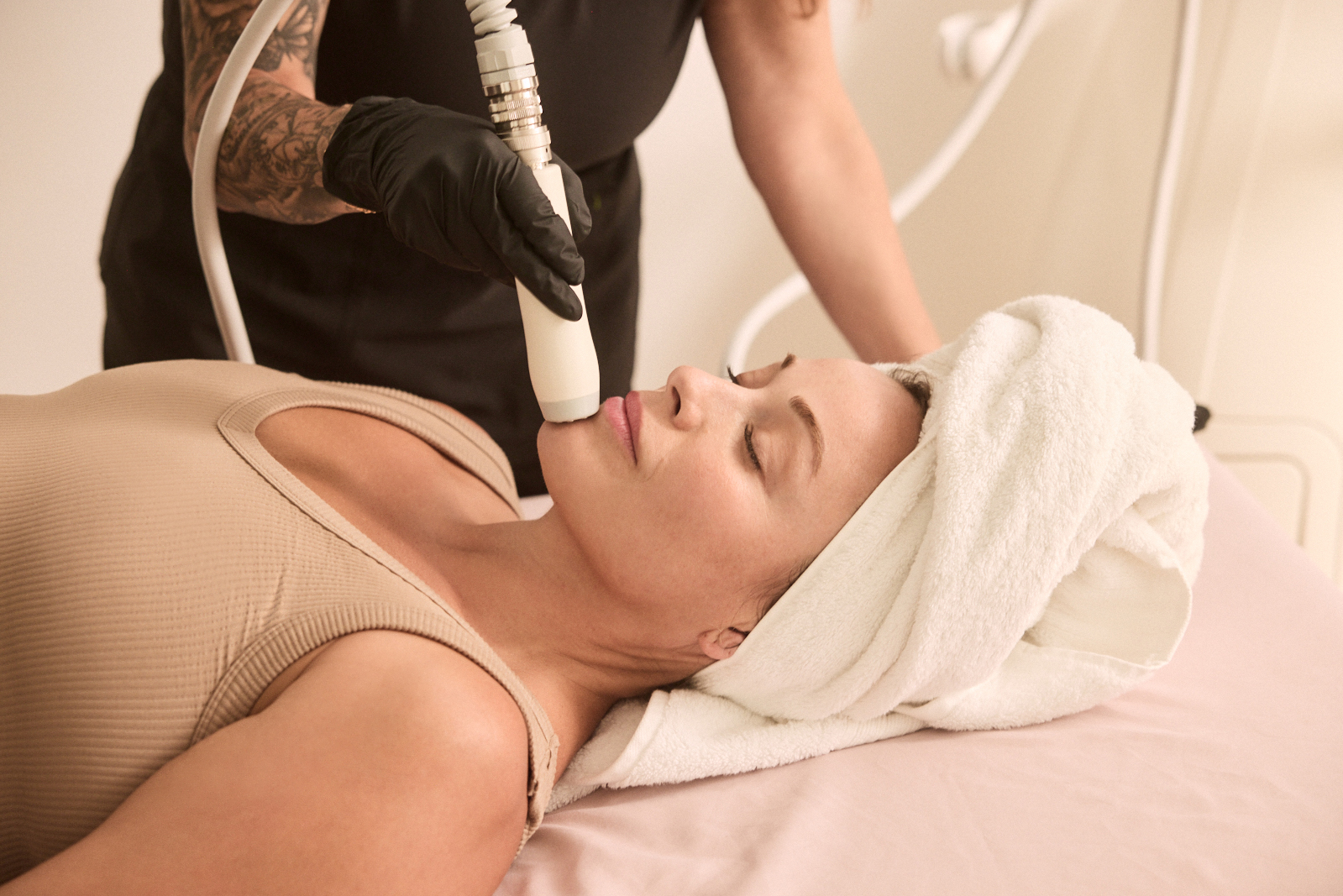
Combined Technology Treatments – T-Shape 2
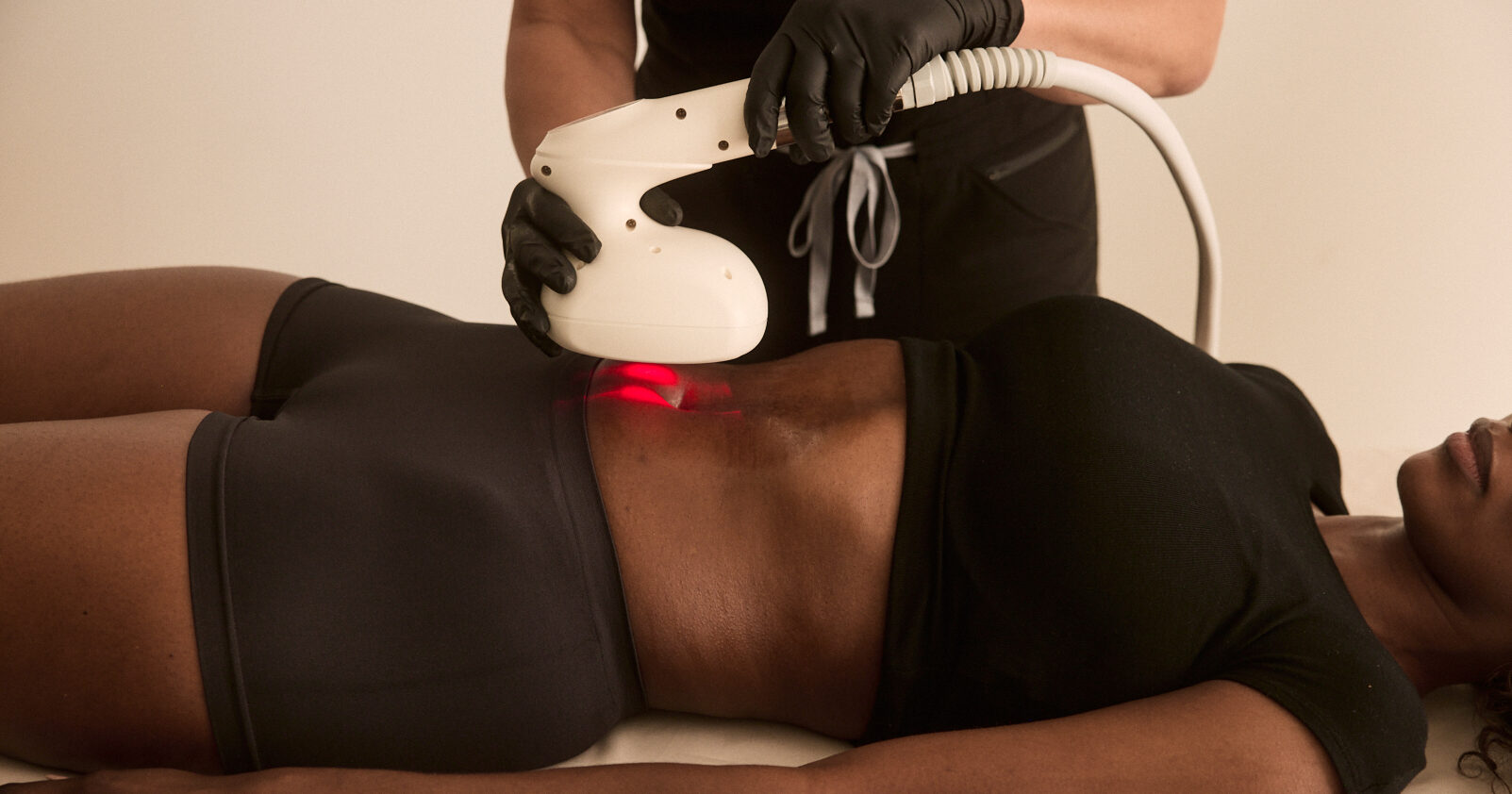
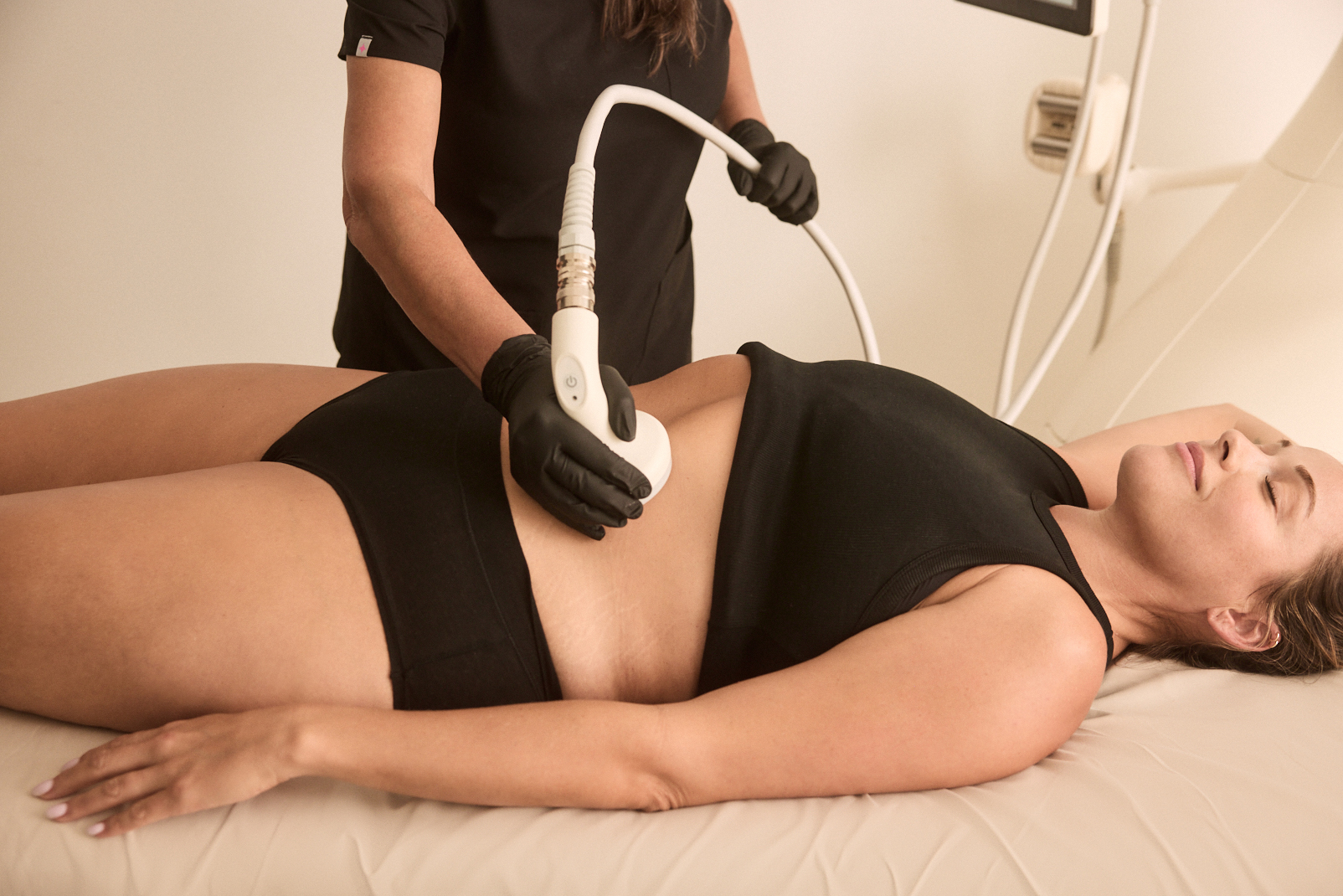
Combined treatments utilize multiple non-invasive modalities simultaneously within a single device. A prime example is the T-Shape 2, which combines multipolar radiofrequency (RF), low-level laser therapy (LLLT), endodermic massage with suction, and mesospheric activation.
The RF energy heats the dermis to contract collagen and tighten the skin; the LLLT can sculpt and improve metabolism, the vacuum massage promotes lymphatic drainage and circulation and can help reduce neck fat, while the mesospheric activation tones underlying muscles and improves overall skin health.
What to expect:
- 6-12 sessions are required
- Minimal downtime; you’ll be able to resume normal activities shortly after
- Results appear weeks or even months after treatment as collagen remodels
Biostimulatory Injectables
Unlike dermal fillers that simply add volume, biostimulatory injectables are injected into the subdermal layers to act as a supportive scaffold. This triggers a mild inflammatory response that stimulates the body’s own natural production of collagen and elastin over time. For the neck, these injectables are typically hyper-diluted to spread evenly. They can help tighten mild laxity, smooth fine lines, and reduce that crepey appearance.
Two of the most popular biostimulatory injectables are Radiesse and Sculptra.
What to expect:
- Typically 2-3 sessions spaced 4-6 weeks apart
- Results develop gradually over 2 to 3 months as your body builds new collagen
- Mild swelling or bruising for a few days post-treatment
- Long-lasting results that can remain for 12-24 months
Dermal Fillers
Dermal fillers use smooth, gel-like substances, most commonly hyaluronic acid (HA), to physically fill and plump specific areas and restore a more youthful appearance. While they don’t mechanically tighten loose skin, they can be highly effective at smoothing out deep, horizontal necklace lines that make the neck look aged.
Fillers can also be placed strategically along the jawline to pull the skin taut, creating the optical illusion of a tighter, more defined neck.
What to expect:
- One session for immediate, visible results
- Mild swelling, tenderness, or bruising that resolves within a week
- Hyaluronic acid naturally integrates into the tissue for a soft, natural look
- Results generally last between 6 and 12 months, depending on the specific filler and individual metabolism
Chemical Peels
Chemical peels involve applying a customized chemical solution to the neck to deeply exfoliate the skin and accelerate cellular turnover. As the damaged outer layers peel away, it forces the dermis below to heal and produce fresh collagen. Because the skin on the neck is thinner and has fewer oil glands than the face, specialized, gentler peels are usually required to smooth superficial crepiness, fade sun damage, and induce mild skin contraction.
What to expect:
- Superficial peels can be done during a lunch break; medium peels require social downtime
- Strict sun avoidance is absolutely mandatory while the neck skin heals
- Skin will feel tight and dry before it begins to visibly flake or peel
- Improves surface-level texture rather than correcting deep structural sagging
Surgical Neck Tightening Procedures
Plastic surgery is often recommended for significant turkey neck, heavy jowls, and pronounced skin excess or muscle banding. When the skin has lost significant elasticity or when fat and muscle changes are extensive, non-surgical procedures usually cannot drastically improve its appearance.
Surgical options include:
- Neck lift surgery like cervicoplasty and platysmaplasty. Cervicoplasty implies removing excess skin, while platysmaplasty implies tightening sagging neck muscles.
- Face lifts, which can reduce sagging skin and jowls, and smooth deep creases in the lower face and neck
- Liposuction, which can remove stubborn fat under the chin and along the jawline
- Facial fat transfer, which can help support neck contour
- Neck band surgery, which brings together the platysmal muscle edges and flattens their appearance
How to Choose the Right Treatment for Neck Tightening
There are so many procedures in the medspa industry that it can be really confusing to understand which one’s the best for you, especially when we’re talking about such a sensitive area like the neck. So, how can you decide? Focus on these four key factors: the severity of your skin laxity, your underlying anatomy (muscle vs. fat vs. skin), your budget, and how much downtime you can afford.
Here’s a quick reference table that can help you narrow down your options based on your current stage of neck aging:
| Severity & Age | Primary Concerns | Best Treatment Options | Expected Downtime |
| Mild (20s–30s) | Prevention, fine lines, “tech neck,” minor loss of hydration | Skincare, superficial chemical peels, Sofwave, superficial RF (Forma), T-Shape 2 | None to minimal (1-2 days) |
| Moderate (40s–50s) | Noticeable crepiness, visible platysma bands, early jowling | Ultherapy, RF Microneedling (Morpheus8), biostimulators (Sculptra/Radiesse), neuromodulators, nitrogen plasma (Neogen), T-Shape 2 | Low to moderate (2-7 days) |
| Severe (60s+) | Pronounced “turkey neck,” deep banding, significant loose skin and fat | Surgical procedures | Significant (several weeks) |
Ultimately, you shouldn’t choose a treatment by yourself. It is highly advisable to talk to a professional who can help you assess different treatment options and find the one that suits your skin best.
At-Home Support: Prevention and Skincare
Your daily habits protect your investment and can help slow down skin aging. You don’t necessarily need a special neck cream, but you do need to extend the facial skincare routine south of your jawline.
Here are the most effective ways to support your neck at home:
- Protect your skin from sun damage. This is non-negotiable. UV damage is among the most common causes of premature collagen breakdown. So, don’t forget to apply a broad-spectrum SPF 30 or higher to your neck and décolletage every single day, even in the winter.
- Try retinoids, which can help stimulate cellular turnover and collagen production. Because your neck skin is thinner and more sensitive than facial skin, start with a lower concentration and apply it over a moisturizer to prevent irritation.
- Try serums that contain hyaluronic acid, ceramides, and peptides. These ingredients can help lock in moisture, temporarily plump fine lines, and support the skin barrier.
- Try antioxidant serums like Vitamin C serums. They can help you fight off free radicals caused by environmental pollution and UV exposure. This can prevent further oxidative stress on your neck.
- Mind your posture! When you constantly look down at your phone and laptop, you’re reinforcing your horizontal folds in the neck. So, try to keep your screens at eye level and take frequent breaks to stretch and relieve tension in the neck muscles.
Next Step: Talk to a Professional
Reading about treatments is an excellent way to educate yourself, but it cannot replace a personalized assessment. Because the neck is a complex structure made of thin skin, localized fat pads, and dynamic muscles, what worked wonders for a friend might not be the right solution for you.
Therefore, always consult with a board-certified dermatologist or board-certified plastic surgeon before scheduling any neck tightening procedures for fewer risks of side effects and suboptimal results.
A qualified professional will assess your skin’s elasticity, skin type, the thickness of your subdermal fat, and the hyperactivity of your platysma muscles. They will give you a candid evaluation of whether you are a candidate for non-surgical devices or if a surgical approach is the only way to meet your skin concerns and aesthetic goals.
By collaborating with a trusted provider, you can create a safe, effective, and tailored treatment plan to restore a firmer, more youthful contour to your neck.
FAQs
Are there any neck tightening procedures without surgery?
Yes, there are neck tightening procedures without surgery. If you aren’t ready for a surgical neck lift, you can try ultrasound technology, radiofrequency energy, RF microneedling, nitrogen plasma neck regeneration, and T-Shape 2. However, it is important to have realistic expectations: nonsurgical options cannot remove large amounts of significantly sagging skin. Instead, they work by either stimulating your body’s own collagen and elastin production, physically remodeling the tissue with heat, or relaxing neck muscles.
What are the best procedures for neck tightening?
There is no single best procedure for neck tightening because the right choice depends entirely on the root cause of your neck aging. The neck is complex, and aging usually involves a combination of skin laxity, muscle banding, and fat accumulation. The best procedure depends on your specific issue:
- For lifting and deep tightening: Ultrasound and nitrogen plasma
- For smoothing crepey skin: RF Microneedling, biostimulators, T-Shape 2
- For relaxing prominent vertical neck bands: Neuromodulators
What is the new procedure for neck tightening?
T-Shape 2 and Neogen plasma skin regeneration are two of the newest procedures for neck tightening.
How much do neck tightening procedures cost?
Various neck tightening procedures vary in cost. Neuromodulators may cost between $300 and $800; RF microneedling may cost $700-$1,500; ultrasound might cost $1,500-$3,500+.
Are there non-invasive neck tightening procedures?
Yes, ultrasound, radiofrequency, and T-Shape 2 are non-invasive neck tightening procedures that require little to no downtime.