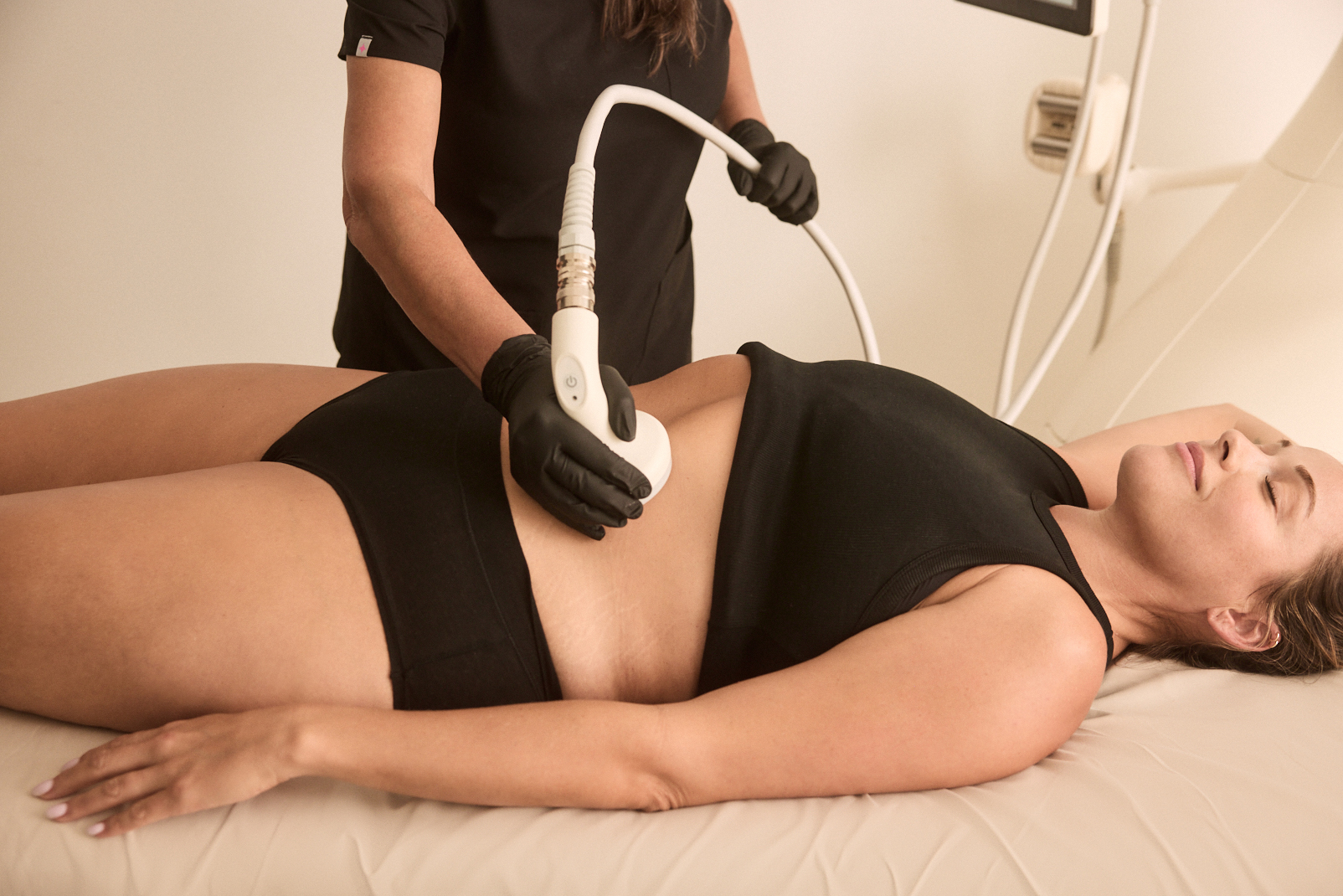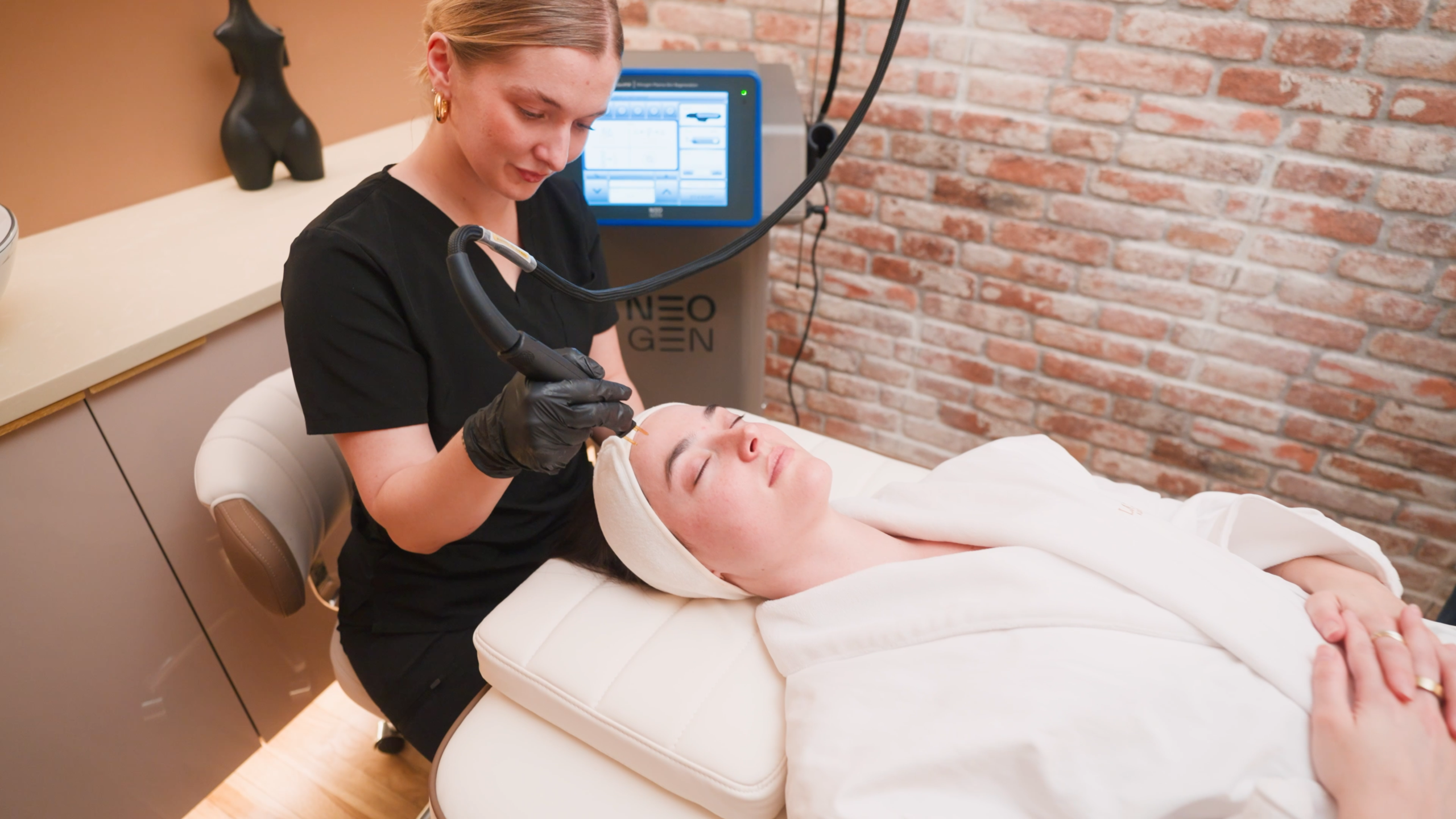
Are you noticing early signs of aging? Maybe some loose skin here and there. Or perhaps your jawline’s lost its definition. If so, you’re probably looking for the least invasive options to address these, right?
Demand for non-surgical facelift options has grown considerably over the past decade. The technology behind them has advanced significantly. Today, there are highly effective, clinically supported non-surgical face lift treatments. They can help address skin laxity, fine lines, deep wrinkles, and facial volume loss. Many of them have no recovery period, leave no scars, and carry minimal risks compared to surgical options. Still, they’re not suitable for everyone.
This guide covers everything you need to know: how non-surgical facelifts work, which procedures are available, how they compare to a surgical facelift, and what outcomes you can expect.
Disclaimer: This article is provided for informational and educational purposes only. The information presented here is not a substitute for professional medical evaluation, consultation, or care and should not be relied upon to make health-related decisions. Always consult a qualified and licensed medical or aesthetic professional before undergoing any cosmetic or aesthetic procedure.
What Is a Non-Surgical Facelift?
A non-surgical facelift is a collective term for non-surgical procedures that rejuvenate the face without incisions, general anaesthesia, or extended recovery. These treatments work through various mechanisms: stimulating collagen production, restoring facial volume, resurfacing the skin, or physically lifting tissue using minimally invasive tools.
Non-surgical treatments work with the body’s own regenerative processes. They produce gradual, natural-looking improvements. That’s exactly how they differ from a traditional facelift (rhytidectomy). The latter repositions facial tissues and removes excess skin through surgery.
The results achieved after non-surgical procedures are generally more subtle. Plus, maintenance sessions are needed to sustain them. That said, for many people, particularly those in their 30s, 40s, and 50s who are noticing early to moderate facial aging, these options can offer meaningful improvements with minimal downtime and fewer risks.
It is worth noting that non-surgical facelifts cannot address advanced skin laxity and may not be suitable for everyone, because they also have contraindications. A consultation with a qualified practitioner, ideally a board-certified plastic surgeon or experienced aesthetic professional, is the best way to determine which approach is appropriate for your specific concerns.

Why Does the Face Age?
Before discussing some of the most popular non-surgical facelift procedures, let us explain a bit why the face ages. This might help you understand how these procedures work.
Facial aging involves a few processes that occur simultaneously:
- Collagen and elastin decline: collagen production peaks in early adulthood and declines at roughly 1% per year from age 25 onwards. Elastin follows a similar pattern. As these structural proteins decrease, skin elasticity drops, and the skin begins to thin.
- Volume loss: the fat pads beneath the skin change and diminish over time; this lead to facial volume loss, hollowed cheeks, and the flattening of contours.
- Bone resorption: the underlying facial skeleton gradually loses density and volume, which reduces structural support for soft tissue.
- Gravitational descent: soft tissue, no longer well-supported by bone, collagen, and fat, descends gradually, creating jowls, nasolabial folds, and marionette lines.
- Sun damage and texture changes: cumulative sun exposure breaks down collagen in the dermis and contributes to uneven skin tone, skin texture changes, and acne scars.
Non-surgical facelift options can help address different aspects of this process. Some target structural lifting. Others stimulate collagen renewal. Others restore lost volume. The most comprehensive results are often achieved by combining two or more approaches.
Non-Surgical Facelift Options: A Complete Overview
Below is a breakdown of the main non-surgical facelift options available today, including how each works, what it addresses, and what to expect.
Keep in mind that non-surgical facelift options are not mutually exclusive. In fact, combining two or more treatments is a common strategy in cosmetic dermatology.
Before discussing more details, here’s a quick comparison of the non-surgical facelift procedures we’ll present below:
| Procedure | Best For | Results Onset | Longevity | Downtime | Invasiveness |
| Radiofrequency (RF) Skin Tightening | Mild-moderate skin laxity, early sagging | Gradual | 12-18 months | None | Non-invasive |
| Plasma Skin Regeneration | Wrinkles, laxity, acne scars, texture, eyelids | Progressive | Long-lasting (1-2+ years) | 3-10 days | Non-invasive |
| T-Shape 2 | Early laxity, skin tone, circulation, mild contouring | Gradual | 1-2 years | Minimal | Non-invasive |
| Dermal Fillers | Volume loss, contouring, folds, under-eyes | Immediate | 6-12 months | Minimal | Minimally invasive |
| Biostimulatory Injectables | Skin quality, collagen stimulation | Gradual | 1-2+ years | Minimal | Minimally invasive |
| Laser Skin Resurfacing | Wrinkles, scars, pigmentation, texture | Gradual | Varies (months-years) | 0-14 days or more | Non- to minimally invasive |
| Botulinum Toxin (Botox) | Expression lines, mild brow lift | 5-10 days | 3-4 months | Minimal | Minimally invasive |
| HIFU (Ultherapy) | Lifting (brow, jawline, neck), structural laxity | Gradual | 1-2 years | Minimal | Non-invasive |
| RF Microneedling | Laxity, acne scars, texture | Gradual | 1-2 years | 1-3 days | Minimally invasive |
| Thread Lift | Mild-moderate sagging, jowls, brows | Immediate + improves over time | 12-24 months | 1-3 days | Minimally invasive |
| Chemical Peels | Texture, pigmentation, fine lines | Days to weeks | Varies (short-moderate) | 0-14 days | Non- to minimally invasive |
1. Radiofrequency (RF) Skin Tightening
Radiofrequency devices deliver controlled electromagnetic energy as heat into the deeper layers of the dermis. This heat stimulates collagen and elastin production while causing immediate tissue contraction. This produces a gradual tightening effect over several months.
What it can help address:
- Sagging skin on the face, jawline, and neck
- Fine lines and early deep wrinkles
- Skin laxity in the midface and lower face
- Overall skin quality improvement
RF treatments are generally comfortable. They require no anaesthesia and involve no significant downtime. Results develop progressively as new collagen forms, typically over 3-6 months. Maintenance sessions are usually recommended every 12-18 months. Research suggests that RF treatments are most effective for mild to moderate laxity. They are less effective for significantly lax skin.
2. Plasma Skin Regeneration
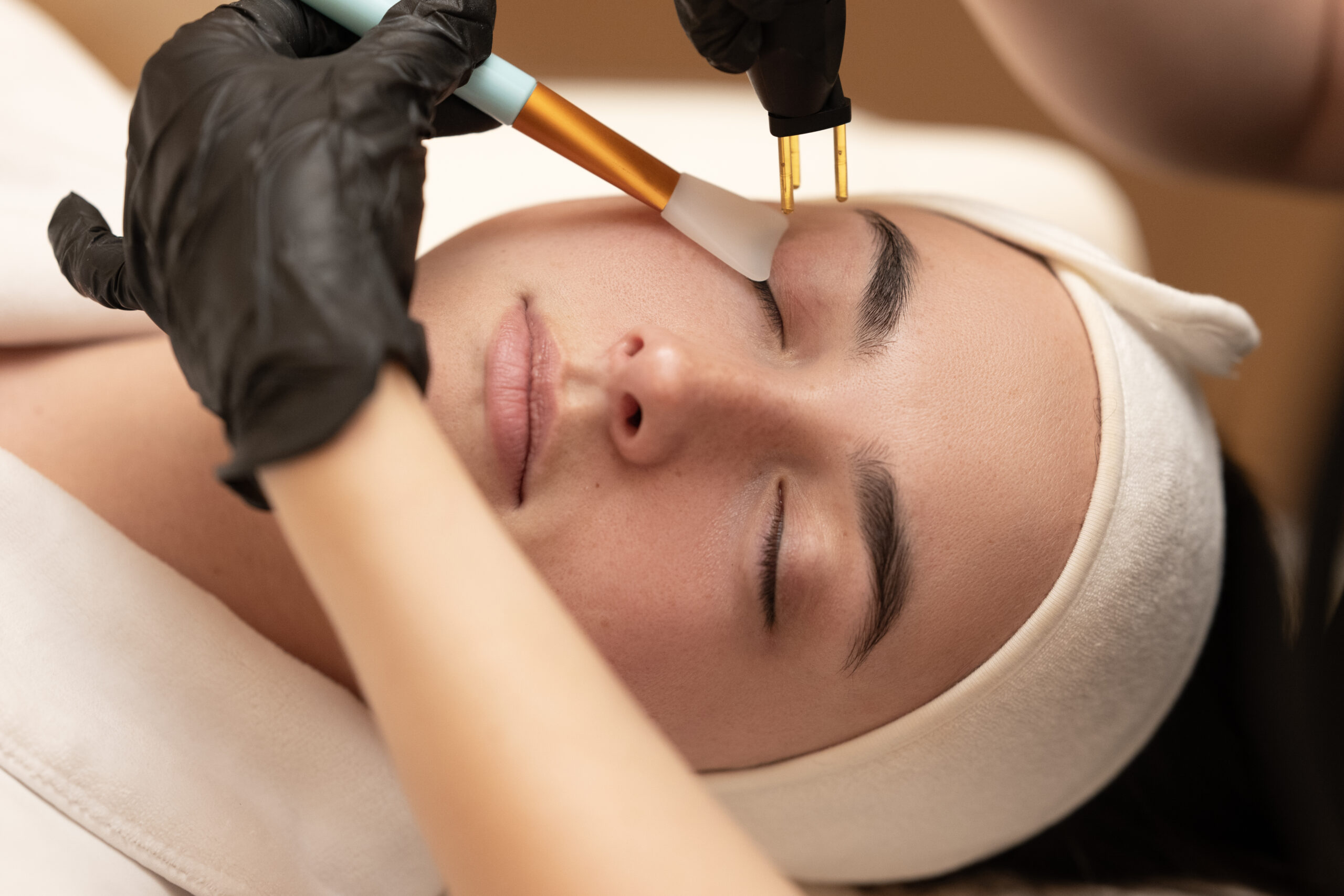
Nitrogen plasma technology (Neogen) is different from both lasers and radiofrequency. It converts nitrogen gas into plasma, which is then delivered into the skin. This process leads to:
- Skin tightening, as the heat causes the tissue to contract
- Skin resurfacing, as the epidermis creates a natural barrier protecting the skin from any infection; once the healing process is finished, the old epidermis is shed, and a new, healthier one is created
- Skin regeneration, as the heat stimulates collagen and elastin production.
Unlike most laser treatments, Neogen preserves the outer skin layer during treatment. It acts as a natural barrier while the dermis rebuilds from within, so there’s significantly less downtime for similar results.
Neogen regenerates the full skin architecture. This means that all of the treated skin is activated. This includes both the superficial and the deeper dermal layers. Collagen remodelling continues for up to 24 months post-treatment.
What it can help address:
- Sagging skin and skin laxity
- Fine lines and deep wrinkles
- Acne scars and sun damage
- Uneven skin tone and skin texture
- Under-eye area and eyelid laxity (a non-surgical alternative to blepharoplasty)
- Collagen and elastin regeneration at the structural level
Neogen offers two energy settings: low energy (3-5 days downtime) and high energy (5-10 days downtime). High-energy protocols can produce results comparable to those of a CO2 laser with less downtime and fewer risks. Unlike many laser resurfacing devices, Neogen is suitable for all skin types.
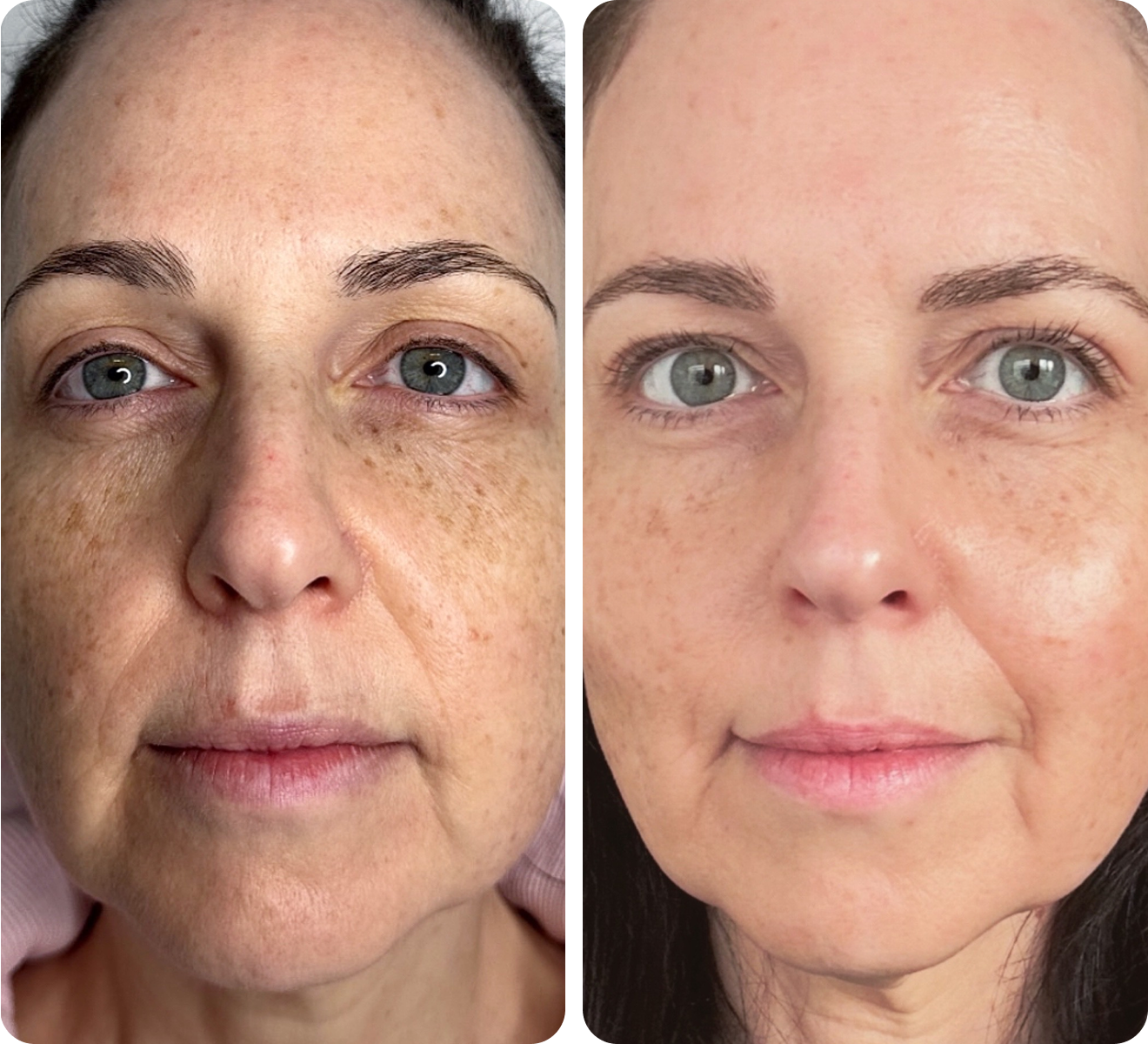
2 Weeks after 1 medium energy treatment with Neogen. Courtesy of Plasmatology.
3. Combination Technologies: T-Shape 2
One of the more versatile options in the current non-surgical facelift market is the T-Shape 2. This machine integrates four synergistic technologies in a single platform:
- Bipolar Radiofrequency (RF): penetrates the skin to stimulate collagen and elastin production and firm tissue
- Low-Level Laser Therapy (LLLT): helps sculpt and improve metabolism, as well as stimulate collagen production
- Vacuum Suction with Endodermic Massage: helps mobilize tissue, enhance circulation, and promote lymphatic drainage
- Mesospheric Activation: tones underlying muscles, helps improve overall skin health, promotes circulation
The T-Shape 2 is designed to be used on both the face and the body. On the face and neck, the combination of RF and LLLT can help stimulate collagen production, improve skin elasticity, and address sagging skin and early skin laxity. The vacuum massage component supports circulation and tissue mobilization, contributing to improvements in skin tone and skin texture.
Results develop progressively, with full outcomes visible 4-6 weeks after completing a treatment plan. Many practitioners combine T-Shape 2 sessions with injectables or skin resurfacing treatments for more comprehensive results.
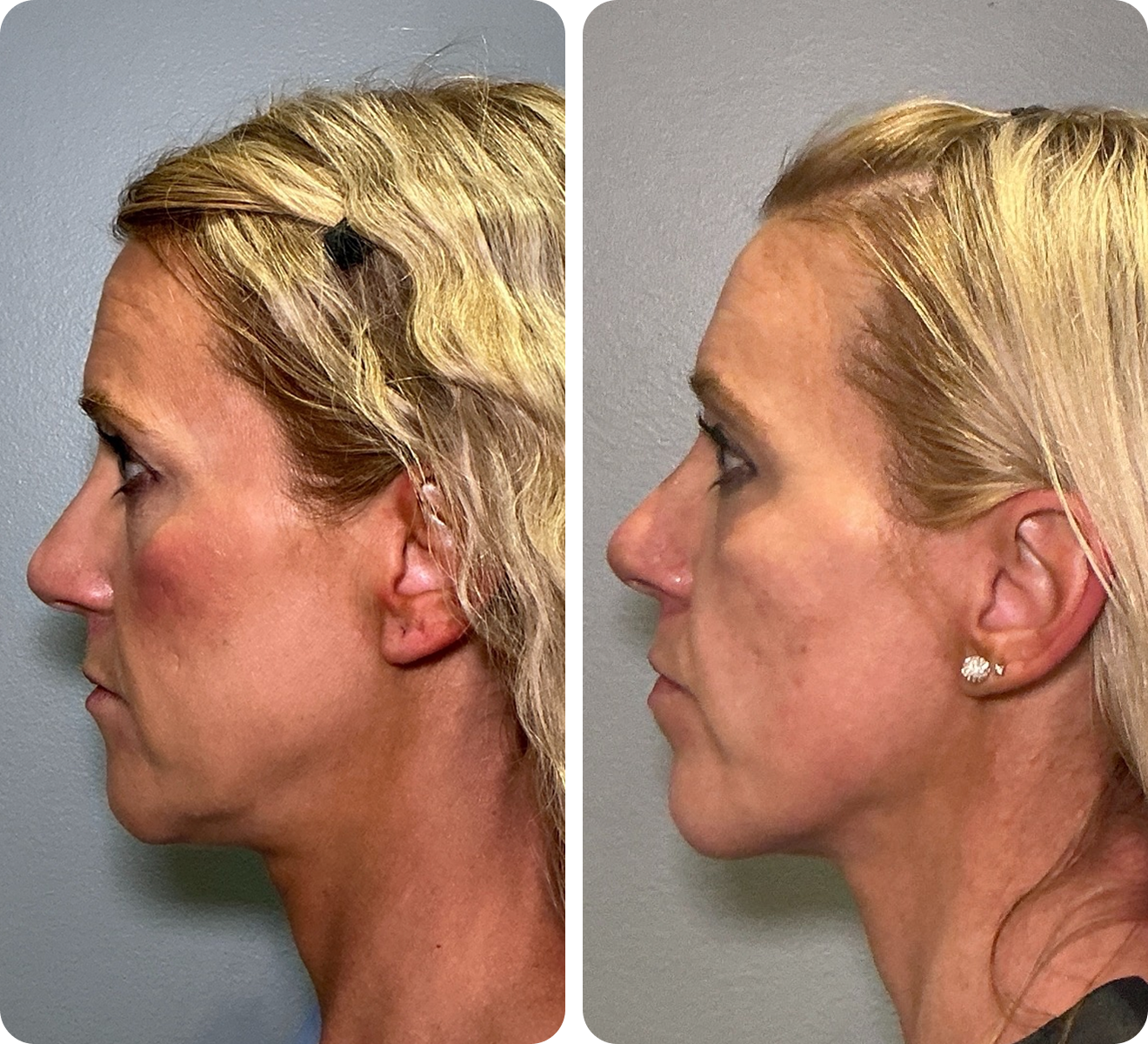
Before and after 2 skin-tightening treatments on the face with T-Shape 2.
4. Dermal Fillers and Biostimulatory Injectables
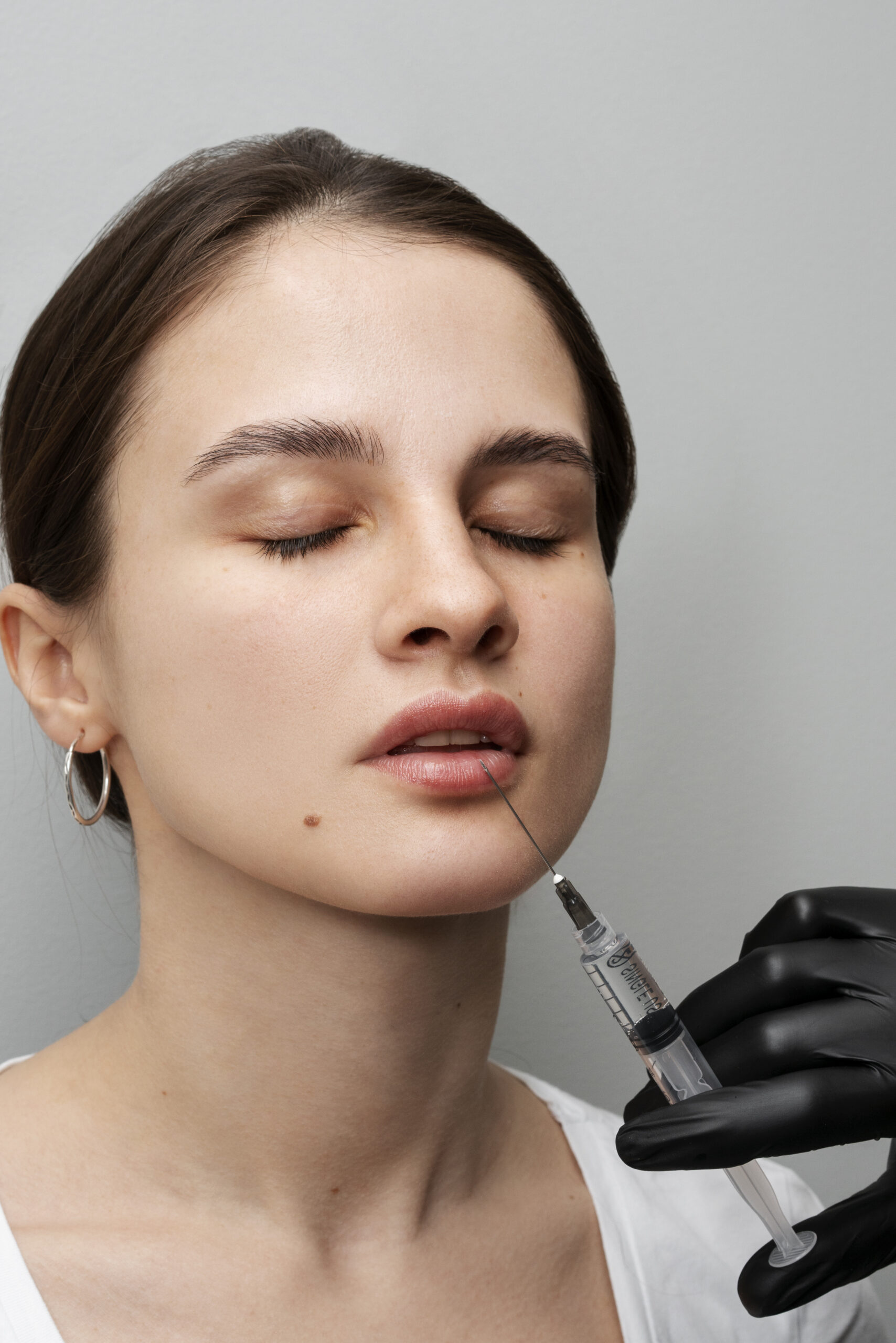
Dermal fillers (or soft tissue fillers) and biostimulatory injectables are injectable substances. They are most commonly based on hyaluronic acid, calcium hydroxylapatite, or poly-L-lactic acid (PLLA). Dermal fillers can help restore lost volume, smooth wrinkles, and improve facial contours, while biostimulatory injectables stimulate collagen production.
A liquid facelift refers to the strategic use of injectable fillers across multiple facial zones to produce an overall lifted, rejuvenated result.
What it can help address:
- Facial volume loss in the cheeks, temples, and midface
- Nasolabial folds and marionette lines
- Hollowing under the eyes
- Fine lines and surface creases
- Definition of the jawline and facial contours
With dermal fillers, results are immediate and can last from 6 months to 2 years, depending on the filler used and the treatment area. Hyaluronic acid fillers are reversible. It is worth noting that these fillers add volume but do not lift tissue. They just provide volume. Technique matters considerably. When dermal fillers are used without proper assessment of facial anatomy, results can appear overdone rather than lifted.
With biostimulatory injectables, the results are not immediate. They work like radiofrequency, in a way, because they do not provide immediate volume but do trigger collagen production long-term.
5. Laser Skin Resurfacing
Laser skin resurfacing uses concentrated light energy to remove damaged outer skin layers and stimulate collagen remodelling in the dermis. There are two main categories: ablative lasers (which remove the outer skin) and non-ablative lasers (which heat the dermis while preserving the surface).
What it can help address:
- Fine lines and deep wrinkles
- Acne scars and sun damage
- Uneven skin tone and skin texture
- Mild skin laxity
- Improve skin texture overall
Ablative laser resurfacing typically produces more dramatic results. It requires 1-2 weeks of recovery and a few more weeks for complete healing. Non-ablative treatments offer more moderate results with shorter downtime. Multiple sessions may be needed for the latter.
Laser treatments are generally not recommended for all skin types. Individuals with darker skin tones may be at higher risk of pigmentation issues with certain devices.
6. Botulinum Toxin (Botox)
Botulinum toxin injections temporarily relax the facial muscles responsible for dynamic wrinkles, meaning the wrinkles that appear when you move your muscles. They are also used strategically to create a mild lifting effect in the brow area and to reduce the downward pull of muscles around the lower face.
What it can help address:
- Frown lines between the brows
- Forehead creases
- Crow’s feet at the outer corners of the eyes
- A mild non-surgical brow lift
- Neck bands (platysmal bands)
Results typically appear within 5-10 days and last approximately 3-4 months. Botulinum toxin is one of the most widely used nonsurgical facelift treatments globally. It is well-supported by clinical evidence for facial rejuvenation when administered correctly. It is often combined with dermal fillers for more comprehensive results.
7. High-Intensity Focused Ultrasound (HIFU)
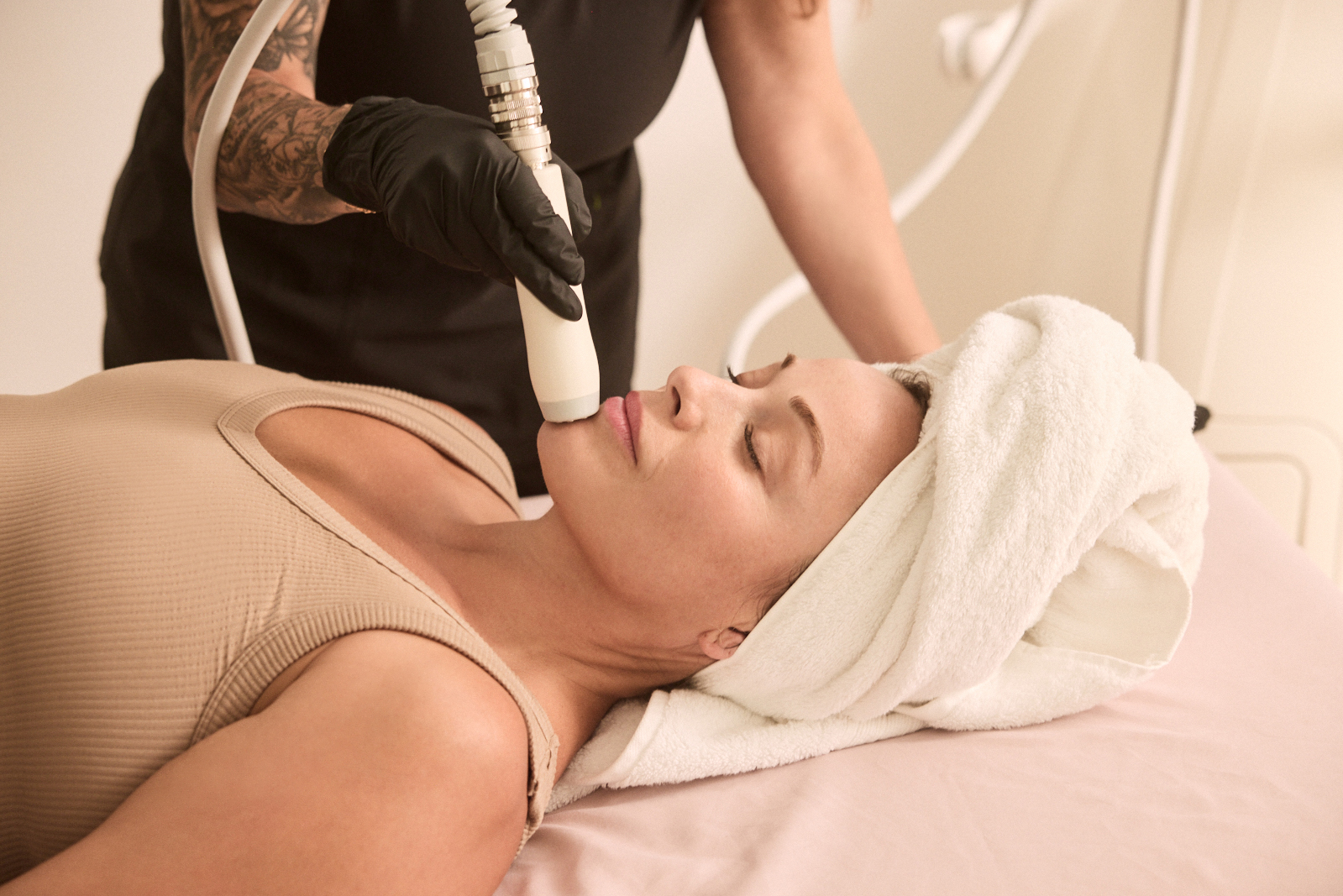
HIFU technology, best known under the brand name Ultherapy, delivers focused ultrasound energy to the deep structural layers of the skin. It can even reach the SMAS layer (the same layer targeted in a surgical facelift). The energy heats the tissue at specific depths, stimulating a robust collagen production response without damaging the surface.
What it can help address:
- Sagging skin on the brow, mid-face, and neck
- Jowling and loss of jawline definition
- Skin laxity in the lower face
- Early signs of aging in the neck and décolletage
HIFU is considered one of the more effective non-invasive procedure options for structural lifting. A single session can produce noticeable improvements. Results continue to develop over 3-6 months as collagen remodels, and they typically last 1-2 years. Some discomfort is normal during treatment.
8. RF Microneedling
RF microneedling combines two technologies: microneedling (which creates controlled micro-channels in the skin to trigger healing) and radiofrequency energy (which delivers heat into the dermis through the needle tips). This approach stimulates a more significant collagen response than either technology alone.
What it can help address:
- Skin laxity and early sagging skin
- Fine lines and acne scars
- Uneven skin texture
- Loose skin in the lower face and neck
Most treatment plans involve 3 sessions spaced 4-6 weeks apart. Results develop over 3-6 months and can last 1-2 years. Some redness and mild swelling are expected for 1-3 days. RF microneedling is considered a minimally invasive procedure because it does create micro-injuries within the skin. This technique produces more noticeable results but may not be suitable for everyone.
9. Thread Lifts
A thread lift is a minimally invasive procedure. It implies inserting dissolvable sutures beneath the skin. The threads anchor the tissue and create an immediate lifting effect. They dissolve over 6-8 months, during which they can also stimulate collagen production in the surrounding tissue.
What it can help address:
- Loose skin and mild to moderate skin laxity in the midface and jowl area
- Brow drooping
- Marionette lines and jowling
- Neck laxity
Thread lifts provide an immediate lift with very little downtime. Most clients return to normal activities within 48-72 hours. Results typically last 12-24 months. They work best for individuals with mild to moderate tissue descent. In advanced facial aging, a surgical facelift will likely produce more satisfactory outcomes.
10. Chemical Peels
Chemical peels imply applying a chemical solution to the skin’s surface. That solution removes damaged outer layers and stimulates new skin growth. Chemical peels range from superficial (targeting the outermost layer) to deep (penetrating into the mid-dermis).
What it addresses:
- Fine lines and surface-level deep wrinkles
- Acne scars and pigmentation
- Uneven skin tone and skin texture
- Sun damage
- Flaking skin and dull complexion
Superficial peels require minimal downtime. Deeper peels may involve 1-2 weeks of recovery. Chemical peels are often used as part of a broader facial rejuvenation plan because they don’t provide immediate facelift results. They’re better for surface concerns.
Non-Surgical vs. Surgical Facelift: How Do They Compare?
If you’re considering non-surgical facelift options but wondering whether a surgical facelift might be more appropriate for your needs, the comparison below may help clarify the key differences:
| Factor | Non-Surgical Facelift | Surgical Facelift |
| Invasiveness | Non-invasive or minimally invasive | Invasive; requires incisions and anaesthesia |
| Downtime | Minimal (0-10 days depending on treatment) | 2-4 weeks typically |
| Results | Subtle to moderate improvement | More dramatic, comprehensive correction |
| Longevity | 6 months to 2 years (maintenance required) | 5-15 years depending on technique |
| Addresses tissue descent | Partially (HIFU, threads, RF) | Fully (repositions deeper structures) |
| Addresses excess skin | No | Yes |
| Risk level | Low; minor side effects common | Higher |
| Cost per session | Lower | Higher upfront; more cost-effective long-term |
| Candidates | Mild to moderate signs of aging | Moderate to advanced facial aging |
What Is the Best Non-Surgical Facelift?
- For sagging skin and loss of firmness → try HIFU.
- For mild skin laxity and early aging → try radiofrequency (RF) treatments.
- For an immediate lifting effect → try a thread lift.
- For facial volume loss (cheeks, temples, under-eyes) → try dermal fillers.
- For dynamic wrinkles (forehead, crow’s feet) → try botulinum toxin (Botox).
- For skin texture, acne scars, and sun damage → try Neogen, laser resurfacing, or RF microneedling.
- For overall skin rejuvenation and collagen stimulation → try plasma skin regeneration (Neogen).
- For tightening, contouring, and circulation boost → try combination treatments like T-Shape 2.
- For surface-level concerns like dull skin and pigmentation → try chemical peels.
Who Is a Good Candidate for a Non-Surgical Facelift?
Non-surgical facelift treatments are generally most suitable for individuals who:
- Are in their 30s to 50s and noticing early to moderate signs of aging
- Have mild to moderate skin laxity but no significant tissue descent
- Are not ready for, or do not wish to undergo, cosmetic surgery
- Want to maintain results between surgical procedures (or delay the need for plastic surgery)
- Prefer minimal downtime and fewer risks than a surgical procedure
- Have realistic expectations about the degree of improvement achievable without undergoing surgery
They are generally less appropriate for individuals with:
- Significant sagging skin and deep tissue descent
- Considerable excess skin around the jaw and neck
- Advanced facial aging where structural repositioning is needed
What to Expect from Non-Surgical Treatments
Non-surgical facelift options can produce meaningful improvements in skin quality, firmness, texture, and overall youthful appearance. Consider these things:
- Their goal is to achieve a refreshed, more youthful-looking skin. Non-surgical procedures won’t cause dramatic changes overnight.
- Most non-surgical treatments require maintenance sessions if you want to maintain the achieved results. A treatment plan with multiple sessions is the norm for optimal results.
- Results vary between individuals, depending on age, skin types, degree of skin laxity, lifestyle factors, and the specific treatments chosen.
- Skin health practices, including sun exposure management, consistent SPF use, and a good skincare routine, can extend the duration of results considerably. The lack of a healthy skincare routine can diminish the results.
- Non-surgical procedures come with a shorter and less painful recovery than surgery. But they can still cause side effects. And they still have contraindications. That’s why you should talk to a professional before scheduling any procedures.
Non-Surgical Face Lift: Safety and Side Effects
While many non-surgical facelift procedures are considered safe, they do have contraindications, can be risky for specific individuals, and can cause side effects, especially if they’re not performed by qualified professionals. Some of these side effects include:
- Bruises
- Scars
- Peeling skin
- Skin redness
- Swelling
- Sensitivity
- Dry skin
- Infections
- Blisters
Always talk to a healthcare professional before undergoing any cosmetic procedure.
Frequently Asked Questions
Is a non-surgical facelift painful?
Most non-surgical facelift treatments involve minimal discomfort. HIFU can produce a sensation of warmth or mild pressure during treatment. RF treatments are generally comfortable. Injectables involve brief discomfort at injection sites. Chemical peels and Neogen may involve some temporary stinging during treatment.
Can non-surgical treatments replace a surgical facelift?
For mild to moderate facial aging, non-surgical facelift options can produce satisfying, natural-looking results but they will not produce dramatic results for more advanced signs of aging.
How much does a non-surgical face lift cost?
Non-surgical face lift procedures cost between $300 and $5,000 per treatment (multiple sessions sometimes), depending on the procedure. You should also account for maintenance treatments, usually yearly.
How long does a non-surgical face lift last?
On average, non-surgical face lifts last between 6 months and 2 years, depending on the procedure. Botox lasts 3-4 months, for instance, while nitrogen plasma skin regeneration and T-Shape 2 results last up to 2 years.
How can I lift a saggy face without surgery?
To lift a saggy face without surgery, you can try a non-surgical method, such as Neogen or T-Shape 2, as they can stimulate collagen, tighten skin over time, and improve texture. You can also try dermal fillers for immediate volume and thread lifts for a mild lift.