Rosacea, an incurable inflammatory skin condition, is a common skin condition that according to the American Academy of Dermatology affects 16 million Americans. While the disease can happen to anyone, there are certain groups who present a higher risk of developing the disease.
Managing rosacea is also big business. In fact, the global rosacea treatment market was valued at $2.09 Billion in 2024 and is expected to steadily increase to $3.19 Billion dollars by 2029, which means there is an opportunity for you as a beauty business owner to offer solutions to help manage this condition both with skincare and specialized treatments.
So, what is rosacea, how does it present, and how can you help your clients manage this chronic skin malady?
Below, we will explore the above questions in greater detail.
What Is Rosacea?
As we stated above, rosacea is a chronic and incurable disease of the skin that is caused by reasons that are still unknown to the medical community. However, there have been several treatments researched to manage and minimize the condition.
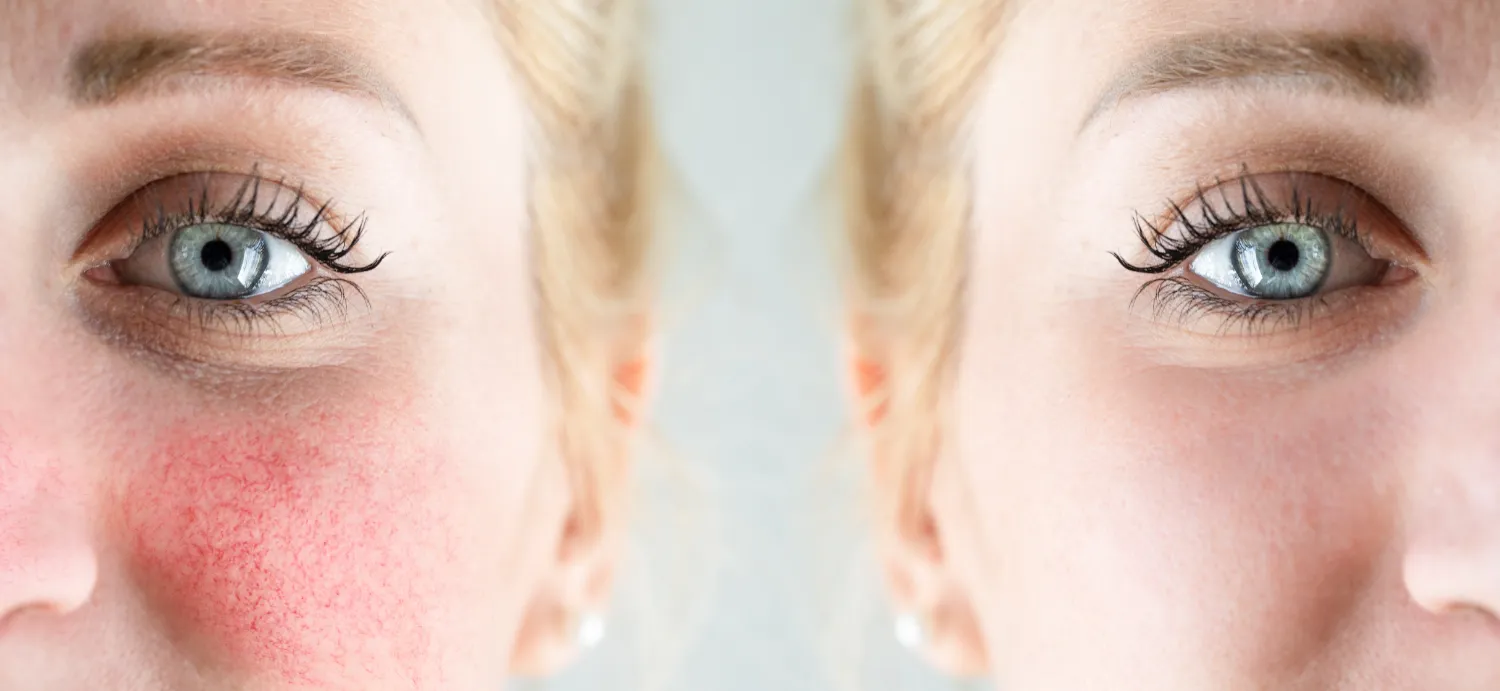
Trademark symptoms include diffuse redness with small pus-filled pimples on the skin that can present during flare-ups. Rosacea symptoms typically present on the skin of the nose, cheeks, forehead, and eyes. Some people may experience secondary symptoms including burning and stinging of the skin, facial swelling from proteins and extra fluid leaking out of the blood vessels, and dry and or rough facial skin.
For your darker skinned clients, symptoms may include swollen skin that is dry and present with patches of dark or dusky brown colorations to the skin, persistent acne, burning or stinging skin after applying skincare, a persistent warm sensation in the skin, hard, yellowish-brown bumps around the eyes, mouth, or both, and skin that gets swollen and thick around the nose, chin, and forehead.
Certain foods and beverages can exacerbate symptoms like dairy, alcohol, caffeine, and spicy foods and drinks. Furthermore, sun exposure can also make rosacea symptoms worse. Rosacea often occurs in cycles with flare-ups with symptoms that may be experienced for months at a time before going away and then possibly returning.
There Are Four Types Of Rosacea
Within the overall category of rosacea, historically there have been four subtypes each with their own symptoms. Below is the overview of each type along with the symptoms associated with them:
- Subtype 1: This subtype is commonly known as erythematotelangiectatic rosacea (ETR). Symptoms present as facial redness, flushing, and dilated blood vessels.
- Subtype 2: This subtype is known as papulopustular (or acne) rosacea. Symptoms present as acne-like breakouts and more commonly affect middle-aged women.
- Subtype 3: This subtype is known as phymatous rosacea and it presents with enlarged pores, bumps on the face, and a thickening of the skin, especially around the nose, which is called rhinophyma. It is a rare form of rosacea and occurs more often in men than women and typically presents with another subtype of rosacea.
- Subtype 4: This subtype is known as ocular rosacea because symptoms present in the eyes and the surrounding area.
In 2017, however, the National Rosacea Society Expert Committee reported that the above classification system doesn’t support the latest research on this chronic disease and developed a new set of standards that take into consideration that many people experience a multitude of symptoms at the same time that may change over time.
What Are The Triggers Of Rosacea?
While the precise root trigger(s) of rosacea are unknown, many clinicians believe that are several factors that may contribute to the condition, which are below:
- Genetic Predisposition: Rosacea often develops amongst close relatives, which indicates either a genetic or inherited aspect may be involved in this chronic condition.
- Blood Vessel Abnormalities: The facial flushing and spider veins on the face are often attributed by dermatologists to be caused by abnormalities in the blood vessels. However, the root cause for the abnormality is still unknown.
- Demodex Mite: Typically, demodex folliculorum mites live within hair follicles on the skin and cause no issues. However, people with rosacea tend to have a higher population of these mites. However, it is still unknown whether the mites are the culprit behind rosacea or the rosacea causes an increase in the mites.
- Heliobacter pylori: Intestinal bacteria known as Heliobacter pylori stimulates the production of bradykinin, a small polypeptide that causes blood vessels to dilate. Many medical experts suggest that this bacterium that resides in the gut may play a role in the development of rosacea.
Who Is At Risk For Rosacea?
There are several factors that can make your clients more likely to develop rosacea, including individuals between the ages of 30 and 50, and is more common in folks with blond hair, blue eyes, and fair skin.
Moreover, there are genetic factors that can make your clients more susceptible to developing rosacea including a family history of the disease or having Celtic or Scandinavian ancestors. Rosacea is also more common in women. However, if men develop the condition, it is typically more severe than in women.
Rosacea’s Link To Other Diseases
In a recent review of current research, The National Rosacea Society Expert Committee also found that several medical conditions may be more common in people who suffer from rosacea when compared to the general population.
These conditions include high cholesterol and blood pressure, coronary artery disease, rheumatoid arthritis, allergies, certain types of cancer like thyroid and basal skin cell cancer, neurological conditions like Parkinson’s disease, multiple sclerosis, and Alzheimer’s disease, in addition to gastrointestinal diseases including celiac disease, irritable bowel syndrome, ulcerative colitis, and Crohn’s disease.
While there is still more clinical research required to make direct links between the conditions and rosacea, exploring the correlations further helps researchers understand the underlying causes as well as help identify new treatments.
How is Rosacea Treated?
The Food and Drug Administration (FDA) has approved several medications to treat rosacea in recent years. The FDA approved oxymetazoline hydrochloride cream to treat persistent facial redness caused by rosacea in 2017. However, it is not considered a permanent solution since it typically causes rebound flushing when stopped.
Other FDA approved topical treatments include azelaic acid, ivermectin, metronidazole, and sulfacetamide. According to research from the American Academy of Dermatology Association in 2018, studies suggest that beta-blockers, certain antibiotics, and light and other energy-based technologies like lasers, may also help relieve rosacea symptoms. For those who suffer from ocular rosacea, a doctor may prescribe blephamide, a steroid eye drop, for a few days followed by tapered use.
The FDA recently approved another topical for frustrated rosacea sufferers that contains 5% benzoyl peroxide that is micro-encapsulated. The topical solution is slowly released into the skin over a 24-hour period, which means it isn’t irritating to the skin.
Once applied, the oil and sebum in the skin help to dissolve the microencapsulated benzoyl peroxide. The company says that in two weeks users can expect 40% less blemishes and by 12 weeks there are on average 70% less blemishes.
If your clients have this skin condition, they will most likely need a customized approach to manage the disease. Your clients should consult with their doctor first to see which methods would be most helpful since lifestyle changes, at-home remedies, prescribed medications, and in-office treatments can be helpful in managing the condition and its symptoms.
Below we will go into further detail about some of the at-home and in-office treatments that may be of use to your beauty clients.
At-Home Treatments
- Stress Reduction: Stress is a common trigger for rosacea sufferers.Finding ways to minimize stress is crucial for managing the disease. This can include getting better sleep, exercising (although this can cause flushing, so some experts suggest drinking ice-water to help minimize flushing during exercise), a healthy diet, and calming activities like yoga, meditation, and tai chi.
- Avoid Triggers: As mentioned above, certain foods and beverages may make rosacea symptoms worse. It is important for your clients to take note of the timing of flare-ups to determine if things like spicy food, dairy, or alcohol consumption worsen the symptoms after consumption.
- Anti-Inflammatory Skincare: Over the counter ingredients found in skincare can be helpful to minimize inflammation in the skin. Aloe vera, feverfew, niacinamide, licorice, and green tea are just a few of the ingredients known to help soothe rosacea symptoms.
In-Office Treatments
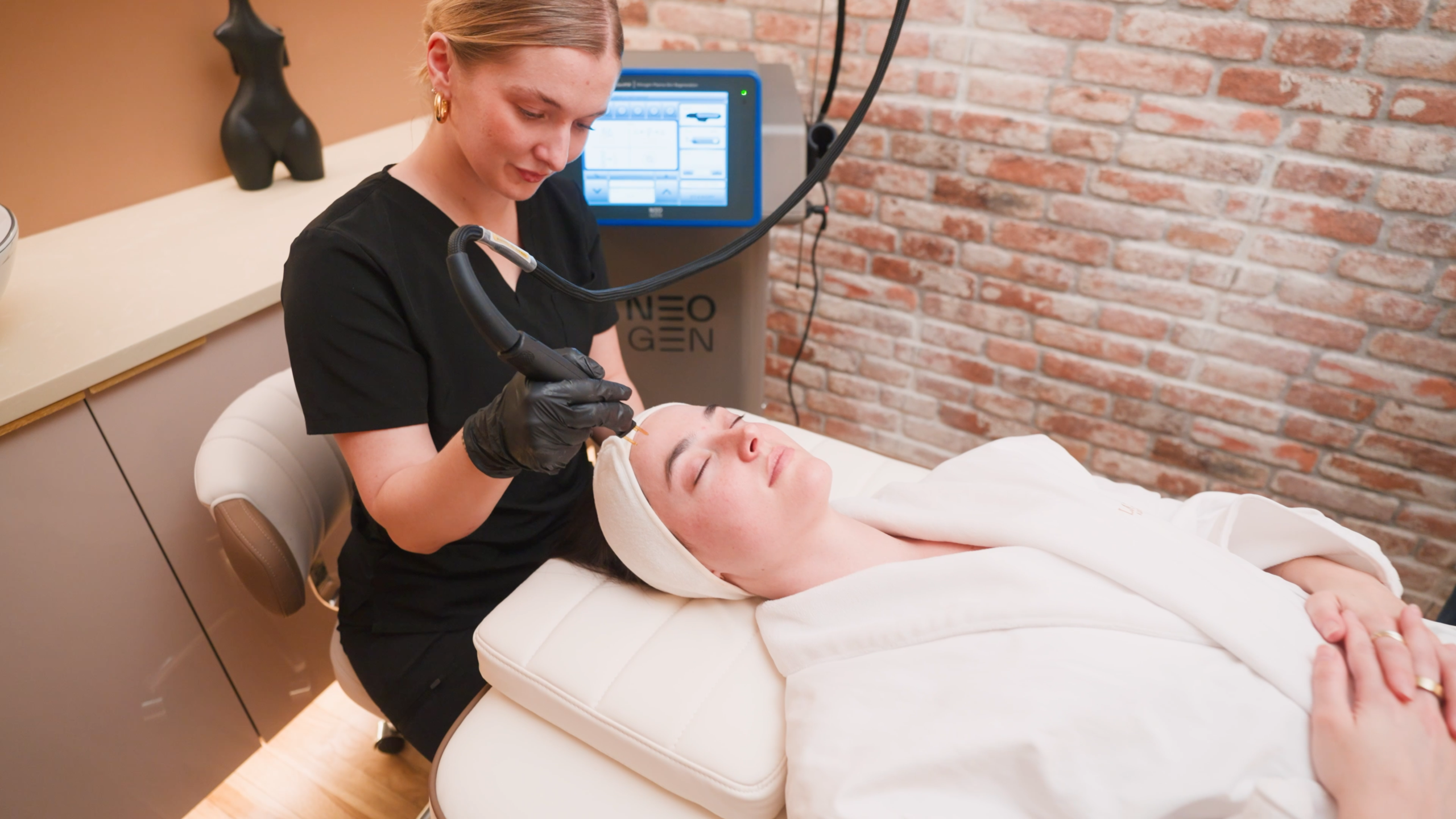
- IPL and BBL: Both Intense-pulsed light, and broad-band light technologies help to minimize diffuse redness as well as help to minimize the appearance of dilated blood vessels in the skin. These are not lasers, rather they use light-emitting diodes as their energy source. Several initial treatments are typically needed followed by a maintenance schedule to keep up with the results.
- Lasers: Like IPL and BBL, there are a multitude of lasers with varying wavelengths that have been used to effectively reduce some of the vascular signs of the condition including dilated blood vessels (sometimes referred to as telangiectasia) in addition to persistent erythema. Certain laser types, like a C02 laser can help address any skin texture changes by stimulating new collagen and elastin giving the skin a more uniform textural appearance.
- Plason: Plason is a clinically validated, non-invasive device that is the first platform available in the United States to offer two different treatments based on the concepts of atmospheric plasma and ultrasonic technologies. While Plason was not developed to treat rosacea specifically, the handpiece showers the skin with positive and negative ion streams, plasma, and actively charged molecules to eliminate bacteria on all skin types.
The device’s PlasmaClear treatment modality was designed to help individuals who have severe acne breakouts since it targets the bacteria that causes acne, reduces sebum, and improves the skin’s overall texture and tone.
- CryoFacial: CryoFacial is one of the three non-invasive treatments offered on the Cryoskin platform that is specifically for the face. CryoFacial treatments use cold temperatures to increase blood flow and oxygen, which reduces inflammation and redness in the skin often associated with rosacea.
The cold temperature can help reduce the symptoms of rosacea with acne by reducing sebum production (that can clog pores) in addition to reducing bacteria that can cause acne. Furthermore, cold temperatures can stimulate the natural production of collagen and elastin, which improves the overall texture and tone of the skin, which may be negatively affected by rosacea.
Conclusion
Millions of individuals suffer from rosacea, which is a chronic skin condition that isn’t fully understood and has no cure. With that said, there are both lifestyle and at-home remedies you can suggest to your clients, as well as skincare choices and specialized treatments that you can provide so they can manage this disease.