Have you looked in the mirror lately and noticed that your face looks a little different, not radically, but just… less firm? You’re not imagining it. And no, it doesn’t only happen when people hit their 50s.
Collagen loss starts earlier than most people think, and it’s more noticeable on the face first. This article breaks down exactly what the early and later signs of collagen loss in face look like, what causes your collagen production to decline faster than it should, and what you can actually do about it. We’ll also cover some of the professional treatments getting real results right now, including what device-based therapies like the T-Shape 2 can offer.
Disclaimer: This article is provided for informational and educational purposes only. The information presented here is not a substitute for professional medical evaluation, consultation, or care and should not be relied upon to make health-related decisions. Always consult a qualified and licensed medical or aesthetic professional before undergoing any cosmetic or aesthetic procedure.
What Does Collagen Actually Do for Your Face?
Collagen is the most abundant protein in your body, making up roughly 30% of your total protein content. In the skin specifically, it accounts for around 80% of the skin’s dry weight.
Think of collagen as the scaffolding inside your skin. It gives the face its structure, volume, and that “bounce-back” quality we associate with healthy skin. Working alongside elastin fibers, collagen keeps your skin firm, smooth, and resilient.
Collagen plays a few key roles in how your face looks:
- Structural integrity: holds the skin’s layers together and gives the face its shape
- Hydration: supports the skin’s ability to retain moisture
- Wound healing: helps repair damaged skin cells
- Volume: gives fullness to cheeks, under-eyes, and the lips
When collagen levels drop, all of these functions are affected, and you can easily notice that on your face.

When Does Collagen Loss Begin?
Here’s where most people are surprised: collagen decline starts in your mid-20s. Not your 40s. Not your 50s.
Research shows that we lose roughly 1% of our collagen per year starting in our late 20s. You won’t notice it at first, of course, because it’s not obvious enough.
The rate of loss isn’t constant throughout life, either. Hormonal changes, specifically menopause, accelerate collagen loss significantly. According to Viscomi et al., collagen declines at an average rate of 2.1% per year in women who are in postmenopause, because estrogen is needed for collagen synthesis, and when estrogen levels drop, so does collagen production.
Scientific studies comparing skin cells from young individuals (18-29 years old) with those from older individuals (80+) found that type I procollagen content, a marker of ongoing collagen synthesis, was decreased by 68% in older skin. That’s a substantial difference. It explains why the visible signs of collagen loss can become quite pronounced over time.
9 Signs of Collagen Loss in the Face
1. Fine Lines and Wrinkles
Definitely the most recognized signs of collagen decline in the face. As collagen and elastin weaken, the skin loses its ability to spring back after movement. Lines begin to set in permanently.
Early signs typically appear around the eyes (crow’s feet), mouth (smile lines), and forehead. As collagen production decreases, the skin relaxes, and these lines deepen. You might also notice nasolabial folds (the creases running from nose to mouth) and marionette lines (vertical lines from mouth to chin).
2. Sagging Skin and Jowls
That’s one of the most obvious signs of collagen loss in the face. Without adequate collagen fibers providing support, skin elasticity drops. Gravity does the rest.
This sagging skin can lead to jowls (drooping skin and fat descending below the jawline) and can also appear in the neck, décolletage, and overall face appearance. If you’ve noticed that your face shape has slightly changed, then your collagen production is slowly declining (unless there is another medical reason for that change).
3. Hollow Cheeks and Sunken Eyes
Collagen provides the necessary structure for facial fullness, which means collagen loss in the face leads to facial volume loss. Think of how full and lifted a child’s face looks! That’s collagen at its peak.
Visible signs of collagen loss here include looking “tired,” hollowness under the eyes, flattening of the cheeks, and hollowing in the temples.
4. Dry, Thin, or Crepey Skin Texture
Collagen assists in maintaining skin hydration and plumpness. When collagen levels are low, the skin becomes dry and flaky and may appear papery and thin, losing its smooth texture and becoming rough to the touch.
Uneven texture and a crepe-paper quality to the skin, especially around the eyes, neck, and cheeks, is a reliable indicator that collagen breakdown is accelerating.
5. Loss of Skin Firmness
If you press lightly on your cheek and the skin takes a moment to bounce back, your skin’s elasticity is declining. Younger, collagen-rich skin rebounds almost instantly. Aging skin with lower collagen levels takes longer to recover or doesn’t fully recover at all.
6. Changes in Skin Tone and Dullness
Losing collagen doesn’t just affect the structure of your face. As collagen and elastin fibers thin out, the superficial layer of the skin becomes less reflective and more dull-looking.
There’s also a process called glycation worth knowing about in this context (more on this below). As Advanced Glycation End products (AGEs) accumulate and cross-link with collagen fibers, the skin gradually takes on a dull, yellow tone.
7. Enlarged Pores
Collagen keeps the tissue taut around each pore opening. As it depletes, the skin lacks the tension needed to keep pores small and tight.
8. Slower Wound Healing
As we age, wounds take longer to heal because our skin gets thinner and more fragile. As it loses collagen and elastin, the skin regenerates more slowly, tears more easily, and has a weaker barrier against infections.
9. A Change in Overall Facial Appearance
Sometimes, your face simply looks slightly different. It’s less lifted, less full, more angular than it used to be. This is the cumulative effect of collagen decline in multiple areas on the face.
What Causes Collagen Loss in the Face?
Signs of collagen loss don’t appear purely because of age. Several lifestyle factors can accelerate collagen breakdown well beyond the natural rate.
| Cause | How It Damages Collagen |
| UV rays / sun exposure | Triggers enzymes (MMPs) that actively break down collagen fibers |
| Excess sugar / refined sugars | Causes glycation: sugar molecules bind to and stiffen collagen |
| Smoking | Limits oxygen delivery to skin cells, accelerates collagen breakdown |
| Hormonal changes | Oestrogen drop reduces collagen synthesis |
| Chronic stress | Elevated cortisol levels suppress the production of collagen |
| Poor diet | Lack of vitamin C, zinc, and amino acids limits new collagen synthesis |
| Poor sleep quality | Reduces growth hormone release, which is needed for collagen repair |
The Sugar-Skin Connection
Most people know that sun damage ages skin. Fewer know that excess sugar does that too.
Sugar molecules, particularly glucose and fructose, attach themselves to collagen fibers in the deeper layers of the skin and essentially glue them together. Once two collagen fibers bond this way, they become rigid. Their ability to repair is reduced. Scientists call the products of this bonding process Advanced Glycation End Products, or AGEs. And they build up in our bodies over time. Refined sugars in particular (white bread, pastries, sodas) drive glycation fastest.
How to Address Collagen Loss: A Practical Guide
There’s no one treatment or solution that restores lost collagen completely. It will keep declining as you age. What you can do is slightly slow down this process and support the existing collagen.

Lifestyle and Diet Changes
These won’t undo years of collagen decline, but they do slow it down significantly and support whatever other treatments you’re using. Here’s what you can do:
- Cut back on refined sugars. Reducing sugar intake will slow glycation-related collagen breakdown.
- Eat vitamin C-rich foods like citrus, bell peppers, strawberries, and broccoli. Vitamin C is a powerful antioxidant and essential to collagen synthesis. The body cannot produce collagen without it.
- Prioritise protein. Collagen is made from amino acids, and you need adequate dietary protein to support healthy skin.
- Stay hydrated. Dehydration slows skin cell turnover and can accelerate the visible signs of aging skin.
- Use daily sunscreen, which is non-negotiable for preserving existing collagen levels.
- Protect sleep, as tissue repair, including new collagen production, happens primarily during deep sleep.
Skincare Ingredients That Stimulate Collagen
Collagen creams applied topically can’t deliver collagen molecules into the skin. The molecules are too large to penetrate deep into the skin. However, quality skincare products can prompt your skin to stimulate collagen from within. Look for products with:
- Retinoids (Vitamin A), which are one of the most evidence-backed ingredients for supporting collagen synthesis and cell turnover
- Vitamin C serums, as vitamin C is both a powerful antioxidant and a direct promoter of collagen production; it also helps protect existing collagen fibers from sun damage and oxidative stress
- Peptides, which are short chains of amino acids that signal skin cells to produce more collagen
- Niacinamide, which supports the skin’s barrier and may help reduce the visible effects of collagen deficiency
Collagen Supplements and Oral Collagen
Collagen peptides and collagen supplements have become more and more popular lately.
Some studies suggest that collagen peptides may help improve skin elasticity and hydration when taken consistently. However, keep in mind that collagen peptides taken orally do not go directly where you need them, meaning to the skin. They go where your body needs them, such as in the skin, the joints, or the bones. In other words, they do not target specific areas directly.
It is also worth noting that collagen supplements are not regulated as medicines, and results vary between individuals.
Professional Treatments That Stimulate Collagen within the Skin
Lifestyle changes and skincare products can help, without a doubt. But if you’re dealing with more visible signs and want more measurable results, you can try professional collagen-boosting treatments.
The most effective options work by creating a controlled stimulus in the skin that triggers the body’s own collagen synthesis response. Here’s an overview of the main approaches.
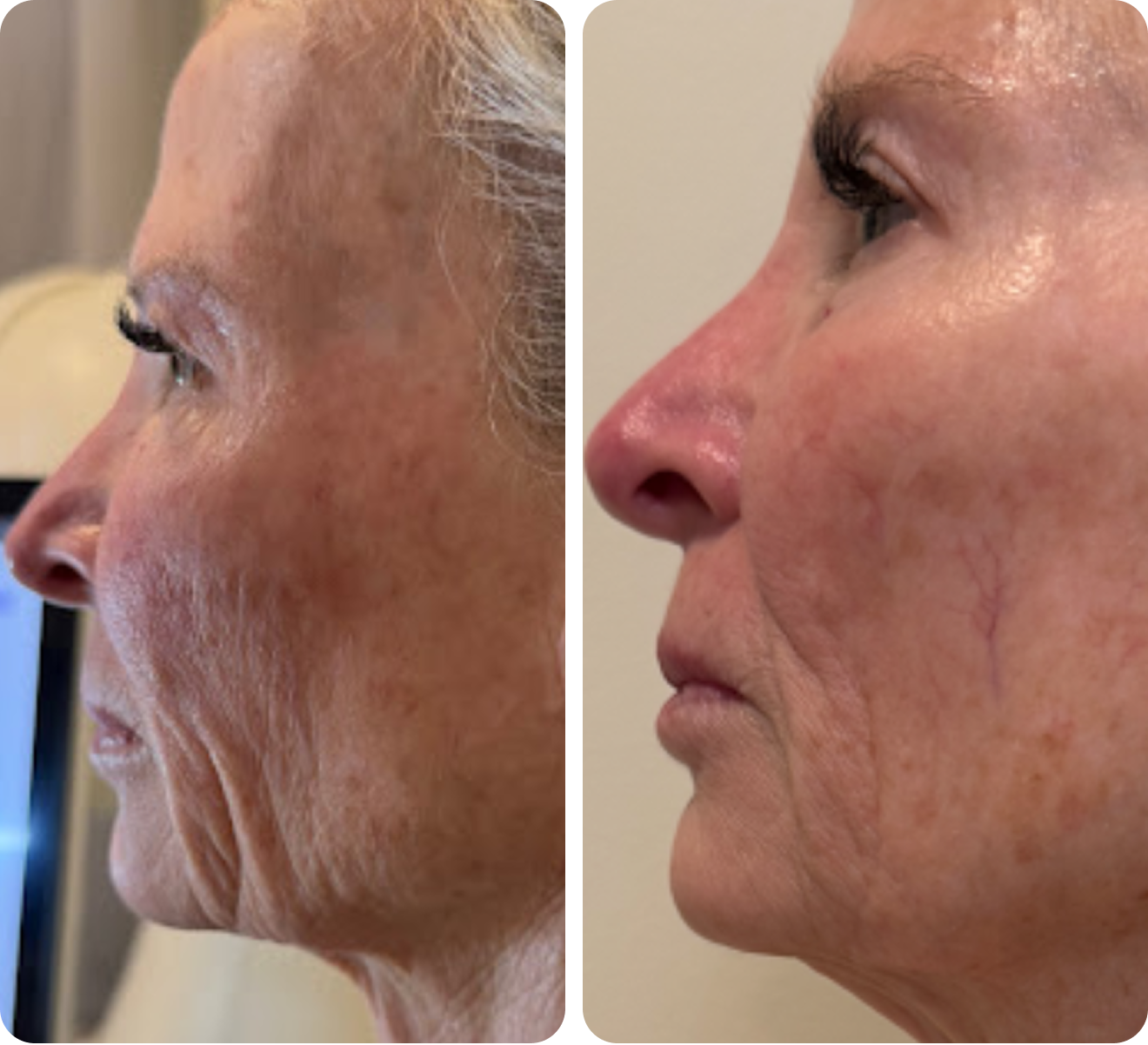
Before and after 8 skin-tightening treatments on the face with T-Shape 2.
Radiofrequency (RF) Treatments: T-Shape 2
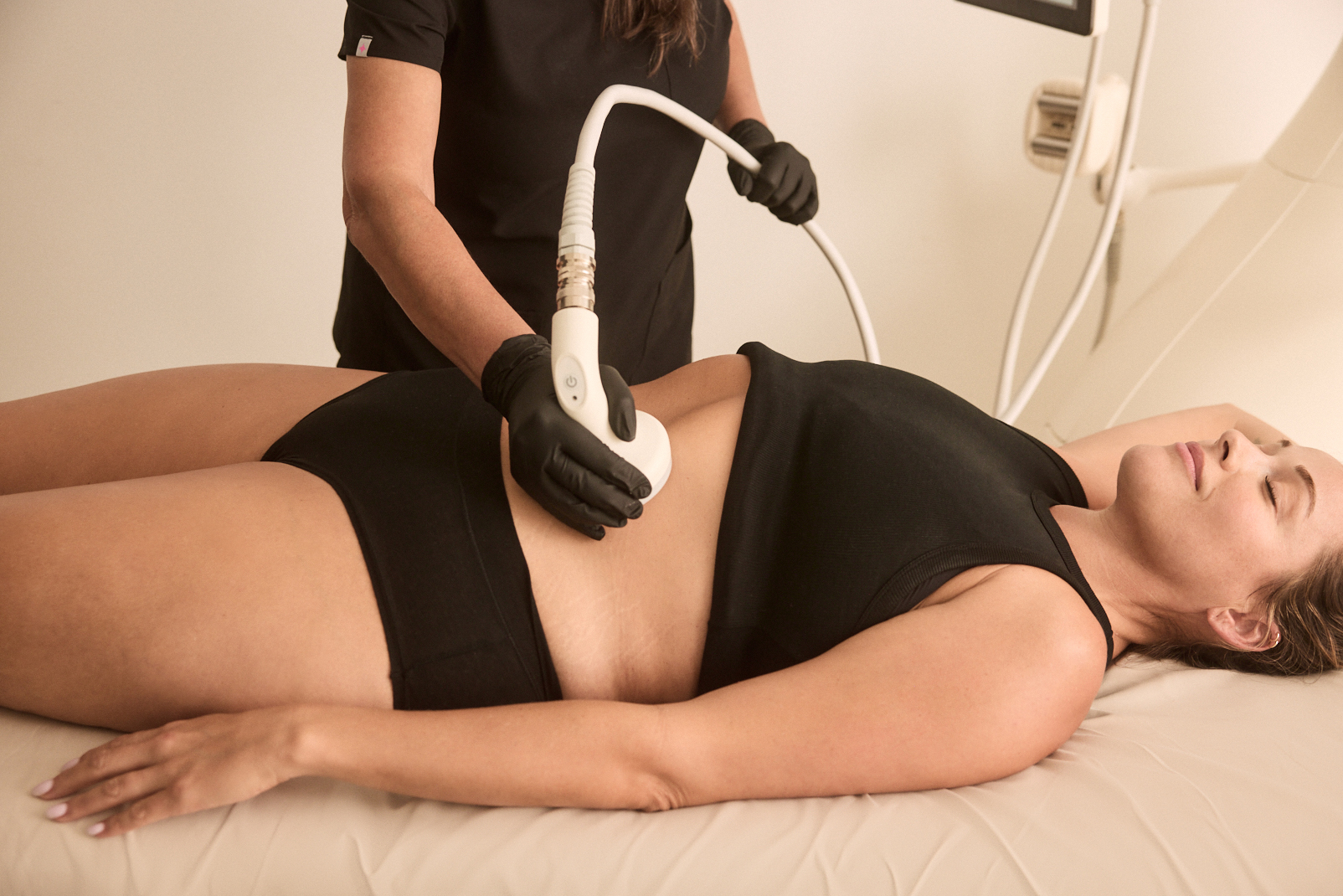
Radiofrequency technology has become one of the most widely used non-surgical approaches for addressing collagen loss in the face. It works by delivering controlled thermal (heat) energy into the deeper layers of the dermis, where collagen is produced. That heat stimulates the fibroblasts, the skin cells responsible for producing collagen.
The T-Shape 2 is a multifunctional, FDA-cleared device that combines four technologies in a single platform:
- Bipolar Radiofrequency: can trigger collagen and elastin production deep within the skin, resulting in improved skin firmness and visible lifting
- Low-Level Laser Therapy (LLLT): can stimulate skin regeneration, contributing to a more toned, contoured appearance
- Endodermic Massage with Vacuum Suction: can help improve blood circulation and lymphatic drainage
- Mesospheric Activation: can support the body’s natural circulatory processes
We recommend a minimum of six sessions (which require little to no downtime and feel like a pleasant, warm massage). After that, the technician you’re working with will reassess and adjust the plan.
If you think T-Shape 2 suits your collagen-boosting goals, find a provider near you and schedule a consultation.
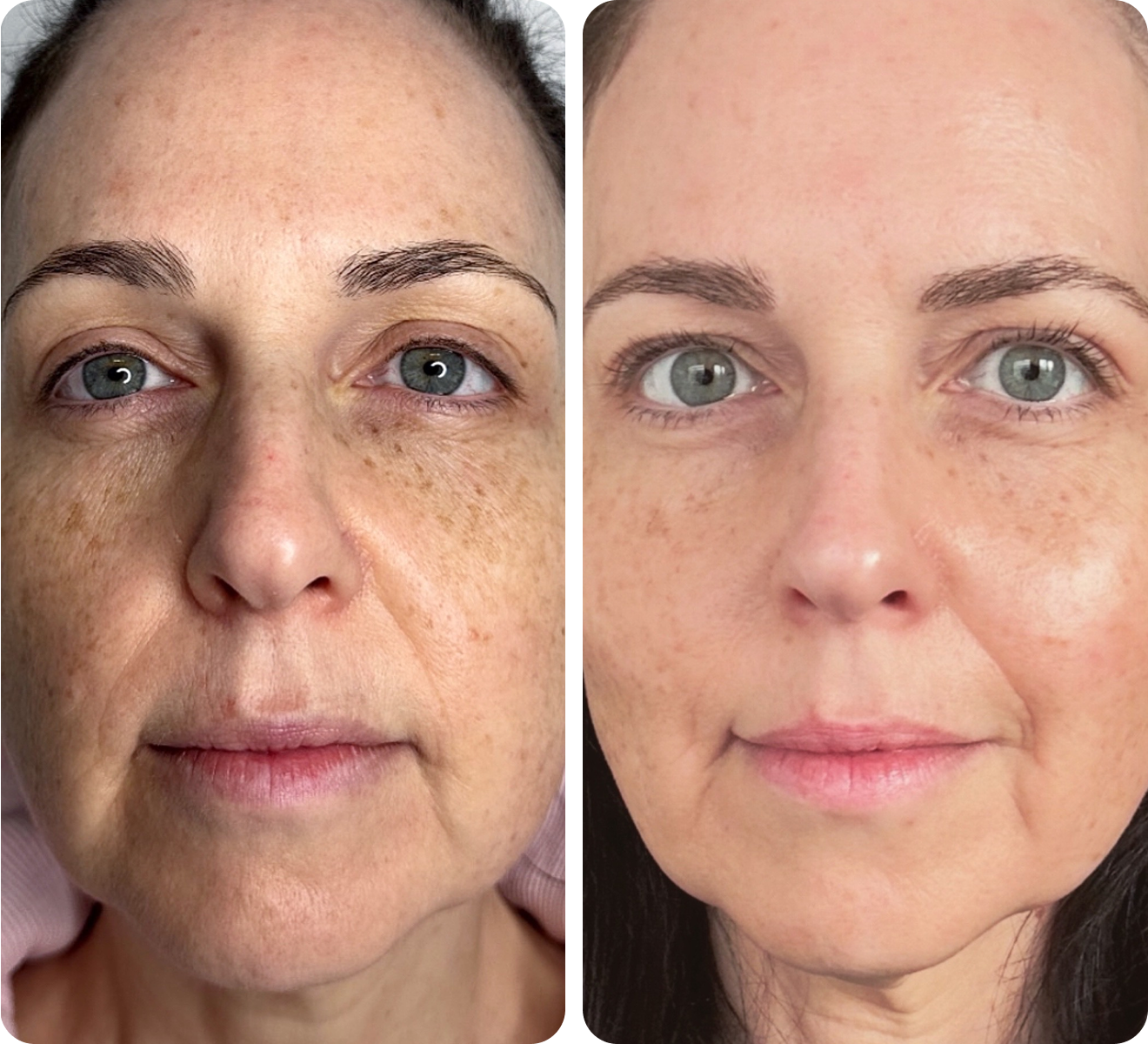
2 Weeks after 1 medium energy treatment with Neogen. Courtesy of Plasmatology.
Neogen Plasma Skin Regeneration
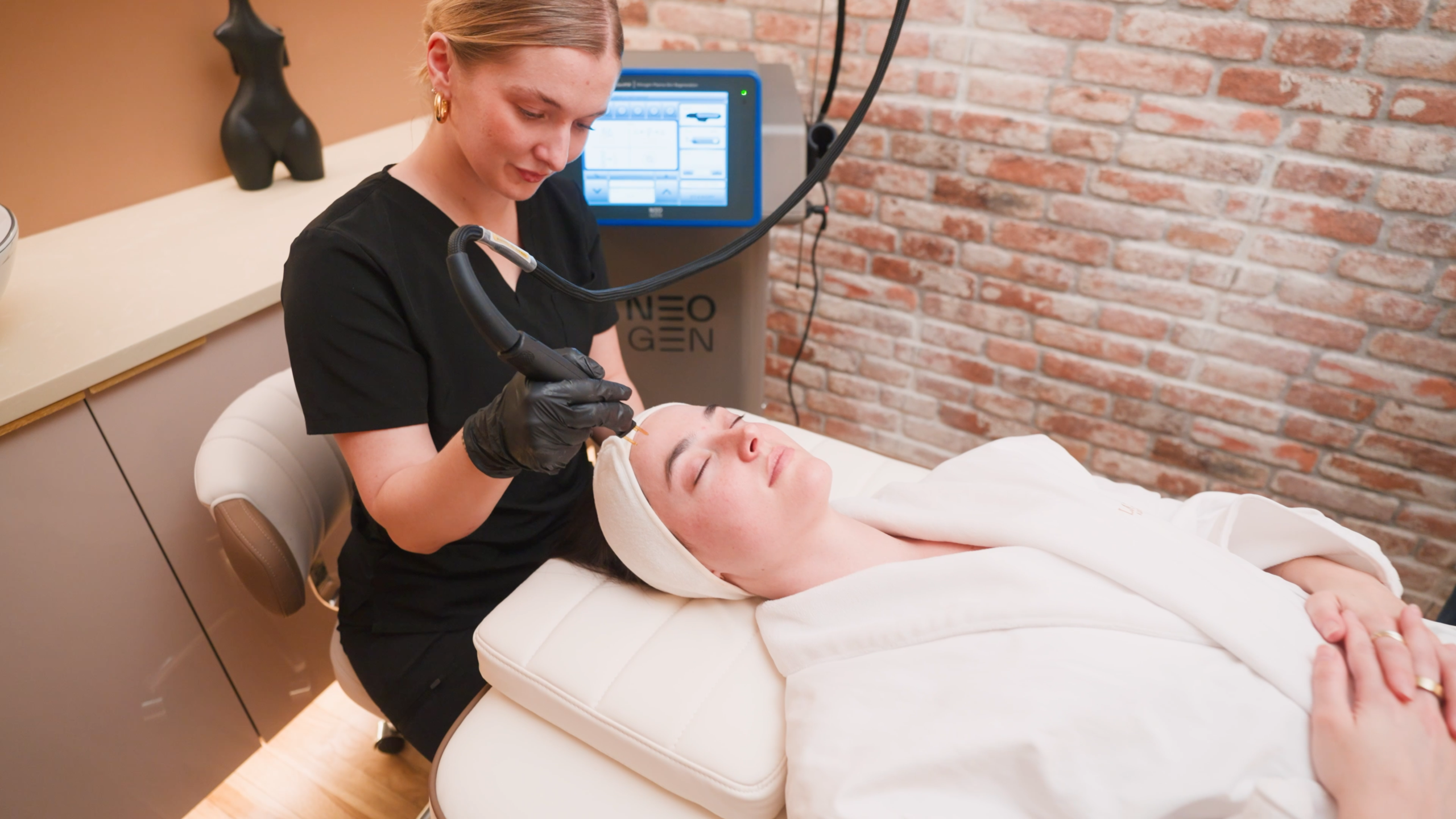
Neogen PSR (Plasma Skin Regeneration) might be a good option for you if you’re looking for a more intensive single-treatment approach. It uses nitrogen plasma technology to deliver controlled thermal energy into both the superficial and deeper layers of the skin. It can penetrate as deep as the reticular dermis, depending on needs. And it’s absorbed uniformly.
When the plasma pulse impacts the skin, the body activates its natural healing response. Thus, it triggers collagen production. Over time, this can help restore volume loss, lift and tighten loose skin, and improve skin texture and tone. It’s a good alternative to CO2 lasers, for example. Why? Because it keeps the surface skin layer intact, so there’s significantly less downtime.
Neogen is generally suitable for most skin types. But a consultation is required to determine whether it’s indeed appropriate for your specific skin tone and concerns.
Other Professional Options
| Treatment | How It Works | Best For |
| Microneedling | Creates micro-injuries to trigger the body’s wound healing and collagen synthesis response | Texture, fine lines, early sagging skin |
| RF Microneedling | Combines microneedling with RF energy for deeper collagen stimulation | Moderate signs of collagen loss, laxity |
| Laser Resurfacing | Removes damaged skin cells, prompts new collagen production | Texture, pigmentation, wrinkles |
| Dermal Fillers | Adds immediate volume to areas affected by facial volume loss | Hollow cheeks, deep creases |
| Ultrasound (HIFU) | Delivers focused ultrasound energy into deep tissue to trigger collagen remodelling | Deeper skin laxity, jawline |
It is worth noting that each treatment carries its own risk profile, recovery expectations, and suitability criteria. Always consult a qualified healthcare professional before choosing a treatment.
Can You Rebuild Collagen Once It’s Lost?
You can stimulate collagen production and slow further collagen breakdown. But collagen that has been lost over many years cannot be completely replaced.
Here’s what you can expect with a consistent, combined approach (lifestyle habits + skincare + professional procedures):
- Improved skin elasticity and firmness
- Less sagging, softer lines
- Brighter, more hydrated skin appearance
- Slowed future collagen decline
Also, keep in mind that these effects don’t happen overnight. It takes weeks or even months to notice a difference.
FAQ
At what age do signs of collagen loss in the face typically start?
Most people notice the first subtle signs of collagen loss in their early 30s, though the decline actually begins in the mid-20s. Factors like sun exposure, smoking, and high sugar intake can push visible changes earlier.
Can collagen creams restore lost collagen?
Collagen creams applied topically cannot restore collagen because they cannot deliver collagen into the deeper layers of the skin. However, skincare products containing retinoids, vitamin C, and peptides can encourage your own skin cells to produce more collagen over time.
Is losing collagen the same as losing volume?
Collagen loss affects skin firmness and structure, while volume loss also involves fat pad redistribution. Both contribute to the hollow, deflated facial appearance that many people associate with aging skin. Treatments that rebuild collagen can address both, to varying degrees.
Can you have too much collagen? What are the symptoms?
Yes, having too much collagen is possible, but it’s usually caused by excess supplementation or conditions that increase collagen production rather than from food alone. Symptoms of too much collagen can include bloating or other digestive upset, joint stiffness or pain, and skin that feels thicker or less elastic.
What vitamin deficiency causes sagging skin?
Vitamin C deficiency is the main one linked to sagging skin because vitamin C is essential for collagen production. Low vitamin C can reduce skin firmness and elasticity, making the skin look looser and more wrinkled.
How do I rebuild collagen in my face?
To rebuild collagen in your face, get enough vitamin C, eat antioxidant-rich foods, stay hydrated, use collagen-supportive skincare, and consider treatments like T-Shape 2. These methods aim to support the skin’s own collagen production and improve firmness over time
What are the first signs of low collagen?
Early signs of low collagen include fine lines or wrinkles, dry or thinning skin, weaker hair or nails, slower healing after injury, joint stiffness, and mild aches.
What food is highest in collagen?
Foods that are high in collagen include animal-derived foods like bone broth, skin, cartilage, and connective tissue from chicken, beef, pork, or fish. The best foods to support your body’s collagen production are vitamin C-rich foods like citrus, peppers, and leafy greens.