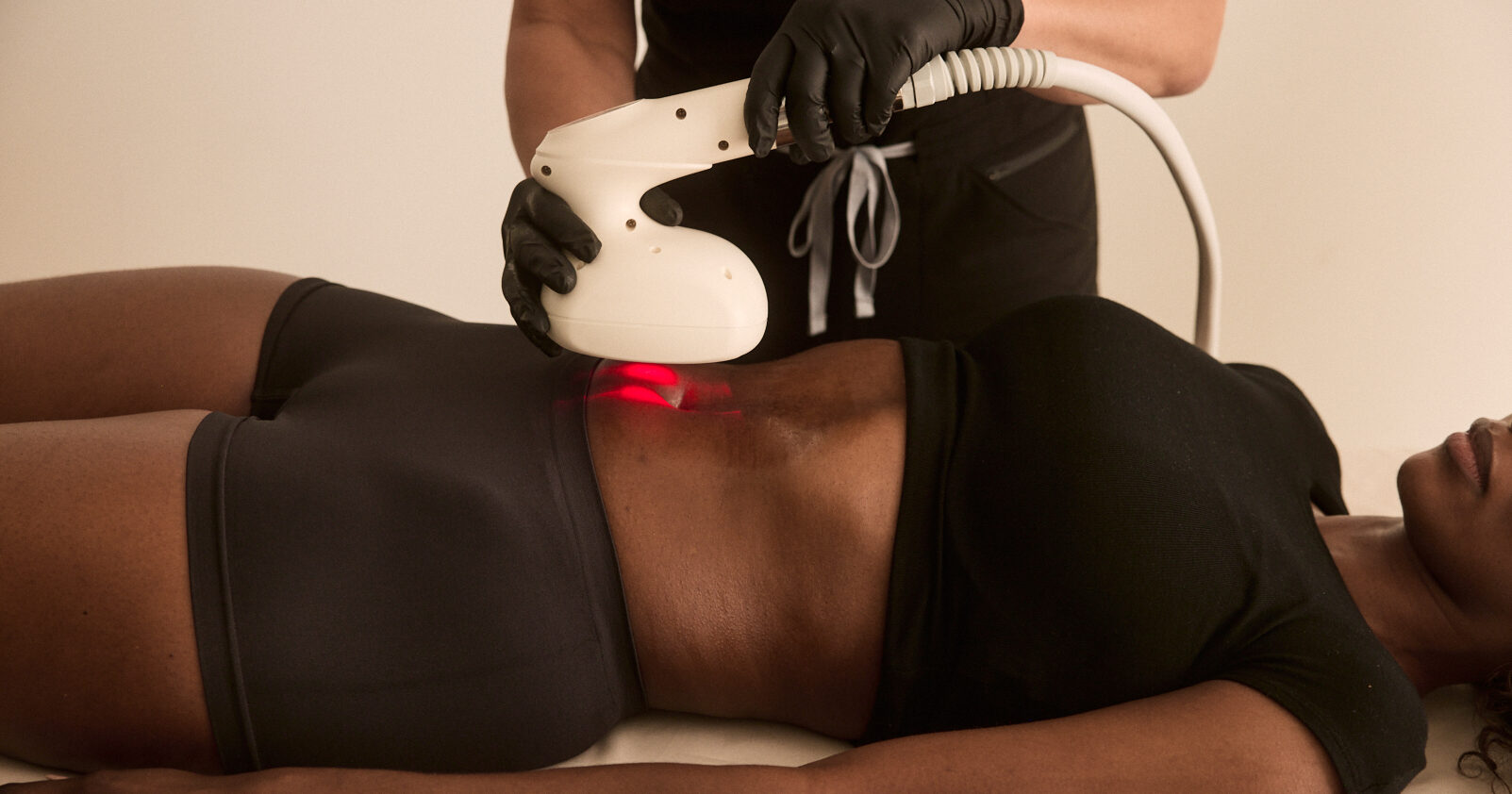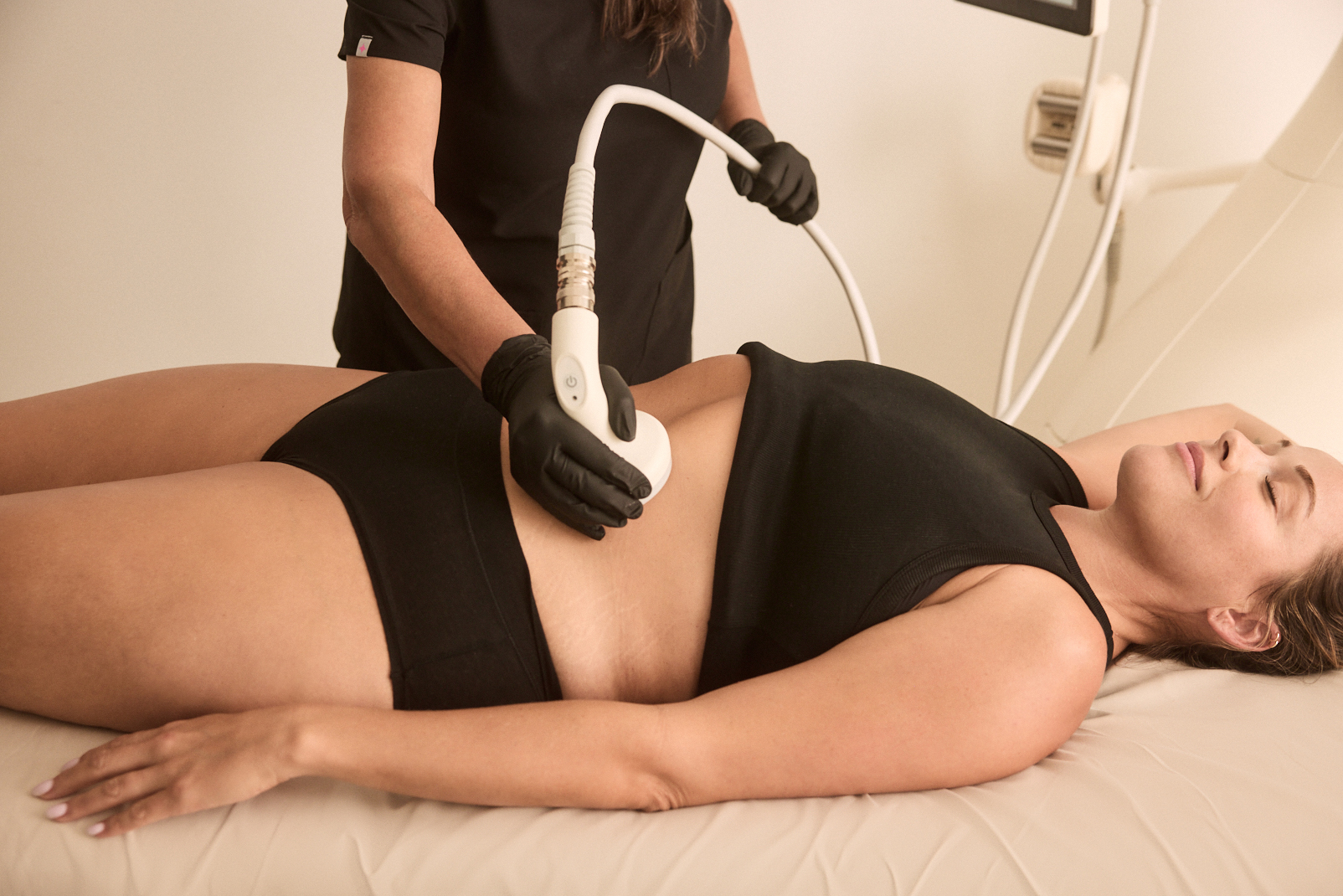
Ultherapy is one of the most well-known non-surgical skin tightening treatments. It uses focused ultrasound energy to stimulate collagen production in deeper tissue layers, helping improve mild to moderate skin laxity in areas like the brow, jawline, and neck. Because it can reach the SMAS layer, many people consider it a non-invasive alternative to surgical procedures.
However, Ultherapy is not the right choice for everyone. Some people find the treatment uncomfortable. Others prefer faster results, lower cost, or technologies that focus more on skin texture and overall quality rather than deep structural lifting.
So, if you’re looking for Ultherapy alternatives, this guide explores different technologies to help you understand which one may suit your goals best.
Disclaimer: This article is intended for informational and educational purposes only. It does not constitute medical advice, diagnosis, or treatment, and should not be relied upon as a substitute for professional medical guidance.
Quick Facts: Best Ultherapy Alternatives
Dermatologists recommend Ultherapy for its deep penetration and ability to stimulate collagen renewal. However, if you’re looking for a treatment similar to Ultherapy, the best option depends on whether your main goal is lifting, tightening, improving texture, or minimizing downtime. Each technology has its own benefits, targets different skin layers, and produces different degrees of collagen stimulation.
Here’s a quick overview:
- Best for deep tightening and lifting: RF microneedling treatments like Morpheus8, deeper radiofrequency devices, or nitrogen plasma. These stimulate collagen at multiple depths and can address both laxity and texture.
- Best gentle ultrasound alternative: Sofwave targets the mid-dermis rather than the deeper SMAS layer, making it ideal for mild laxity and early aging concerns.
- Best for a tighter skin on the face with minimal downtime: Thermage or non-invasive skin radiofrequency tightening like T-Shape 2 can heat the dermis broadly and improve firmness without recovery time.
- Best for skin quality + tightening: T-Shape 2, nitrogen plasma, or non-ablative laser treatments can help improve texture, pigmentation, and fine lines while still stimulating collagen.
- Best injectable alternative: biostimulators like Sculptra or Radiesse can support gradual collagen rebuilding and work well alongside energy-based treatments.
What Is Ultherapy?
Ultherapy is an FDA-cleared non-surgical treatment that uses micro-focused ultrasound with visualization (MFU-V). It targets the deeper layers of the skin, including the SMAS layer, the same foundational tissue addressed during a surgical facelift.
This technology delivers precise thermal coagulation points at depths of up to 4.5mm beneath the skin surface. This stimulates collagen production without damaging the epidermis. On that account, Ultherapy can be effective for mild to moderate skin laxity in specific treatment areas.
Primary uses for Ultherapy include:
- Brow lifting and forehead tightening
- Neck treatment for loose skin
- Jawline contouring
- Décolletage improvement
Typical treatment sessions last 60-90 minutes, depending on the treatment area. Patients appreciate that Ultherapy requires only one treatment session for noticeable results. Most side effects of Ultherapy are mild and short-lived, so you can quickly return to daily life.
Visible results appear gradually over 2-6 months as new collagen and elastin production occurs. Ultherapy results can last approximately two years with follow-up treatments.
Why Isn’t Ultherapy Suitable for Everyone?
Many people seek Ultherapy alternatives because of:
- Limited treatment areas: FDA approval covers only the face, neck, and chest, not body areas
- Gradual results: the 2-3 month waiting period for the desired outcome doesn’t suit everyone
- Cost considerations: Ultherapy sessions typically range from between $1,500 and $3,500, which can exceed the price of other treatments for skin tightening
- Potential side effects: temporary swelling, tenderness, numbness, and rare nerve injury can occur
Who Is Not a Good Candidate for Ultherapy?
You may not be an ideal candidate for Ultherapy if:
- You have low pain tolerance, as the procedure can sometimes cause discomfort during ultrasound energy delivery.
- You have active skin infections. Any active infection in the treatment area must be treated first.
- You have certain medical implants, as metal implants or electronic devices near treatment areas may contraindicate the procedure.
- You’re pregnant or breastfeeding. Most non-surgical cosmetic procedures are postponed during this time.
- You want to address severe sagging skin. Ultherapy addresses mild to moderate laxity, so surgical options like facial plastic surgery might be better suited in this case.
- You have open wounds or severe cystic acne, as the treatment area must be healthy.
- Your medical history includes certain conditions, such as bleeding disorders or autoimmune diseases, because they may affect the healing process.
Ultherapy Alternatives: Technologies and Devices
An Ultherapy alternative is any treatment that can help improve skin elasticity, firmness, or lifting through different mechanisms. Some use a similar ultrasound technology at different depths. Others employ radiofrequency energy or combination approaches.
Below are commonly used Ultherapy alternatives, grouped by technology, with examples of well-known devices.
Other Ultrasound Devices
Ultherapy is not the only device on the market that uses ultrasound technology to help improve skin laxity and appearance.
Sofwave is the most popular Ultherapy alternative. It is an ultrasound device that uses Synchronous Ultrasound Parallel Beam (SUPERB) technology and reaches depths of up to 1.5mm in the mid-dermis. Sofwave treatments cost slightly less than Ultherapy and are suitable for fine lines and wrinkles and less severe laxity. It’s also more comfortable than Ultherapy. Sofwave is FDA-cleared for improving the appearance of skin laxity on the upper arms.
High-Intensity Focused Ultrasound (HIFU) treatments are often recommended instead of Ultherapy. HIFU is not a single brand or device, but rather a category of ultrasound technology used by many different platforms. Like Ultherapy, HIFU works by creating precise coagulation points beneath the surface to stimulate collagen production and gradually tighten lax tissue. HIFU can cover broader areas, but most HIFU devices do not provide real-time imaging like Ultherapy, which uses MFU-V.
Radiofrequency (RF) Treatments
Radiofrequency skin tightening heats the skin, promoting collagen contraction and remodeling. Unlike Ultherapy’s focused ultrasound energy targeting specific depths, RF treatments deliver heat more diffusely across skin layers. Moreover, radiofrequency does not go as deep as Ultherapy.
Here are the benefits of radiofrequency compared to Ultherapy:
- Broader treatment areas, including body applications
- Generally, more comfortable sessions
- More budget-friendly
Radiofrequency treatments are better suited for mild skin laxity or maintenance, while Ultherapy is better for deeper wrinkles and moderate skin laxity. An example of radiofrequency treatment is Thermage, which sometimes shows results right away, improving over time and lasting 1-2 years with more maintenance sessions.
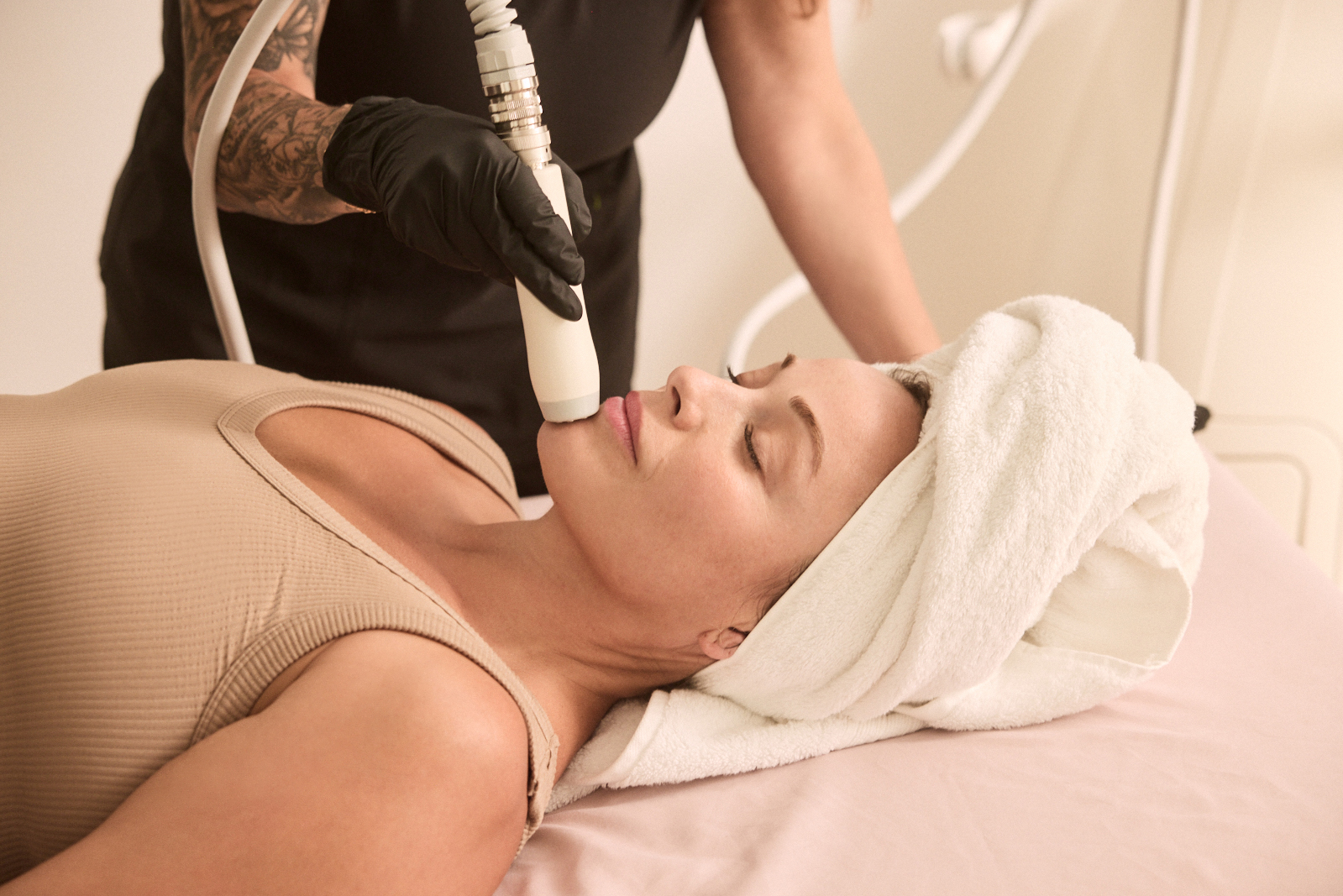
Combination Technology: T-Shape 2
T-Shape 2 is a non-invasive skin tightening option that combines multiple technologies. It is much gentler on the skin than Ultherapy and requires minimal downtime. T-Shape 2 incorporates four different technologies:
- Bipolar Radio Frequency, which can gently heat the skin and cause collagen production
- Low-Level Laser Therapy, which can help improve cellular metabolism, tissue recovery, and microcirculation
- Endodermic massage with suction, which can help improve lymphatic drainage and reduce tissue stagnation
- Mesospheric activation, which can help stimulate underlying muscle tone, skin nutrition, and blood flow
Like other technologies, T-Shape 2 can trigger the body’s healing response to stimulate collagen and elastin production. It can work well for treating fine lines and mild skin laxity. At the same time, it can help enhance overall skin health by addressing skin issues like cellulite.
T-Shape 2 is better suited for face and body contouring, cellulite reduction, and overall skin firmness. It causes minimal discomfort, usually just temporary redness and warmth. It requires more treatments than other technologies, usually at least 6.
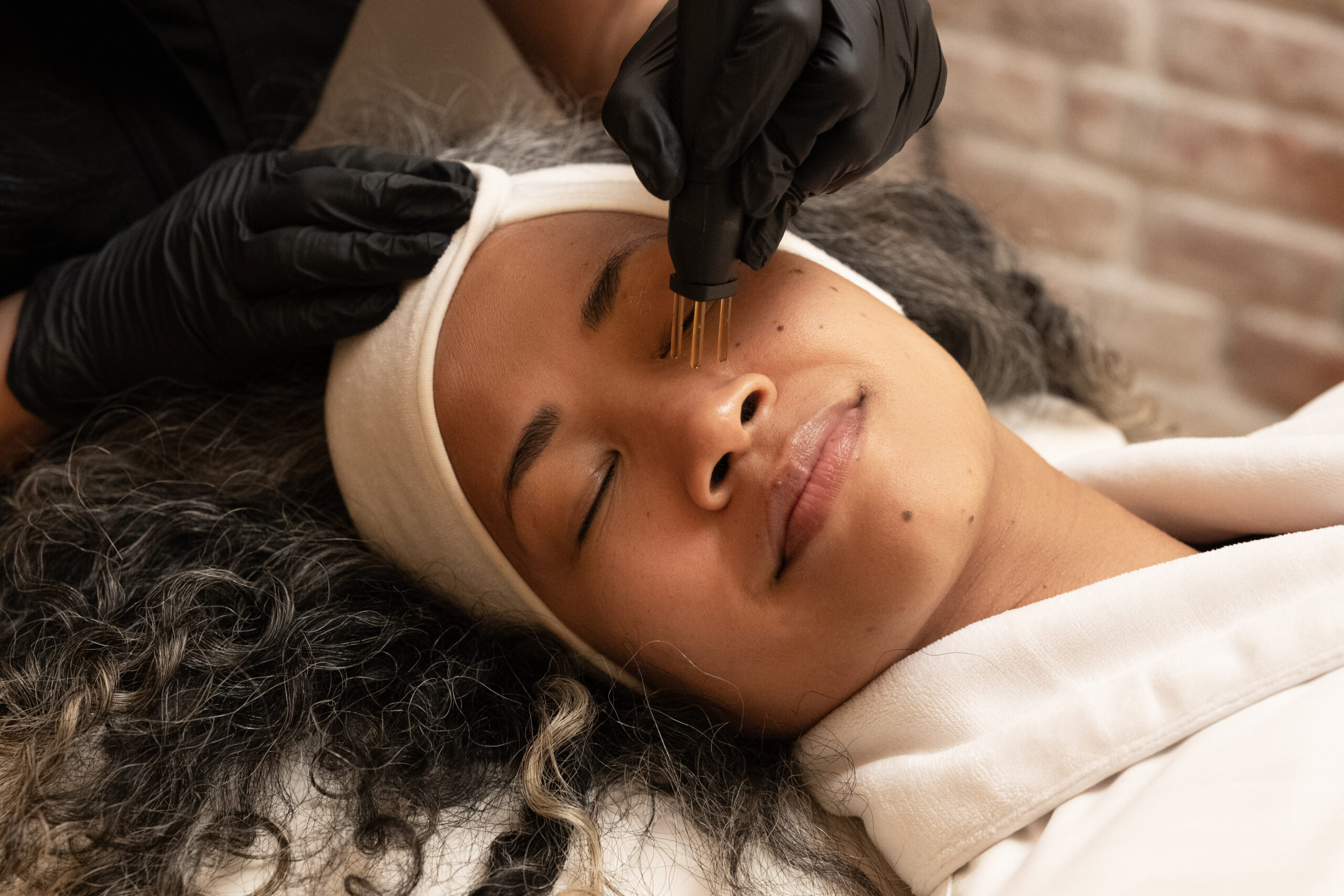
Nitrogen Plasma Skin Regeneration
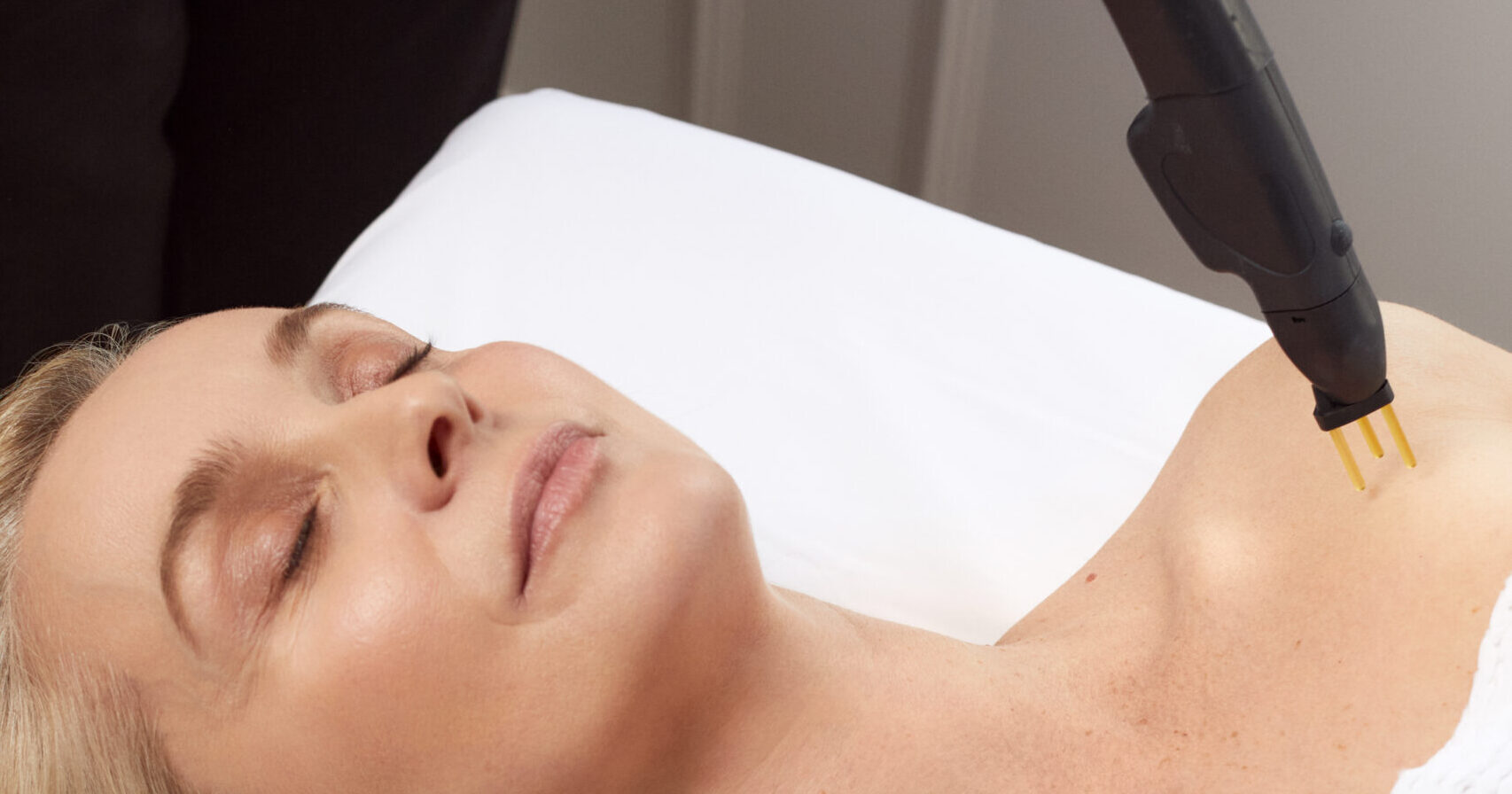
Nitrogen plasma technology (Neogen) converts medical-grade nitrogen gas into thermal plasma energy. This energy is delivered in controlled pulses to heat different layers of the skin without breaking or removing the outer epidermis. This triggers a robust healing response that builds new collagen and elastin.
Here are the benefits of nitrogen plasma compared to Ultherapy:
- It excels at maintaining overall skin quality: fine lines, wrinkles, texture, pigment irregularities, acne scars, skin tightening
- It is usually more tolerable than Ultherapy
- It can have minimal downtime with low-energy settings
RF Microneedling Devices
RF microneedling combines controlled micro-injuries caused by tiny needles with radiofrequency energy delivered to depths of up to 4mm. It is considered a minimally invasive procedure because it triggers robust wound-healing responses that boost collagen production, elastin production, and hyaluronic acid formation.
Among the most popular RF microneedling devices are:
- Morpheus8: can help address skin laxity, acne scars, enlarged pores, uneven skin tone, stretch marks, and fine lines; can cause moderate downtime and mild discomfort during treatment
- Secret RF: energy delivered at shallower depths with less downtime, addressing skin laxity, fine lines and wrinkles, and scars
- Vivace RF: uses 36 gold-plated needles for controlled energy delivery, suitable for fine lines, pores, and mild skin tightening
- Potenza: offers both monopolar and bipolar settings for customizable treatment depths in a single session
- Sylfirm X: delivers RF in shorter, controlled pulses for improved comfort and reduced downtime
Non-Ablative Laser Skin Tightening
Non-ablative laser treatments heat the deeper layers of the skin without removing the outer layer (like ablative lasers do), stimulating collagen production while keeping the surface intact. An example of a non-ablative laser is non-ablative Fraxel Duo.
Compared to Ultherapy, laser treatments:
- Excel at surface-level improvements and texture
- Are less effective for deep skin layers and structural lifting
- Have a minimal to moderate downtime (sometimes several days, depending on intensity)
- Are better suited for pigmentation concerns and crepey skin
These treatments are often chosen when skin texture and quality matter more than dramatic skin lifting.
Injectable Skin Rejuvenation Treatments
Some people prefer injectable treatments over energy-based devices. These support skin quality from within through different mechanisms.
Here are some examples of injectable skin rejuvenation treatments:
- Biostimulators (Sculptra, Radiesse), which encourage the body to produce new collagen over time, gradually improving firmness
- Skin boosters (Profhilo), which deliver hyaluronic acid to improve hydration, smoothness, and skin elasticity
- Polynucleotides, which stimulate cellular regeneration for natural-looking results
Compared to Ultherapy, injectable treatments:
- Have minimal downtime, often only one treatment day for initial effects
- Work best as supportive or combination treatments
- Require maintenance with follow-up treatments every 6-12 months
- Are better suited for superficial skin concerns and enhancing skin quality
Ultherapy vs Ultherapy Alternatives: Quick Comparison
| Treatment | Does it hurt? | Typical downtime | Best for | Common side effects |
| Ultherapy | Moderate (can feel sharp or deep during pulses) | Minimal (hours) | Deep lifting, SMAS layer targeting, mild to moderate laxity | Mild redness, swelling, tenderness |
| Sofwave | Low-moderate | Little to no downtime | Mild-to-moderate skin laxity, fine lines and wrinkles | Redness, swelling, tenderness |
| RF therapy (Thermage, Forma) | Low-moderate (feels like heat or deep warmth) | Several hours | Mild skin laxity, maintenance, gradual tightening | Redness, warmth |
| RF microneedling | Mild to moderate | 1-3 days | Uneven skin tone and texture, large skin pores, skin laxity | Skin dryness, mild flaking, tightness |
| Non-ablative lasers | Moderate | 1-7 days | Texture, pigmentation, mild wrinkles | Redness, swelling |
| T-Shape 2 | Low | Several hours | Skin laxity, body contouring, fine lines, massage | Redness, warmth |
| Nitrogen plasma skin regeneration | Mild-moderate | 1-10 days, depending on energy levels | Deeper skin tightening, wrinkles, acne scars, pigmentation | Mild swelling, redness, tight sensation, flaking |
| Injectable skin treatments | Low (needle discomfort only) | 0-1 day | Skin hydration, smoothness, long-term collagen support | Swelling, bruising |

How to Choose the Right Ultherapy Alternative
Selecting the right treatment depends on your primary concerns, lifestyle constraints, and budget considerations.
1. Choose Based on Your Main Concern
If your main concern is moderate sagging, you can try
- Deep RF treatments like Thermage
- Morpheus8 at deeper settings for combined tightening and texture
- Nitrogen plasma skin regeneration with high-energy settings
If your main concern is skin texture and mild laxity, you can try:
- RF microneedling options (Morpheus8, Secret RF, Potenza)
- T-Shape 2 procedures
- Sofwave ultrasound
If your main goal is gradual improvement and maintenance, you can try:
- Injectable treatments like dermal fillers and biostimulatory injectables
- Radiofrequency procedures
- Sofwave for gentle, progressive tightening
- T-Shape 2 procedures
If your main concern is body contouring, you can try:
- T-Shape 2
2. Choose Based on Pain Tolerance and Downtime
- Low pain tolerance: RF without needles, T-Shape 2, Sofwave, injectable skin boosters
- Minimal downtime needed: non-invasive treatment options like T-Shape 2, dermal fillers, radiofrequency
- Moderate downtime: RF microneedling devices, non-ablative laser treatments, nitrogen plasma skin regeneration
3. Choose Based on Budget and Maintenance
- Budget-conscious options: dermal fillers, T-Shape 2, RF microneedling
- Immediate effects: dermal fillers
The Importance of Working With a Professional
The safety and effectiveness of any skin-tightening treatment depend heavily on provider expertise and proper treatment customization.
Working with an experienced professional matters because they can:
- Determine whether you’re a candidate at all. Your skin type, medical history, medications, and scarring/pigmentation tendencies are very important.
- Identify the right treatment and technology, matching them to your goal and skin biology, and establish a personalized treatment plan. Two people can have the same skin concerns (e.g., loose skin) but need different treatments for optimal results.
- Adjust device settings to lower the risk of complications. Treatment depth, energy level, and pulse mode can change outcomes, especially for PIH-prone patients.
- Create a gradual plan instead of overtreating. The most common cause of prolonged redness, overall skin texture irregularities, or dissatisfaction is overly aggressive settings or too-frequent treatments.
- Provide pre- and post-care. This can help prevent pigmentation issues, provide barrier support, and reduce the risk of inflammation.
FAQs
What’s the difference between Thermage vs Ultherapy?
The difference between Thermage vs Ultherapy is that Ultherapy uses focused ultrasound to target deeper tissue layers, including the SMAS layer, creating a lifting and tightening effect from beneath the skin, while Thermage uses radiofrequency energy, which heats the dermis more diffusely for overall tightening and texture improvement.
What’s the difference between Sofwave vs Ultherapy?
Sofwave targets the mid-dermis at a shallower depth, so it’s better suited for fine lines, early laxity, and gentle skin tightening with less discomfort. Ultherapy reaches deeper layers, including the SMAS, so it’s more effective for structural lifting of the brow, jawline, and neck.
What’s the difference between HIFU vs Ultherapy?
HIFU refers to a broader category of focused ultrasound devices that stimulate collagen through thermal coagulation points. Ultherapy is a specific micro-focused ultrasound system with real-time imaging (MFU-V).
What’s the difference between Ultheraphy vs Fraxel?
Ultherapy uses ultrasound energy to tighten deeper tissue layers and improve skin laxity, focusing primarily on lifting and contouring. Fraxel is a non-ablative laser that improves surface texture, pigmentation, and fine lines rather than providing deep structural lifting.
Is Sofwave better than Ultherapy?
Sofwave is not necessarily better than Ultherapy. They serve different purposes. Sofwave targets the mid-dermis at around 1.5mm deep, which makes it better suited for fine lines and early skin laxity. Ultherapy can reach deeper layers (up to 4.5mm), producing more noticeable lifting over time.
Which Ultherapy alternative has the least downtime?
Ultherapy alternatives with the least downtime include Sofwave ultrasound, Thermage, T-Shape 2, and injectable skin boosters or biostimulators.
Is RF microneedling better than Ultherapy?
Whether RF microneedling is better than Ultherapy depends on your goal. RF microneedling can improve texture, pores, acne scars, and tightening because it treats multiple skin layers. Ultherapy is more focused on deep lifting and contouring rather than surface changes.
Is Morpheus8 better than Ultherapy?
Morpheus8 isn’t objectively better than Ultherapy. It’s just different. It combines microneedling with radiofrequency energy, which allows it to target surface texture and deeper tightening simultaneously. Ultherapy delivers ultrasound energy deeper into structural tissue to lift areas like the jawline or neck. If your goal is skin quality and remodeling, try Morpheus8. If you want structural lifting, try Ultherapy.
What’s the most affordable alternative to Ultherapy?
Budget-friendly alternatives to Ultherapy include radiofrequency tightening, skin boosters, T-Shape 2, and RF microneedling.